Taliban

Biden’s press conference was a feast of disinformation

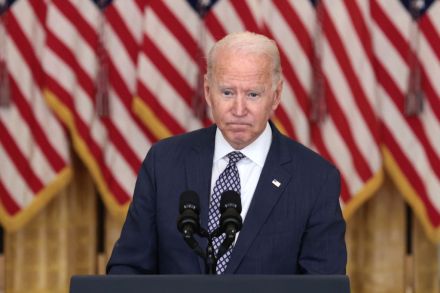
Joe Biden emerged from his cave, saw his shadow, and told us there will be three more years of winter. That winter, descending on America’s position in the world, was on public view at Biden’s Friday press conference about Afghanistan. Standing behind him was the Vice President, the secretary of defense, the secretary of state and the national security adviser, a stark contrast to the sad photo of Biden alone on a video call from Camp David with those advisers. Why have them stand there, mute? To convey to the public that the administration was united...and to convey to his advisers that they were all on this sinking ship together.

press
war

The last war for democracy

Twenty years after 9/11, the War on Terror has come full circle. Everyone expected the Taliban to surge back to power as soon as American forces left Afghanistan. Instead, the surge began while America’s embassy in Kabul was still open, inviting unwelcome flashbacks to Saigon in 1975 and Tehran in 1979. There are piquant memories of 1989, too — not of the Berlin Wall’s fall or a young Francis Fukuyama’s publishing ‘The End of History?’ in the National Interest, but memories of an Afghan insurgency’s triumph over a superpower. That triumph would inspire and ultimately contribute in the most concrete ways to a decade of terrorism, culminating in the 9/11 attacks.

taliban kabul

What exactly was the plan in Afghanistan?

The collapse of the Afghan army and state was so rapid and so total that, mercifully, talking heads have already moved on from debating whether the country might have been saved from a Taliban takeover. Everyone now agrees that was impossible, and the trillion dollars spent to prevent it was thoroughly wasted. Instead, because pundits and politicians must fight over something, the scrum has been over the frantic manner of America’s withdrawal. Was the Biden administration warned that Afghanistan would collapse in the amount of time typically reserved for a test cricket match? And if so, did it simply ignore those warnings?

France is nervous about welcoming a wave of Afghan refugees

From our UK edition

Emmanuel Macron has once more infuriated many in France, but this time it has nothing to do with Covid passports or mandatory vaccination. In an address to the nation this week, the president discussed the disturbing scenes from Kabul as the Taliban invaded the capital of Afghanistan. France, he said, would be a haven for those Afghans 'who share our values' but nevertheless the country must 'anticipate and protect ourselves against significant irregular migratory flows that would endanger the migrants and risk encouraging trafficking of all kinds.' His rhetoric went down badly with much of the French left.

How America failed to learn its lessons from Vietnam

From our UK edition

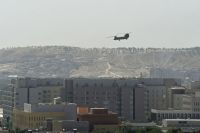
The hasty withdrawal from Kabul has inevitably been compared to the Fall of Saigon at the end of the Vietnam war. Pictures of a Chinook flying over the US embassy in the Afghan capital to pluck staff to safety did bear something of a resemblance to the airlift of 1975. But is the comparison fair? Joe Biden, at least, has been keen – for understandable reasons – to deny that Afghanistan is anything like Vietnam. A month ago, Biden told a reporter he saw ‘zero’ parallel between the Vietnamese and Afghan withdrawals: ‘The Taliban is not the same as the North Vietnamese army. They’re not remotely comparable in terms of capabilities.

The Afghan state was dying before the Taliban took over

From our UK edition

To understand how Afghanistan is going to change in the future, you have to first understand what the ‘Islamic Republic’ established by the United States was like. Even before the Taliban took over, Afghanistan’s democracy had been deteriorating for some time, with three presidential elections in a row ending in bitter controversies over vote rigging, manipulation and fraud on a massive scale. The parliamentary elections attracted less attention but were no less controversial. Voter participation had declined constantly and in 2019, when the latest elections were held, turnout probably did not exceed 10 per cent, although it is hard to know the exact figure. Persistent insecurity and high levels of corruption weakened the legitimacy of the Republic.

How much trouble is Dominic Raab in?

From our UK edition

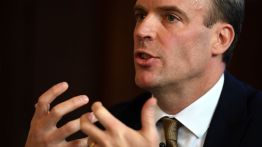
When MPs returned to parliament on Wednesday to debate the situation in Afghanistan, it was Joe Biden who received the most criticism during the debate. But a close second in the firing line was the UK Foreign Secretary. After Dominic Raab waited until Sunday night to fly back from his holiday in Crete, opposition MPs were quick to go on the attack. When Raab asked Starmer what he would do differently give the complexity of the situation, the Labour leader replied: 'I wouldn't go on holiday when Kabul was falling'. The SNP's Ian Blackford also joined in – suggesting Raab ought to be ashamed of himself.

The Taliban’s lightning victory was no surprise

From our UK edition

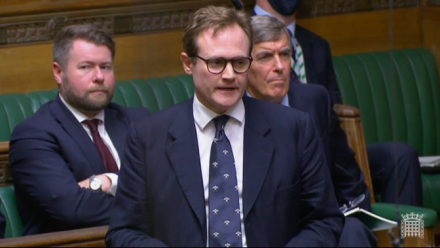
As the debacle in Kabul unfolds, in Washington and London the mud slinging about who is to blame is beginning. British Generals are blaming ‘spineless Johnson and Biden’ and the ex military MP, Tom Tugendhat, contends that we should have stayed put. That the spectacular ending of Afghanistan’s brief interlude in ‘Western Liberalism’ appears to have been such a surprise only underlines the utter delusion of the last twenty years. I worked for an aid agency in Kandahar at the height of the Taliban regime and remained in Afghanistan until just prior to the British deployment to Helmand.

Afghanistan will once again become a breeding ground for terror

From our UK edition

'Bin Laden is dead and al Qaeda is degraded in Afghanistan and it's time to end the forever war'. So said Joe Biden earlier this year when he announced his decision to pull US troops out of the country. The scenes of chaos that have followed that departure makes it vital that this myth – that western troops had already outstayed their welcome in Afghanistan – is not allowed to go unchallenged. The reality is rather different: Biden's decision to 'end' the war (or at least America's involvement in it) was a politically motivated one, which suited the president.

Joe Biden’s shabby treatment of the Afghan army

From our UK edition

Is a Taliban takeover of Afghanistan now inevitable?The President: No, it is not. Q. Why? The President: Because you — the Afghan troops have 300,000 well-equipped — as well-equipped as any army in the world — and an air force against something like 75,000 Taliban. It is not inevitable… Q. Do you trust handing over the country to the Taliban? The President: No, I do not trust the Taliban. Q. So why are you handing the country over…? The President: It’s a — it’s a silly question. Do I trust the Taliban? No. But I trust the capacity of the Afghan military, who is better trained, better equipped, and more re- — more competent in terms of conducting war.

Afghanistan: The error of withdrawal

From our UK edition

Like many veterans, this last week has been one that has seen me struggle through anger, grief and rage. The feeling of abandonment, not just of a country but of the sacrifice that my friends made. I’ve been to funerals from Poole to Dunblane; I’ve watched good men go into the earth, taking with them a part of me and a part of us all. And this week has torn open those wounds, left them raw, left us all hurting. I know it’s not just soldiers. I know aid workers and diplomats who feel the same way. I know journalists who’ve been the witnesses to our country in its heroic effort to save people from the most horrific fates. This isn’t just about us. The mission in Afghanistan wasn’t a British mission, it was a Nato mission.

May and Starmer hold Boris’s feet to the fire over Afghanistan

From our UK edition

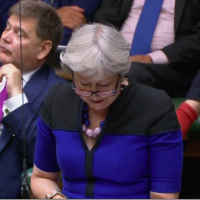
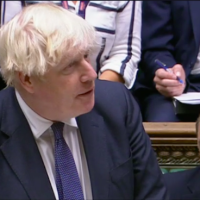
Boris Johnson has had a very uncomfortable start to today's Commons debate on Afghanistan. Not only did he have a series of critical interventions from his own backbenchers when he was speaking, he then had to sit through an unusually powerful speech from Sir Keir Starmer. The Leader of the Opposition criticised the PM's 'careless leadership', slammed the Foreign Secretary's 'dereliction of duty' in remaining on holiday as the situation worsened, and pointed to an 'unforgivable' lack of planning over the 18 months following Donald Trump's deal with the Taliban.  This was swiftly followed by an equally furious Theresa May.

Boris Johnson opens Afghanistan debate to frosty reception

From our UK edition

Boris Johnson opened the debate on the situation in Afghanistan to a packed house. With virtual parliament rules now gone, MPs on both sides crammed into the Commons Chamber to take part in the debate. But the large audience didn't actually help the Prime Minister. In fact, it served to highlight the criticism the government is facing both from opposition politicians and its own MPs. Within minutes there had been critical interventions from Labour and Tory members.  Johnson began his statement by looking back on the 9/11 terror attacks, which saw the UK – along with other allies – join forces with the United States to enter Afghanistan. The Prime Minister said the aim was to stop further terror attacks being planned there and to stabilise Afghanistan.

Why is Britain refusing to save Afghans who helped us?

From our UK edition

Screams for help are coming from Afghanistan, and echoing around the world. Mine comes from British consultancies and charities the UK government funded to run state-building projects in Afghanistan. As a fair number of Conservative politicians and activists read The Spectator, I am publishing them here in the hope that you will alert your leaders to the desperate need for sanctuary for people who have every right to expect help, but are being abandoned. I am not writing it in the polemical 'this is the worst government in modern British history' spirit. (There will be more than enough time for that.) Nor is it the moment to say that the Johnson administration failed in the basic political task of imagining a worst-case scenario and having a contingency plan ready for when it hit.

How did US intelligence get Afghanistan so wrong?

From our UK edition

It may well go down as the understatement of the year. In a quite extraordinary address to the nation after the fall of Kabul to the Taliban, the US President made this admission: ‘The truth is this did unfold more quickly than we had anticipated. So what’s happened? Afghanistan’s political leaders gave up and fled the country. The Afghan military collapsed, sometimes without trying to fight.’ https://www.youtube.com/watch?v=OUrivUGaATM If this were the only intelligence failing of recent years, then maybe a little indulgence could be shown More quickly? Than we had anticipated? As recently as 10 August, US intelligence said that it would take the Taliban up to 90 days to take Kabul.

The hitch with Hitchens

From our UK edition

It hasn’t taken 20 years to work out that Christopher Hitchens was a dud, but this week’s collapse of Kabul obliges us to reexamine the Hitchens back catalog — because Hitchens had an outsized influence on debates about the supersised errors of post-9/11 foreign policy. The briefest of looks exposes the deficits of the neoconservative mind. An even clearer picture emerges of the hubris that led American policymakers, and the West in general, to justify the invasions of Afghanistan and Iraq as the spread of liberal enlightenment, rather than subjecting them to the tests of Realpolitik. Never trust a man whose favorite sport is politics.

The Taliban’s win will unleash the next wave of global jihad

From our UK edition

The Taliban retaking Kabul has been inevitable for almost the entirety of the 20 year war, and certainly since Barack Obama announced the US troop withdrawal from Afghanistan in 2011. And yet the manner in which Kabul has fallen, with images of despair and the Taliban’s unopposed march to the presidential palace, heralds a global tectonic shift. For Islamist militia, regardless of their orientation, it signifies jihad’s biggest win of the decade. Jihadist outfits from Africa to the Middle East and South Asia, including groups that have been facing off against the Taliban in Afghanistan, will bask in the ‘triumph of Islam’.

Pakistan is the true winner from the Afghan debacle

From our UK edition

'Everyone is getting out – and fast', the man tells me over a crackling line. He is tired, clearly subdued. A UN staff member, he was in Afghanistan until very recently and is still trying to process what happened. 'We knew this was going to happen,' he continues, 'but everyone was caught by surprise at the speed of the Taliban advance.' UN staff are now being evacuated to Almaty in Kazakhstan, from where they will make their way to their respective countries. But what about the local Afghans that worked with them? 'Our Afghan colleagues were given letters of support for country visas in the region: Iran, Pakistan, and India.