Taliban

Why the Afghanistan-Pakistan war matters

More than a decade ago, during a tense visit to Islamabad as secretary of state, Hillary Clinton gave Pakistan’s leaders a warning: "You can’t keep snakes in your backyard and expect them only to bite your neighbors." She was referring to the Taliban and other militant groups that Islamabad had long tolerated as part of its "strategic depth" policy aimed at countering India’s regional dominance. Now, as Pakistan’s jets strike targets inside Afghanistan and the Taliban mobilize forces along the border, that warning seems like a prophecy.
Inside the Biden administration’s indifference towards rescuing Americans from Afghanistan

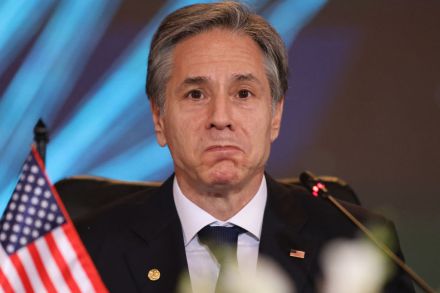
At the time of the Afghanistan withdrawal, Biden administration officials said behind closed doors that secretary of state Antony Blinken and national security advisor Jake Sullivan “don’t give a fuck” about rescuing Americans from the clutches of the Taliban. The admission came on a late August 2021 phone call held between the Department of Defense and congressional Democrats, based on The Spectator’s review of contemporaneous text messages. During the conversation, a Pentagon official acknowledged in response to frustration from Democrats that two of the senior-most officials working on the evacuation — Blinken and Sullivan — were indifferent to the plight of their fellow Americans.

afghanistan kabul

The never-ending War on Terror

Twenty-two years ago today, the United States experienced its worst terrorist attack in history. It was a life-changing moment for tens of thousands of Americans, particularly those in the New York metropolitan area who saw two of the city’s most iconic buildings reduced to smoldering heaps of rubble and ash. The Pentagon, a stoic building across the Potomac River from our capital, saw one of its sides destroyed. About 166 miles to the northwest, another hijacked plane went down in rural Shanksville, Pennsylvania. By the time that horrible day was over, nearly 3,000 people had lost their lives. The country’s entire being was shaken to the core. Americans, particularly those in New York and Washington, DC, felt more vulnerable than they had in years. For President George W.

terror

The Biden admin was prepared to leave our Afghan allies behind

The administration’s utter failure to plan for the inevitable Afghanistan evacuation meant that it had barely enough resources to focus on getting (some) US citizens out of the country. If the government was the only actor calling the shots — normally standard procedure in war zones, to say the least — then the tens of thousands of Afghan allies who had risked their lives based on years-long US promises of loyalty would be on their own.  Colonel Seth Krummrich, a twenty-two-year Green Beret who served as the chief of staff for Special Operations Command Central (SOCCENT) during the withdrawal, told us that US special forces had had just enough capacity to rescue Americans stranded across the country, but evacuating SIV applicants was simply beyond their bandwidth.

afghan allies biden

John Kirby’s Clean-Up on Aisle Kabul

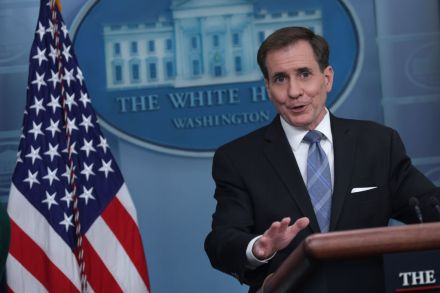
I almost feel sorry for John Kirby, the National Security Council spokesman tasked with tidying up after the icky messes deposited about the landscape by Joe Biden.  Let me emphasize the adverb “almost.” Kirby’s job is unenviable. Basically he has to lie and pretend that his boss and that excruciating, illiterate muppet of a press secretary, Karine Jean-Pierre, make sense. It’s always a horrible goulash that Kirby has to contend with. He has my sympathy for that.  But yesterday, when Kirby stood before the press to answer questions about the administration’s report on Ameirca’s humiliating flight from Afghanistan in August 2021, his performance was not just cringe-making. It was infuriating.

john kirby afghanistan

How Afghanistan erred by thinking Biden would never leave

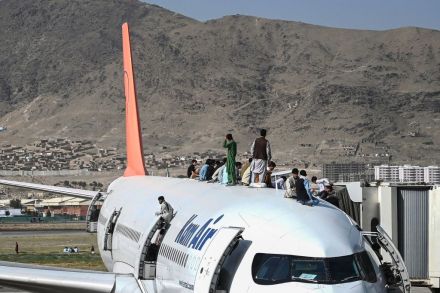
By now, the American troop withdrawal from Afghanistan is etched into history as a failure — one that punctured the Biden administration’s self-professed persona as a collective of calm and cool national security veterans. The Taliban’s rapid capture of the entire country, coinciding with the meltdown of the US-funded Afghan security forces and the awful optics of desperate Afghans trying to get on a flight out of Kabul, will be examined by historians for decades. The history-writing is already well underway. On February 17, the GOP-held House of Representatives sent letters to several government departments demanding any and all records related to the withdrawal.

Trump is wrong that the US should negotiate peace in Ukraine

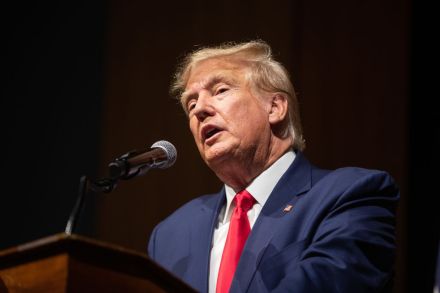
The GOP’s foreign policy doves and soft isolationists have grown stronger, with 40 percent of “Republican and Republican-leaning independents” saying the US is giving too much aid to Ukraine. Former president Donald Trump has now taken up the mantle of this movement, firmly anchoring himself to the anti-Ukraine aid faction of the party. Trump recently gave an interview to radio host Hugh Hewitt in which he made one thing clear: he’s no fan of aiding Ukraine. Asked about sending F-16s, Trump said, “I think the United States should negotiate peace between these two countries, and I don’t think they should be sending very much.” When Hewitt asked if the former president would cut aid to Kyiv, Trump responded, “we’ve got to make peace.

One year later, Biden is right to have left Afghanistan

A year ago today, the Taliban captured the northern Afghan city of Kunduz, dealing the US-supported Afghan government an embarrassing blow and setting in motion a blitz across the country that would eventually send Afghan President Ashraf Ghani and his closest aides into exile. A week later, Taliban fighters entered Kabul virtually unopposed. American forces would leave the country two weeks later, cutting the cord on a two-decade war that cost the US over $2 trillion and tens of thousands of casualties. "We succeeded in what we set out to do in Afghanistan over a decade ago,” President Biden said from the White House last August 31. "Then we stayed for another decade. It was time to end this war.” Much has changed since the troops left.

The Taliban’s rough year in power

Next month will mark the first anniversary of the Taliban’s second stint in power in Afghanistan after a twenty-year insurgency against the US-backed government. In August 2021, Taliban fighters, flush with captured American military equipment and the jubilation of victory, were openly walking the streets of Kabul. While the disgraced Afghan president, Ashraf Ghani, was preparing for a life of exile in the United Arab Emirates, Taliban officials were converting his offices into their headquarters. The Taliban’s first year in power, however, hasn’t been pretty. The group has quickly come to understand that administering a poor and faction-prone country is a lot more difficult than taking up arms against a deeply unpopular, corrupt, foreign-dependent government.

The Taliban’s Afghanistan quagmire

Hibatullah Akhundzada is a secretive man who is only occasionally heard and seldom seen. But on May 1, the Taliban’s supreme leader was delivering a sermon in Kandahar’s central mosque, bragging about his organization’s supposed successes. “Congratulations on this victory, freedom and success,” said the reclusive Akhundzada, surrounded by armed bodyguards. Nine months after the Taliban captured Afghanistan and forced the hapless Ashraf Ghani to flee the country in a helicopter, its chief official remains content with relishing the past. But truth be told, the Taliban has nothing to brag about.

Remember Afghanistan?

For Americans, neglecting Afghanistan has long been the norm. Almost from its inception, it was the forgotten war, fought “over there so we do not have to face them” here, as President George W. Bush once put it. It was a campaign to crush the Taliban only to abruptly become a democratic nation building project and then just as quickly be sidelined for the “real war” in Iraq. Even as far back as 2009, when the United States still had 62,000 troops in the country, David Folkenflik, NPR’s media correspondent, was asking, “Hey, Media: Where’s the Afghanistan Coverage?” This all appeared to change last August — at least for a time.

Biden’s State Department is a laughingstock

Last week, the State Department learned that twice this summer China had tested a new hypersonic missile weapon with nuclear capabilities. According to the Financial Times, the rocket employed a “fractional orbital bombardment” that also had the guidance ability to “glide” around the earth in orbit. The test reportedly stunned the Biden administration, and comes on the heels of a string of embarrassing global events for the US, including the fall of Afghanistan and Russia opting not to raise natural gas supplies to Europe after the completion of the Nord Stream 2 pipeline. Secretary of State Tony Blinken reacted with a series of “deeply concerned” letters. The State Department had once again been caught flat-footed. But fear not: Blinken has his priorities straight.

state department

The Taliban learn just how hard governing Afghanistan is

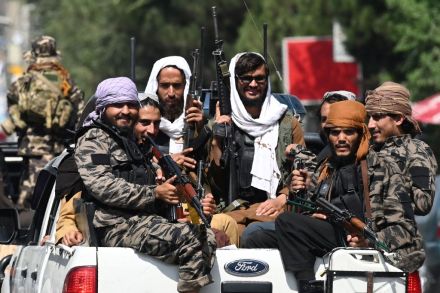
For the first time in two decades, and arguably for the first time since the late 1970s, there is a semblance of calm in Afghanistan’s countryside. The US troop withdrawal last August, ending Washington’s 20-year misadventure in the country, has ushered in a period when airstrikes, IEDs, and Taliban-orchestrated bombings are no longer daily facts of life. Afghans who haven’t seen their relatives for years are now able to travel the roads without worrying about getting menaced by Taliban gunmen or fleeced by corrupt Afghan army troops. At the same time, Afghanistan is at a perilous moment in its history.

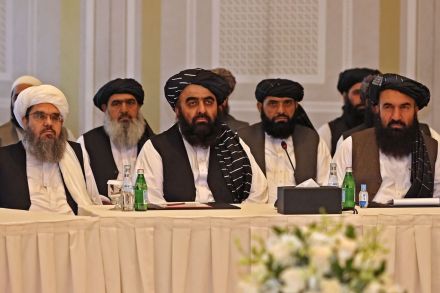
taliban

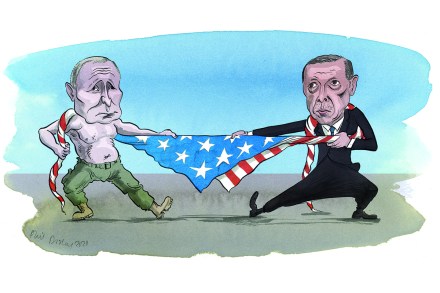
History returns for Putin and Erdogan

Washington’s allies are deploring the Biden administration’s mismanaged withdrawal from Afghanistan, and they’re worrying publicly about its implications for Nato. Russian leaders, resisting the urge to gloat, express well-founded concerns over the spread of jihadist terrorism northward into Central Asia. And China is moving in, cutting deals with the Taliban to mine lithium and other critical minerals. The reaction in Turkey has been more ambiguous, but also more interesting. Early in the evacuation, Turkey sent soldiers to Kabul to secure the airport. It is already clear that Turkey’s Islamist government is ready to recognize and work with the Taliban — while also loudly discouraging Afghan refugees from trying to enter Turkey.

turkey

Will Biden deal with the Taliban?

When President Joe Biden tapped longtime aide Antony Blinken to be his secretary of state last November, Blinken landed his dream job. Here he was, a man widely respected in foreign policy circles, continuing the family business (his father and uncle were both ambassadors and his stepfather was an adviser to John F. Kennedy). What Blinken could have lived without, however, was the grandstanding, bravado and livid speeches from lawmakers responsible for overseeing his work. Unfortunately, fielding self-righteous questions is a part of the job description.

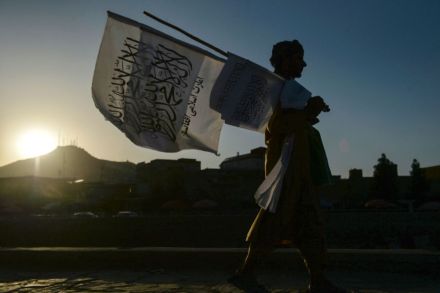
taliban

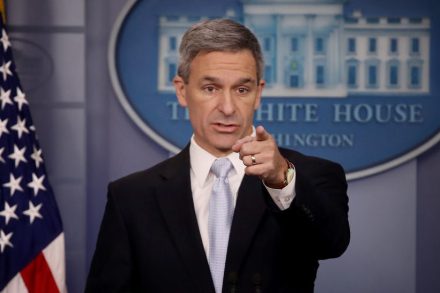
Ken Cuccinelli: Afghans flown to US ‘not being vetted’

Former deputy secretary of Homeland Security Ken Cuccinelli said Thursday that the United States has flown in thousands of Afghan nationals that have not been properly vetted in the aftermath of the military withdrawal of Afghanistan. According to data published by the Washington Post, 23,876 'at risk' Afghans have already arrived in the US out of the more than 120,000 individuals that were evacuated from the Kabul airport. Cuccinelli explained during an interview on WMAL's O'Connor & Company that these individuals are being 'paroled in' to the US because there has not been enough time to conduct a thorough security screening and confer them legal status. 'They're not being vetted. They're being what's called "paroled" in,' Cuccinelli said.

ken cuccinelli
taliban

The Taliban didn’t beat America. Afghanistan did

The late Edward Said invented, or at least brought into vogue, the notion of Orientalism. For a time this became the big boo word in academia, a handy phrase for casting a variety of writers, ranging from Jane Austen to Charles Dickens to Joseph Conrad, into the abyss for their putative imperial cast of mind when it came to depicting the inhabitants of the further reaches of the British empire. But soon enough, as a recent and lengthy erudite review in the London Review of Books noted, Said apparently found himself accused of the very same sin by the cultural revolutionaries that he had exposed. It turned out that the founder of Orientalism was (gulp) an Orientalist. My, my.

Joe Biden’s victory lap around Afghan defeat

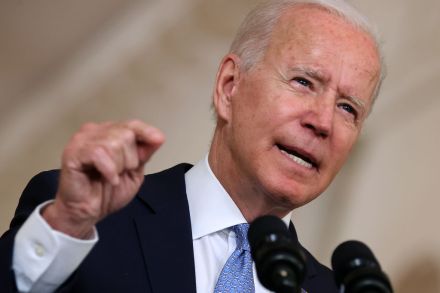
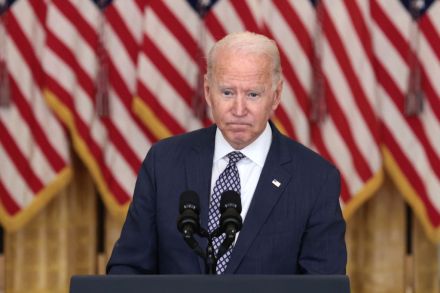
President Biden walked to the White House podium on Tuesday and proclaimed the US withdrawal from Afghanistan an ‘extraordinary success’. He relied on the unanimous advice of military leaders and strategic advisers for these wise decisions. If there were any failures, they were due to Donald Trump. Never in history, he said, had there been such a successful airlift. Of the Americans who wanted to leave, we got out an amazing 90 percent. Surely that’s a success all around, despite the collapse of the Afghan army, which nobody expected. Of course, as a far-sighted leader, Biden said he had ordered plans for that, too.

biden

Who lost Afghanistan?

America's longest war draws to a bloody end. As the pullout deadline approaches, the probability of more atrocities like the suicide bombing last Thursday that killed 13 of our troops, and more than 90 Afghans, remains nauseatingly high. The American public was ready for us to leave Afghanistan. It was not prepared for just how ugly leaving could be. President Biden bears responsibility for the lives lost, just as he bears responsibility for those lost throughout the course of this conflict and the similarly ill-premised Iraq War — both of which he helped to launch while he was in the United States Senate. He has made grave mistakes. One mistake he has not made, however, is to waver from the decision to withdraw. He has not let terrorists change our timetable.

press

Stephen Miller: here comes the Afghan refugee crisis

The rapid takeover of Afghanistan by the Taliban has potentially dire consequences for Afghan women and children. The Islamist group was able to commandeer sophisticated US weaponry and other military equipment during our poorly-planned troop withdrawal. And so Americans have been primed to cheer the arrival of planes carrying thousands of Afghan refugees, who we are told would otherwise be executed by the Taliban, into the United States. But what are the long-term consequences of rapid refugee resettlement? Could this present a risk to national security? How will this effect Americans economically or culturally?

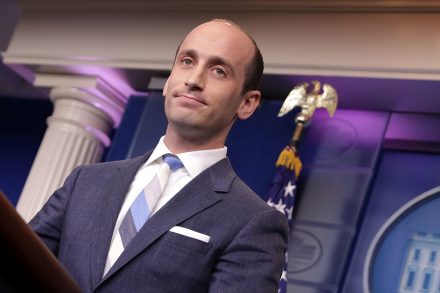
Former White House Senior Advisor Stephen Miller (Getty Images)