Taiwan

The Baltic nations show the world how to defend freedom

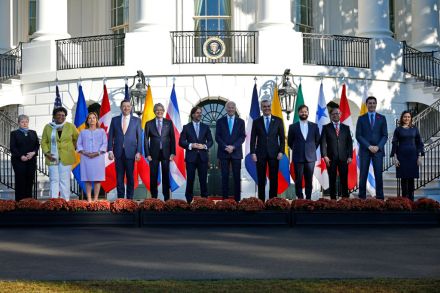
It is not inevitable that the Baltic States of Estonia, Latvia, and Lithuania would be among freedom’s most potent defenders. Nestled between the Russian mainland and Moscow’s exclave of Kaliningrad, their only direct connection to their NATO allies is through the vulnerable Suwalki Gap. For its part, NATO only has small rotational forces stationed in the three countries. At first glance, one would expect these tiny nations (Lithuania is the largest at 2.8 million people) to prefer flying under the radar. Instead they have become some of the most vocal and powerful defenders of the Western way of life. Tiny though they may be, the Baltic countries have managed to stand up to the two greatest enemies of freedom at work today, Russia and China.

Japan’s defense revolution

You don’t need to be an Asia specialist to recognize that China is undergoing a significant military modernization campaign. China’s leader, Xi Jinping, and the Chinese Communist Party are seeking to transform the People’s Liberation Army (PLA) into a world-class military by 2049, and complete the development of the military platforms, capabilities, enablers, and amphibious weapons systems necessary for a potential Taiwan contingency by 2027. Beijing’s defense budget rose by 139 percent between 2010 and 2020.

How to survive the ‘permacrisis’

Are we in a permanent state of crisis? The Britain-based lexicographers at the Collins Dictionary think so. Last month they chose “permacrisis” as their word of the year. Defining the neologism as “an extended period of instability and insecurity,” Collins explained that their selection “sums up quite succinctly how truly awful 2022 has been for so many people.” It’s easy to see why the word has particular resonance for the Brits, now onto their third prime minister this year. But the sense that we are stuck in an endless cycle of crises is a global one. As 2022 draws to a close, the world faces a daunting set of overlapping disasters.

permacrisis

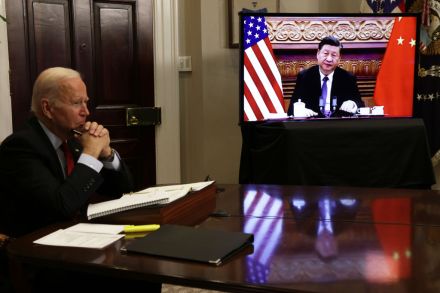
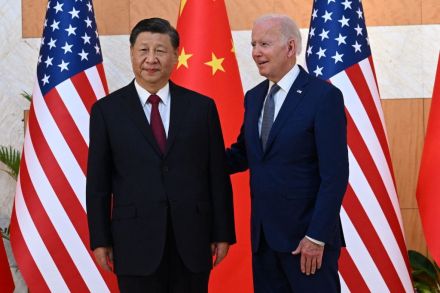
The Biden-Xi meeting was long overdue

The bilateral relationship between the United States and China is arguably the most important in the world today. The two countries make up approximately 42 percent of the world’s economic output and more than half of global military expenditure (at $801 billion, the US share of that total dwarfs China’s). The Biden administration’s recently released National Security Strategy names China as "the only competitor with both the intent to reshape the international order and, increasingly, the economic, diplomatic, military, and technological power to do it." The central objective from Washington’s standpoint is to compete vigorously with Beijing, prevent China from attaining hegemonic status in the Asia-Pacific, and ensure this competition doesn’t slide into conflict.

America’s military isn’t ready for a war with China

China’s 20th Party Congress concluded on October 23, and President Xi Jinping secured a norm-breaking third term as leader of the Chinese Communist Party (CCP). With the Politburo Standing Committee stacked with close confidants and dissent virtually wiped out, Xi is the strongest he has ever been. Xi has also redoubled the Party’s commitment to taking the island of Taiwan, by force if necessary. Secretary of State Antony Blinken recently said that China “was determined to pursue reunification on a much faster timeline.” The alarm has been repeatedly sounded by American military officials, with speculation that a Chinese invasion of Taiwan could occur as soon as 2023.

Welcome to the age of nuclear blackmail

Vladimir Putin’s recent announcement that he was not bluffing about using nuclear weapons against the West in his war on Ukraine is one of the strongest indications yet of the risks the liberal world now faces in opposing authoritarian aggression. In the face of Russian aggression, or in committing the United States to defending Taiwan, as President Joe Biden did yet again recently, Washington and its partners face the possibility of direct confrontation with the world’s most powerful, nuclear-armed militaries. For the first time in a generation, Western powers risk being checked by adversaries willing to threaten massive conventional and nuclear warfare. The era of cost-free intervention to uphold the liberal world order is over.

nuclear

Keeping up with the Pelosis

As Cockburn scrolled through the gossip about Kim Kardashian's latest breakup (this time with Pete Davidson), he couldn't help but think of her show, a sloppy soap opera/reality TV series where drama runs with tear-stained makeup. Sound familiar? Cockburn couldn't help but think of Speaker of the House Nancy Pelosi. After all, lately there's been enough drama in her family to fill at least three seasons of runtime (at a conservative estimate, of course). Pelosi, having successfully returned home from her long-awaited trip to Taiwan, is now engaging in another slap-fight with Xi Jinping. In an interview on NBC’s Today, she said of the trip, “Yes, it was worth it,” and “[Xi] is in a fragile place...he’s acting like a scared bully.

Trump at CPAC Texas: America should kill drug dealers like China does

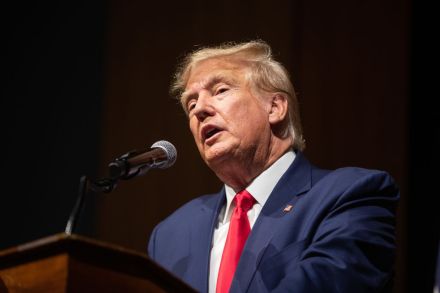
Donald Trump headlined CPAC Texas, delivering a series of broadsides to the Biden administration to a packed arena at Dallas’s Hilton Anatole. The more than 2,500 seats were filled — with even more guests lining the aisles. Donald Trump Jr.’s girlfriend, Kimberly Guilfoyle, was supposed to introduce the 45th president — but found herself bumped at the expense of Arizona gubernatorial candidate Kari Lake, for reasons that remain unclear. Prior to the former president’s speech, a short film played on the large TV monitors. “We are a nation in decline,” a Trump voiceover began. “We are a failing nation.” Gloomy black-and-white footage followed, accompanied by thunder and rain sounds. A screenshot of Trump’s suspended Twitter account was perhaps the most moving image.

trump

What has Pelosi’s Taiwan trip wrought?

In becoming the highest-ranking American politician to visit Taiwan in a quarter-century, House Speaker Nancy Pelosi has become the dominant foreign affairs news story of the month, eclipsing, if briefly, Russia’s war in Ukraine. Yet beyond all the sound and fury, Pelosi’s trip changed nothing in the cross-Strait balance of power. What it did was to legitimize the “mission creep” bringing Taiwan and America closer together. Both supporters and critics of the trip were quick to invest Pelosi’s visit with major symbolic significance.

Pelosi is right to put China on notice

House speaker Nancy Pelosi has always had a flair for the dramatic. During the Trump presidency, for example, she ostentatiously tore up his State of the Union speech. But for sheer spectacle, it will be hard for Pelosi to top her “will she, won’t she” visit to Taiwan this week. In spite of the suspense, there was never really any doubt about it. For weeks China has issued dire warnings about the perils of her visit. So, as it happens, have several commentators, including The Spectator’s Freddy Gray, whom I debated on the Americano podcast, and who seems to have a bad case of the collywobbles about the Pelosi trip.

Pelosi’s visit to Taiwan is about politics not diplomacy

The Biden administration is increasingly concerned about a trip to Taiwan next month by House Speaker Nancy Pelosi. And they should be. The visit is pointlessly provocative for little gain. Pelosi would do well to remember the Chinese proverb: "Always know if the juice is worth the squeeze." The domestic political juice is charm points for Pelosi from her large, pro-Taiwan constituency back home as she runs for reelection. A third of Pelosi’s congressional district is Asian-American and taking on Big China has long been a major part of her political identity. She, for example, made a public show out of meeting with pro-democracy protesters from Hong Kong and urging a boycott of the 2022 Winter Olympics in Beijing.

2022 Biden contradicts 2001 Biden over action in Taiwan

Cockburn is not one to point fingers (as they are often preoccupied with his cigar), but he finds himself making an exception for President Biden over his apparent U-turn on the issue of the United States using military force to help defend Taiwan against China. Tyler Cowen, an economics professor at George Mason University, just unearthed a 2001 Washington Post op-ed then-senator Joe Biden wrote dissenting from President George W. Bush’s stance that the “United States had an obligation to defend Taiwan if it was attacked by China.” Biden wrote that “words matter,” and that Bush’s extreme language had "damaged US credibility with our allies and sown confusion throughout the Pacific Rim.” Speaking of confusion...

What Ukraine means for Asia

If Asia has entered the debate over the war in Ukraine, it is primarily through questions over the role China is purported to be playing in supporting Russia. Given the now-infamous declaration of a “partnership without limits” by Vladimir Putin and Xi Jinping during the Beijing Olympics just weeks before the invasion, many observers have searched for signs of Chinese aid, military or economic, to Russia in the conflict. The scope of devastation in Ukraine and the probable war crimes being committed by Russian troops understandably mean less attention has been paid to how the conflict might affect geopolitical stability in the Indo-Pacific region. The exception is Taiwan — there has been considerable speculation over the influence of Ukraine on Beijing’s calculations there.

asia

What does Ukraine really mean for Taiwan?

No one should think that Vladimir Putin’s invasion of Ukraine means that Xi Jinping will decide to use force against Taiwan anytime soon, if ever. China is not Russia, nor Taiwan Ukraine. Yet neither should policymakers presume that Beijing will not be influenced by what happens on the other end of Eurasia. Washington must consider whether and how Putin’s aggression has raised the stakes in defending Taiwan from the People’s Republic of China. At the least, US strategists will seriously have to assess whether a global environment in which norms of international behavior are regressing may serve to spur Beijing to military action that once seemed unlikely.

taiwan

No, China isn’t about to invade Taiwan

I have a medal for winning the Cold War. And I'm not alone — they were awarded to all members of the military and federal civilian employees who served during the Cold War. That included me, at the tail end, with the State Department. Ironically, my so-called Cold War service was in Taiwan. I probably should return the thing; the Cold War is far from over. Part of the Cold War's real conclusion is playing out in Ukraine in real time. Is Taiwan, another hanging chad from that era, next? Is President Xi watching a weakened America giving in to the Russians and seeing his chance to seize Taiwan? Nope. Taiwan is not Ukraine is not Taiwan. The two places only exist next to each other in articles like this one because both are the results of American policy.

The NFL bends the knee to China

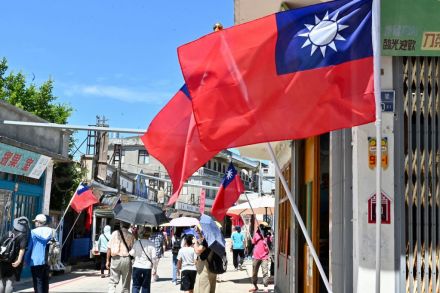
The National Football League is the latest American sports league to cave to Chinese interests while pushing woke policies at home. The league announced Wednesday that it was expanding internationally by allowing eighteen of its thirty-two teams to market abroad. However, a map detailing the marketing agreement labeled Taiwan as part of China. Taiwan considers itself an independent country, but China has been aiming to take control and considers Taiwan one of its many provinces. In 2018, China demanded that international companies list Taiwan as a Chinese province or risk losing the ability to do business in China. The NFL has clearly accepted this attempted power grab in exchange for being able to market its games and merchandise in China.

NFL commissioner Roger Goodell (Getty Images)

Talking turkey with William F. Buckley Jr. on Quemoy

Sixty years ago, as a college student, I spent Thanksgiving on the island  of Quemoy off Formosa (as Taiwan was still called) eating Taiwanese turkey with Taiwanese generals, William F.  Buckley, Jr.  and chopsticks. Present-day college students — or even their parents — may not have heard of Quemoy — or its twin island, Matsu — until now. Or even Buckley, the highly articulate founder of modern conservatism, for that matter. Xi Jinping has been taking a hard and measured look at President Biden and our Department of State since last March when the Chinese Communist Party had Andrew Blinken and Jake Sullivan all but kowtowing to the CCP’s foreign affairs chief, Yang Jiechi, at a summit in Anchorage, Alaska.

quemoy

Biden’s State Department is a laughingstock

Last week, the State Department learned that twice this summer China had tested a new hypersonic missile weapon with nuclear capabilities. According to the Financial Times, the rocket employed a “fractional orbital bombardment” that also had the guidance ability to “glide” around the earth in orbit. The test reportedly stunned the Biden administration, and comes on the heels of a string of embarrassing global events for the US, including the fall of Afghanistan and Russia opting not to raise natural gas supplies to Europe after the completion of the Nord Stream 2 pipeline. Secretary of State Tony Blinken reacted with a series of “deeply concerned” letters. The State Department had once again been caught flat-footed. But fear not: Blinken has his priorities straight.

state department

The sleepwalkers

It is customary for presidencies to lose vitality and purpose in their last months. It is unprecedented for a presidency to lose its way in its first year, and when it still holds a majority in both houses of Congress. The Biden presidency has donned Jimmy Carter’s cardigan of shame in only nine months. If, that is, it ever was the Biden presidency. It was sold from the get-go as the ‘Biden-Harris presidency’. Double-barreled names are an inveterate mark of snobbery, and in this case the snobbery is that of the higher tokenism. Even the Democrats’ own members didn’t want Harris on the card in 2020. Harris’s symbolic merits as a woman of color seem to have been outweighed by her blatant falsity and opportunism.

biden

Taiwan could spark a war between America and China

Some time between now and the next 10 years war between the United States and Communist China is certain. The only questions are when and how it will start — and how many millions of people will die. Why would I dare make such a bold prediction? Simple. History has conspired to create the perfect mix: trillions of dollars in trade up for grabs, a geopolitical rivalry, military tensions, bad blood, competing national egos and a quest for tech dominance. Washington and Beijing seem on the way to a world war the likes of which mankind has never before seen. And the most likely spark for this war is Taiwan.

taiwan china