Syrian civil war

The jihadist I knew: my life as al-Sharaa’s prisoner

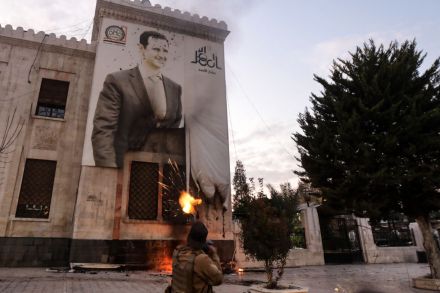
As Washington rolls out the red carpet today for the former al-Qaeda chieftain and now Syrian president, Ahmed al-Sharaa, Syria’s minorities continue to live in terror. An army of destruction, half Mad Max, half Lollapalooza is rolling through the desert somewhere south of the country’s capital, Damascus. Who has ordered these militants into action? No one knows. What do they want? It isn’t clear. But, as a former prisoner of al-Sharaa’s band of jihadists, I can’t say I’m surprised by what is unfolding in Syria. Whatever else might be said about the old regime of Bashar al-Assad, no one was ever in doubt as to who was in charge.

Why Trump met Syria’s interim president

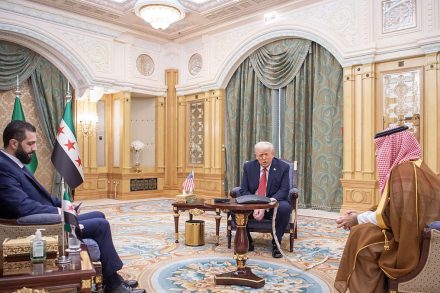
Few career arcs in modern history can be as remarkable as that of Ahmed Hussein al-Sharaa – or Abu Mohammed al-Jolani, to give him the nom de guerre under which he fought American troops in Iraq back when he was a firebrand member of al-Qaeda. Twenty years ago al-Sharaa was languishing in a US military prison in Baghdad, held on suspicion of terrorism. Today, as Syria’s new interim President, he shook hands with Donald Trump posing for photo-calls alongside the de-facto ruler of Saudi Arabia Mohammad bin Salman. Trump was evidently impressed by al-Sharaa, who has swapped the turban and dusty fatigues that he habitually wore before taking Damascus by storm last winter for a plain blue suit and purple tie. “He’s a young attractive guy.

al-sharaa

Will the Syrian Civil War create another ISIS?

From our UK edition

There are unintended consequences, and then there are unintended consequences. What we are seeing in Syria, as Aleppo and Hama fall (and Homs braces itself) to a coalition of anti-regime forces whose DNA is to be found in al-Qaeda et al, is an unintended consequence of Israel’s bombardment in Syria of Iran-funded pro-Assad groups, and the pulverising of Hezbollah in Lebanon. An unintended consequence of the weakening of Iran and its Axis of Resistance. For the three pillars on which Bashar al-Assad props up (for the time being) his murderous kleptocratic narco-state – Iran, Hezbollah and Russia – are, respectively, on their ‘best’ behaviour in the hope of talks with the US, broken, or extremely distracted.

The Middle East catches diplomacy fever

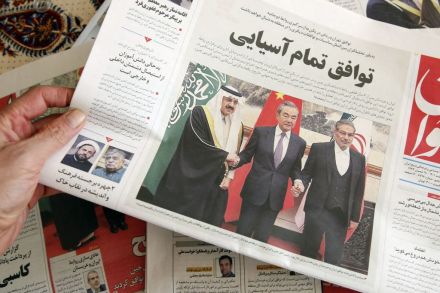
Peace isn’t exactly blossoming like rosebuds in the Middle East. The region is still host to a devastating civil war in Yemen, a humanitarian crisis in Syria, sporadic terrorist attacks in Iraq and an endless tit-for-tat between the US and Iranian-backed militias in Iraq and Syria. Indeed, just last night, President Biden authorized several airstrikes against three militia locations in retaliation for a drone attack on an American base in Syria that killed one contractor and injured six others. But for an area of the world so often regarded as hopeless, the Middle East is suddenly looking like an epicenter of diplomacy.

syria peace

Down with the ‘Third World War’ doomsayers

Some people are always telling you that the world is soon to end. In the old days many of them would wear sandwich boards describing near-term doom, and not wash. Now, their cousins in the environmental movement glue themselves to oil refineries and don’t shave. In each case, they drip with urgency. The oceans will boil, the land will burn. Your children will fry. Or, alternatively, the Lord will return and take only the righteous to their reward. Be afraid and confess, before it is too late. Public life has these people, too, for this tendency is quite universal. Financial doom-mongering is a profitable little side-line for some economists. The great crash they predict is always upcoming.

world war three

Spare a thought for Syria during the coronavirus crisis

From our UK edition

There is no place on earth less prepared for a coronavirus outbreak than a Syrian refugee camp. In hindsight, the deliberate targeting of homes and hospitals in Idlib, displacing over a million people from their houses, seems even more heinous now that it has left north west Syria utterly defenceless to the impact of the virus. The only saving grace is that the hell-on-earth created here by the brutal Idlib campaign means that very few people are incentivised to visit and bring the disease with them. While the regime-held south confirmed its first case on Sunday, there are a few suspected cases in the rebel-held north west, but virtually no ability to test and confirm, thanks to the wholescale and deliberate destruction of healthcare services in Idlib.