Syria

Just Give War A Chance: Obama’s Realpolitik Approach to the Syrian Civil War.

From our UK edition

Boris Johnson makes a strong case in today's Telegraph that even if the west wanted to intervene in the Syrian civil war the point at which is was plausible to do so has long since passed. The benefits of intervention no longer outweigh the risks. Meanwhile, Paul Goodman reiterates that there's no obvious British national interest in intervening. It is difficult to disagree with either analysis. Across the Atlantic, meanwhile, Andrew Sullivan is appalled by the Obama administration's decision to offer a modest quantity of modest weaponry to the Syrian opposition. This isn’t just unwise; it’s close to insane, he suggests. Don't be fooled into thinking this will shorten the conflict or save lives, he argues.
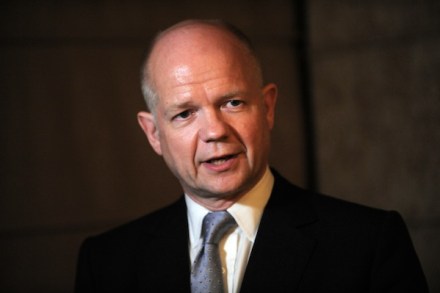
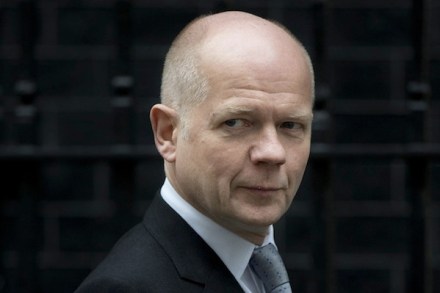
William Hague: There are ‘no palatable options’ in Syria

From our UK edition

While the G8 begins today with splits already clear on Syria, David Cameron will be aware, as he sits down for talks with world leaders, that the splits in his own Parliament are becoming increasingly vocal. It's not just Boris Johnson's column in today's Telegraph in which the Mayor of London warns that 'we won't get a ceasefire by pressing weapons into the hands of maniacs'. Tory MPs have started openly discussing the lack of support for arming the rebels. Johnson's intervention could be read by some as yet another attempt to undermine the PM who appears to be considering arming the rebels out of a deep personal conviction, given he commands very little support even within his own party on this. But it also underlines what a quagmire this situation is.

Cameron wants to change the military balance in Syria, but how do you do that without arming the Islamists?

From our UK edition

David Cameron and Vladimir Putin have just concluded their pre G8 talks, the main topic of which was Syria. Cameron wants to use the next few days to try and persuade the Russians to stop backing Assad; the weapons they’ve been sending him have enabled him to gain the upper hand on the rebels militarily. Cameron instinctively wants to do something about the slaughter in the Levant for both strategic and moral reasons. As one figure intimately involved in British policy making on Syria told me earlier, ‘The one certainty is that, if nothing is done, not only will lives be lost, not only will Assad not negotiate, but we will also not stop radicalisation.

Will Parliament get a vote on Syria? PM says ‘basically yes’

From our UK edition

David Cameron is far more optimistic than Nick Clegg about arming the Syrian rebels: that much has been clear for a while. He explained why he's optimistic on Sky's Murnaghan programme this morning, arguing that if the West doesn't work with the 'good' rebels, then the 'bad' rebels will have more of an opportunity to flourish. He said: 'I want to help the Syrian opposition to succeed and my argument is this: yes there are elements of the Syrian opposition that are deeply unsavoury, that are very dangerous, very extremist and I want nothing to do with them. I'd like them driven out of Syria. They're linked to al Qaeda.

UK finds ‘credible evidence’ for chemical weapons in Syria. But is there a credible case for arming the rebels?

From our UK edition

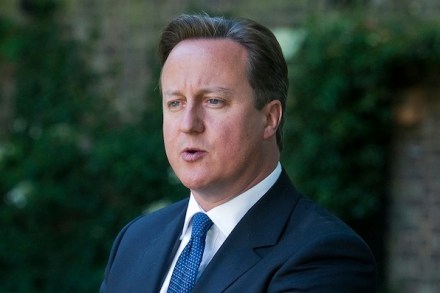
David Cameron was pressed on Barack Obama's decision to give assistance to the Syrian rebels when he spoke to journalists in the Downing Street garden this afternoon. He gave a long answer, the transcript of which you can read at the bottom of this post, along with the audio. But here are the key points on the Prime Minister's current thinking on Syria. 1. He agrees with the American stance. He told the press conference: 'I think it is right that the Americans have said what they have said and I wanted to back that up with the information and the involvement that we've had in that assessment.' That included Britain seeing 'credible evidence of multiple attacks using chemical weapons in Syria'. But this is as much about America moving towards Britain's position on Syria.

After Obama’s intervention, will level playing fields in Syria become level killing fields?

From our UK edition

Now that Barack Obama has decided to arm the 'good' rebels in Syria, it's more likely than ever that Britain will follow suit. The G8 summit next week in Northern Ireland may well turn into a pre-war summit, which will certainly be interesting seeing as Putin will also be there. The Russians may respond by giving more arms to Assad and the level playing field may quickly turn into a level killing field. The Wall St Journal says that Obama has pretty much decided on a no-fly zone enforced by allied aircraft based in Jordan which will allow rebels to train. But which rebels? There are more than a dozen of them, some already fighting with each other.

Syria: Assad’s axis of evil

From our UK edition

A few days ago in northern Aleppo, 14-year-old Mohammad Qataa was shot dead by armed fighters who accused him of blasphemy. The Free Syria Army denied any connection to the savage act, calling it an act of ‘terrorism’ committed by rebels linked to al-Qaeda. This is not the first time that a Syrian civilian has been accused of insulting Islam. On March 21 the prominent Sufi scholar Sheikh Muhammad al-Bouti was assassinated inside a mosque in Damascus because of his views about the violence in Syria. The FSA has denied these attacks and so has the Assad regime. So who are these rebels shooting people and chopping off heads in the name of Islam? Some could be the very individuals that many in the west would like to arm.

Cameron wins PMQs… or does he?

From our UK edition

Well, that was an easy Prime Minister's Questions for David Cameron, wasn't it? Sometimes the PM just turns up for work and knocks it out of the park. It helped, of course, that for once he had his own team cheering him along, with backbencher after backbencher leaping up to ask loyal questions. The whips will be toasting a win in their office this afternoon. The Prime Minister had some very good retorts to Ed Miliband indeed. If Labour had a good week on welfare last week, the happy feelings will have evaporated today as Cameron managed to ridicule them not just on the detail of their spending pledges - while hinting that he's not quite as open to movement on pensions spending as she might have hoped - but also on their attitude.

A mass grave and a refugee camp for Syrians – Iraqi Kurdistan teaches that military intervention can work

From our UK edition

Two experiences stand out from my recent visit to the Kurdistan Region in Iraq: meeting refugees fleeing Syria at the Domiz refugee camp; and seeing a weeping son uncovering the body of his father, Mohammed Serspi, murdered by Saddam Hussein's regime in the 1980s. The first, a biblical tide of innocent humans cast out by a vicious dictator in 2013. The second is a single example from a multitude of evil which continues to wreak its effect decades on. The factor uniting these two experiences is Iraqi Kurdistan itself, whose very existence as a prosperous, free, secular place, and whose tragic history, shows just why dictators must be challenged. Whilst visiting the Domiz refugee camp, I shared David Cameron's pride in Britain's commitment to overseas aid.

Portrait of the week | 6 June 2013

From our UK edition

Home Patrick Mercer MP resigned the Conservative whip after being filmed in discussion with a fake Fijian firm that paid him £4,000 to ask parliamentary questions; he was in fact being investigated by BBC’s Panorama and the Daily Telegraph. Lord Cunningham and Lord Mackenzie of Framwellgate were suspended by the Labour party after the Sunday Times filmed them discussing lobbying terms, and Lord Laird resigned the Ulster Unionist whip over the same matter. All the parliamentarians deny wrongdoing. Mike Hancock MP resigned the Liberal Democrat whip while he defends a civil case in which a woman constituent is alleging sexual assault.

We need to talk about Syria

From our UK edition

There can be little doubt that Britain is edging towards intervening in Syria. President Bashar Assad’s bloody ruthlessness seems to be paying off: his forces are retaking former rebel strongholds (the strategic town of Qusair was reclaimed this week) and the more he believes he can win, the less likely he is to negotiate. From a distance, there seems to be a case for the West to move quickly to help the rebels, and create a more level playing field. The aim would not be to prolong the conflict, but to make a negotiated peace settlement more likely. The Prime Minister made the case in the Commons this week.

Syria: What has changed to make western intervention a necessary or realistic policy?

From our UK edition

Peter Oborne is back in his David-Cameron-is-not-Disraeli-he's-mad mode this week. He accuses the Prime Minister of losing the plot over Syria. As always, the ghosts of Iraq stalk this debate even though the two problems are scarcely comparable. For that matter, I'm not sure it is fair on Cameron to suggest that, after Libya, the Prime Minister has become war-crazy. Yet I was also struck by something the estimable Tim Shipman reports today: Mr Hammond was recently present when backbenchers suggested that the Tory leadership could do with ‘a small war’ to distract attention from party discontent over Europe and gay marriage. ‘It had better be a very small war,’ the Defence Secretary said. Needless to say, this is a very silly way of talking. Even in jest.

What’s eating Turkey

From our UK edition

  Ankara ‘Islam, politics, economics — choose two’ is a great line, said by one of my Turkish students, and it would make a good exam question. Tayyip (the name means ‘very clean’ in Arabic — cf. ritual washing) Erdogan (meaning ‘strong hawk’, a Turkish nationalist reference) came to power in 2002 with a very good press. This was to be what the world wanted — a Muslim version of German or Italian Christian Democracy — and for years he gave it that. The rival parties destroyed themselves in silly bickering and corruption, and Erdogan’s party was very successful, with reforms in health and housing that improved the lives of ordinary Turks no end.

The Syrian quagmire

From our UK edition

What will it take before the UK decides to supply the Syrian rebels with arms? Many are cautious about whether this measure would really make the conflict any better, but William Hague has made it clear that he believes there is a strong case for at least threatening to do so. Further evidence of chemical weapons usage by the regime against the Syrian people suggested again this week that the 'red line' for action has definitely been crossed, but today Number 10 tried to spell out the thinking behind an apparent delay in acting. The Prime Minister's official spokesman said that the decision to not renew the EU arms embargo was part of a 'very clear, concerted approach that is designed to send a clear and unambiguous signal to the Assad regime.

Why Cameron’s warning on Syria leaves me feeling nervous

From our UK edition

David Cameron’s Commons statement today contained two blunt warnings. In a significant escalation of the argument over communications data, he warned that ‘we will suffer’ if we don’t make progress on the matter. He also declared that not intervening in Syria could boost extremism and mean that the situation there becomes a ‘tragedy for us too’. On communications data, I suspect that there’s a limit to how much progress he can make with his coalition partners. The vibe from the Clegg camp is that they have no desire to back down on this issue and feel that many of their critics are being opportunistic post Woolwich. However, it was Cameron’s warning on Syria—which I suspect will receive less coverage—that struck me more.

Is it time to aid Turkey’s protestors?

From our UK edition

Is it now time for William Hague to send money, and possibly arms, to the rebels now participating in what we might call a Turkish Spring? There have been violent demonstrations, clashes with police, petrol bombs thrown and the like. The protestors are largely from Turkey’s most secular cities and regions and include gay rights supporters, students, professionals, football supporters (?), women’s groups, journalists and the like. Their objection, principally, is the growing Islamification of what was, until comparatively recently, a proudly secular and fairly modern state.

Syria: when ‘red lines’ make the headlines

From our UK edition

What is a red line, exactly? We've been hearing a lot of talk about 'red lines' from our politicians in recent weeks in relation to Syria, chemical weapons, and western intervention. 'Red Line' has become a sort of post-Iraq diplomatic catchphrase. It translates, roughly, as  the 'point at which we, the West, will definitely — and we really mean it — intervene, so take us seriously, ok?' But where has it come from? Is it connected to 'redline', the mechanical word for the maximum engine speed at which an internal combustion engine can operate without overheating? Is it to do with the red laser lines that alarm systems use? The thin red line? 'Redlining' in Microsoft Word? Or has it actually been around for ages?

Does William Hague know what he is doing with Syria?

From our UK edition

A week or so after the murder of a British soldier by two psychopathic savages in Woolwich, the Foreign Secretary William Hague is back pleading with our European partners to help the murderers’ brothers fighting the jihad in Syria. I use the term ‘brothers’ a little loosely, sure; it is the term they would use. The photographs of one such jihadi chopping up and indeed eating a Syrian army soldier has not dissuaded Mr Hague from the view that these people are in the main peace-loving democrats who wish for nothing more than an agreeable secular state with the full panoply of human rights for all. He was not dissuaded of this by the jihadis eating people, or attacking Christians, or proclaiming their allegiance to Al Qaeda.

Ancient and Modern: the nature of war

From our UK edition

Syrians continue to slaughter each other, and seem eager to draw others into the conflict. Thucydides, the great Greek historian of the Peloponnesian War between Athens and Sparta (431-404 bc), would strongly resist. Thucydides starts by saying that he began his history because he expected the war would be ‘great and very well worth recording’. After assessing previous conflicts, he concludes that it was indeed ‘greater than all others’, but qualifies what he means by that: ‘there was suffering unparalleled on such a timescale... never before were so many cities captured and laid waste, never before were there such numbers of refugees nor so much slaughter, both in the war itself and as a result of civil strife.