Syria

David Cameron’s wars: How the PM learned to love precision bombing

From our UK edition

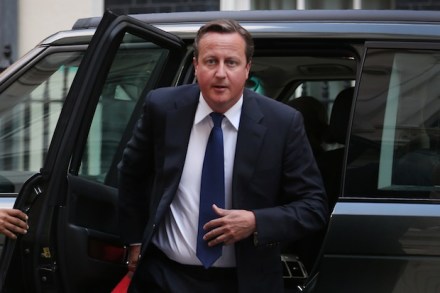
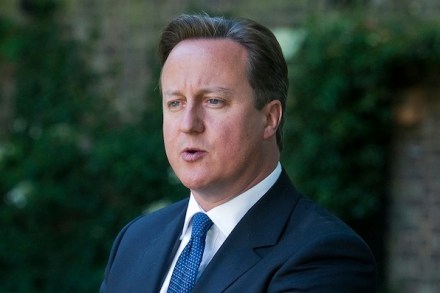
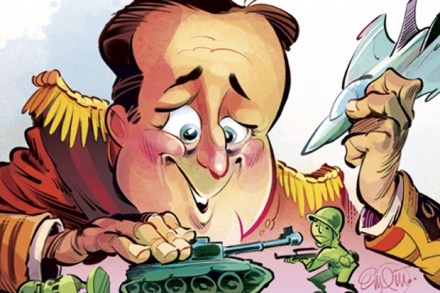
What is the one consolation for an MP who has beaten all their colleagues to the top job? It can hardly be the luxury of having your life, circle and income open to alternate snorts of envy and derision. Nor can it be the quagmire into which nearly all attempts to solve the nation’s domestic problems now fall.  Only one thing allows prime ministers of a country such as Britain to feel they have power. That is exercising it. And nothing exercises power more than deciding which wars to fight. In opposition, David Cameron did not much like the idea of war, and derided his colleagues for their admiration of Tony Blair. Yet in office — as Syria is revealing — he is treading a very similar path.
Cameron’s retreat on Syria vote: why it happened and what it means

From our UK edition

To be fair to David Cameron, he's not the only leader who's performed a volte-face in the past 24 hours. If you'd listened to Ed Miliband yesterday afternoon, you might have been forgiven for thinking that he was quite likely to support the government's motion on Syria, so long as it was and 'legal' and had specific and limited aims.

The Government’s motion on Syria – and Labour’s amendment

From our UK edition

Government motion: This House: Deplores the use of chemical weapons in Syria on 21 August 2013 by the Assad regime, which caused hundreds of deaths and thousands of injuries of Syrian civilians; Recalls the importance of upholding the worldwide prohibition on the use of chemical weapons under international law; Agrees that a strong humanitarian response is required from the international community and that this may, if necessary, require military action that is legal, proportionate and focused on savings lives by preventing and deterring further use of Syria’s chemical weapons; Notes the failure of the United Nations Security Council over the last two years to take united action in response to the Syrian crisis; Notes that the use of chemical weapons is a war crime under customa.

Labour to vote against government motion on Syria

From our UK edition

Ed Miliband has now confirmed that he will table a Labour amendment to the government's motion on Syria, demanding that the Prime Minister return to the Commons once the UN weapons inspectors have reported, thereby delaying the main vote on intervention. And Labour will vote against the government's motion. Whether you think this is a wise move from Miliband depends partly on whether you think he's as worried as some in the Conservative party are about the case for intervention, the lack of evidence and the legality of it, or whether you suspect that this is more about the problems supporting intervention outright would have caused a party still haunted by Iraq, and the lack of public support for military action.

Premature engagement in Syria is wrong for Britain

From our UK edition

The events in Syria are distressing. The pictures and reports of an alleged chemical weapons attack on innocent civilians with hundreds of dead and thousands suffering horrifying symptoms is alarming. The news footage is deeply disturbing and upsetting. It is natural to want to punish whoever did this – to demonstrate that the civilised world will not stand idly by while people are gassed indiscriminately. But because we are a civilised nation we need to stay calm, step back and establish what really happened. We need a thorough investigation and we need the facts. Not the ones that fit what we want to think or those that suit an agenda.

An improvement on Lord Finkelstein’s Syria analogy

From our UK edition

As Freddy Gray points out, Danny Finkelstein has wheeled out a very odd argument in the Times today (£), in favour of intervention in Syria. We are all subject to 'omission bias' says Finkelstein, and uses an example from Scorecasting, a sports psychology book — of the sort most bought by men who can't catch. Here's the example: 'Lets say there's a disease that kills ten in every 10,000 kids, and a vaccine that protects agains the disease, but kills five in every 10,000. Would you let the doctor inoculate your kid?' asks Finkelstein. The fact that most people say no, is an example of how prone to 'Omission Bias' we are. We'd rather not act if there's a risk, even if it would be rational.

Syria: why warnings about good men doing nothing won’t swing the debate

From our UK edition

Danny Finkelstein writes  in his column for The Times today that just because we are unsure about what the outcome and effect of any intervention in Syria may be, that is not reason enough to do nothing. Further to support his case for military intervention he suggested that those that argue against military intervention fail to grasp that the consequences of that approach are impossible to anticipate as well. In other words, quite possibly damned if you do and damned if you don't. Well I certainly agree with the latter point. I fully accept that I am no expert on the Syrian crisis, and the complexities of the region.

Should we really bomb Syria ‘for show’?

From our UK edition

'Syria won't go away if we just shut our eyes,' says the newly ennobled Daniel Finklestein, in today's Times (£). What he proposes instead is that we support the Prime Minister, then close our eyes and intervene. It is better to do something than nothing. Who knows what will happen? But at least we will have shown the bad guys that we mean business. (Don't let's talk about the other bad guys, for now, those heart-eaters on YouTube who will benefit if the West moves against Assad. That will only complicate matters.) What nonsense these liberal interventionists spout. Finklestein cites the Korean War as a reason to attack in Syria. 'The war was hugely unpopular and nearly resulted in disastrous military defeat,' he says.

How will the Tory whips handle tomorrow’s Syria vote?

From our UK edition

The government has yet to compose the motion that MPs will debate and vote on in tomorrow's Commons debate on Syria. And while some MPs are making clear that they are very nervous about the prospect of intervention, many others are yet to make up their minds. This means that as they return to Parliament today and tomorrow ahead of the debate (which starts at 2.30pm), they are sitting targets for the whips. There are some MPs like John Baron who are clear that they do not support intervention. Then there are a number of independently-minded MPs like Douglas Carswell and Sarah Wollaston who aren't worth much of a whip's time: it won't make any difference to how they cast their vote.

David Cameron and Barack Obama’s latest call on Syria – a readout

From our UK edition

David Cameron and Barack Obama spoke last night again about the situation in Syria. Below is a readout of the call from Number 10: 'The PM spoke to President Obama last night to further discuss the serious response to last week's chemical weapons attack in Syria. 'Ahead of today's NSC, it was an opportunity for the PM to hear the latest US thinking on the issue and to set out the options being considered by the Government. 'Both leaders agreed that all the information available confirmed a chemical weapons attack had taken place, noting that even the Iranian President and Syrian regime had conceded this. And they both agreed they were in no doubt that the Assad regime was responsible.

Audio: Cameron, Clegg and Miliband on Syria and what their statements tell us

From our UK edition

David Cameron, Nick Clegg and Ed Miliband this afternoon gave statements on Britain's response to the use of chemical weapons in Syria. There were important similarities between the statements which are worth examining. Here is what we learned: 1. The action must be legal. Miliband told the cameras after the meeting that 'when I saw the Prime Minister this afternoon I said to him that we the Labour party would consider supporting international action, but only on the basis that it was legal'. Meanwhile Clegg and Cameron both insisted that the measures being considered were legal. Clegg said: 'Any steps we will take will have to be legal. This Government, this Coalition Government, of course is not going to act outside the remit of international law'. 2. The action must be proportionate.

Michael Gove’s not-so-gentle reminder to Ed Miliband

From our UK edition

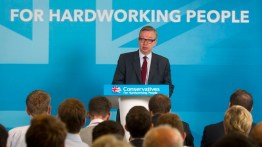
Surprise, surprise — Michael Gove doesn’t think much of Ed Miliband. To keep up the momentum on Labour's summer of discontent, the Education Secretary gave a speech at Conservative HQ this morning, focusing on Labour's troubled relationship with the trade unions — again. He was clearly enjoying himself as he compared the Labour leader's present position to two of the party's moderate forces: ‘And if anyone thinks I am asking too much I ask simply this - what would Blair do? Indeed, what would even Kinnock have done? ‘The sad truth is that - charming, intelligent, eloquent, thoughtful, generous and chivalrous as Ed Miliband may be - in this critical test of leadership he has been uncertain, irresolute, weak.

Breaking: Parliament will be recalled for a vote on Syria

From our UK edition

David Cameron has just confirmed that Parliament will be recalled on Thursday for MPs to vote on a government motion regarding the response to the chemical attacks in Syria. In reality, it would have been very difficult for the government to do anything else. But the question now is whether the statement that is offered to MPs is enough firstly to convince wavering coalition MPs of the case for intervention (and the case for the specific intervention chosen) and secondly to convince the Labour party not to whip its MPs against the vote: something Douglas Alexander this morning warned could happen.

How will Cameron consult Parliament on Syria?

From our UK edition

It would be a surprise if, when the Prime Minister and colleagues make their decision on consulting Parliament on intervening in Syria, they don't settle for some form of debate. An early day motion by Graham Allen demanding a recall of Parliament has swiftly accrued signatures from MPs of all parties, including Douglas Carswell, Stewart Jackson, David Davies, Graham Stuart, Philip Davies, Martin Vickers, James Gray, and Adam Holloway. But the question is how Parliament will be consulted. A vote on action would still be dangerous.

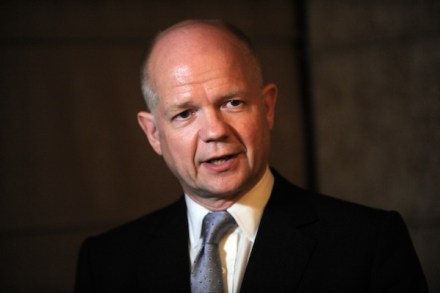
William Hague: We can act without UN security council unity

From our UK edition

William Hague is keeping his options open on Syria: not just on what the response will be to last week's chemical weapons attack, but on whether (and how) Parliament will be consulted on any intervention. What is clear is that there will be some form of response, regardless of whether the United Nations Security Council unites over what that response is. Hague said: 'So, is it possible to act on chemical weapons, is it possible to respond to chemical weapons without complete unity on the UN Security Council? I would argue, yes it is. Otherwise, of course, it might be impossible to respond to such outrages, such crimes and I don't think that is an acceptable situation.

Pressure grows for recall of Parliament on Syria

From our UK edition

David Cameron and his colleagues have made fairly carefully-worded pledges on whether or not Parliament should be consulted if the government starts planning for a military intervention in Syria. They could feasibly stick to the precise wording of those pledges this week without recalling MPs for a debate, but this will be a very difficult position to maintain as pressure is growing on all sides for a recall. Labour's Shadow Foreign Secretary Douglas Alexander said this evening: 'If, in reality, the Prime Minister is now considering military options involving UK personnel then of course I would expect him to seek a recall of Parliament and to come to the House of Commons and make his case in advance of a decision being made.' It's not just the opposition pushing for a debate, though.

Cameron and Obama warn Assad of ‘serious response’

From our UK edition

David Cameron spoke to Barack Obama yesterday about the situation in Syria. A Number 10 spokesman gave the following read-out of the call: 'They are both gravely concerned by the attack that took place in Damascus on Wednesday and the increasing signs that this was a significant chemical weapons attack carried out by the Syrian regime against its own people. The UN Security Council has called for immediate access for UN investigators on the ground in Damascus. The fact that President Assad has failed to co-operate with the UN suggests that the regime has something to hide. 'They reiterated that significant use of chemical weapons would merit a serious response from the international community and both have tasked officials to examine all the options.

George Galloway blames Israel for the use of chemical weapons in Syria

From our UK edition

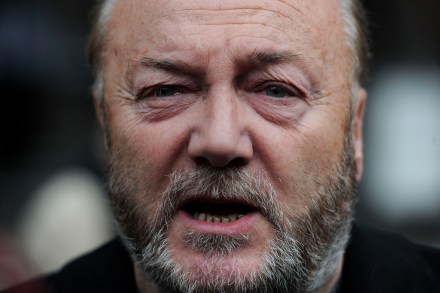
Say this for George Galloway: every time you think he cannot sink any lower he finds new ways to surprise you. His latest contribution to Press TV, Iran's propaganda station, speaks for itself. Parody is pointless. Given his history and his paymasters, we would expect him to defend the Assad regime in Syria. Even so, under-estimating his ability to sniff out the true villains is never sensible. Here's his "analysis" of the use of chemical weapons in Syria: "If there's been any use of nerve gas it's the rebels that used it. [...] If there has been a use of chemical weapons it was al-Qaeda who used chemical weapons. Who gave al-Qaeda chemical weapons?

The Thin Red Line

From our UK edition

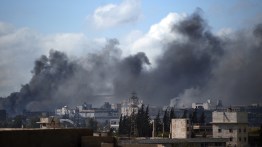
The elasticity of President Obama’s 'Red Line' on Syria seems to be being stretched to breaking point following this week’s chemical weapons attack by Bashar Assad in a Damascus suburb, Ghouta, where up to 1,200 people, including many women and children may have died. What we all have seen on our screens is not an episode from ‘Wag the Dog’ as Assad and his chief cheer leader Putin would have us believe. In fact this is likely to have been the worst chemical attack on civilians since Saddam Hussein gassed up to 5,000 Iraqi Kurds in Halabja 25 years ago. Fortuitously the UN has a team of chemical weapons inspectors on the ground 15 minutes away from yesterday’s attack.