Sweden

What will the successful cities of the future look like?

From our UK edition

Can architecture solve urban crises? Or should architects and planners concentrate on mitigating the consequences of wider events (climate change, war, demographic and economic shifts), then hope for the best? What happens when we have no choice but to build or rebuild cities? In her new book, Gabriella Bennett, a journalist interested in architecture and urban landscapes, spends two years flying around the world looking for answers to these and other questions. Woven through her adventures are two personal quests: to reckon with her unhappy adolescence in the Scottish postwar new town of Glenrothes; and to reset her life after a pandemic-era health crisis that led her to quit her job.

Why Greta is so angry about Swedish immigration

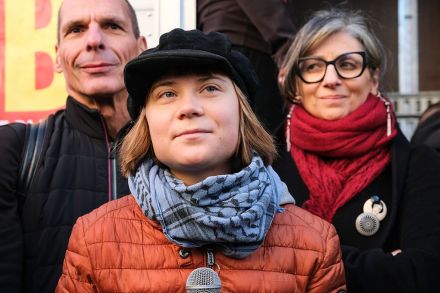
Greta Thunberg is 23 years old. Six years have passed since her emotional address to the UN Climate Action Summit about the end of the world. She has since shifted her attention from climate activism to one fashionable left-wing cause after another, but her tone is as shrill as ever. The other day, she denounced Sweden’s migration policy as inhumane. Her conclusions, as usual, wrong. But she is at least right about one thing: Sweden has adopted an entirely new migration policy. In Sweden, the system has until now often penalized the honest and rewarded the dishonest For years, Sweden took more asylum seekers per capita than any other country in Europe. Now asylum numbers have fallen to their lowest level since 1985, even as pressure across the rest of the continent remains immense.

The surreal drama of Helsinki’s history

From our UK edition

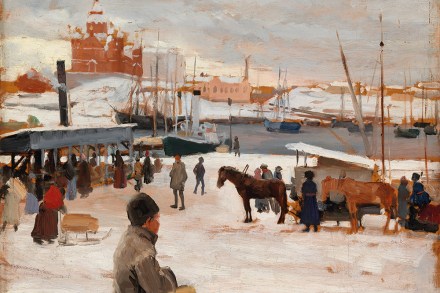
In 1920, the young Finnish architect Alvar Alto flew over Helsinki for the first time. He was aghast. ‘An aviator can see where the monkeys have been and destroyed so very much,’ he recalled. Alto’s aerial view reflected a story of fragmentation and occupation spanning some five centuries, now surveyed by the historian Henrik Meinander. The capital, explains the author, was bashed about by a series of bad actors – Swedes, Russians and Germans – until Finland stood its ground and became an independent nation in the early 20th century. Helsinki is ‘a city shaped by the sea, a city best seen from the sea’, writes Meinander. ‘Wherever you are in Helsinki’s inner city, you will always be close to the water.

Nicotine pouches: solution or smokescreen?

From our UK edition

29 min listen

There has been a renewed focus on tobacco and nicotine products across Europe. Just as countries seek to speed up the process to a smoke-free future, through measures like generational smoking bans and increased regulations on packaging and advertising, there has been a sharp increase in young people using alternative nicotine products like vapes and pouches. Philip Morris International (PMI) expects to see two-thirds of its revenue come from smoke-free products by 2030 – including its product, Zyn. Dr Moira Gilchrist, chief communications officer at PMI, and Charlie Weimers MEP, a member of the Swedish Democrats, join The Spectator’s Lara Brown to talk about how nicotine pouches can help the transition away from tobacco to a smoke-free future.

Starry starry night: the return of the sleeper train

From our UK edition

The railways have survived into the 21st century by constantly reinventing themselves. Written off all too frequently by parsimonious politicians as a 19th-century invention made redundant by the car and the aeroplane, trains have enjoyed a remarkable renaissance. Most happily, the sleeper has made a comeback, despite the fact that towards the end of the past century the mostly state-owned rail companies decided it was too much hassle to provide couchettes and compartments on trains running through the night. These trains got in the way of essential track maintenance; their use tended to be seasonal, and much of the rolling stock was well past its sell-by date. Budget airlines and high-speed rail further contributed to their demise.

Who killed Salwan Momika, the Iraqi who burned a Quran?

From our UK edition

Salwan Momika, the Iraqi man who spearheaded the Quran burning protest in Sweden, was shot dead today. Five men have been arrested for the murder, which was committed in front of an online audience, with the victim livestreaming on TikTok at the time of his killing. While police in Stockholm haven’t formally announced the motive for the crime, Momika isn’t the first critic of Islam to have been brutally murdered in Europe – and I expect he won’t be the last. Momika had repeatedly received threats, from radical Muslims and Islamic countries alike, following the 2023 Quran burning demonstration, during which he had been attacked.

Does Rachel Reeves need an ‘escape route’ on winter fuel?

From our UK edition

14 min listen

Fraser Nelson and Katy Balls join James Heale to look ahead to a crucial week for Labour. On Tuesday, Parliament will hold a binding vote on the changes to winter fuel allowance - how are Labour expected to deal with this? Former shadow chancellor Ed Balls, and husband of the current home secretary Yvette Cooper, has argued that Labour need an 'escape route' from the policy. What can we read from this intervention? And how influenced are the government by the spectres of George Osborne and Liz Truss? Also on the podcast, Fraser talks about both the problems facing Germany, and the surprisingly successful measure that Sweden has introduced, to deal with net migration.

Why did Swedish conservatives relax gender-change laws?

From our UK edition

In the 2010s the main political dynamic inside western societies could be boiled down to simple left and right. Figures such as Jordan Peterson, and others loosely grouped under the banner of the ‘intellectual dark web’, were only just rising to prominence and had begun to discuss the new-fangled idea of the ‘culture wars’.  These days conservatives are just phoning it in, going through the motions, and collecting their paychecks for as long as they can Today, the battle between progressives and conservatives has been replaced by something far more confusing and unsettling.

Bill Maher lays bare Sweden’s refugee problem

Comedian Bill Maher is often a fascinating person to watch. His show, Real Time with Bill Maher, airs Friday nights on HBO and features monologues and a panel of guests who discuss the week’s news stories. What is interesting about the program is that Maher is a sort of “anti-woke” liberal — the weed-smoking, pro-choice, left-libertarian kind — that despises political correctness. This makes for entertaining viewing because Maher alternates between spitting out hideous ideas, hilarious jokes that cut both sides of the political aisle and occasionally stumbling upon — and being willing to vocalize! — an important but perhaps inconvenient truth.

Murder in the dark: The Eighth House, by Linda Segtnan, reviewed

From our UK edition

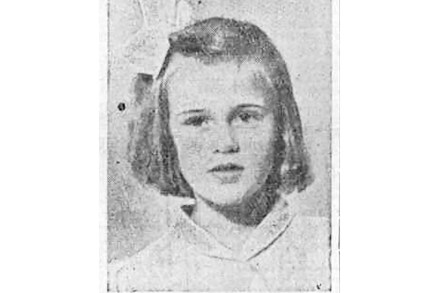
It takes a Scandinavian mother to write like this: ‘Why murder a nine-year-old girl? She wasn’t raped. Rape is the only motive I know of for the murder of little girls, unless the killer is a close relative.’ Linda Segtnan’s The Eighth House benefits from this bluntness. Its author, a historical researcher based in Stockholm, was browsing through a newspaper archive in 2018 when a photograph of nine-year-old Birgitta Sivander caught her attention. The girl lived in a village called Perstorp in southern Sweden until one evening in May 1948 she went out to the football field and did not return. A search was organised, the human chain making its way into the nearby forest in the middle of the night to look for her. They found her clogs.

What we owe to the self-taught genius Carl Linnaeus

From our UK edition

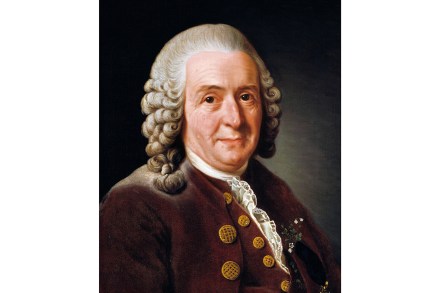
Carl Linnaeus and Georges-Louis Leclerc, Comte de Buffon were both taxonomists, born in the same year (1707), but apart from that they had little in common and never met. Buffon was French, Linnaeus Swedish. Buffon was suave, elegant, tall and handsome (Voltaire said he had ‘the body of an athlete and the soul of a sage’), whereas Linnaeus was a bumptious little man (under 5ft), who was widely regarded as uncouth. Buffon’s funeral was attended by 20,000 mourners but Linnaeus died almost forgotten, after suffering from a brain disease for 15 years. Yet the Linnaean system of taxonomy has survived much better than Buffon’s, which was hardly a system at all.

What does the European centre-right stand for?

From our UK edition

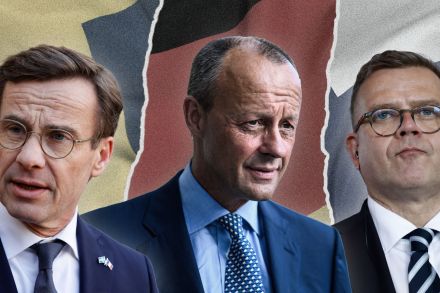
Friedrich Merz, the leader of Germany’s Christian Democratic Union (CDU), dropped the bomb last weekend. In a TV interview, Merz opened the door for collaboration with Alternative für Deutschland (AfD), the nationalist-populist party that is home to Germany’s cabal of crackpots and right-wing extremists. He didn’t say what form such co-operation would take, but talked about finding ways to run local councils when the AfD won democratic elections – which happened a few weeks ago when Hannes Loth won a mayoral race in a small town in Saxony-Anhalt. The reactions to Merz’s comments came thick and fast. Politicians from the left questioned his democratic credentials. He’s the ‘wrecking ball of democracy’, said Sara Nanni of the Greens.

Why Europe riots

From our UK edition

Montpellier A spectre is haunting Europe. In France, Sweden, Germany, Belgium and even Switzerland, the rule of law is being challenged by the rule of gangs. Disaffected young people cut off from society feel nothing but nihilistic contempt for it. Higher temperatures and social media are creating a heated summer. Judging from recent events in Paris and Stockholm, this year could be the worst so far. The rise of gang violence is associated with immigration. Europe has shown itself incapable or unwilling to control the influx of migrants, some of them genuine asylum seekers, others simply opportunists. Nor have European politicians succeeded in dealing with the problems created by immigration, despite spending billions on social projects.

Why Europe’s shift to the right may cost the Tories

From our UK edition

On her recent visit to Washington, shadow chancellor Rachel Reeves presented herself as the perfect candidate to be the next chancellor in the modern mould: an environmentalist, interventionist and protectionist similar to Joe Biden and Olaf Scholz. Reeves champions what she calls ‘securonomics’, a sister of Bidenomonics with an environmental twist. But the trouble with Reeves’s approach is that just as she makes plain her direction, much of Europe is heading the other way. Take Finland. Until recently the country was led by Sanna Marin who, with New Zealand’s Jacinda Ardern, became the face of the international centre-left.

How they treat trans children across the pond

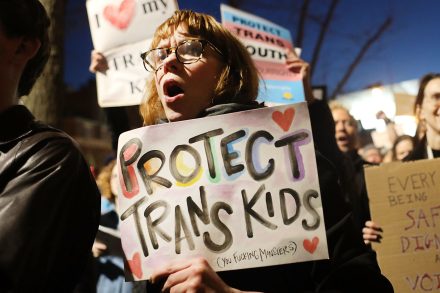
England's National Health Service made the major announcement last week that they would limit the prescription of puberty-blocking drugs for transgender children to clinical trials. A report released by the NHS on June 9 states that "there is not enough evidence to support their safety or clinical effectiveness as a routinely available treatment and that they should only be accessed as part of research." The decision is the latest consequence of a multi-year review into how the medical community in England should treat children who suffer from gender dysphoria.

LGBT activists gather outside the Stonewall Inn (Photo by Spencer Platt/Getty Images)

Covid and the politics of panic

From our UK edition

It is 15 months since Sweden’s Coronavirus Commission presented its final report. The 770-page document analysed how the country handled the pandemic and came up with numerous suggestions for how things might have been done better. The initial response, it concluded, was too slow, but the report vindicated the decision to make social distancing measures voluntary rather than compulsory. Why, then, has it taken the UK’s own Covid inquiry so long even to get going? In two weeks’ time the chair of the inquiry, Baroness Hallett, will finally start to hear evidence for module one – which looks at Britain’s pandemic preparedness – but she has said that she expects to be collecting evidence for three more years. And then of course the report will have to be written.

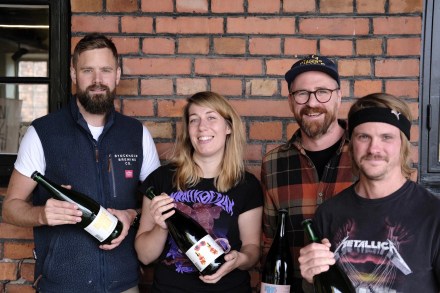
Opening a bottle with: Olly Bartlett, Stockholm Brewing Company

Quizzed on how best to assimilate a new culture, travel writer and celebrity chef Anthony Bourdain once uttered the famous line: “Drink heavily with locals whenever possible.” I never met the man, but still I miss him and his deft writing. The Opening a Bottle series is about getting pickled with people far cooler than I am, in whatever city I’ve washed up in. I land in Stockholm as the leaves start to fade brown, and the mercury is already dropping. My gloveless hands turn alabaster as I doggedly cycle around the island of Djurgården, or "museum island." I gape at the once-sunken Viking boat. I dodge the ABBA tribute. I take aim at hilltop open air museum Skansen, then ditch my wheels (out of bounds). I swear a lot. I get really fucking cold.

stockholm

Forget electric cars: America should invest in electric roads

As President Joe Biden and House Speaker Kevin McCarthy begin to square off on a compromise debt ceiling bill, the subsidies in the so-called Inflation Reduction Act, or IRA, for the purchase of electric cars will prove a major, if not the major, sticking point. McCarthy clearly knows that Goldman Sachs, Brookings and other respected observers have predicted that these EV credits could cost taxpayers $390 billion over the coming decade — or at least twenty-seven times the original estimate. Yet the president is also acutely aware that preserving the IRA’s role in facilitating a rapid transition away from gas-powered vehicles is the reddest of lines for his progressive base.

electric roads

Turkey’s heavy price for pressuring the Russians

If you enjoyed the weeks-long intra-NATO spat about whether to send heavy tanks to Ukraine, then you’re going to love the ongoing kerfuffle about whether Sweden and Finland should be admitted into the transatlantic alliance. Whereas Germany was the lone holdout in the first instance, Turkey is the obstacle in the second — and going by the fiery words of Turkish President Recep Tayyip Erdogan, the squabble won’t end soon. Erdogan, in the midst of his toughest election campaign in two decades, has been using his veto over Sweden's and Finland’s NATO memberships to press both countries on one of his top priorities: cracking down on the Kurdistan Workers’ Party, a group Turkey, the US, and the European Union all label a terrorist organization.

greece

Has a Quran-burning protest ended Sweden’s Nato dream?

From our UK edition

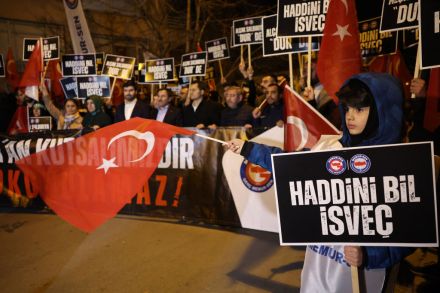
A crowd gathered outside Turkey’s embassy in Stockholm on Saturday afternoon to watch far-right politician Rasmus Paludan burn the Quran. Paludan, who leads the anti-Islam ‘Hard Line’ Danish party, was watched by dozens of photographers, police officers and bemused passers-by. Paludan is no stranger to controversy: he has previously been convicted under racism and defamation law. This latest stunt was called to show his party’s opposition to immigration and, he says, to stand up for free speech. Now, though, the stunt has become a diplomatic crisis for Sweden – and there are fears that its bid to join Nato could go up in smoke.