Surveillance

Will robots simply bore us to extinction?

A few years ago, when ChatGPT and Claude were beginning to take off, some tech leaders seemed to develop a curious interest in oceanography. Consider, for instance, the Microsoft CEO Satya Nadella’s suggestion in 2023 that AI ought to be compared to a ‘tidal wave’; or Mustafa Suleyman’s book on AI, The Coming Wave (2024), in which the DeepMind co-founder talks urgently about an ‘impending deluge’ (while repeatedly warning us that the ‘wave is coming’, and, even more alarmingly, ‘the coming wave really is coming’). It didn’t take long for the analogy to spread. The IMF’s Kristalina Georgieva would liken the technology to a ‘tsunami hitting the labour market’.

Our brave new world

In 1961, just two years before he died in Los Angeles, the polymath, philosopher and novelist Aldous Huxley gave humanity a warning. Much of his prophecy about society in Brave New World had come to pass, he said, which made him even more certain that the standout problem of the future would be our inability to resist becoming enslaved to our own technology. Now, more than 60 years after his death – and with an entire generation of children frying their brains with smartphones and nobody able or willing to do anything to stop them – it is hard to deny that he was onto something. The man was destined to be a prophet for our gadget-addled age.

Technology

Laughing at Putin is a powerful form of protest

From our UK edition

Penal Colony No. 2. A girl in a green coat. Red splashes of fireworks against the night sky. She arrives back in Moscow: photographers, a clamour of questions, what is it like to be free? Meetings, cops, her little six-year-old son with a sparkler, a video being recorded, her mother nearby, anxious. Like the flickering, scratchy lens of a film projector, Maria Alyokhina’s Political Girl illuminates the story of her life from the moment she and the other members of Pussy Riot were let out of prison in 2013 until, in 2022, she finally fled Russia disguised as a delivery driver. Nine years of fighting the slowly tightening noose of Putin’s regime with an endless, almost crazed persistence.

There was no escaping the Nazis – even in sleep

From our UK edition

Soon after Hitler came to power in 1933, Charlotte Beradt, who as a Jewish journalist and a communist had been barred from publishing, found her sleep wracked by nightmares that unmistakably reenacted the terrors of the Nazi regime. Deprived of her regular employment, her own dream experiences prompted the subversive if dangerous idea of recording the dreams of her fellow citizens. ‘I began to collect the dreams that the Nazi dictatorship had, as it were, dictated,’ she wrote. Citing a dictum of a Nazi official that in Hitler’s Germany no one has a private life except while asleep, the material she collected demonstrated how dreams ‘as minutely as a seismograph’ can record impinging external realities.

Is nothing private any more?

From our UK edition

How did the UK become a place where young people think it’s permissible to record a relative at home and make that recording public? Why has privacy been so easily discarded, and why have people welcomed its demise so they can control the behaviour of others? A few years ago, when I taught at university, a student who lived with their parents told me they had argued with their mother about what they described as ‘queer identity’. The student had secretly recorded the argument and wondered what I thought about them using it for a piece of writing. I think their assumption was that because I’m a journalist I would embrace the idea. I did not.

The psychological toll of being constantly tracked and harassed

From our UK edition

In late 2018 a Saudi journalist living in exile in Canada, who liked to work out in between recording YouTube critiques of his government, ordered some protein powder online. When a text message landed on Omar Abdulaziz’s smartphone notifying him of a DHL delivery, he clicked on it without hesitating. The portrait Deibert paints is a million miles away from the Cold War binary world of John le Carré The DHL invitation was fake digital bait. By clicking on it, Abdulaziz had enabled Pegasus, a spyware program designed by a now infamous Israeli company, NSO Group.

Learning difficulties: The University of Bliss, by Julian Stannard, reviewed

From our UK edition

You have been warned. First, David Butterfield has excoriated Cambridge University in these pages, leaving its standing devalued. Now Julian Stannard, a poet and novelist, delivers in fiction a devastating evisceration of other current universities. The University of Bliss belies its title. This is a work of high satire and Stannard vents his frustration with more than a touch of Swiftian saeva indignatio. His ridicule is extreme and addictively readable. The novel follows the career of the newly appointed vice chancellor Gladys Nirvana, partial to foot massages which transport her to regions signalled by her surname and give her acute sexual gratification.

Philip Womack, Ian Thomson, Silkie Carlo, Francis Young and Rory Sutherland

From our UK edition

28 min listen

On this week’s Spectator Out Loud: Philip Womack wonders why students can't tackle university reading lists (1:12); Ian Thomson contemplates how much Albania has changed since Enver Hoxta’s dictatorship (6:12); Silkie Carlo reveals the worrying rise of supermarket surveillance (13:33); Francis Young provides his notes on Hallowe’en fairies (20:21); and Rory Sutherland worries that Britain may soon face a different type of migrant crisis (24:08).  Produced and presented by Patrick Gibbons.

Nordic dream or nightmare?: The Mark, by Frida Isberg, reviewed

From our UK edition

Imagine a society, a high-minded psychologist tells his curmudgeonly father, ‘in which people are like cars. They have to go in for inspection once a year’ in order to assess their emotional fitness for the shared highway of life. As for the ‘psychopathic percentage’ whose ‘moral disorders’ lead them to fail this spiritual MoT, never fear: state-funded therapy will get them on the road again. And should they refuse? Surely, as we learn later in The Mark, everyone longs to stand ‘on the right side of history’. The Nordic dream of close-knit, high-trust, mutually supportive welfare societies has always had its internal critics: mavericks, naysayers and backsliders, who prize autonomy beyond, even against, community.

Chinese tyranny? American surveillance is scary too

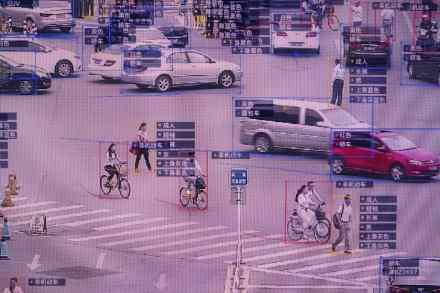
The New York Times recently ran an article on the dangers of surveillance tech in China. One wishes they would do the same for the US. According to the Times, Chinese authorities implement facial recognition tech everywhere they can, the police seek to connect electronic activity (making a call) to a physical location, biometric information such as fingerprints and DNA is collected on a mass scale, and the government wants to tie together all of this data to build comprehensive profiles on troublesome citizens. The latter is the Holy Grail of surveillance, a single source to know all there is known about a person.

When America makes Orwell look like an amateur

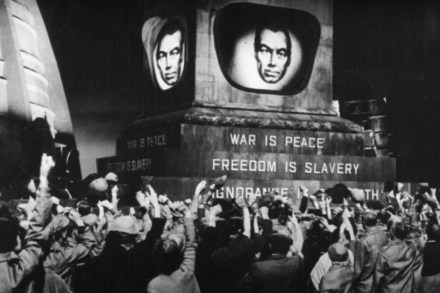
Under today's gathering dark clouds, a reread of Nineteen Eighty-Four shows how the otherwise prescient George Orwell was wrong to think people were going to have to be tortured into submission. Half of America (still psychologically locked down, vexed and vaxed) wouldn't have it any other way. The world of Nineteen Eighty-Four is grim in a way 2022 would understand. The people of Orwell's future want to be controlled. They have come to prefer it. Freedom from choice makes them feel safe. People accept being monitored, and their media being censored. They think of it all with a sense of the inevitable — the only way to stay safe if they think of it at all. The all-seeing telescreens in their homes and the snitches and spies embedded in their lives are for the better, really.

The rising surveillance state in American cities

Three American cities now require or likely will soon require businesses to give police access to their private surveillance footage. Leaders of all three cities see it necessary and cite rising crime. But privacy advocates decry the proposals as another example of the USA becoming the United Surveillance States of America. Houston became the first city to enact such rules. It’s part of Mayor Sylvester Turner’s federally funded One Safe Houston initiative. Turner announced it in February following a series of officer-involved shootings coupled with several dozen murders. “I don’t want to see any more carnage on our streets or in front of these businesses,” the mayor told reporters after the ordinance passed in April.

The authoritarianism of British Transport Police

From our UK edition

When our freedoms are being taken away we are like the proverbial frog boiled alive in water where the temperature is slowly brought to boiling point. Who batted an eyelid in June when it was reported that rail companies are drawing up plans to abolish paper rail tickets and have us all travel with e-tickets instead? Who picked up on today’s story that explains one of the reasons why the police are so keen to switch us to e-ticketing? Lucy D’Orsi, chief constable of the British Transport Police, says her force wants access to data from passengers’ mobile phones and bank cards so that it can track us around the network. At the moment, you can get on a train from Wolverhampton to London with a paper ticket and leave little trace.

The lawless Liz Cheney

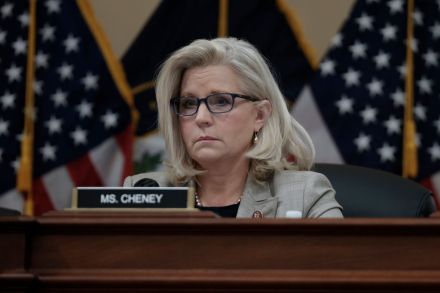
Congresswoman Liz Cheney had a supposedly shining moment this week as she sat on the January 6 committee to lecture the Capitol attackers and anyone in league with former President Donald Trump about the importance of the rule of law. Cheney has long said the committee was about “fidelity” to the Constitution. Seriously? Liz Cheney? Dick’s neocon daughter? People are buying this? I don’t even know where to start. In 2011, when libertarian-leaning Republican Justin Amash and many in the Tea Party movement insisted that President Barack Obama did not have the constitutional authority to bomb Libya, Cheney, Senator John McCain and other establishment politicians said to hell with the Constitution.

cheney

Pre-crime has arrived in China

From our UK edition

The idea of ‘pre-crime’ was popularised by Philip K. Dick’s story ‘The Minority Report’ and the 2002 Steven Spielberg film based on it. Here was a vision of a shudderingly paranoiac technological dystopia in which you could be arrested for something you haven’t even done yet. Not so science-fictional as all that. ‘Pre-criminal’ is the phrase — apparently one in official currency — that’s used of the protagonist of the story with which Darren Byler begins his chilling short book. Vera Zhou was a student of Byler’s at the University of Washington.

Biden’s vaccine order is about power, not health

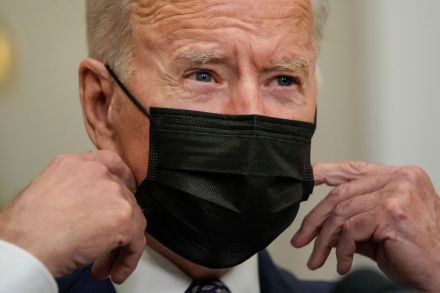
Sometimes a thing can be two things at once, one good and one bad. That requires a choice. And in a free society, that choice is usually best made by the individual directly affected. If not, then by an open, democratic process. Yet that is not what's happening with Joe Biden's vaccine mandate and it's why the cure is worse than the disease. I am, by my choice, thrice vaccinated. I understand the COVID vaccine prevents me from getting sick, and it is only a day-by-day smaller population of unvaccinated people who are actually still at risk of dying. We each make a choice. Now the government wants to make that choice for us. Vax mandates are an unhealthy thing for our democracy and represent a willful effort by government to exert additional control over an already cowed population.

vaccine

Urban Meyer and our DIY surveillance state

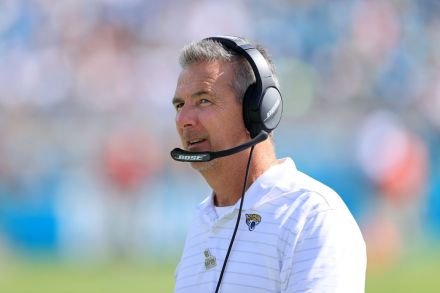
Imagine having a bad week by Jacksonville Jaguars standards. Such is the fate that has befallen Urban Meyer, the head coach of that star-crossed NFL franchise. Meyer was recently caught on video grind-dancing at an Ohio bar with a woman who was very much not his wife. This prompted sighs of relief from us '90s kids who were worried the term 'grind-dancing' had gone out of vogue forever. It's difficult to understate just what a mess Meyer's Jaguars are. The team is one of only four NFL franchises to have never made it to a Super Bowl. They've struggled for years with mediocre quarterbacks (who among us hasn't been walking down a sidewalk only to accidentally intercept a ball from Blake Bortles?). Meyer, along with rookie hotshot QB Trevor Lawrence, were supposed to turn all that around.

meyer

Somebody’s watching me

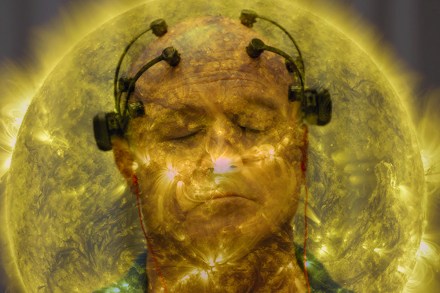
America has an abundance of daring documentarians: Frederick Wiseman, Errol Morris, Alex Gibney, Laura Poitras, Morgan Neville, Matt Wolf, Morgan Spurlock and Michael Moore, off the top of my head. Not a diverse list demographically, but you can tell their movies apart. Some are better than others, some (Poitras and Neville) have oily ethics, but others still have made some of the most iconic American films of this century (Spurlock’s Super Size Me is in the lexicon even if nothing else he’s done is, and say what you will about Moore and his films, his impact on American pop-political culture cannot be dismissed entirely).

all light, everywhere

The strange new liberal attraction to the feds

In a political era defined by abnormalities, few developments are as bizarre as the newfound liberal admiration for federal law enforcement. Given its rich history of activism and countercultural tendencies, the left has traditionally regarded federal law enforcement with hostility. Looking back, this attitude has been largely earned. Throughout the 20th century, radical leftists were relentlessly targeted under the guise of protecting America from seditious ideologies. For instance, from 1919 to 1920 thousands of suspected communists were arrested in sweeping raids that spanned 23 states. Subsequent attempts to combat 'subversives' would prove no less appalling: in 1964, the FBI hatched at blackmail plot aimed at coercing Dr Martin Luther King, Jr. to commit suicide.

feds fbi