Supreme court

The Democrats’ race-based regime is collapsing

The Supreme Court’s decision yesterday in Louisiana v. Callais et al has inevitably drawn strong criticism. In ruling that electoral districts cannot be redefined along racial lines, the Court stands accused of "gutting" the Voting Rights Act, crippling civil-rights law and effectively disenfranchising minority voters.  What the Supreme Court has "gutted" is not the Voting Rights Act of 1965 – but a nakedly racial form of gerrymandering But the Court’s decision was correct on the merits. It also represents a great retrenchment that’s taking place in American politics.

Tariff refunds are a nightmare for Trump’s economy

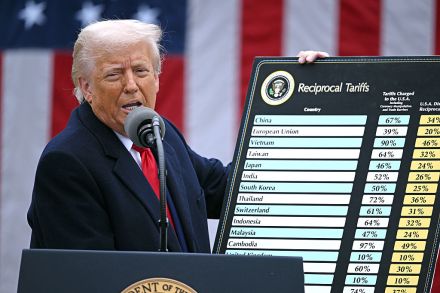
Donald Trump's second presidency began with a blaze of executive orders which horrified and impressed in equal measure. It also begged the question: if it really were so easy for a president to circumvent the legal obstacles and assert his will, how come none had behaved in this way before? A year on, we are learning the truth: no, a president can't just do what he likes, and there is a horrible price to pay if he tries. In the case of Trump's "Liberation Day" tariffs the notional bill is $166 billion. That is the sum that US Customs believes it will have to refund to importers who paid tariffs which were ruled unlawful by the Supreme Court in February. A computer portal to handle the refunds was set up this week, the administration of which adds more cost.

trump tariffs

The Supreme Court is right to reject Trump’s tariffs

At a rally in Georgia on Thursday night, President Trump declared that he couldn’t wait “forever” for the Supreme Court to rule on the legitimacy of his sweeping tariff policy. Whether or not the court was listening to his complaint, forever arrived today as it handed Trump a thumping defeat. It struck a blow not only for fiscal but also political sanity. Government intrusion upon the free enterprise system is bound to prove inimical to prosperity and liberty The language of the ruling was as lapidary as it was persuasive. “President asserts the extraordinary power to unilaterally impose tariffs of unlimited amount, duration and scope,” Chief Justice John Roberts wrote in the 6-3 opinion.

Celebrity Justices compromise the Supreme Court

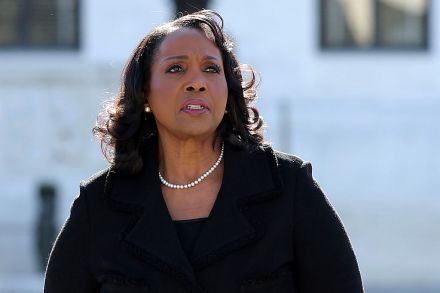
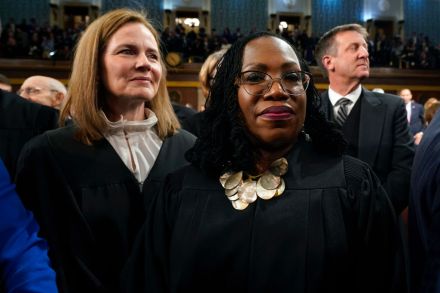
The real problem with US Supreme Court Justice Ketanji Brown Jackson attending the Grammys wasn’t that it revealed her true colors as a liberal, but that it showed the slow and steady erosion of the court’s institutional reserve.Senator Marsha Blackburn, the Tennessee Republican, demanded that Chief Justice John Roberts launch an investigation into Jackson alleging she breached ethics rules by appearing at the anti-ICE event.“Americans deserve a Supreme Court that is impartial and above political influence,” Blackburn gravely pronounced. “When a Justice participates in such a highly politicized event, it raises ethical questions. We need an investigation into Justice Jackson’s ability to remain impartial.

Ketanji

After Trump comes reform

America needs Donald Trump, badly. He is the bull in the china shop that every nation needs from time to time. He is testing his country’s constitution to destruction as well as its relations with the outside world. Such tests hasten the necessity of reform. The only question is how long will it take for reform to catch up and overcome him, as it surely will. Constitutional chaos may then break loose after midterms. This is America’s great opportunity In January alone Trump toppled the leader of Venezuela, mooted the conquest of Greenland and a 100 percent tariffs on Canada, insulted the British army and killed Americans protesting his immigration policy.

Is the Supreme Court poised to protect the Fed from Trump?

Rarely has the ideologically divided US Supreme Court seemed so much on the same wavelength. And that is not good news for President Trump.In arguments Wednesday in a case that centers on President Trump’s authority to fire members of the Federal Reserve, the US central bank, both Republican and Democratic appointees suggested giving the president unfettered control would harm financial markets and damage public confidence.“Your position – no judicial review, very low bar (for dismissal) and that the president alone makes the determination – would weaken if not shatter the independence of the Federal Reserve,” said Justice Brett Kavanaugh in an exchange with US Solicitor General John Sauer, representing the Trump administration.

Lisa Cook

Is the Supreme Court poised to back trans bans?

It’s been a less than stellar year for trans activists. Shortly after taking office last January, President Trump signed an executive order withholding federal funds from any school that permits biological men and boys from playing on women’s sports teams. Then in June the US Supreme Court upheld a Tennessee law banning the use of puberty blockers and hormones for the treatment of young patients suffering from so-called gender dysphoria and seeking to change their gender identity. And on Tuesday the Supreme Court heard arguments in two cases brought by transgender athletes seeking to overturn laws in Idaho and West Virginia barring biological boys and men from playing on female sports teams at the state and local level.

Trans

How the Supreme Court could sway the midterms

Each Supreme Court term typically includes at least one explosive case that inflames political passions and captures the public imagination. When the court overturned Roe v. Wade in 2022, or when it greatly broadened presidential immunity, as it did last year in Trump v. the United States, or when it ruled against race-based college admissions in 2023, it reaffirmed its centrality and reminded voters that it mattered. As it happens, very few Americans can name the chief justice of the Supreme Court of the United States (surveys show it is consistently under 16 percent), but most know instinctively the high court’s opinions deeply impact governance, politics and culture.

Supreme Court

Federal judges crave the spotlight

In the great injunction sweepstakes that have followed Donald Trump’s second administration like a shadow, we have seen district court judges with a hankering for executive power attempt to play president in more than a hundred cases from immigration and tariffs to funding various executive branch agencies, so-called trans-rights, DEI and climate change. Some of these injunctions and temporary restraining orders are still pending. Many, perhaps most, have been resolved by the Supreme Court in ways that favor the Trump administration, not always categorically but usually by affirming the broad scope of executive power envisioned by Article II of the Constitution.

judges supreme court

Is Trump’s $2,000 tariff dividend plan loopy?

It’s becoming increasingly taxing for Donald Trump to defend his tariff policy. His latest gambit is to float the prospect of a $2,000 rebate to Americans from the tens of billions that the federal government has collected in tariffs. But will this prove any more successful than his previous attempts to justify his loopy tariffs?With the Supreme Court apparently poised to strike down his tariffs as a form of revenue collection designed to perform an end-run around Congress, Trump is scrambling. As usual, bravado prevails. On Sunday, he declared, “A dividend of at $2000 a person (not including high income people!) will be paid to everyone,” the president said on Truth Social.” Trump also dismissed his detractors as “FOOLS!

Trump

Will SCOTUS strip seats from Democrats?

The headwinds facing Democrats in Congress have been blowing powerfully for some time now. On culture, the economy, law enforcement and immigration the party is on the defensive as it casts about not only for a winning message, but leaders able to persuade the public the party remains relevant in the age of Trump. Add to that list of hurdles the Supreme Court. The court’s conservative majority has delivered one blow after another to treasured progressive causes including transgender rights, maintaining the federal workforce and presidential authority. Now the court is contemplating changes to the Voting Rights Act that could, if carried out, cause Democrats to lose a dozen or more seats in the House, all of them held by minorities.

SCOTUS

Can Trump end mail-in voting?

President Donald J. Trump, burned in 2020 at the height of Covid by some states’ shenanigans ranging from rule changes regarding absentee voting to registration requirements, is now on a quest to reform mail-in voting and traditional ballot tabulation machines. On August 18, the President posted the following missive on Truth Social: “I am going to lead a movement to get rid of MAIL-IN BALLOTS, and also, while we’re at it, Highly ‘Inaccurate,’ Very Expensive, and Seriously Controversial VOTING MACHINES, which cost Ten Times more than accurate and sophisticated Watermark Paper, which is faster, and leaves NO DOUBT, at the end of the evening, as to who WON, and who LOST, the Election.” Some of the voting practices the President has critiqued are unusual, to say the least.

Donald Trump

How to reform judicial review responsibly

L.W., a transgender girl, her parents, and her doctor agreed that it would be good and medically appropriate for her to receive gender-affirming hormone therapy. The state of Tennessee, where L.W. lived, passed a statute in 2023 prohibiting transgender minors from receiving such treatment. Did the statute discriminate against L.W. on the basis of sex? The US Supreme Court said it didn’t. In 2023, the British government planned to send to Rwanda people who tried to get to the United Kingdom on small boats and then seek asylum. Would that policy violate the asylum seekers’ human rights because the conditions in Rwanda were unsafe? The UK Supreme Court said it did.

The judiciary picks another fight with Trump

The second coming of President Trump has brought an invigorated commander-in-chief asserting broad authority over the executive branch, reigniting debate over how much power the president has over his own subordinates, including US Attorneys. At present, the battle has focused on one US Attorney in particular. On March 24, 2025, the President named Alina Habba, his former personal attorney, the Interim US Attorney for the District of New Jersey. There’s a catch: Interim US Attorneys may serve only 120 days. On July 1, the President nominated Habba for Senate confirmation as New Jersey’s US Attorney; if confirmed, Habba could have served permanently at the pleasure of the President. Neither of her home state’s senators (both Democrats) supported Habba.

President Donald Trump (Getty)

Amy Coney Barrett v. Ketanji Brown Jackson

The Supreme Court has reined in the authority of district court judges by ruling unconstitutional the ever more common practice of universal injunctions, an abuse of Article III power that cried out for the Court’s intervention. Trump v. Casa is a long overdue vindication of the limits of constitutional power. Sadly, yet increasingly predictably, some progressives claimed the end was nigh… again. In dissent, Justice Ketanji Brown Jackson’s words fairly smoldered from the page: “It is not difficult to predict how this all ends. Eventually, executive power will become completely uncontainable, and our beloved constitutional Republic will be no more.” She further lambasted her colleagues’ 6-3 majority decision as “an existential threat to the rule of law.

Supreme Court
Supreme Court

Supreme Court allows Trump to recast America

Donald Trump is on a roll. Last week, he bombed Iran and imposed a ceasefire on Tehran and Jerusalem. Now the Supreme Court, in its final day of session, has handed him another victory by constraining the power of federal judges to constrain the executive branch. The verdict is clear: the Trump administration will have much more latitude to recast America.In essence, the Supreme Court is consolidating a conservative counter-revolution that began, as Sam Tanenhaus notes in his exemplary new biography of William F. Buckley, Jr., after World War II and is reaching full flower under Trump. Once upon a time, liberals enacted sweeping policies and programs through the courts. Now it is the right’s turn.

Why Trump should put himself on the Supreme Court

Legend has it that after subduing Greece, Egypt, Persia, wide swaths of India and what’s now Afghanistan, Alexander the Great wept, lamenting “there are no worlds left to conquer.” Donald Trump is close to knowing how that feels. “I run the country and the world,” he declared in a recent Atlantic interview. Trump’s second term has barely begun, but already the thought must cross his mind: “What next?” Alexander was lucky to die young, at 32 and at the peak of his power. The President is in rude health and leads a charmed life. The grim reaper missed him last year when an assassin’s bullet grazed his ear in Butler, Pennsylvania. As it stands, Trump can look forward to leaving office, aged 82, in January 2029. He’s conquered the world only to lose it to term limits.

supreme court trump

Could abortion pills be the sleeper issue for the midterms?

The politics of the abortion issue in the post-Dobbs environment has been dramatically altered, both by the introduction of state-level restrictions in Republican states and by pressure campaigns in Democrat-dominated states to increase the subsidization and solidification of existing lax abortion policies. But the most significant development in the abortion space in recent years wasn’t a decision that came from the Supreme Court, but from the Biden administration – first temporarily (with Covid as the justification) and then permanently granting the ability to dispense abortion-inducing pills via telehealth, without the previously required visit to a doctor.

Trump should have the power to fire the Fed chair

The Chair of the Federal Reserve is arguably the most powerful economic official in the United States. He’s also the least accountable. He sets borrowing costs for households and businesses, opens lending windows to banks deemed “too big to fail,” and decides when to tame or ignite inflationary forces. Unlike the Treasury Secretary or even the President himself, he answers to no one. That may soon change. In Trump v. Wilcox, the Supreme Court is weighing whether the President should be allowed to remove the head of an independent agency.

Fed

The Everything, Everywhere All at Once presidency

The Supreme Court’s 5-4 ruling lifting the order blocking the deportation of accused members of the Venezuelan gang Tren de Aragua is a significant legal victory for the Trump administration. More importantly, it's also a policy vindication for those within this White House whose approach to government upon their return to Washington was to do everything, everywhere, all at once. The legal victory itself was hailed by every prominent member of the President's deportation team, with Attorney General Pam Bondi announcing she’d redouble her efforts, Homeland Security Secretary Kristi Noem declaring that all those here illegally must “LEAVE NOW” and Stephen Miller practically ebullient in his interview last night with Sean Hannity.