Supreme court

Why the death of Chevron matters

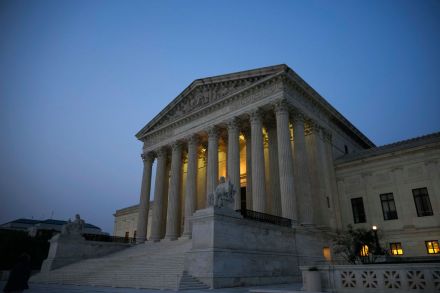
Chevron is dead. Many will mourn its passing. Forty is too young, they will say, for a doctrine to have done its work in enabling bureaucrats to decide for us the meaning of laws and the nature of reality. But the US Supreme Court has overturned Chevron in a landmark ruling in Loper Bright and Relentless, cases named after fishing boats which regulators drove toward extinction. It is appropriate, as Justice Gorsuch phrases it in his concurrence, that “the Court places a tombstone on Chevron no one can miss.”   The powers of the bureaucracy reined in by the new ruling may seem subtle or benign. The Chevron doctrine was that when the terms of a law are ambiguous, regulators in administrative agencies have the power to define the meaning of the law and its application.

chevron

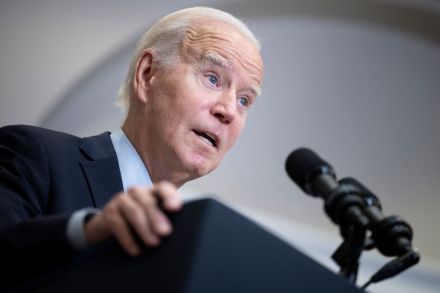
What’s next after Biden’s debate horror show

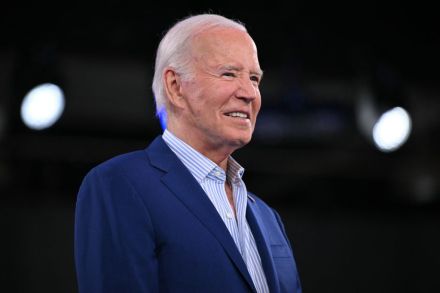
Donald Trump must have that Friday feeling. It’s the morning after the night before, when his Democratic opponent disintegrated live on camera before an audience of millions. The purpose of President Biden agreeing to a first presidential debate so early in the cycle was to head off concerns about his frailty and mental acuity. His energetic State of the Union address in March exceeded admittedly low expectations — but Thursday’s bumbling and feeble performance had the exact opposite effect.The entire op-ed page of the New York Times is begging the president to stand down. “I watched the Biden-Trump debate alone in a Lisbon hotel room, and it made me weep,” writes Thomas L. Friedman.

The left-wing plot to delegitimize SCOTUS

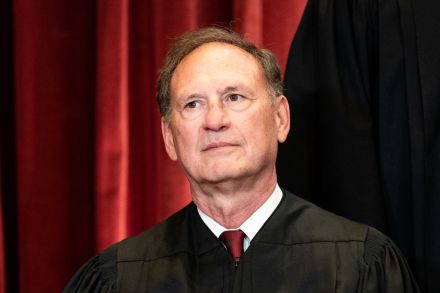
Left-wing activists are working overtime to smear the conservative majority on the Supreme Court in a blatant attempt to undermine rulings coming out of the nation’s highest court. They attempted to stop Justice Brett Kavanaugh’s nomination with dubious, vague and uncorroborated sexual assault accusations. Justice Amy Coney Barrett was painted as a Catholic extremist — Senator Dianne Feinstein declared during her confirmation hearing that “the dogma lives loudly in you” — and her husband was targeted with a Rolling Stone article that charged him with the crime of... being a lawyer.

samuel alito scotus

Trump takes Capitol Hill

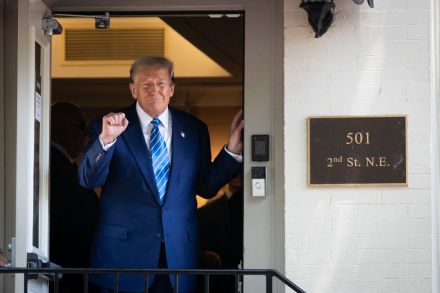
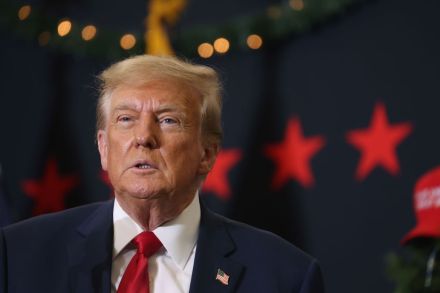
Welcome to Thunderdome. Donald Trump took to Washington today in a series of meetings with business leaders, House members and senators in what was clearly meant to be a rousing “yes I’m still in charge” play. But it was also a Trump who seemed nervous about his prospects, particularly as it relates to how the abortion issue will be a drag on him in November: Abortion has emerged as Democrats’ most potent political weapon in the two years since Roe v. Wade was overturned, a reality the former president acknowledged during a closed-door Capitol Hill meeting.

Behind Justice Alito’s war with his progressive neighbors

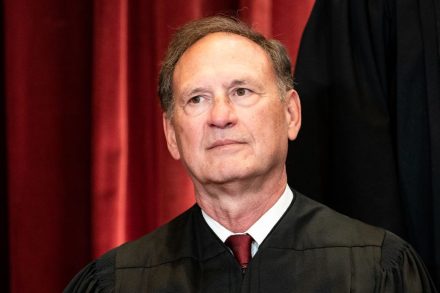
“Somebody in a position of authority needs to talk to her and make her stop,” complained a thirty-six-year-old man to a Fairfax County, Virginia, officer on the line, according to a recording reviewed by the New York Times. The alleged perp here? Martha-Ann Alito, wife of conservative Supreme Court justice Samuel Alito. Like Justice Clarence Thomas’s wife Virginia, Martha-Ann is now all over the news, with progressive activists ready to use her to discredit her husband’s rulings. Earlier this month, the Times reported the Alito household had flown an upside-down Old Glory flag at their Virginia home. The US flag code states that the flag ought not to be inverted “except as a signal of dire distress in instance of extreme danger to life or property.

Alito

Justice Alito stirs the pot

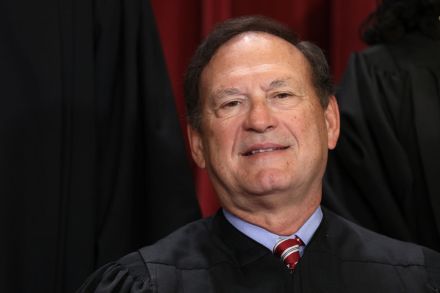
Fool me once, shame on you; fool me twice, shame on me. This old adage has taken on a new meaning for the left as Supreme Court Justice Samuel Alito is developing a bit of a habit for displaying allegedly "far-right" flags. In under a week, the New York Times has unearthed images of dissident flags waving proudly at the justice’s house on two separate occasions, leaving Democrats clamoring about judicial ethics.   The smoking gun in the controversy is an “Appeal to Heaven” flag that was seen flying at Alito’s summer home on Long Beach Island in New Jersey last summer. The flag, which depicts a pine tree, was first used during the American Revolution but has since become associated with the “Stop the Steal” movement after being brandished by January 6 protesters.

samuel alito

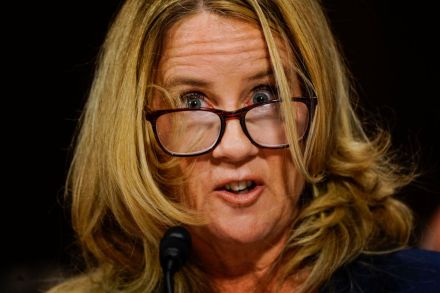
The return of Christine Blasey Ford

Christine Blasey Ford, the professor who accused Supreme Court justice Brett Kavanaugh of sexually assaulting her in high school, is back in the spotlight. Five-and-a-half years on from her public testimony about her allegations, Ford has released a memoir titled One Way Back. Amazingly, Ford has once again conquered her crippling fear of flying — which delayed the Senate’s investigation into her claims back in 2018 — to promote her book on major television programs. Blasey Ford first accused then-Supreme Court nominee Brett Kavanaugh of assaulting her in a confidential letter to the late Senator Dianne Feinstein’s office. Feinstein kept the letter to herself for weeks until revealing the letter to Democratic colleagues, who urged her to act on the information.

Biden’s absurd student loan ‘solution’

You’ve got to hand it to President Biden — when he puts his mind to something he doesn’t let mere semantics like the rule of law stop him. Despite an earlier Supreme Court slap down, “Middle Class Joe” provided an upper-class gift to some 150,000 college graduates in the form of $1.2 billion in student loan forgiveness. That brings total educational loan forgiveness under this White House to $137 billion effectuated by nothing more than a stroke of Biden’s pen via executive order. Biden openly boasted of his defiance, all but inviting the justices to try to stop his patronage gambit. It’s not that anyone can blame him, because it’s a political win-win for the White House.

2024 and the invasion at the southern border

Donald Trump crushed the New Hampshire primary, as every poll in Alpha Centauri predicted he would. Nevertheless, his sole remaining opponent for the GOP nomination, Nikki Haley, “vowed to fight on.” Why? A cynical person might suggest the interaction of two volatile liquids: cash, on the one hand, and consultants, on the other. Haley is swimming in both. The cash is coming from two sources: brittle, establishment faux conservatives like the Kochs and wily Dem operatives like the billionaire Reid Hoffman who, in addition to shoveling gobs of money to Nikki Haley, is also funding such entrepreneurial activities as E. Jean Carroll’s bizarre lawsuit against Donald Trump. In a sane world, the support of a malignant figure like Hoffman would be disqualifying for Haley.

border
Supreme Court

The Supreme Court takes on the administrative state

After consecutive Supreme Court terms with major rulings on abortion, guns and affirmative action, the justices don’t have anything on the docket now that will roil the culture wars. (The Trump ballot case to be argued as this goes to press will be a small blip.) Instead, this year our black-robed philosopher-kings are doing battle with the administrative state — which Steve Bannon promised to “deconstruct” when Donald Trump took office last go-round. That shouldn’t be surprising; notwithstanding the media trope that Trump “stacked the court” to overrule Roe v. Wade, it was instead potential nominees’ commitments to reining in the bureaucracy that was White House counsel Don McGahn’s focus.

The effort to keep Trump off the ballot has been a century in the making

What happens now that the Colorado Supreme Court has kicked Donald Trump off the primary ballot? The first thing, apparently, is similar lawsuits in other “blue” states. Those will continue despite the Wednesday decision by the Michigan Supreme Court that Trump’s name can remain.   Nearly all the commentary has been devoted to the legal reasons for these rulings and their political implications. But it is important to consider the effort to exclude Trump in a wider context, one that goes beyond his personality, polarizing candidacy and events of January 6.  That wider frame is a century-long progressive effort to reframe the way America is governed and to loosen the constitutional barriers to those changes.

trump ballot

Trump off the ballot?

You don’t have to be a Trump supporter (I am not) to be deeply troubled by Colorado court decision to keep Donald Trump off the primary ballot. Let me count the ways. First, the reason Trump is being excluded is new, untested, and profoundly controversial in its application here. Basically, the court is saying Trump cannot appear on the primary ballot because of a subsection of the Fourteenth Amendment meant to exclude Confederate officials who waged a civil war against the United States. Using that provision to exclude Trump is utterly novel. Its unprecedented use here invites the conclusion that it is being wielded as a political sledgehammer by Trump’s opponents and that some of those opponents wear judicial robes.

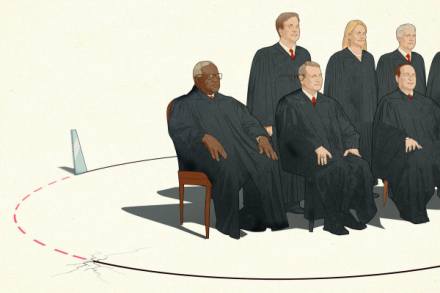
Inside the progressive war on the Supreme Court

In the basement of a Washington, DC restaurant, 200 ticket-purchasing fans have gathered to witness the live recording of a multifaceted conversation about the villainy and corruption of the Supreme Court, and one justice in particular. It only seems appropriate to order the shrimp and grits: it costs $19.99 and comes with a white-wine tomato sauce. This may seem rather hifalutin, but it also comes in a glass mason jar that references tired hipster kitsch — perfectly suitable for a live podcast hosted by Slate.

Supreme Court

Why legacy students aren’t a civil rights issue

I just caught the news that four pages in a notebook dated 2014 and stuffed into a couch cushion have been accepted as a valid will for the late singer Aretha Franklin. The jury that decided this enriched two of her sons and disappointed a third son, who was favored in an earlier will. This is what I call a legacy. But America is all worked up about another kind of legacy. I refer, of course, to the endearing habit of colleges and universities to give a leg up to the kinder of their alumni. Why do they do this? And why are so many people worked up over it?  These aren’t hard questions. Colleges have two reasons for their legacy programs.

legacy

Is the age of the legacy student over?

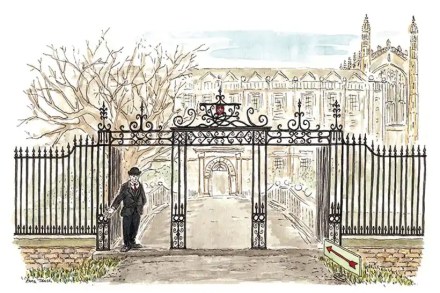
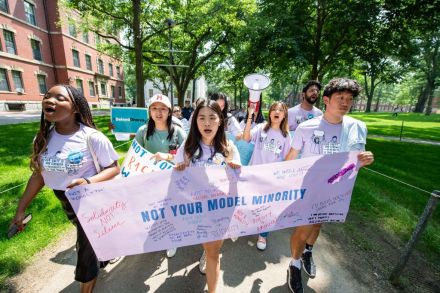
Johnston’s Gate isn’t the only entrance to Harvard Yard. For years, money, status and secret lists have opened back doors into Harvard University for a select group of privileged students. And the easiest way to open these doors? The right parents. According to the Harvard Crimson, over a third of the class of 2022 had a parent or other relative who attended Harvard. In the wake of the Supreme Court’s ruling against affirmative action, the admission policy that has created America's aristocrats is starting to take some heat. Could legacy admission be the next to go? Three Boston-based advocacy groups say yes.

small colleges legacy

Meritocracy now!

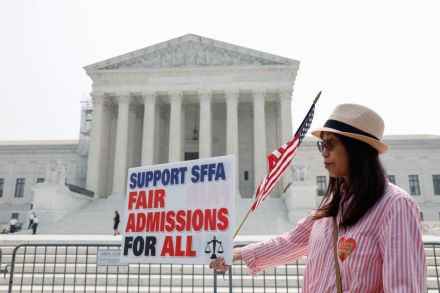
Last Friday, a day after the Supreme Court’s decision on affirmative action, I noted the gap between the Democratic Party’s leaders and its voters on race-based admissions. Polls find a majority of Democrats opposed to using race as a factor in admissions. The party’s elite, however, is almost universally in favor of affirmative action — as hysterical reactions from the president and others made clear.  But that was last week. Now that the dust has settled, and everyone has had a chance to cool down over July 4, have the Democrats gained some Independence-Day perspective on the end of race-based decisions? Not really.

The new battleground for abortion

It’s been just over a year since the Supreme Court decided in the Dobbs case to overturn Roe v. Wade — and pro-life activists were right when they predicted that the fight against abortion was just getting started.  Of course there was plenty for them to celebrate in the aftermath of Roe, which essentially kicked the issue of abortion back to individual states. Thirteen states had “trigger laws” in place that would almost immediately enact near-total bans on abortion, with some exceptions, in the event Roe were overturned. Other states reacted to the Supreme Court’s ruling by passing gestational bans on abortions ranging between six weeks after conception and fetal viability outside the womb.  The new bans are already saving unborn lives.

abortion

NPR says Asian Americans should love affirmative action

NPR thinks Asian Americans should stand against the Supreme Court’s ruling on affirmative action whether they like it or not. In an article published Sunday, NPR’s race and identity correspondent Sandhya Dirks argued that white conservative activists have used affirmative action to divide Asians from other communities of color for far too long. In fact, Asian students have nothing to lose by embracing the practice.  Per the article, Asian Americans became proxies for white privilege when affirmative action lawsuits brought by white students failed in 2013. To beat the legal system, Edward Blum, the head of Students for Fair Admissions, approached Asian students who he claimed had been hurt by biased college admissions.

harvard npr

Affirmative action was hurting black students

From our UK edition

Harvard may have a slightly more difficult time poaching black students from Boston College, Miami University of Ohio, or other less elite schools in the wake of the Supreme Court’s decision invalidating Harvard’s racial admissions regime. Recruiters from BlackRock and Goldman Sachs may have to suffer the indignity of recruiting their black employees from the University of Connecticut or Rice University, rather than from Stanford and Yale. But contrary to the hysterical rhetoric from President Joe Biden, the Court’s dissenting Justices, and the democratic commentariat, the doors of educational opportunity will remain wide open to black people. As many black students as before will go to college, assuming that they want to.

The president versus the court

Joe Biden’s best days may be behind him, but the president’s talent for feigning moral outrage is undiminished. That much was clear from the president’s reaction to Supreme Court decisions in the last few days, in particular his remarks in response to the court’s rulings on affirmative action and his administration’s student debt forgiveness program.  This week has served as a reminder that Biden is a president who knows his survival depends on drawing the most demagogic caricature of his opponents he can get away with.