Suicide

Lifelong death wish

From our UK edition

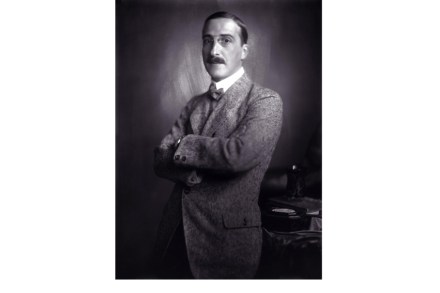
In February 2009, in a review in these pages of Stefan Zweig’s unfinished novel, The Post Office Girl, I wrote: ‘Here surely is what Joseph Conrad meant when he wrote that above all he wanted his readers “to see.’’  In The Post Office Girl Zweig explores the details of everyday life in language that pierces both brain and heart.’ Especially the details of loneliness, I should have added. Intimations of suicide darken this novel, and in 1942, with the manuscript incomplete, Zweig, age 60, and his much younger second wife, Lotte, poisoned themselves in a small Brazilian town and died in bed with her embracing him. It is telling that she did the embracing.

Blow-out in Berlin

From our UK edition

D. B. C. Pierre’s Vernon God Little was an unusual Man Booker winner (2003). D. B. C. Pierre’s Vernon God Little was an unusual Man Booker winner (2003). Not only was it brilliant, it was also a first novel, and apparently by an American. Holden Caulfield was invoked, and Liam McIlvanney called it ‘the most vital slice of American vernacular since Huck Finn’. It turned out, though, to have been written by a Brit, ‘on the floor of a box-room in Balham’. D. B. C. Pierre is the nom de plume of Peter Finlay, an evolved childhood nickname — ‘Dirty But Clean’, which is evidently his motto as a writer. Foully satirical, he is also sweetly allegorical.

The optimism of a suicide

From our UK edition

A postal strike would have been a disaster for Van Gogh. Letters were his lifeline and consolation. Not only did he receive through the mail his regular allowance from his brother Theo but, in letter after letter in return, he poured out his thoughts and feelings, recorded his work in progress and conveyed his impressions of books, people and places. In his often solitary existence, he was an avid recipient and kept in touch with a variety of correspondents, especially when he was in the South of France during the last two years of his life. The glory must be shared, however, with Theo, in that he kept Vincent’s letters, many of which contained drawings, either appended or on the sheet itself, surrounded by his tumble of words.