Suburbs

Why cities have lost their appeal

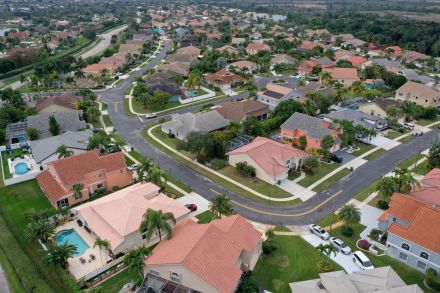
Over the past half century, media and academic sources repeatedly suggested that increasingly dense cities would dominate the future. Places such as London, San Francisco and Chicago would dominate an economy. Today, this assessment seems grossly dated. Even in the pages of the urbanista New York Times there are widespread fears of an “urban doom loop.” But this, too, is a stretch. Great core cities will not go the way of post-imperial Rome, but their role is being recast as the urban frontier shifts increasingly to the periphery. What we are seeing mirrors H.G. Wells’s vision. He predicted that most economic life, and most families, would shift to the suburbs and exurbs.
cities

The West faces a new type of housing crisis

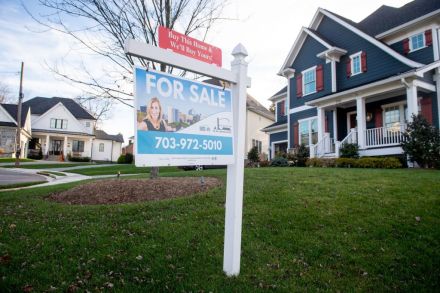
Throughout the West, particularly the Anglosphere, housing costs are ravaging the middle class. Homeownership, long the key to social mobility, is on the decline, particularly among younger generations and minorities. According to the Organization for Economic Cooperation and Development, house prices in high-income countries have been rising “three times faster than household median income over the last two decades,” causing the standard of living “to stagnate or decline.” Unlike previous housing crises, this one is not primarily caused by mass displacements due to wars or natural disasters or population growth.

housing

Suburbia’s irredeemable reputation in the American canon

"My God, the suburbs!” John Cheever, the short-story writer who has rejoiced in the nickname “the American Chekhov,” had what can only be described as ambivalent feelings about the twentieth-century housing developments that grew up on the outskirts of major cities. He said of them that “they encircled the city’s boundaries like enemy territory and we thought of them as a loss of privacy, a cesspool of conformity, and a life of indescribable dreariness in some split-level village where the place name appeared in the New York Times only when some bored housewife blew off her head with a shotgun.” Cheever was not wholly consistent himself.

suburbia

The difference between children and tattoos

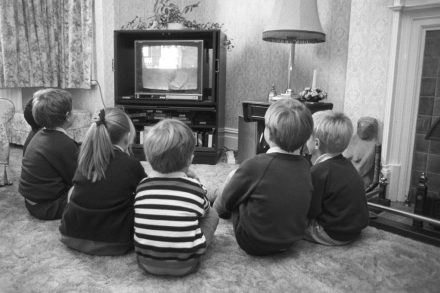
Mrs. McMorris and I have five daughters — and much like the WNBA nobody is watching them. Unattended children are best kept to the cozy culs-de-sac of the suburbs where the only threat to life and limb is inattentive Amazon delivery drivers, rather than the city where they could fall prey to inattentive pit-bull owners — or worse, watchful public-school teachers. Every father knows the first thing to do when moving to the suburbs is to find a cheap handyman who will respond within the hour to any text message. All the better if he is a licensed plumber, which is how Mrs. McMorris and I found Scott from All Total Service plumbing. Scott is indifferent to my career as a journalist, though he cares deeply about his Nextdoor rating.

children

Why antivax is back

The first time I ever heard the term “vaccine injury” was when I was in rehab aged nineteen. One of the women who was living at the halfway house — we’ll call her Jane — lost her son and blamed the vaccine he’d had that morning. Jane said he was fine, got the vaccine and then dropped dead on the playground later that day. This was almost twenty-five years ago, so the details are fuzzy. I don’t remember how old her son was; I don’t remember what vaccine — but I do remember that story. Everyone told Jane she was crazy, including all the doctors and her husband. She and her husband split up and she drank herself into oblivion and near death.

antivax

You can never escape the suburbs

Had you told me when I quit drinking that one decade into sobriety I’d be a suburban Texas mom, I probably would have kept drinking. A friend and I were recently talking and I said, “I don’t know, a part of me feels like I’m giving up, moving to the suburbs.” She laughed and said, “That’s what the suburbs are — surrender.” The suburbs in all their sameness and picket-fenced perfection represented a life I never wanted — with their Live, Laugh, Love Etsy signs and swingers. They weren’t for eccentric artists or messed-up comedians. They were for sorority girls and women who loved game nights and crafts and the Bible and botox parties.

suburbs

The last roadside ice cream stands in America

When I’m out on small New Jersey roads — sometimes Virginia roads, but I don’t see them there as often — I always take an extra second to look at ice cream stands. You know the place: a basic, boxy building with a little awning, an ornamented, angular front, one or two counters to order, and more often than not no inside seating or even a customer entrance. The staff are usually high-schoolers, maybe retirees. The prices, like everything, have crept up, but they’re still wallet-friendly. They’re refreshingly un-trendy, too. Nobody manhandles your ice cream on a frozen rock. I love these places. I have many fond memories of my parents pulling off the road for ice cream, sitting at a simple table on gravel under an awning and enjoying a treat. Simplicity. Contentment.

Against the ‘concept restaurant’

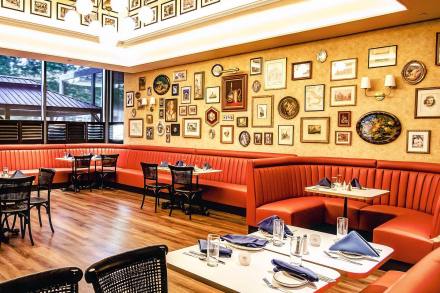
My wife and I live in Northern Virginia, in Fairfax County. Whenever we go out to eat, we almost always go somewhere in the suburbs. Fairfax, along with neighboring Montgomery County in Maryland, is home to a wealth of restaurants serving cuisines from all over the world. Just last January, Bon Appétit wrote that “to travel DC’s Beltway is to sample the flavors of the world,” and the New York Times declared that “America’s next great restaurants are in the suburbs.” You could argue that the suburban food scene in the DC metro area surpasses that of the city itself. Nonetheless, DC is widely seen as a “foodie city,” and its restaurants generally get more coverage and hype than their suburban counterparts.

Why a post-Covid world might not be so bad

No one need ask why the strict public health regime to manage Covid — masks, mandates, quarantines, and required inoculations — has begun to collapse. Between angry truckers, unfavorable polling for continued lockdowns, the perception of a Wuhan coverup, changing reports of vaccine effectiveness, and declining hospitalizations, even President Biden and blue state governors realize they have but two options: pretend to be leading a return to normalcy or face an unpredictable grassroots rebellion. The interesting question for Americans is not why the sudden prospect of a return to normalcy but what “returning to normalcy” really means.

Time for conservatives to fall out of love with the suburbs

In the waning months of the 2020 campaign, President Trump cast himself as the defender of the suburbs. It didn’t work. Suburban voters made Joe Biden president. But although Trump lost that election, the pro-suburb talking points he popularized didn’t go away. Last month, after California legalized duplexes statewide, the outrage came roaring back. Tucker Carlson fumed that soon 'drug-addicted vagrants’ would be terrorizing innocent American suburbanites. Right-wing Twitter personality Auron MacIntyre perceived a plot to destroy the wealth concentrated in single-family homes and force everyone to live in the 'urban decay’ of 'the favela’.

suburbs