Subscriber only

What the papers say: Why we shouldn’t mourn Martin McGuinness

From our UK edition

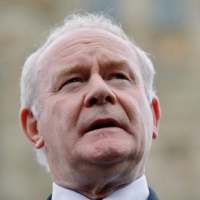
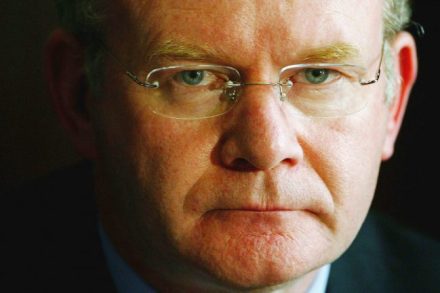
Martin McGuinness’s death has sparked a wave of fawning and fury in the obituaries. So: ‘man of war’, peacemaker or something in between? The Sun’s verdict is clear: the ‘pious praise’ for McGuinness is nothing short of ‘revolting’. It’s true, the paper says, that the ‘second part’ of his life differed from his early days. And it’s also the case that McGuinness ‘risked his own neck’ to help bring peace in the end. But to hear the likes of Tony Blair play down McGuinness's role as an IRA commander ‘turns the stomach’. McGuinness might have fancied himself as a ‘folk hero’, but there was ‘nothing noble about this “struggle’, says the Sun.
The morally illiterate obituaries to Martin McGuinness are just what he would have wanted

From our UK edition

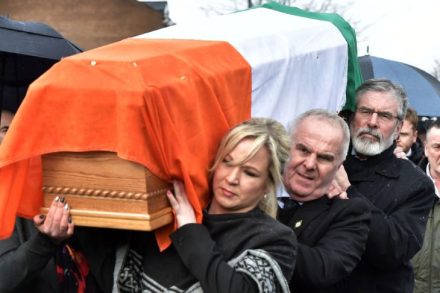
Well the obituaries for Martin McGuinness are in. And many are as morally illiterate as the man himself could have wished for. For instance, various obituarists have noted that the young McGuinness’s failure as a young man to get an apprenticeship as a mechanic started him off on the road to terror. Few of these eulogists have noted the many people across continents and generations who also failed to get apprenticeships (often for even more sectarian reasons) and yet strangely refused as a consequence to pick up some pliers and an Armalite and torture and kill their way to political power. Other obsequies have been even stranger. Alex Salmond, for instance – perhaps recognising a fellow nationalist – praised Martin McGuinness as ‘a friend of Scotland’.

The Brexit bunch are the real referendum whiners

From our UK edition

In an age of fanaticism, it was always unlikely that the urge to censor would be confined to the left. If you think that the insults conservatives have thrown at liberals will not boomerang back to injure them, consider the following examples of right-wing invective. Conservatives claim millennials are ‘special snowflakes,’ unable to handle criticism – a generalisation that crashes and breaks on the vast number of exceptions. To concentrate on specifics for once, it is a matter of fact that the world’s most special snowflake is Donald Trump. He and his supporters target judges, journalists and any other critic. No slight is forgotten or forgiven.

Jacob Rees-Mogg leads the celebrations at Article 50 party: ‘to the Brexit heroes of Islington!’

From our UK edition

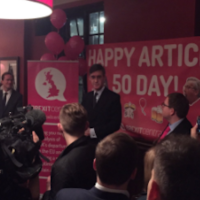
Was it a case of fate or a helpful tip off from No 10 that meant Brexit Central's Brexit party fell on the same day Theresa May announced the date she would trigger Article 50? Either way, it made for a joyful atmosphere as the likes of Vote Leave's Matthew Elliot, Nigel Evans and James Cleverly gathered in the Barley Mow to celebrate the UK's impending departure from the EU. Leading the celebrations was arch-Brexiteer Jacob Rees-Mogg, who used his speech to rebuff suggestions that Leave supporters lack answers; 'we know the road -- and it's a good road, it's a high road. It's a high road that we built before -- and now we are re-tarmacing': 'Leaving the European Union is a rebirth for our nation.

What the papers say: Jean-Claude Juncker’s ‘deluded’ Brexit punishment talk

From our UK edition

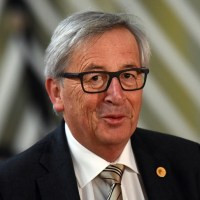
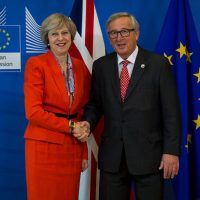
Finally, we have a date: March 29th will see Theresa May trigger Article 50 and set the Brexit train in motion. After all the hype, what can we expect? The Sun says it hopes that the European Parliament will handle things better than its ‘muppet of a President’. Jean-Claude Juncker, who the paper says is a man who sees his bottle as ‘completely empty’ rather than half-full, has surpassed himself with his latest ‘belligerent Brexit ­outburst’, according to the paper. Juncker, who suggested that Britain’s Brexit punishment will put other countries off from jumping ship, clearly thinks he can use ‘fear’ to ‘whip millions of disenchanted voters across Europe into line’, says the Sun.

Macron and Le Pen both fail to dazzle in first French Presidential debate

From our UK edition

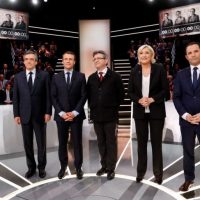
It was the burkini that brought Monday night's debate to life between the five main presidential candidates for next month's French election. For the first hour of the televised debate there had been much posturing and postulating but no sharp exchanges. That changed when Marine Le Pen accused Emmanuel Macron of turning a blind eye to the burkini, the Islamic swimwear that last summer caused such controversy in France. Macron rejected the charge, telling Le Pen in a forceful exchange she was a dangerous provocateur. The centrist candidate, who claims to be 'neither left nor right', then went on the counter-attack, accusing the National Front leader of sowing divisions within society by attempting to make four million French Muslims 'enemies of the Republic'.

At least Martin McGuinness made old age. Many others didn’t

From our UK edition

So Martin McGuinness has died. Already this is giving vent to the sort of ‘How McGuinness became a man of peace’ stories. Personally I have always thought the salient point about the man is not that he became a man of peace but that he was ever a man of violence. Over recent years a narrative has developed around the Troubles, that the people who ‘became men of peace’ are much to be admired.

Andrew ‘Calamity’ Cooper – the man who blew Remain – in talks to take on Scotland project

From our UK edition

Scottish nationalists may want to get the champagne at the ready. Word reaches Steerpike that Andrew 'Calamity' Cooper - the serial bungler whose last project was the EU Remain campaign - is being sounded out to lend his expertise to Scots trying to save the union. The SNP want a referendum within two years; Theresa May has said 'not yet' but plans are being made by unionists. Unsurprisingly, Cooper has been at a bit of a loose end since the EU campaign. A campaign is currently being set up in preparation of a second independence referendum -- with the working title 'New Direction'.

Revealed: the 63 Labour seats the Tories could snatch at the next election

From our UK edition

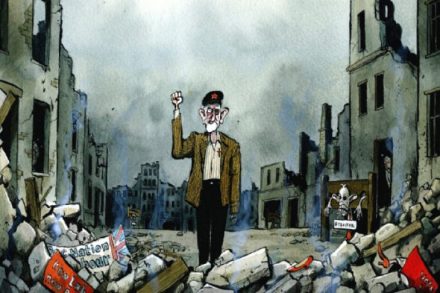
Theresa May has once again ruled out a snap general election but that doesn’t mean the temptation to hold one will go away. Today’s ICM poll shows why: the Tories, on 45 per cent, have a 19-point lead over Labour. This pushes the Government’s poll lead up by three points following a fortnight dominated by Philip Hammond’s Budget debacle, his subsequent u-turn over hiking national insurance rates and Theresa May coming under pressure from the SNP. With Jeremy Corbyn in charge of the Labour party, the usual rules that a government would be punished for a bungled budget need not apply.

Theresa May will trigger Article 50 next week

From our UK edition

The wait is over. Almost. Theresa May will trigger Article 50 - the first formal step in Britain's departure from the EU - on March 29th, Downing Street has confirmed. Brexit Secretary David Davis said: ‘Last June, the people of the UK made the historic decision to leave the EU. Next Wednesday, the Government will deliver on that decision and formally start the process by triggering Article 50. We are on the threshold of the most important negotiation for this country for a generation.’ The announcement means that the Prime Minister will make good on the pledge she made at the Tory party conference to kick start the process of Brexit before April 1. Next week's announcement will undoubtedly be significant in terms of symbolism.

George Osborne finds old habits die hard

From our UK edition

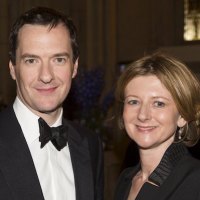
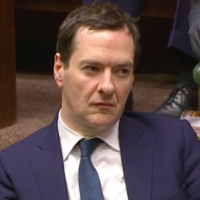
George Osborne became the subject of much mockery over the weekend after Rohan Silva let slip that the former chancellor had only decided to apply to be editor of the Evening Standard editor after friends had come to him for help with their own applications. While Mr S has since advised readers not to approach the MP for Tatton for career advice (unless one is sure Osborne would not be interested in the job for himself), it may be best to avoid going to Osborne for help full stop. Mr S couldn't help but recall an interview the Tory politician gave to the Mail on Sunday, in which he revealed how he met his wife Frances.

If the EU didn’t like Boris’s prison guard joke, why conform to the stereotype?

From our UK edition

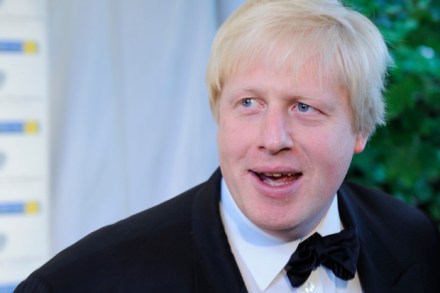
A few weeks ago, Boris Johnson made a point about the EU negotiations and the futility of the idea of punishing Britain for the sake of it. ‘If Monsieur Hollande wants to administer punishment beatings to anybody who chooses to escape’, he said, ‘rather in the manner of some World War II movie, then I don’t think that is the way forward, and actually it’s not in the interests of our friends and partners’. Cue howls of outrage. ‘Abhorrent and deeply unhelpful’, said Guy Verhofstadt, the European Parliament’s chief Brexit negotiator. But was Boris really so wide of the mark?

What the papers say: Why Tony Blair is still wrong about Brexit

From our UK edition

Why did 17.4m people vote for Brexit? A long list of reasons have been put forward but Tony Blair thinks he has the definitive answer: ‘authoritarian populism’. The Sun is not impressed; the paper says that it’s a sorry spectacle to see former Prime Ministers ‘slinging insults’ at voters having been ‘defeated and rejected by the people they used to govern’. What’s more, Blair’s attempt to explain away the referendum shows he is missing the point. After all, the paper argues, Blair seems rather less keen to ‘acknowledge the effects of the uncontrolled immigration he forced on British communities’ in determining the outcome of the referendum. But Blair isn’t alone.

George Osborne trolls MPs

From our UK edition

After George Osborne was announced as the new editor of the Evening Standard on Friday, there was uproar across the House -- with Labour writing to the Cabinet Office to complain about the appointment while Tory MPs took to their WhatsApp threads to sulk. Today the drama moved into the Chamber thanks to an Urgent Question from Labour's Andrew Gwynne. Asked about the ministerial code relating to Osborne's latest job, Ben Gummer -- speaking for the government -- said the advisory committee on business appointments has received a letter from George Osborne about his appointment as editor of the Standard. The minister for the Cabinet Office said the committee were 'considering' the request and would publish a decision in due course.

Boris Johnson and the Cursed Theatre Trip

From our UK edition

Spare a thought for Boris Johnson. Ever since the Brexit vote, the Foreign Secretary has struggled with the often hostile reception he now receives in London from angry remain-ers. Now it seems things have got so bad that he can't even enjoy a quiet night out at the theatre. Thandie Newton -- the Crash actress -- tells the Sunday Times that her teenage daughter, Ripley, spotted Johnson in the audience on a recent trip to see Harry Potter and the Cursed Child at the Palace Theatre. Alas Ripley doesn't hold such a high opinion of the Conservative politician and she proceeded to seek him out to alert him to this fact: 'She went over to say: “Hello, Mr Johnson, my name is Ripley Parker and I just wanted to tell you you’re a c---. I hope you enjoy the show.

Sunday political interviews round-up

From our UK edition

Tim Farron's fearsome foursome: May, Le Pen, Trump, Putin What can Tim Farron, leader of the Liberal Democrats, do to get attention? He had an idea  for the party's conference in York today: suggest that the world is in the grip of a fearsome foursome: Donald Trump, Vladimir Putin, Marine Le Pen... and Theresa May. He claimed that have the same traits in common: being "aggressive, nationalistic, anti-Nato, anti-EU. It is the post-war internationalist consensus unravelling in real time. Winston Churchill's vision for a world that achieves peace through trade, common values and shared endeavour evaporating before our eyes." Clegg: Bring on the election.

The great ‘adventure story’ of British Catholicism

From our UK edition

Roy Hattersley would never have been born had it not been that his mother ran away with the parish priest who instructed her in the Catholic faith before her marriage to a collier — the priest conducted the wedding; a fortnight later they eloped. This deplorable episode had one happy consequence: the birth of Roy, who never knew the reason for his father’s ease with Latin until after he died. So Roy is in a way a small part of his latest book, The Catholics, a history of the church and its people in Britain since the Reformation. He is an atheist but says, ‘Religion in general — belief in the unbelievable — fascinates me.

Is the main purpose of the cabinet secretary to frustrate the PM?

From our UK edition

The minister’s private secretary wrote to another cabinet minister about the previous day’s cabinet meeting: They cannot agree about what occurred. There must have been some decision, as Bright’s resignation shows. My chief has told me to ask you what the devil was decided, for he be damned if he knows. Will you ask Mr G. [Gladstone] in more conventional and less pungent terms? That was in 1882. Twenty years later, the fog still reigned. Sir Robert Morant, the driving force behind Balfour’s 1902 Education Act, wrote: Impossible to find out after a cabinet meeting what has actually been the decision. Salisbury does not seem to know or care, and the various ministers who do care give me contradictory versions.