Students

Students against abortion

From our UK edition

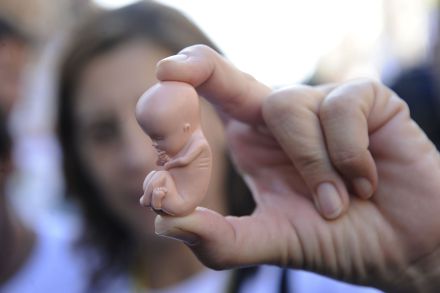
In November 2013, the campaign group Abortion Rights announced their first-ever student conference. It was, they explained, in response to ‘many student unions reporting increased anti-choice activity on campuses’. Societies such as Oxford Students for Life, which I’ve been part of for the last couple of years, don’t tend to think of themselves as ‘anti-choice’, but it’s true there are more of us around. The number of young people who are opposed to abortion, or at least worried about it, is growing — this despite the usual hostility from student unions. Just look at the results of a ComRes survey conducted in April.

Students worrying about ‘value for money’ miss the point of an arts degree

From our UK edition

University towns are already awash with fur-trimmed gowns and proud parents, but behind the smiles there’s a glimmer of resentment: four in 10 of those graduating this year think they’ve been ripped-off. According to a survey of 1000 final-year students by ComRes, students are split over whether they think their degree was good value for money. One factor determining their verdict was their subject, with two-thirds of those studying science, technology, engineering and maths saying their course was worth the fees. Just 44 per cent of humanities and social science students agreed.

‘Trigger warnings’ are tools for censorship. They have no place in academia

From our UK edition

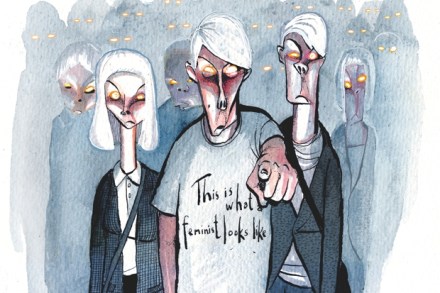
I get defensive when feminists are accused of being prudes. There’s nothing prudish in critiquing a monotonously promiscuous culture; in despairing of unrealistic body standards, or believing, as I’ve argued before, that porn is healthy, even necessary, when it’s privately stashed under the mattress, but doesn’t belong on the high street. Then a bunch of students does something so reactionary in the name of feminism that we may as well scatter séance candles about the university library and revive en masse the spirit of the Victorians.

The Greens’ regressive message has lost them student votes

From our UK edition

‘If you’re not a socialist before you’re twenty-five, you have no heart; if you are a socialist after twenty-five, you have no head,' goes the old, oft-misattributed saying. But if you’re a Green party supporter on a university campus today, you’re more likely to have no friends. It was reported last week that the Green party's share of the student vote has almost halved in the past two months – falling from a peak of 28 per cent to a paltry 15. In January, the Greens’ vote was creeping up on Labour (the consistent student favourites) but it has now plummeted below even that of the so-called ‘Tory scum’ you hear so much about on tuition-fees demos.

Young votes are there to be won but politicians don’t seem interested

From our UK edition

If I had a penny for every time a politician or a journalist insinuated that of all the issues facing Britain in the 21st century, public transport was the thing that affected my life the most, I would own a bus company. If I had a penny for the amount of times someone asked how angry I was about Clegg and tuition fee rises, I would have no student debt. But this is the political climate we currently live in. Modern politicians have well and truly shafted young people, and not just through policy changes or obvious attempts to bribe their older, greyer core vote. I'm talking about Westminster’s desire to constantly label all young people the same.

Dear Mary | 16 April 2015

From our UK edition

Q. I have moved from London to the centre of a historic market town, now becoming famous as a foodie destination. For some reason people who would never have dreamt of dropping in without ringing when I lived in Kensington now think it almost de rigueur to knock on my door without warning when they are staying locally for the weekend. I like many of these people — but such unplanned visits are disruptive. Can you suggest a way I might retrain people to give me notice without seeming middle-aged and crusty? — Name and address withheld A. Make it a policy to always put on a coat and hat or sunglasses before answering the front door and to be holding your keys.

The war on frat culture

From our UK edition

 New York It’s a new semester and a new start at the University of Virginia. Thomas Jefferson, the university’s founder, once encouraged America’s youth to ‘come and drink of the cup of knowledge and fraternise with us’. But this term, any student who fancies a swig from the cup of knowledge had better be sure it doesn’t contain any unauthorised alcohol — in fact he should beware fraternising at all, especially in a ‘frat house’, for fear of breaking the strict new rules. It’ll seem incredible to fans of the 1978 film Animal House, but at the University of Virginia, one of the heartlands of America’s famous ‘Greek’ system, the chilly hand of authority has clamped down on frat-house life.

Why tomorrow’s parents won’t want their children to go to university

From our UK edition

Could the current generation of parents be the first ones who won’t want their children to go to university? Until now that mortarboard photo on the sideboard has always been the dream, visual proof that your offspring have munched their way to the top of the educational food chain. Advancement by degree. But that was before tuition fees. Now there’s a price tag attached to your little one’s ‘ology’ (to quote Maureen Lipman in those BT ads), how many people will automatically see it as a good thing? Perhaps more of us will refuse to prostrate ourselves before the great god Uni? If so, that can only be a good thing. I attended Manchester University between 1989 and 1992.

Warning: these books could seriously damage your health

From our UK edition

Welcome to 2015, the year that speaking and writing freely had to stop. Anything that might cause trauma to anyone of any race except the white one will be expunged, and the perpetrators of politically incorrect speech or written word will be airbrushed for ever. The word trauma derives from the Greek and means wound. The literary canon will be the first to bite the dust as it’s one big trauma, especially for feminists. The Great Gatsby, for example, is bonfire material because of a variety of scenes ‘that reference gory, abusive and misogynistic violence’. And let’s not forget The Adventures of Huckleberry Finn, as racist a book as ever there was — worse than Gone with the Wind.

Left-handed people are stupid (and everyone who worries about immigration is a bigot)

From our UK edition

Thoroughly cheering news emerged this week that left-handed people are likely to earn between 10 and 12 per cent less than their right-handed colleagues. (So 11 per cent less, then). Good. I have never cared for left-handed people, considering them arrogant and possessed of unsavoury personal habits — and were I an employer I would not give jobs to any of them. I would let them moulder on benefits, and laugh and point as I passed them waiting at the bus stop on their way to the dole office. Awful people. The most famous left-handers from history were Gerald Ford, Fidel Castro, the spoon-bending self-publicist Uri Geller and the controversially sexist Victorian Jack the Ripper. I think that tells you all you need to know.

Spectator letters: A history of Stepford Students; Brendan Behan and Joan Littlewood; and the Army’s tour of Pakistan

From our UK edition

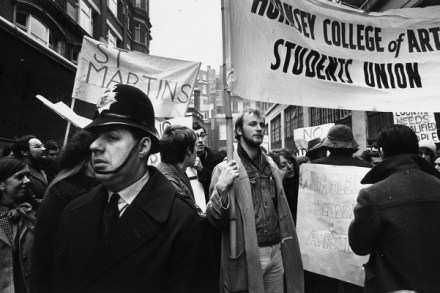
Silencing students Sir: The Stepford Students (22 November) are nothing new. The NUS-inspired ‘No Platform’ policy has been used to ban anything that student radicals don’t like since at least the 1970s — usually Christians, pro-life groups or Israel sympathisers. It should not be in the power of the narrow-minded activists of the student union to prevent individual students or groups from exercising their right to free speech and freedom of association. All students should have equal access to university-funded facilities, regardless of their beliefs.

Free speech is so last century. Today’s students want the ‘right to be comfortable’

From our UK edition

[audioplayer src="http://rss.acast.com/viewfrom22/8f1c0b97-698e-45c6-b50a-84e0e4b3773a/media.mp3" title="Brendan O'Neill and Harriet Brown discuss the rise of the Stepford student" startat=41] Listen [/audioplayer] Don't be a Stepford student — subscribe to The Spectator's print and digital bundle for just £22 for 22 weeks.  Have you met the Stepford students? They’re everywhere. On campuses across the land. Sitting stony-eyed in lecture halls or surreptitiously policing beer-fuelled banter in the uni bar. They look like students, dress like students, smell like students. But their student brains have been replaced by brains bereft of critical faculties and programmed to conform.

Having an abortion means ending a life. Even pro-choice students should realise that

From our UK edition

Last week, the Tab, an online student tabloid, published an article by an anonymous Cambridge student entitled ‘I shouldn’t have been aggressively reminded of my abortion at Freshers Fair’. The author was complaining that she had been upset by a stand at the fair run by Cambridge Students For Life, an anti-abortion student society. The stall, she argues, had no place at an event that is meant to welcome new freshers, and was offensive to her personal choices. Her article certainly offended me. Her own abortion, she tells us, 'crosses my mind only once in a blue moon, and never tinged with regret'. It is clear that she considers abortion to be a feminist issue, akin to equal-employment rights or women’s suffrage: 'I am a confident woman and assertive feminist. . .

‘Islamophobia’ strikes again – national students’ union refuses to condemn Isis

From our UK edition

[audioplayer src="http://traffic.libsyn.com/spectator/TheViewFrom22_16_Oct_2014_v4.mp3" title="Sean O'Callaghan and Govinda Clayton join Lara Prendergast to discuss talking to terrorists." startat=808.5] Listen [/audioplayer] In a world often devoid of good news, there has been a fine development on the farthest-flung shores of insanity. The British National Union of Students aspires to represent students, though traditionally tends only to represent those students who are politically ambitious and possess left wing views. In any case, its latest idiocy is that it has tied itself in knots over the Islamic State in Iraq and Syria - Isis. A condemnation of the ebullient Islamic group was tabled by a student of Kurdish descent.

The death of student activism

From our UK edition

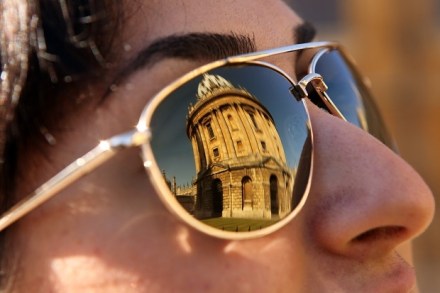
Oxford students heard this morning that, after a three-day referendum, our student union, OUSU, will be disaffiliating from the National Union of Students. I voted to break with the NUS, and I felt confident doing so: Oxford’s membership currently costs us over £25,000 a year, and, aside from the dubious satisfaction of knowing that Nick Clegg will never be short of misspelt placards to stare at, no one has a clue what we get in return. The most notable thing about the referendum was how little people cared. The turnout was just 15 per cent, despite voting taking place online.

Opera tickets are too cheap

From our UK edition

A revival of Anna Nicole will open the Royal Opera House new season, it was announced today. And students will be able to get in for £1, tweeted Kasper Holten proudly. A quid! So that’s an orchestra, an excellent cast of 17, a chorus, a production team of two or three dozen, two hours of words and music and a very good conductor all for less than one pot noodle. The news might baffle. The received wisdom is that opera tickets are too high. Far too high. So high that they are the principal (if not sole) reason why the art form has fallen behind the others in the popularity stakes. But the reality has always been quite different. Even for adults, a portion of Royal Opera House tickets has always been dirt cheap.

How local government is threatening Oxford University’s competitiveness

From our UK edition

The press love a bit of Oxbridge competition, but Oxford is embroiled in a far older and more ruthless rivalry: town vs. gown. It was in a dispute between the university and city of Oxford that Cambridge University has its foundations. In 1209, according to Roger of Wendover’s chronicle, an Oxford liberal arts scholar accidentally killed a woman. The Mayor led a group of townspeople to the killer’s house, only to find that he had fled - instead, they seized the three innocent scholars with whom he rented the house and hanged them. Fearing future tyranny and terrified of their fellow citizens, an exodus of Oxonians left the dreaming spires for a provincial backwater on the river Cam.  History repeated itself in 1355. A pub fight escalated into the two-day Battle of St.

Ancient Rome’s fraudulent foreign students

From our UK edition

Foreign students getting on to courses under false pretences, overstaying their welcome and so on are nothing new. Ask the Romans. In the 4th century AD, the Roman empire was tottering, and Diocletian decided to sort it out. The resulting increase in bureaucracy led to a large rise in taxation. This laid a particularly heavy burden on the wallets of the wealthy who ran local government (the decuriones), because it was their duty not only to collect local taxes but also to make up any shortfall. But there were tax exemptions, one of which was for students — a luxury only the rich could afford. The result was a sudden enthusiasm for education.

I’m ashamed of myself

From our UK edition

On waking up (at noon) on Thursday morning, I found I had a text from one of my fellow History freshers. Sent at 6am and accompanied by a screenshot of a half-finished essay: ‘WHY am I still up?!’ The all-nighter is a notorious Oxford experience, and not one I thought I would ever have to sample. ‘I’ll be fine getting the work done at university,’ I blithely assured those warning me of how unstructured a History student’s life is, ‘I like to keep busy.’ What I failed to appreciate is that it’s impossible not to be busy at university. School without lessons was dire — by Tuesday afternoon of the pre-Christmas week of ‘fun’ I had lost the will to live, let alone make Chemistry-themed paper-chains.

Cheated by freshers’ week

From our UK edition

My freshers’ pack (a yo-yo, two balloons, a sachet of instant hot chocolate and a condom) is barely visible beneath English Historical Documents, volume 1. Two nights of dancing knee-deep in foam has taken its toll on my shoes, and I feel slightly tricked - encouraged to partake in a week of university-approved partying, and then, two days in, given a 19-item reading list and an essay due in for next week. School friends’ Facebook pages are torturous: three weeks into term at other universities, yet to hand in their first piece of work and seemingly out every night. At dinner the conversation has morphed from ‘So where are you from?’ to ‘You haven’t started writing yet either, have you?’.