Streaming

The streaming model is broken

From our UK edition

‘Do you want to stream something?’ my girlfriend asked me. It was 5 p.m. on a Saturday and I’d had a horrendous week. I’d caught one of those mutant viruses that you learn about in nursery rhymes or at the London Dungeon. The cough was the worst part. It was the sort of cough that evacuates a Tube carriage. It was the sort of cough you hear in a western before the protagonist says: ‘Old Billy Boy got consumption. There ain’t a darn thing we can do ’bout it. Doc says he got weeks. Poor bastard. He ain’t never gon’ make it to Montana.’ In short, I was feeling out of sorts. And as such, I was ready for some mind-numbing television. ‘We can watch something,’ I said. ‘What do you fancy?
The new Stranger Things is loopy and sweet

So, the new – and supposedly final – season of Stranger Things has arrived in Netflix, just in time for Thanksgiving. Expectations have been through the roof that this installment will not be a turkey, but the good (stranger?) thing about the series so far is that it has maintained a remarkably high level of quality since it began in 2016. This is by no means a given for an Eighties-inflected fantasy show that is so devoted (the cynics might and have said slavishly) to all things that Steven Spielberg produced in that decade that the bearded one might have sued for plagiarism, were it not for the fact that the homage remains an affectionate and heartfelt, rather than cynical, one.

stranger things

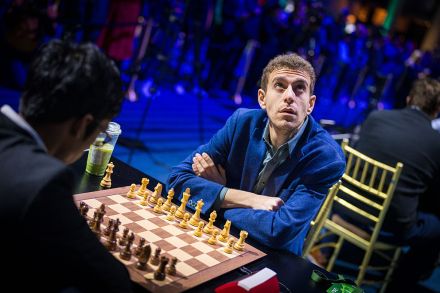
How chess killed Danya Naroditsky

Last month, chess grandmaster Daniel “Danya” Naroditsky started streaming again from his house in North Carolina. He had taken a break from it recently; I was one of at least a thousand viewers to welcome him back that night. But something was off. Danya, normally effusive and energetic, seemed haggard. As the broadcast went on, he began to slur his words. At one point, realizing he’d made a wrong move, he punched himself in the head. It was painful to watch. Throughout, Danya talked about a man whose accusations had allegedly subjected him to torment and abuse over the past year. At times, he was close to tears.

danya naroditsky

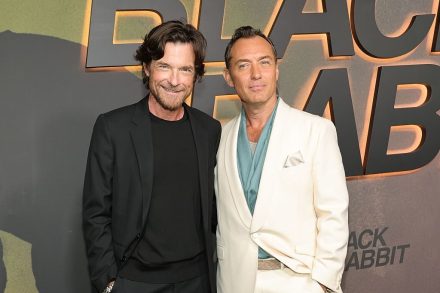
Jason Bateman breaks bad in Black Rabbit

When Bryan Cranston staggered on-screen in the opening scene of Breaking Bad in 2008, stumbling out of a crashed RV dressed only in his underpants, and addressed the camera with, “My name is Walter Hartwell White…to all law enforcement entities, this is not an admission of guilt,” he immediately changed perceptions of who he was as an actor. Previously, he was best known for being the goofy dad in Malcolm in the Middle, and despite some effective straight performances, most thought of him as a comedic performer, rather than the star of what became the most talked-about crime drama series since The Wire. Jason Bateman would, one presumes, like to follow Cranston’s lead.

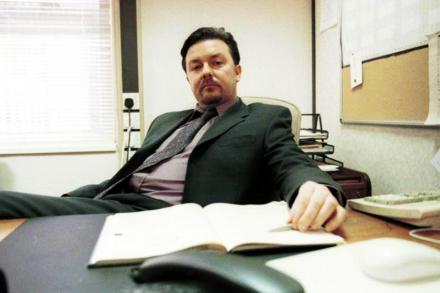
The Office is the TV show that will never die

From our UK edition

A thought hit me when bingeing the first series of The Paper on Sky’s Now streaming service this week: how on earth did it take this long for someone to make a sequel to The Office? Don’t get me wrong, this wasn’t a glowing verdict on the comic merit of The Paper – an Office-style mockumentary set in a struggling regional newspaper in Toledo, Ohio. Rather it was a reflection on the usually mercenary economics of big television. During the pandemic, the American version of The Office racked up an astonishing 57 billion streaming minutes, despite its final episode having aired in 2013. The show premiered in 2005, inspired by the British sitcom created by Ricky Gervais and Stephen Merchant that ran from 2001 to 2003 (and which is itself still a big hit on iPlayer).

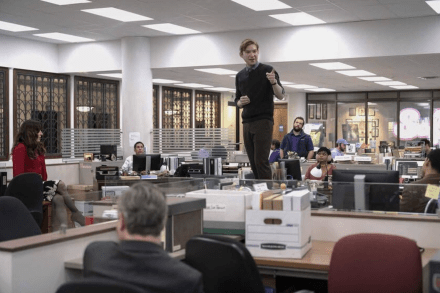
The Paper is really, really bad

Making a spin-off of a spin-off is the trickiest task on television, not least because it assumes that the audience is sufficiently fond of the original and the reinvention alike to be happy to go steady with the third round, too. In all fairness, the new workplace-themed sitcom (although on the evidence of this first season, comedy-drama is probably a more accurate designation) The Paper is only a callback to the US The Office, in that its premise is that the same documentary crew that captured the bewildering banality of life at Dunder Mifflin has headed to Toledo, Ohio, there to follow the travails of a once-proud, now-flailing newspaper, the Toledo Truth-Teller.

Channel 4’s Beth is a sad glimpse into the future of terrestrial TV

From our UK edition

On the face of it, Beth seemed that most old-fashioned of TV genres: the single play. In fact, Monday’s programme was the complete version of a three-parter made for YouTube and excitedly announced as Channel 4’s first-ever digital commission. A less excited interpretation, however, might be that it was Channel 4’s first sign of surrender to the hostile forces of streaming now threatening all of Britain’s terrestrial networks. Either way, it was a peculiar watch that, over the course of its 36 minutes, felt less like a fully fledged drama than notes towards one. In a nervous bid to ensure YouTube viewers were gripped before they could search for something else, it began with a good-looking couple having sex. But not for long.

Is Taylor Swift ushering in a new era for movie theaters?

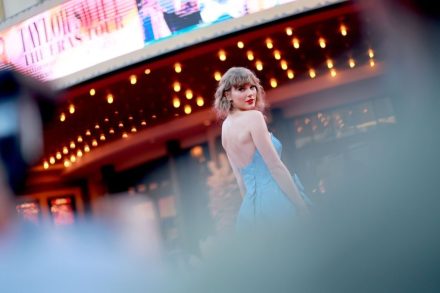
After a relatively quiet few weeks at the US box office, now that the Barbenheimer phenomenon has finally receded from view, it has fallen to another all-conquering icon to drag audiences back to theaters in their millions. Yes, Taylor Swift is no longer content with conquering stadia, but has now managed to establish herself as an unparalleled draw for the big screen as well, with Taylor Swift: The Eras Tour opening in American cinemas. With a first weekend gross of $97 million, it will either be the highest October launch since Joker in 2019, or even surpass it. Not bad for something made on a budget of no more than $20 million, self-produced by Swift herself and bypassing studios to be distributed directly to theaters.

taylor swift

Apple’s foray into streaming

On September 9, 2014, Apple users found an unrequested gift in their iTunes: a new U2 album. Songs of Innocence was supposed to jump-start a new wave of engagement with Apple’s music products, introducing their enormous user network to it for free. And it worked: Apple announced that it was “the largest album release ever.” But just because something’s free doesn’t mean people will use it. The following Monday, Apple released instructions for how to remove the album. Bono has subsequently, and repeatedly, apologized. Five years later, in March 2019, Apple announced its entrance to the streaming game: Apple TV+.

apple

Elon Musk’s new CEO will move Twitter toward streaming

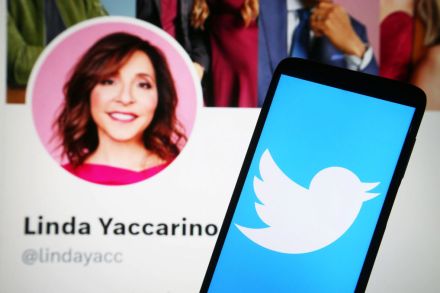
Elon Musk’s hire of Twitter’s new CEO, Linda Yaccarino, says a lot about where Musk plans to take the news-dependent, micro-blogging website that has become the center of the media universe. Notable conservative Twitter accounts raised alarms that Yaccarino is a social justice warrior who pushed DEI and mask and vaccine mandates and wants to return Twitter to a "woke" paradise that sees accounts banned for thought crimes. Meanwhile, progressive media accounts highlighted her Catholic background and Republican connections. Right-wing accounts declared it the death of Twitter, even as it was revealed that Tucker Carlson will be bringing streaming programming similar to his former show on Fox News to the platform.

linda yaccarino

Is YouTube TV about to fumble NFL Sunday Ticket?

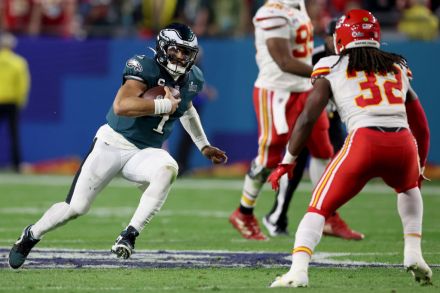
Over the past few years, the NFL, a professional sports behemoth built largely on the backs of broadcasting deals with the major TV networks, has thrown its lot in with Big Tech to grow its game. In 2022, it was Amazon securing the broadcasting rights to Thursday Night Football. Now, in 2023, it's YouTube TV — and parent company Google — getting in on the pigskin profits. YouTube TV has just landed one of the juiciest plums of all: NFL Sunday Ticket.  From its debut in 1994 until this past year, Sunday Ticket was the domain of satellite cable provider DirecTV. The service was a way for NFL fans to watch every game on the Sunday slate, as opposed to just the two or three offered by the networks in local markets.

nfl sunday ticket

Is Glass Onion a victim of its own success?

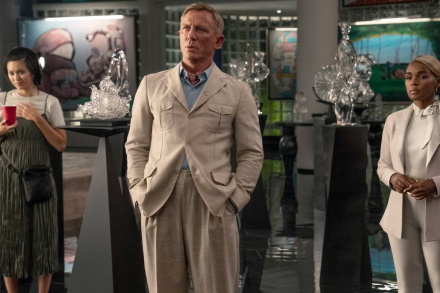
Screen adaptations of Agatha Christie mysteries never go out of style. The problem is that they're so often concerned with literal fidelity that they get bogged down in self-seriousness, so desperate to “update” everything that they veer into the ludicrous. With 2019's Knives Out, Rian Johnson successfully updated the Christie-style whodunit because he had a deep knowledge of its formula and he played it with a pitch-perfect, kooky sensibility. For Knives Out’s sequel, the newly released Glass Onion, Johnson does what you should do when Netflix gives you buckets of money to make a whodunit. There are expensive locales and production design, a bevy of great character actors and a twistier murder plot.

Blockbuster is the best argument in favor of That ’90s Show

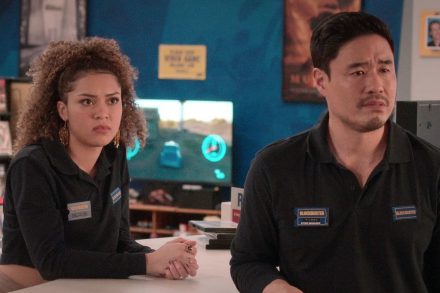
Blockbuster is a single-cam sitcom about the last Blockbuster (located inside a strip mall in Michigan). The set is dressed in authentic signage, fluorescent lights, blue walls and an oddly prophetic Howard the Duck poster. The employees have real Blockbuster name tags and uniforms (the producer, John Fox, acquired the rights and handed it over to established showrunner Vanessa Ramos: I have the rights to Blockbuster. Would you like to develop a workplace?). Every episode is packed with movie references and checkout-counter humor. The transitions between scenes are scored to hip-hop beats that sound like something you’d hear on Nickelodeon in the Nineties. You’re inside a Blockbuster for the first time since Carol Danvers fell through its roof in Captain Marvel.

blockbuster

Is Netflix losing the battle of the streaming giants?

From our UK edition

From time to time, Netflix’s marketing brains like to get a bit cute with the company’s past. ‘Don’t give up on your dreams – we started with DVDs,’ read one recent viral post. But while the streaming giant happily references its most famous transition, it’s much more coy (and probably wisely) when it comes to its latest one. It isn’t hard to see that 2022 Netflix is a very different beast to the one most of us signed up for. If you joined Netflix during its peak – e.g. somewhere in the long window between House of Cards and Tiger King – you would have likely bought into the idea of it being a one-stop shop for all things streaming. But has it really kept that promise?

The Princess is misanthropic TikTok schlock

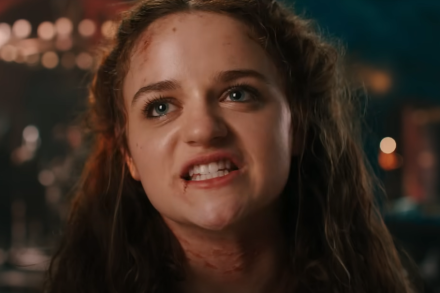
The studio pitch for Hulu’s new direct-to-streaming action thriller The Princess probably went something like this: “What if we crossed The Princess Bride with The Raid: Redemption?” Honestly, though, that logline makes the film sound better than it is. The Princess is a dizzying, hyperviolent spectacle that blends nonstop combat with a decidedly progressive moral vision, resulting in an eminently GIF-able — but emotionally sterile — finished product. The eponymous Princess (Joey King, whose breakout role was Beverly Cleary’s Ramona Quimby), who’s never given a proper name, inhabits a quasi-fantastical European kingdom devoid of magic or monsters on the model of The Princess Diaries’ Genovia.

Picking Apple

Would you sign up for a screening streaming service that only had a dozen movies? A handful of series, and no classics? You might pause and ask if it’s worth it, compared to the range of options on other streaming providers. But if you’re like many of us, you might decide to pony up — after all, it’s only $5. Of course, I’m describing Apple TV+. It’s cheaper than Netflix or Hulu. But what you get, at least for now, is pretty limited. That’s not to say what they have isn’t good: they’ve pumped in a massive budget to lure creators like Oprah and Werner Herzog to this enterprise. Their movies have major stars. There just aren’t many of them. But they could have gone the other way.

apple

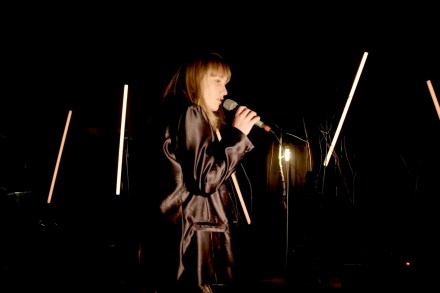
Reminiscent of Roxy Music’s cocktail sound: The Weather Station reviewed

From our UK edition

One of the unforeseen consequences of the rise of streaming was a change in the very structure of the pop song. Listeners who needed only to click a button to explore an unfathomable amount of music rapidly lost patience. They were less willing to listen to long songs; they were less willing to wait for songs to develop, even over the course of three minutes; they liked songs that sounded the same as other songs they were familiar with. And so, over the past decade or so, pop has adopted a formula: songs now tend to open with a huge hook, then throw more hooks on top of that, and then — because a small cadre of songwriters and producers are viewed as safe hands — they get remade in barely different forms again and again.