Steve bannon

The Trump revolution is devouring its own children

From our UK edition

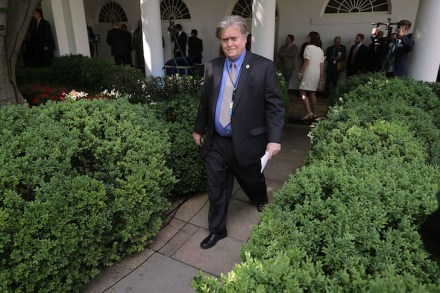
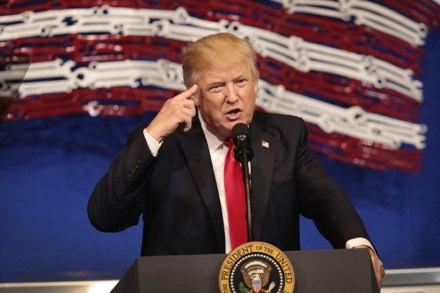
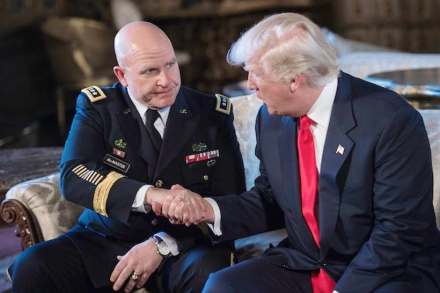
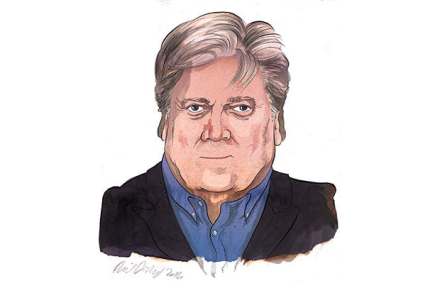
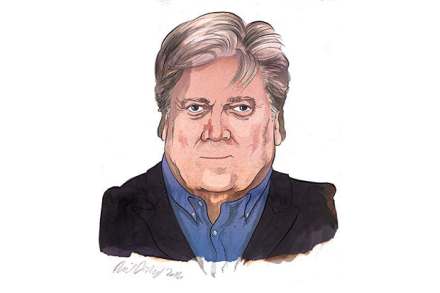
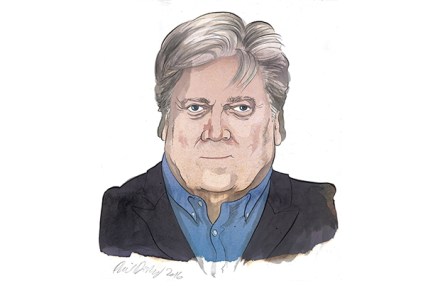
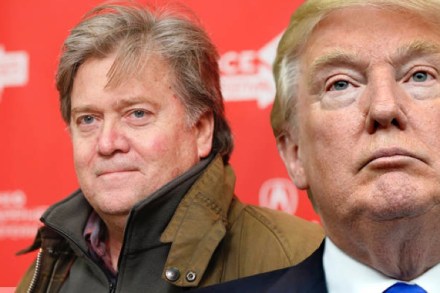
Steve Bannon is out. H.R McMaster is in. It's now starting to dawn upon some of Donald Trump's most ardent admirers that they've been had. The main accomplishment of the Trump revolution has not been to forward populism. It has been to devour its own children. Trump entered office declaring that 'this carnage ends now'. Not so. He's been producing it in the form of lopping off the head of one adviser after another. Bannon is now promising 'war' against the 'New York Democrats' that he says are running the White House. If so, it will be a fratricidal one. Bannon was of course the brains behind Trump's defeat of Hillary Clinton, something that the president could never entirely forgive. Trump wants all the credit for himself.
Is Donald Trump now at war with Trumpism?

From our UK edition

Ding dong Steve Bannon is gone – and all the liberal world order is cock-a-hoop. As Democrat congressman Tim Ryan said, ‘Good. He had no business being there to begin with.’ Or as Nita Lowey, D-N.Y. put it, ‘Steve Bannon should have never been a White House official.’ Maybe it is a good thing that Steve Bannon, an apocalyptic thinker better suited to Breitbart and Talk Radio agitation than real power, is gone. And yet and yet – in the craziness that is Trumpland, Bannon was the closest thing to a coherent strategic thinker in the White House. Who is there now? Bannon had principles – mad ones, perhaps – but a thought-through worldview. I'm not convinced anybody else in the White House does.

Yet again, Trump’s presidency has conformed to a Saturday Night Live sketch

From our UK edition

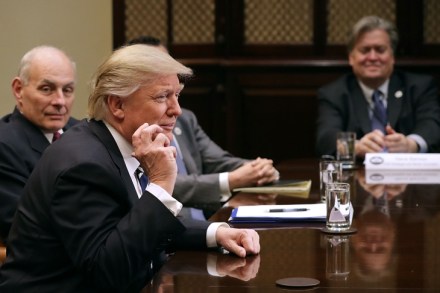
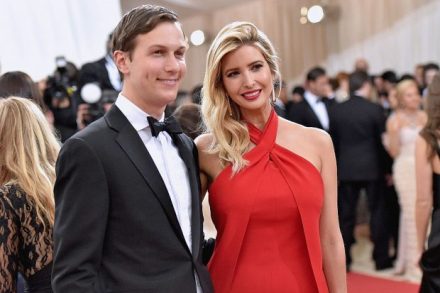
The statement from the White House makes little attempt to disguise what happened. ‘White House Chief of Staff John Kelly and Steve Bannon have mutually agreed today would be Steve's last day. We are grateful for his service and wish him the best.’ This is pretty much the same form of words used when Anthony Scaramucci was fired by Kelly. Four senior White House aides have now gone in the last five weeks. So it seems that Kelly, a former US general brought in by Trump a few weeks ago, is serious about fixing this dysfunctional White House – and, perhaps more strikingly, Trump seems serious about letting him do so. The clincher seems to be a new alliance between Kelly and Jared Kushner, Trump's son-in-law, who has wanted Bannon fired for some time now.

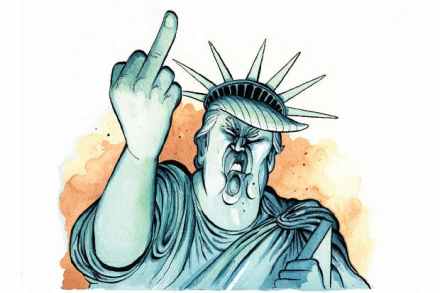
Trump’s presidency will stain America for years to come

From our UK edition

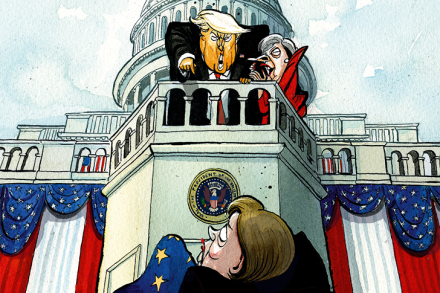
It is amazing what a crowd - or a basket - of deplorables can do. Sometimes they can even strip away cant and reveal the truth. Such has been the case since a few hundred neo-Nazis and assorted other white supremacists marched in Charlottesville, Virginia, at the weekend. They were protesting the planned removal of a statue honouring General Robert E. Lee, a statue typical of the American south’s longstanding emotional sympathy for the Confederacy. The Confederates might have been wrong, but they were romantic and, besides, they were our kind of wrong. Of course they should still be honoured by statues that serve as consolation prizes or participation trophies. America’s original sin endures, you know.  And it lives in the White House too.

Trump’s Brit

From our UK edition

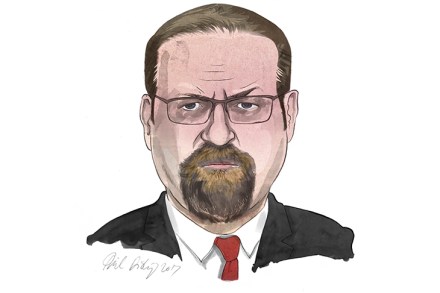
Sebastian Gorka is a big man. He has a powerful handshake, a deep voice, and a serious goatee. He’s also deputy assistant to President Donald Trump, and known as the most influential Brit in the White House. He was born in London, the son of Hungarian immigrants, and grew up in Ealing. Yet he seems to identify more with America and Hungary than with Britain. When I ask him if he feels British, he says, ‘As a good friend said to me, and I think this is a quote from someone else, possibly Hayek, “You were always American, you were just born in the wrong country.”’ Nevertheless, the British government, desperate to form bonds with a Brexit--friendly Trump administration, has been eager to claim him as one of us.

Why it’s a shame Steve Bannon is being sidelined

From our UK edition

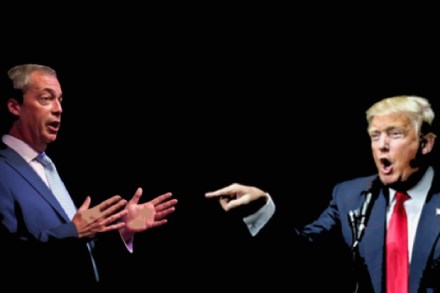
There were three reasons why I so badly wanted Donald Trump to win the US presidential election. One was that the alternative was Hillary; another that I knew it would annoy all the worst people in the world; but the third was a positive one: I genuinely believed that as an independently wealthy, outsider candidate with no loyalties to the DC establishment, Trump was going to be the revolutionary hero who would finally free the people from the shackles of a corrupt, sclerotic and self-serving ruling elite. Some may scoff at my naivety. But there was evidence to support my view. Brexit had just happened and what seemed clear from Trump’s embrace of Nigel Farage was that he saw himself as part of the same populist wave.

Is Trump’s revolution already over?

From our UK edition

There were three reasons why I so badly wanted Donald Trump to win the US presidential election. One was that the alternative was Hillary; another that I knew it would annoy all the worst people in the world; but the third was a positive one: I genuinely believed that as an independently wealthy, outsider candidate with no loyalties to the DC establishment, Trump was going to be the revolutionary hero who would finally free the people from the shackles of a corrupt, sclerotic and self-serving ruling elite. Some may scoff at my naivety. But there was evidence to support my view. Brexit had just happened and what seemed clear from Trump’s embrace of Nigel Farage was that he saw himself as part of the same populist wave.

Donald Trump is listening to his generals – and that’s great news for Britain

From our UK edition

‘Great Britain has lost an Empire and not yet found a role’. Fifty-five years on, Dean Acheson’s remark has not lost its sting. British statecraft is, even now, an attempt to lay claim to a place in the post-imperial world. The events of the past few months — Brexit, the election of the most unlikely US president in history and the debate over the Union — all raise the issue of what kind of country Britain hopes to be. The chemical weapons attack in the rebel-held town of Khan Sheikhoun in Syria last week has prompted the first foreign policy crisis of this new era. Britain’s role in the response has become a proxy for the wider debate about our global standing.

Donald Trump turns on Steve Bannon

From our UK edition

Steve Bannon fast became the most powerful person in the world you’ve never heard of. The man behind the Breitbart website became Donald Trump's chief strategist and was credited with both Trump’s presidential victory and his wholehearted embrace of an America First, nationalist position in his first month in office. But Bannon’s influence has been on the wane in recent weeks. He’s got into a power struggle with the President’s beloved son-in-law Jared Kushner; despite one of the rules of Trump world being that family always wins. The ‘establishment’ have also gained at his expense.

Putin’s Syria problem

From our UK edition

For Vladimir Putin, Syria has been the gift that kept on giving. His 2015 military intervention propelled Russia back to the top diplomatic tables of the world — a startling comeback for a country that had spent two decades languishing in poverty and contempt on the margins of the world’s councils. At home, the war took over as a booster of Putin’s prestige just as the euphoria over the annexation of Crimea was being eroded by economic bad news caused by low oil prices and sanctions. In the Middle East, Russia was able to show both friends and enemies that it was once again able to project power every bit as effectively as the Soviet Union had once done.

Has Steve Bannon been sidelined?

From our UK edition

Perhaps Steve Bannon isn’t quite as all-powerful within the Trump administration as everybody believed. He’s just been removed from the principals committee of the National Security Council. This news has been understood as a sign that Trump’s new National Security Advisor H. R. McMaster is now calling the shots on foreign policy. The spin in Washington is that Bannon’s role on the NSC had been to act as a ‘check’ on the now disgraced former advisor Mike Flynn, who resigned in February, and with the more level-headed McMaster in charge he's no longer needed. It’s also emerged that Bannon has kept full level national security clearance. So what’s changed? Something, clearly, for all the naysaying of White House insiders.

Ken Loach’s Bafta’s diatribe shows he is stuck in the past

From our UK edition

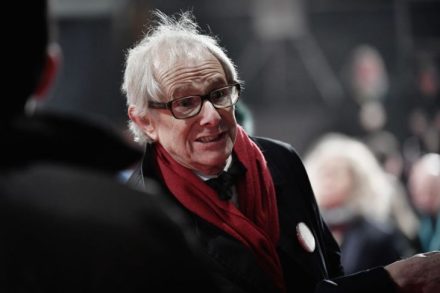
Ken Loach, who seems to defy the rule that you get more right-wing as you get older, used his Bafta acceptance speech last night to attack the Tories. He said that the Government would 'have to be removed' and went on to say:  'In the real world, it’s getting darker. And in the struggle that’s coming between the rich and the powerful...the big corporations and the politicians that speak for them on the one hand, and the rest of us on the other the film-makers know which side they’re on.' To be fair to voters, they seem to be quite set on removing governments, or at least overturning the status quo: first in Britain and then the United States, and this spring perhaps even in France and the Netherlands.

Trump’s foreign policy seems designed to terrify everyone – including his own government

From our UK edition

‘Plan, prepare, and train for the outbreak of chaos,’ says al Qaeda’s handbook, The Management of Savagery, a blueprint for building the Caliphate through what might be called creative destruction. ‘At the outbreak of chaos, the onset of jihad: ride the wave…exploit the situation.’ Did Steve Bannon, Donald Trump’s new chief strategist, read The Management of Savagery? He has been accused of implementing a ‘chaos theory of government’. Create chaos. Destroy the old order. Build paradise. The Trump administration has seemed busily engaged in phase one during its first two, hair-raising weeks in office.

A renewed special relationship

From our UK edition

Freddy Gray, Paul Wood and Kate Andrews discuss Trump's arrival at the White House:   As president, Barack Obama was too cool for the special relationship. The romantic bond between the United States and Great Britain, which always makes Churchill fans go all soggy-eyed, left him cold. Obama was more interested in globalism, ‘pivoting’ to Asia and the European Union. Donald J. Trump is a very different creature. The new US President seems to cherish Great Britain, whereas the EU annoys him. Brexit is beautiful, he believes — and the EU is falling apart. Trump may or may not know the name of the British Prime Minister but, as he told Michael Gove this week, he is determined to strike a free trade agreement with Britain ‘very quickly’.

A Donald-Boris alliance would be good for Brexit

From our UK edition

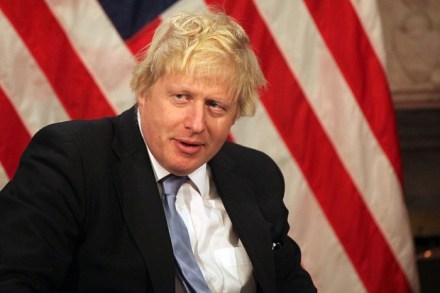
It's a shame that protocol, being protocol, prevents Foreign Secretary Boris Johnson from meeting President-elect Donald Trump during his trip to Washington. Boris can't even meet Rex Tillerson, the man Trump has chosen as his Secretary of State, until Tillerson is confirmed by the senate. A Trump-Johnson encounter would be a meeting of considerable media and public interest: the Donald and the Boris have become aligned in people's minds ever since the EU referendum, when Nick Clegg and others called Johnson 'Trump with a thesaurus' and so on. It's true that Boris is, in a tabloid sense, a thinking man's Trump. The two men are born New Yorkers. They share an enthusiasm for women (in a dangerous male predator sense), as well as for entertainment and jingoism.

The looming presence of Trump’s son-in-law follows a troubling pattern

From our UK edition

For all the top jobs being dished out by Donald Trump, there’s one figure close to the president-elect that worries me more than the others. Steve Bannon’s appointment as Chief Strategist might have fired up the Twitter mob, but it’s the elevation of Jared Kushner as Trump's unofficial chief consigliere which seems most troubling of all. After all, however you spin it, having your son-in-law apparently calling the shots means Trump is following in some worrying footsteps. While some have cheered Trump’s victory for the rude awakening it gave to soft-hearted liberals, Kushner popping up at Trump Tower for the Donald’s first meeting with a foreign leader – Japan’s PM Shinzo Abe – should be a wake-up call.

The Breitbart conspiracy

From our UK edition

Donald J. Trump always keeps everyone guessing. Is the president-elect ditching his crazy act in order to bring in a conventional Republican government? Or ditching conventional Republican government in order to bring in his crazy act? Is he bringing together the anti--politics outsiders and the Washington insiders? Or is he playing them against each other? Are we witnessing the usual scramble for power that accompanies every incoming administration? Or is the Trump transition a new kind of shambles? The answer to all these questions is yes, probably. Take the role of Steve Bannon, executive chairman of the right-wing website Breit-bart (aka ‘Trump Pravda’), who served as the Donald’s campaign manager in the run-up to the election.

Donald Trump’s latest White House appointment is shockingly conventional

From our UK edition

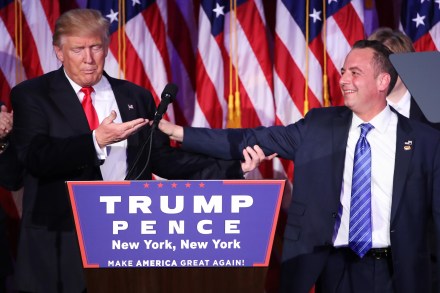
The news that Donald Trump has appointed Reince Priebus, the Republican National Committee Chairman, as his Chief of Staff is shocking -- shockingly conventional. In his victory speech on Tuesday night, Trump made it clear that he felt he owed Priebus a lot for his campaign's success. 'Reince is really a star,' he said. 'And he is the hardest-working guy.' So arguably the appointment is not a surprise. As usual, however, Trump seems to be playing a cleverer game than his opponents realise. His administration team seemed happy to let the media believe that he was going to give the Chief of Staff job to Steve Bannon, his campaign manager and the head of Breitbart news. This would have been a much more Trumpist, less Republican, choice.

How Breitbart hijacks right-wing populism

From our UK edition

The news that Donald Trump's new campaign manager is Steve Bannon, head of the right-wing media site Breitbart, has shocked a few commentators. It shouldn’t. For almost a year now, it’s been obvious to anybody who can be bothered to look that the Trump campaign and Breitbart fit together like hand in glove, though who is the hand and who is the glove is harder to fathom. Bitter ex-Breitbart employees now call the site ‘Trump’s Pravda'. The name seems to have been coined by Ben Shapiro, one of Breitbart's more successful journalists, who finally had enough and resigned over what he saw as a lack of editorial integrity in the age of the Donald.