Star wars

The new Elon Musk biography lacks a clear vision

From our US edition

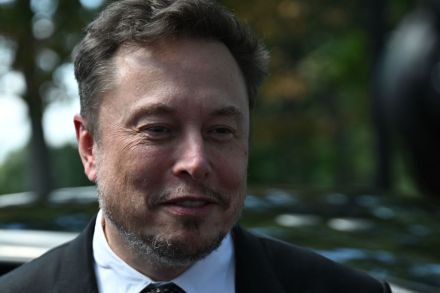
In the prologue to his biography of Elon Musk, Walter Isaacson evokes the Hero’s Journey in its most pop-culture incarnation: It’s one of the most resonant tropes in mythology. To what extent does the epic quest of the Star Wars hero require exorcising demons bequeathed by Darth Vader and wrestling with the dark side of the Force? Isaacson’s assumption is that Luke Skywalker is the hero of the original film A New Hope. His preamble is titled “Muse of Fire,” a reference to the most famous prologue in literature, the opening lines of Henry V. In Shakespeare’s play, the poet, recognizing the gargantuan feat before him, asks the Muse for help: O, for a muse of fire that would ascendThe brightest heaven of invention!
elon musk

Why didn’t William Friedkin get much credit when he was alive?

From our US edition

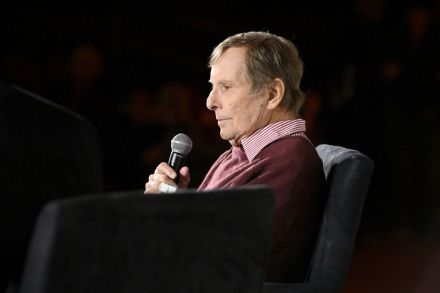
Ask your average man on the street — or at least your average clued-up man with a decent knowledge of modern Hollywood — about the films of William Friedkin, who has died aged eighty-seven, and he will confidently sing the praises of Friedkin’s legendary pictures, The French Connection and The Exorcist. Then if he is pressed on the other eighteen films Friedkin directed, ranging from the excellent and underrated to the dismal, and a look of panic is likely to come over his face before he excuses himself and rushes into a nearby subway (or, if he is in New York, flees to an overground railway in homage to the legendary car chase scene in The French Connection). It is your choice whether you do a Popeye Doyle and head off in frantic pursuit, or leave him be.

william friedkin

How does Kathleen Kennedy still have a job at Lucasfilm?

From our US edition

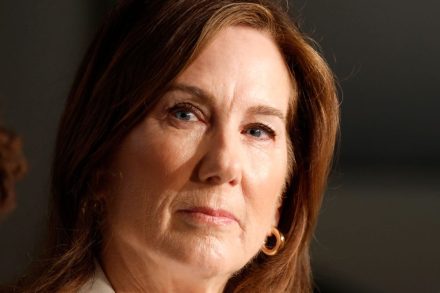
For the past several days, the internet has been focused on the astounding Independence Day failure of Indiana Jones: The Dial of Destiny, which was beaten on its opening day by an anti-human trafficking indie movie starring Jim Caviezel, Sound of Freedom. Of course Indy 5 will, and already has, raked in far more than the Christian-themed film based on the true story of OUR Rescue founder Tim Ballard, but the latter film already made its $14 million budget back while going toe to toe with a $300 million CGI-laden Disney-Lucasfilm picture. But the real question people should be asking is: will this embarrassment finally be the end of Kathleen Kennedy?

kathleen kennedy

Spider-Man: Across the Spider-Verse dodges all the MCU virtue-signaling

From our US edition

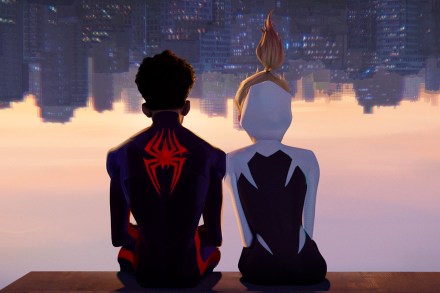
The complaints about the Marvel Cinematic Universe are by now widely known. Their films follow predictable formulas and story beats. Characters become increasingly indistinguishable quip machines. The stakes are never high. The streaming content is overwhelmingly forgettable. Other than the death of Tony Stark onscreen and the sad passing of Chadwick Boseman offscreen, emotional moments are few and far between, as it's hard to care about characters when everything can be reset with a bit of multiverse mumbo jumbo. And then there's the problem of, well, as the Critical Drinker refers to it, THE MESSAGE. Expect a lot of that in the already twice-postponed production of The Marvels, girlbossing into theaters this winter.

Spider-Man: Across the Spider-Verse

Phoebe Waller-Bridge is a franchise murderer — and Indiana Jones is her next victim

From our US edition

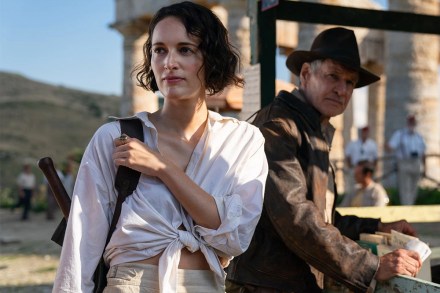
Phoebe Waller-Bridge must be destroyed before it's too late. The short-bob comedienne fond of wall-breaking and lazy edits has, in very short order, emasculated and destroyed multiple franchises thanks to the overwrought praise for her adaptation of her one-woman show, a descriptor that should itself elicit a bit of vomit in the back of the throat. Not content to politicize Star Wars as an irritating droid in Solo or to chop off the balls of James Bond in Daniel Craig's swan song whose name no one remembers, Waller-Bridge has now set her sights on a firmly American man to take down: Indiana Jones, whose fifth edition box office she will eradicate in spite of all the goodwill of these United States. https://twitter.

phoebe waller-bridge

Why are there no paintings in Star Wars?

From our US edition

Why are there no paintings in Star Wars movies? The question occurred to me recently, rewatching The Rise of Skywalker. I’m old enough to recall seeing A New Hope in a drive-in in summer 1977, as well as the infamous Star Wars Holiday Special on television in 1978. Over time, my interest in Star Wars has shifted into something akin to nostalgia, so it may not be surprising that this question never struck me before. What is surprising, however, given their glaring omission from the films, is that the man who created the Star Wars universe happens to be a major collector of art — including paintings — and is due to open the Lucas Museum of Narrative Art in Los Angeles by 2025.

Star Wars

Liz Cheney is no Obi-Wan Kenobi

From our US edition

Cockburn was finishing a bottle of brandy the other day when he nearly spat out his drink. A columnist from the Washington Post, Jonathan Capehart, compared Liz Cheney to Obi-Wan Kenobi. Capehart said on PBS: I keep thinking about the scene in Star Wars: Episode IV, when...Obi-Wan says to Darth Vader, "If you strike me down, I will come back more powerful than you can imagine." And to me, Liz Cheney is Obi-Wan Kenobi. If she loses...she could very well come back more powerful than Donald Trump has imagined. After laughing hysterically for the better part of four hours, Cockburn decided to weigh Capehart's point. Unfortunately he was forced to conclude that Liz Cheney is nothing like Obi-Wan Kenobi. Here's why.

Hollywood has a school violence problem

From our US edition

Streaming services have a school violence problem. For all the hand-wringing and anti-gun stances actors love to indulge on social media, their industry has no problem glorifying the very terror they claim to condemn. Two such cases came last week, right after the Uvalde school shooting that left twenty-one people dead, nineteen of which were schoolchildren. On Friday May 27, three days after Uvalde, the fourth season of Stranger Things premiered on Netflix with an opening scene of mass child death, apparently at the hands of the show’s protagonist, Eleven, in a flashback. Several kids' corpses lie on the floor with smears and pools of blood around them. The streaming service added a disclaimer at the beginning of the season specifically referencing the incident in Texas.

stranger things school

The genius of stop-motion wizard Ray Harryhausen

Modern Two in Edinburgh reopens this week, and what more fitting subject for a show in a time of global catastrophe than Ray Harryhausen, titan of cinema, creator of beasts, destroyer of cities, king of adventure? If you were near a screen at any point during the Cold War, you almost certainly watched Harryhausen movies. The tentacled Beast from 20,000 Fathoms, so realistic it was awarded an X certificate upon arrival in Britain; the mythical marvels of The 7th Voyage of Sinbad; and the vicious skeletons of Jason and the Argonauts captivated generations of viewers. These indelible creations, all handmade by one man, the animator, special-effects pioneer and producer Ray Harry-hausen, have become a magical fixture in our collective imagination.

Star Wars: the force a-weakens

From our US edition

This article is in The Spectator’s December 2019 US edition. Subscribe here. The first Star Wars trilogy enraptured by blending classic drama with science fiction. There was Luke Skywalker the fresh-faced hero, emerging from obscurity to save the day. There was Vader the villain, who had once been good but had embraced the dark side. There was the Emperor, the twisted puppeteer. There was the daredevil pilot Han Solo. There was Leia, the princess who had to be saved. There was even that essential companion on any voyage: a bumbling upper-class Englishman. All of it was familiar from classic cinema and adventure stories, but all of it had the strangeness of science fiction. The villain lurked behind a fearsome mask and choked people by mind control.

star wars

Disney and the imagination recession

From our US edition

Only in retrospect does 1999 appear to be the last imaginative year of mainstream American cinema. From Cruel Intentions to Being John Malkovich, American Beauty to American Pie, The Sixth Sense to Eyes Wide Shut, Election to Magnolia, and Fight Club to The Matrix, it was, as Esquire magazine put it, 'the last great year in movies.' In the year 2039, if anybody is able to tear themselves away from insect burgers and the lurid projections of VR pleasuredomes long enough to reflect on the movies of 2019, what will they have to rhapsodize about? They will look back and see a cultural landscape monopolized by one company: Disney.

disney