Spying

Was I too right-wing for MI6?

From our UK edition

Like many people, I’ve been bemoaning the woke capture of our security services for some time. In 2024, Sir Richard Moore, then the head of MI6, resigned from the Garrick Club during the row over the admission of women, and earlier this year it emerged MI5 was excluding white people from registering interest for administrative roles due to the ‘under-representation’ of black, Asian and minority ethnic people. You would hope the recruitment of spies would be based on merit, given the vital role they play in protecting the national interest, but apparently diversity targets are more important.

Trump team warned over London’s Chinese super-embassy

So much for simple Chinese takeout. In his never-ending search for economic growth, British Prime Minister Sir Keir Starmer has finally alighted on the obvious answer: cozying up to the liberal-minded democrats of Tiananmen Square. The Prime Minister is expected to fly to Beijing in the new year, once the long-awaited Chinese super-embassy in the London neighborhood of Tower Hamlets secures planning approval next month. No wonder 2025 is the year of the snake, eh?  But there now seems to be a wrench in the works, ahead of the mooted approval on December 10. For a group of American politicians are up in arms about the possible threat to global financial security.

china embassy

The reluctant spy: The Predicament, by William Boyd, reviewed

From our UK edition

According to the literary critic Harold Bloom, male writers have daddy issues. So keenly do they feel the oppressive influence of their forefathers that when they take up the pen it is to use it as a sword. To produce something new, they must engage their predecessors in a writerly duel to the death. Bloom’s examples are all very highbrow – Blake vs Milton, Keats vs Shakespeare – but the theory applies across the literary spectrum. When William Boyd sits down to write a new spy novel and, removing his pen from its sheath, looks up to assess the field, it is (among others) the faces of Ian Fleming and John le Carré who stare back. What better way to deal with the anxiety of their influence than to create a spy who is not only reluctant but practically monogamous too.

Here be dragons: the truth about Chinese espionage

From our UK edition

On 3 July a Chinese man, Xu Zewei, was arrested in Milan to face extradition on nine charges relating to the hack carried out by a group called Haf-nium during the Covid pandemic. Western companies had secrets stolen in 2020 and 2021 when a weakness in the Microsoft Exchange servers was exploited. The National Cyber Security Centre (NCSC), part of GCHQ, later said 70 British firms had fallen victim to ‘a malicious act by Chinese state-backed actors’. The court documents claim that officers of China’s ‘Ministry of State Security and the Shanghai State Security Bureau directed Xu to conduct this hacking’.

The questions the government must answer over the China spying case

From our UK edition

Exactly a year ago, this magazine warned that ministers were showing a dangerous naivety towards China. We revealed that the Chancellor, the Foreign Secretary and the Prime Minister were all intent on cosying up to Beijing. They were scornful of the wariness Conservative ministers had shown towards the Chinese Communist party. The Labour leadership believed that their pursuit of growth could be supercharged by Chinese investment. They hoped one of their missions – the drive to decarbonise the grid – could be facilitated by Chinese tech. They thought Tory attitudes to China were warped by ideology and a more pragmatic line towards Beijing would be economically rewarding.

Lab leaks & spy scandals: was Cameron wrong about China?

From our UK edition

48 min listen

This week on Quite right! Michael and Maddie turn their sights to Westminster’s latest espionage scandal – and the collapse of the case to prosecute two men accused of spying for China. Was the case dropped out of incompetence, or out of fear of offending Beijing? As Michael puts it, ‘Either we’re not being told the truth, or this is a government of staggering incompetence.’ They also unpick the growing row over Jonathan Powell, Keir Starmer’s National Security Adviser, and his alleged role in shelving the case. What does his re-emergence, along with Peter Mandelson and other ‘Sith Lords of Blairism’, tell us about the return of New Labour’s old moral compromises?

Spy scandal: what is Labour’s policy on China?

From our UK edition

15 min listen

It’s a ‘great and beautiful day’, as Donald Trump wrote in the guestbook at the Knesset, where he will address the Israeli parliament after the final hostages were handed back to Israel. It is, of course, a historic piece of diplomacy, and the conversation in Westminster has turned to the extent to which the UK was involved. Bridget Phillipson claimed over the weekend that Britain played a ‘key role’ in bringing about peace – much to the chagrin of Mike Huckabee, the US Ambassador to Israel, who called her ‘delusional’. Is she? The government have more pressing issues, however, with the collapsed China spy case – the sudden abandonment of a case brought against two men (Chris Cash, a parliamentary researcher, and Chris Berry, an academic).

Did Jonathan Powell torpedo the China espionage trial?

From our UK edition

The antics of Keir Starmer and his top security adviser over the collapsed China espionage case bring to mind the slapstick British movie Carry On Spying – which is precisely the message it will have conveyed to Beijing. Instead of Bernard Cribbins, Kenneth Williams and their team of fictional incompetents, the real-life Whitehall farce has Jonathan Powell on a single-minded mission to appease China. Powell, Starmer’s national security adviser, has been accused of torpedoing the trial to avoid embarrassing China at a time when he is leading efforts to rebuild diplomatic ties with Xi Jinping. One can only imagine the despair in Britain’s security agencies and the Crown Prosecution Service, who would not have brought the charges unless they were reasonably confident of success.

Is the British Council really a ‘nest of espionage’?

From our UK edition

I worked for nearly a decade at the British Council in East Asia. Every day, under the guise of teaching English and promoting awareness of British culture abroad, I would compile dossiers on people of interest, take pictures of government buildings and military installations and pass secret documents to couriers to smuggle back to Britain. I would sometimes meet contacts in parks where we would have brief, cryptic conversations beginning with a code line like ‘The geese are flying south early this year’, without ever directly looking at each other. Except of course I did none of these things and neither, I am convinced, did anyone else.

The US is vulnerable to threats from its own military

Mohamad Hamad, a 23-year-old Air National Guardsman from a Palestinian refugee family, was charged last month with attempting to blow up Jewish institutions in Pittsburgh’s Squirrel Hill neighborhood, using homemade pipe bombs. Hamad allegedly vandalized the buildings with antisemitic slogans accompanied by Hamas-related symbols. But Hamad was hiding in plain sight. If anyone had bothered to check his social media they have seen him boasting about holding extremist views and posing with weapons. “Been a terrorist since I was a kid in Lebanon,” he posted on social media alongside photos of him with AK-47 rifles and other firearms. His case highlights a catastrophic flaw in US military vetting procedures.

Militrary

Could anyone be trusted in Tudor and Stuart England?

From our UK edition

‘Spies, you are lights in state, but of base stuff,/ Who, when you’ve burnt yourselves down to the snuff,/ Stink, and are thrown away.’ Ben Jonson likened his fellow secret agents to a tallow candle: a grotty necessity, to be discarded without regret. Who now remembers Arthur Gregory, and his ‘admirable art of forcing the seal of a letter; yet so invisibly, that it still appeared a virgin to the exactest beholder’? Or the scrivener Peter Bales, so dainty with his quill that he could forge any handwriting, and who touted at Elizabeth I’s court the Renaissance equivalent of microfilm, a script so minuscule that he could fit the Lord’s Prayer, the Credo, the Ten Commandments, two short Latin prayers, his name, motto, and the date ‘within the circle of a single penny...

The Xi files: how China spies

From our UK edition

Most states spy. In principle there’s nothing to stop them. But China’s demand for intelligence on the rest of the world goes far beyond anything western intelligence agencies would typically gather. It encompasses masses of commercial data and intellectual property and has been described by Keith Alexander, a former head of America’s National Security Agency, as ‘the greatest transfer of wealth in history’. As well as collecting data from government websites, parliamentarians, universities, thinktanks and human rights organisations, China also targets diaspora groups and individuals. Chinese cyber intrusions have targeted British MPs and stolen population-level data from the UK Electoral Commission database.

FBI director Chris Wray hammered by Republicans in Congress

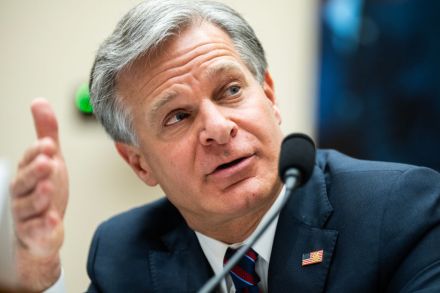
Sparks flew during a series of testy exchanges about “nonconsensual nudes,” domestic terrorism and social media censorship as FBI director Christopher Wray testified before the House’s Judiciary Committee. The hearing marked Wray’s first appearance to Congress since Attorney General Merrick Garland appointed a special counsel to investigate former president Donald Trump. It kicked off with some snide remarks from committee chair Jim Jordan, who chided his Democratic counterpart for mispronouncing a name, perhaps because he missed an earlier deposition. Republicans portrayed Wray as disconnected with his own department, while Democrats used him as a stand-in to praise all law enforcement.

chris wray congress

The security state says jump. The media asks ‘how high?’

The tacit alliance between operatives of the national security state and corporate media burst into view last week when the New York Times and the Washington Post did the FBI’s job for it by tracking down the leaker of documents that detailed, among other things, the extent of American and allied involvement in the Ukraine war.  That Bellingcat, the shadowy, government-funded open-source intelligence group, played a role in helping to identify the twenty-one-year-old Air National Guardsmen Jack Teixeira proves (once again) that many media outlets are now de facto agents of the national security state.

media leak tows security state

The truth comes out about Beijing’s balloon

Well, well, well. The world seems amazed at the news that the Chinese spy balloon that meandered over the entire continental United States this winter was, you know, spying. That’s what spy balloons do: they spy. They collect intelligence — in this case, information from some of America’s most sensitive sites (I was going to say “secure sites,” but that would clearly be inaccurate). What do they do then? Like bees collecting pollen, they transmit what they collected back to the hive, which, mirabile dictu, just happens to be located in Beijing.  Anyone who was paying attention knew this. Did secretary of state Antony Blinken? Did puppet-in-chief Joe “Chocolate-Chip” Biden? Probably.

spy balloon

The spycop debacle is another nail in the Met’s coffin

From our UK edition

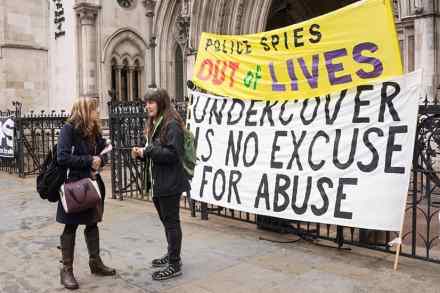
In 2010, Mark Kennedy, a tattooed social justice warrior, was exposed as an undercover police officer. In this guise he infiltrated climate change activist groups and in the meantime formed a number of sexual relationships with fellow activists. Kennedy manipulated and deceived several women, including ‘Lisa’, with whom he formed a particularly close bond, while his wife and children were left in the dark about his exploits. But Kennedy was no lone bad apple. He was part of a group of Metropolitan Police spies deployed to gather intelligence on left-wing protest groups.

Should locals be allowed to work at British embassies?

From our UK edition

It is just short of 30 years since the collapse of the Soviet Union and suddenly there comes a reminder of how the world used to be. A member of staff at the British Embassy in Berlin has been arrested in Germany on suspicion of spying for Russia. The arrest took place in Potsdam, which used to be in East Germany, and the Glienecke Bridge separating the town from Berlin proper is where Cold War spies used to be exchanged. The suspect has been identified only as David S, and it is believed he worked in a security role at the embassy. Two details that are known, however, are that he is a British citizen and that he was what is known as a 'local hire'.

We need to act now to block Britain’s social credit system

From our UK edition

I have to admit that I didn’t quite get it right when, 12 days ago, I wrote: ‘There is a model for what will be coming our way if we do not resist vaccination passports and electronic ID cards: China’s social credit system, which blacklists people for numerous antisocial offences, from crossing the street on a red light to failing to sort their recycling, and uses the information to deny them the right, for example, to buy rail and airline tickets.’ I had in mind that it would take two to five years for a vaccination passport scheme to morph into a Chinese-style social credit system. In fact, it took two weeks.

Why the Pegasus spying scandal probably won’t harm Viktor Orban

From our UK edition

‘The EU has a dictatorship growing inside of it,’ proclaimed Guy Verhofstadt on Monday afternoon, while calling for an EU inquiry into the ‘Pegasus’ scandal, which has exposed the potential Hungarian misuse of state surveillance on anti-government journalists, media owners and businesspeople. The ‘Pegasus Project’, a multinational investigation led by the French non-profit organisation Forbidden Stories, suggests that investigative journalists critical of Hungarian Prime Minister Viktor Orbán’s regime (along with independent media owners and government-critical businesspeople) were the subject of phone hacking in recent years.

Matt Hancock isn’t the only politician who is clueless about cyber security

From our UK edition

It is widely acknowledged that Britain has some of the world’s finest cyber capabilities. GCHQ is a global leader in those dark arts, and its offshoot, the National Cyber Security Centre (NCSC), is making that expertise available to businesses and others in need of help with their digital defences. All the more shocking, then, that our political leaders seem so utterly clueless. They have pledged to make Britain the ‘safest place in the world to be online’, but instead are running around like stars in a digital age ‘Carry On’ movie. Exhibit number one is Matt Hancock.