Sporting history

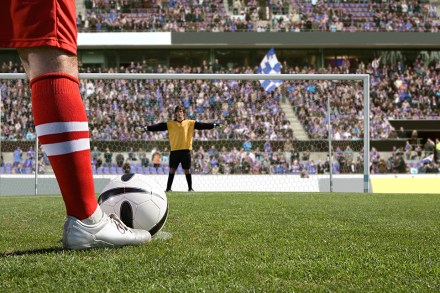
Who would be a goalkeeper?

‘We are all goalkeepers now,’ declares Robert McCrum, and who could seriously argue with that? Every day we try to defend our own goal against the hurtling ball of fate, but too often end up fishing it out of the back of the net. Then again, we are also all strikers, hopefully hoofing, occasionally taking a bit of a dive in the box. Or central defenders, muddied but valiant. Or nippy little wingers, making mazy but pointless runs down life’s touchline, whingeing at the referee. Come to think of it, we are all, in a very real sense, referees too. There is no end to the football-as-metaphor game. For the football metaphorist, every pass and kick, tackle or foul represents some grand, universal truth about life and the wider world.

Bad sports, from the ancient Greeks to the present

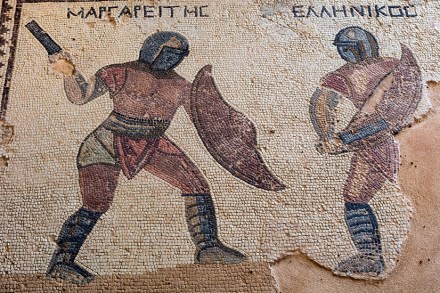
Sports history, writes Wray Vamplew, is sometimes ‘sentimental, reactionary and built on the implicit assumption that the sporting past was a better place in which to play games. It wasn’t.’ His own account — the fruit ofa career’s work — is so shapeless that it often reads like the encyclopaedia that he claims he didn’t want to write. The emeritus professor of sports history at the University of Stirling hasn’t managed to assemble his own narrative. But if there is one to be extracted from Games People Played, it’s this: contrary to popular opinion, we may be living in sport’s golden age. Perhaps the best bits of the book are about ancient sports. We learn that the Greeks had no concept of amateurism or fair play.

Snakes alive! Playing cricket in Latin America

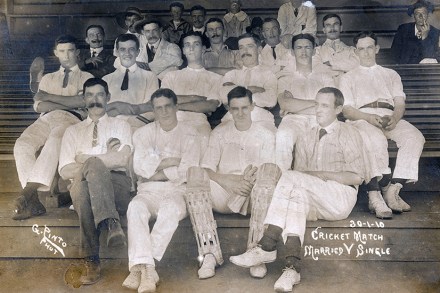
Cricket in Latin America sounds like an oxymoron. Yet in almost every country in the region willow was hitting leather before feet were kicking pigs’ bladders. England vs Australia, first played in 1877, may be cricket’s iconic series, but the Ashes cedes ten years of history to the contest between Argentina and Uruguay — the rivalry of the River Plate. In Evita Burned Down Our Pavilion, James Coyne and Timothy Abraham, cricket journalists with a fondness for Latin America, travel from Mexico to Argentina with bat in rucksack and dates with fusty archives. A social history with elements of travelogue, the book tells a story of new horizons and false dawns, as the most English of pastimes tried to drop anchor amid scorpions, populist regimes and general bafflement.

Sport, for the English, has always been a defiant assertion of liberty

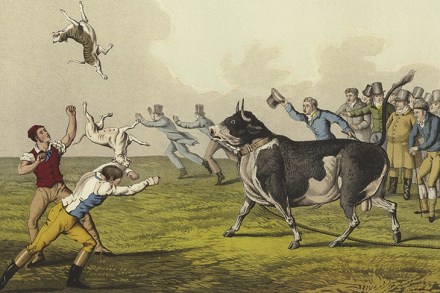
The English cannot be understood without some appreciation of their attachment to their games, and yet this is an area of their story often overlooked by historians. Or perhaps it is simply considered beneath their interest. This is the central message of Robert Colls’s superb account of England viewed through the medium of its sports and pastimes.

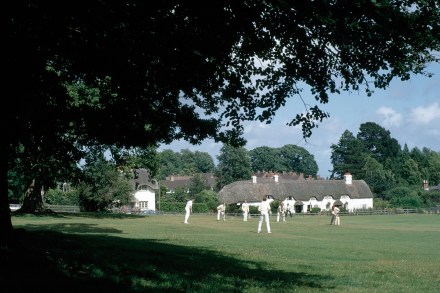
The deserted village green: is this the end of cricket as we know it?

Imagine an archetypal English scene and it’s likely you’re picturing somewhere rural. Despite losing fields and fields each year to developers, the countryside is ingrained in our collective consciousness as our unspoiled national haven. It is Albion’s Garden of Eden, with its Holy Trinity of village church, local pub and cricket ground.Englishness itself, as much as cricket, is the main theme of Michael Henderson’s genre-melding And That Will Be England Gone: The Last Summer of Cricket. The title alludes to Philip Larkin’s poem ‘Going, Going’, and the last summer was 2019, when Henderson, sportswriter and cultural critic, took a journey around the cricket grounds of his past.