Sport

Why can’t China play football?

From our UK edition

It would be tough for any country to lose 7-0 in a World Cup qualifier, but when the losing team is China, and the thrashing is at the hands of arch-rival Japan, it is deeply humiliating. The defeat was ‘shameful’, according to an editorial last week in the Global Times, a state-controlled tabloid, while the Shanghai-based Oriental Sports Daily called it ‘disastrous’, adding: ‘When the taste of bitterness reaches its extreme, all that is left is numbness.’ Some commentators called for the men’s team to be disbanded, bemoaning that a country of 1.4 billion people could not find 11 men capable of winning a match.

Why women’s golf is better than men’s

From our UK edition

In the exhilarating event of Somerset managing to sneak past Surrey and being on their way to claim their first county cricket championship since the Norman Conquest – or since Vic Marks was playing – they would owe one of their captains from long ago, an eccentric gentleman by the name of Jack Meyer, a big debt of gratitude. Without Meyer it is unlikely that Somerset would have snared Archie Vaughan, the 18-year-old son of Michael and the hero of Somerset’s nerve-racking win over Surrey, the defending champions, last week.

Mickleover: the real home of cricket

From our UK edition

Readers concerned that the seemingly imperious march of Bazball across the cricket firmament has blotted out the more, er, traditional virtues of the game need fret no more. Matches in the ninth division of the Derbyshire League don’t normally make headlines from Australia to Qatar but a needle relegation tussle between Mickleover Third XI and Darley Abbey’s Fourth team was no ordinary game. Mickleover piled up a chunky 271-4 declared in a mere 35 overs, thanks largely to a teenager called Max Thompson who belted 186 from 128 balls, with a feast of fours and sixes. If you have to call up J.K.

Will there ever be another cricket captain like Richie Benaud?

From our UK edition

Some books have good titles. Many books, sadly, have terrible titles. But a few rare books have the perfect title – the one that tells you briefly what the book is about, and also whether you want to own it. Richie Benaud’s Blue Suede Shoes is one such. If that title grabs you, you should go out and buy it now, because the book is brilliant. If it doesn’t, you have probably stopped reading this review already and turned over to Melissa Kite. Either you love Blofeld’s ‘My Dear Old Thing’ eccentricities or you want him slowly roasted over an open fire Harry Ricketts is a poet and critic who was born in London but has lived in New Zealand since 1981.

The simple beauty of the Hundred

From our UK edition

Time to come clean: I really like the Hundred. This is the sort of view that normally makes people look at you as if you had just professed an admiration for Gary Glitter. But come on, this is a crisp little short-form cricket tournament, played out at the height of summer to largely packed houses. What really is not to like? Cricket is one of the few sports that works in different formats, so it beats me why the Hundred arouses such venom. It has done wonders for the women’s game, it doesn’t take long and it is all televised – much of it on terrestrial TV. Crucially, it has brought new fans to the sport, especially families and youngsters.

Does it matter if Trump is weird?

From our UK edition

Would-be veep Tim Walz has opened Pandora’s box with his use of the W-word to characterise Donald Trump and his running mate (no sniggering at the back: this W is for ‘weird’). Because, let’s face it, a heck of a lot of politicians are way-out weird, aren’t they? It’s practically part of the job description. If we start calling them all out on it, the currency’s going to devalue fast. My thesaurus devotes nearly half a page to synonyms for weird. ‘Freaky. Wacko. Odd. Eccentric. Crazy. Off the wall. Out to lunch…’ Well, sure, that’s pretty much Trump to a T. He is uniquely odd, but those adjectives neatly summarise plenty of politicos this side of the pond too. Liz Truss. (Oh, come on, don’t get all Truss-defensive – you know she was weird.) Theresa May.

About as edgy as Banksy: Joe Rogan’s Netflix special reviewed

From our UK edition

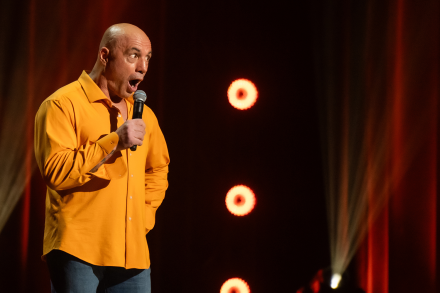
My resolution this summer was to see how far into the Olympics I could get without watching an event. It’s harder than you think. Especially when you’ve got kids calling constantly from the sitting room: ‘Dad, Dad, it’s Romania vs Burkina Faso in the finals of the women’s beach volleyball and there’s been a tremendous upset…’ Rogan is marketed as an edgy alternative to the mainstream media. He is about as edgy as Banksy I jest. I actually do know what happened in the finals of the women’s beach volleyball. It was the first thing I watched because that was what was on when I walked into the room and broke my duck. Italy beat the long-standing champions the United States, which delighted me enormously.

This Olympics belongs to the female athletes

From our UK edition

You knew it was going to be a superb Olympics from the moment Celine Dion belted out an Edith Piaf classic from the Eiffel Tower. And nothing since has disappointed – not least commentator Mark Chapman having to say things like ‘She was late with her eskimo roll’ during the incomprehensible kayak cross. But amid such a banquet of sporting greatness, what to single out? This has been a fantastic Games for women. And remember that the founder of the Olympics, Pierre de Coubertin, was opposed to the participation of female athletes, largely to preserve their dignity. Different times admittedly, but even so the 1500m became an event for women only in 1972, and the marathon only in 1984. Look what they’re achieving now. Amid such a banquet of sporting greatness, what tosingle out?

Does ‘artistic swimming’ truly describe the world’s hardest sport?

From our UK edition

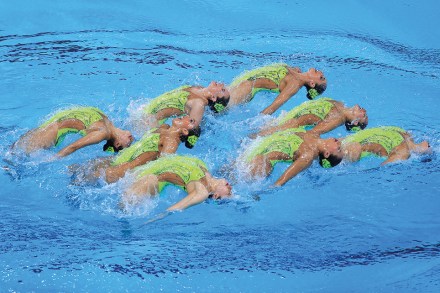
Synchronised swimming isn’t really a sport, is it? It’s ‘artistic swimming’ now, of course, though many athletes don’t like that term precisely because it makes the Olympic event sound less like a real sport. But by the end of Swimming Pretty, Vicki Valosik’s meticulous history of synchronised swimming, it’s difficult to think of it as anything other than one of the toughest sports we’ve been watching in Paris – and wonder why anyone would disagree. That question is one that Valosik addresses in her book, along with making the case for the sheer discipline and power of a synchronised swimmer. Her skill is in doing both without ever sounding plaintive or chippy. Besides, the story she tells is so remarkable that it doesn’t need any forced drama.

Winning was all that counted in the ancient Olympics

From our UK edition

It is agreed that the National Lottery revolutionised British athletics, pouring money into the training of athletes with potential, especially in expensive sports like rowing. In the ancient Olympics, only the equine events demanded serious financial outlay – in theory any male could run, jump, throw or fight – but though we hear of goatherds and ploughboys winning events, the games were still the playgrounds of the rich. The point is that reaching the highest level of any sport requires time, training and doctors, i.e. money. Further, sport, like education, requires leisure, and only the rich could afford that. But the rewards in terms of public fame and acclaim were very high.

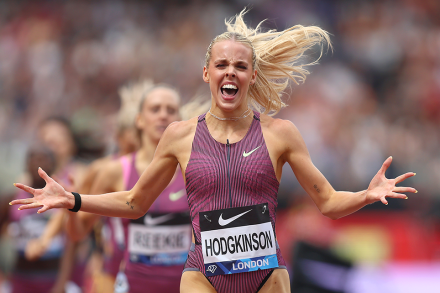
Why Keely Hodgkinson is the one to watch at the Olympics

From our UK edition

The Olympics have been creeping up on us through the forest of top-class sport this summer. But now they’re here, the third time the summer Games have been held in Paris. The first was in 1900, and reflect what a very different place the world was then. There were old favourites such as track and field athletics and cycling, but less probably croquet, firefighting and fishing and – one to scare the pants off the woke warriors of today – live pigeon shooting, making its one and only appearance at the five-ringed circus. Indeed an Olympic historian, reflecting on the fate of the luckless pigeons, said: ‘This disgusting event marked the only time in Olympic history when animals were killed on purpose.

Arise, Sir Gareth!

From our UK edition

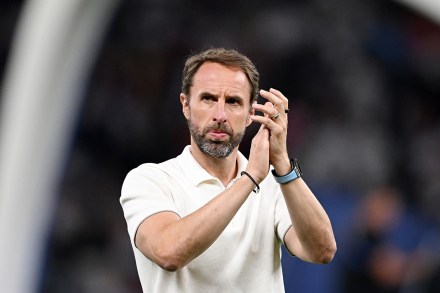
I detected a degree of surprise among those people who were uncommonly cheered by Sir Keir Starmer’s election victory that England failed to beat Spain in the final of the European Championship. That wasn’t in the script. For those Labour supporters in the press and floating in the shallow trough of luvviedom, an England victory would have been the first thing to gild this brave new era of kindness, generosity of spirit and diversity.

Will the Olympics ever be politics-free?

From our UK edition

The modern Olympics, first held in Athens in 1896 in a genuflection to their Grecian predecessors, was the creation of Pierre de Coubertin, a French aristocrat. As this septet of books shows from allusive angles, Coubertin’s best known quotation – ‘the most important thing in the Olympic Games is not winning but taking part’ – must rank as a paradigm example of a precept more honoured in the breach than the observance. It is rivalled only by his anticipation that the Games would be ‘a vehicle for increasing friendly understanding among nations’. In an elegant series of vignettes entitled Aux Armes! Sport and the French: An English Perspective (Fairfield Books, £9.

Is Southgate making it up as he goes along?

From our UK edition

Say what you like about Gary Lineker, and plenty do, but he’s a terrific presenter and when he’s not running it, Match of the Day dials down a notch. If he wants to bang on about the language of Suella Braverman and 1930s Germany, well it’s a free country – though elsewhere you might find his lachrymose response to the Gaza war somewhat tiresome. When Lineker decided to ramp up his cosy, own-brand T-shirt style by using his podcast to call the England team’s (admittedly lacklustre) performance against Denmark ‘shit’, doubtless the bevvied-up boyos at the Croydon fan zone would have downed a few more pints in appreciation.

The perils of going to Manchester United

From our UK edition

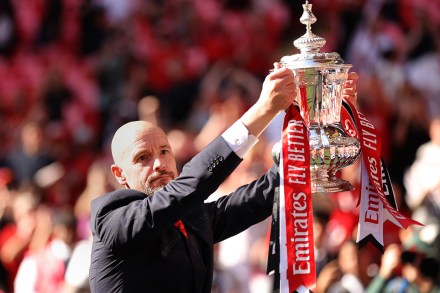
Plodding up Wembley Way to the FA Cup Final at the weekend surrounded by a phalanx of well-refreshed Manchester United fans was not a savoury experience, but the game was something else. What was clear was how good United were, full of bite and high-throttle energy, ready to go for broke against the best team in the world, and playing in a way that hasn’t been seen all season. So Manchester City couldn’t pull off their ‘double-double’ – the League title and the Cup in two successive years. For the first time, United played for their manager, Erik ten Hag, and Pep Guardiola couldn’t do anything about it. On this occasion, the Dutchman showed superior tactical nous to outwit him.

Is pro-golf eating itself? 

From our UK edition

Spare a thought for Manchester United’s Erik ten Hag. He’s got a fairly crummy, injury-hit team who appear to have given up running (apart from Alejandro Garnacho who is still young enough to think that it’s OK to belt down the left wing and then deposit the ball somewhere, though not in goal). His new owner is pictured in the stands with his head in his hands and he has to cope with the choleric visage of his predecessor Sir Alex Ferguson watching on with an expression of scarcely controlled contempt, while two former United godfathers, Gary Neville and Roy Keane, fulminate in the Sky commentary box about how crap the manager is.

What does the Olympic torch have to do with Hitler?

From our UK edition

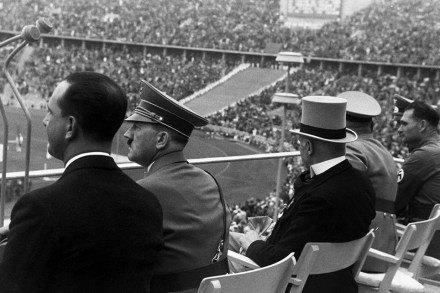
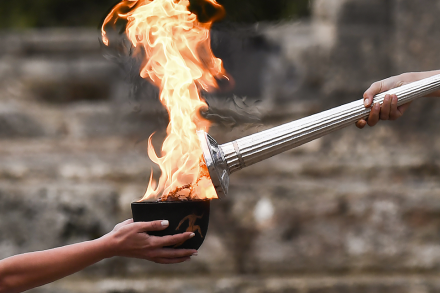
The original Olympic Games established a basic canon of seven games unchanged over some 900 years: foot, horse and chariot races, boxing, wrestling, pankration, and pentathlon. This year’s Olympics feature 42 games, adding for the first time ‘competitive breakdancing, an urban sport that originated in the hip-hop culture of 1970s block parties in the US’. It has been ever thus since the Games were first revived in Wenlock in 1850, when soccer, cricket and quoits appeared. The first ‘Olympics’, started in Greece in 1859 – a minor, one-day event in the context of a huge agro-industrial exhibition – featured climbing the greasy pole.

County cricket needs Bazball

From our UK edition

It’s freezing cold and everywhere is flooded, so it must be the start of the county cricket season. Surrey, last year’s champions, head for Old Trafford on Friday, in what should be a three-sweater day, aiming to make it three titles in a row. And who would bet against them? It’s a superb tournament, the county championship, much more than just an opportunity for elderly gentlemen to spread their wings with a sandwich lunch. But it could certainly do with some reforms. This goes against a lot of current thinking, but why not revert to three-day matches with a points system heavily weighted against draws? This would provide considerably more excitement, with no excuse for spending ages building a big first innings, as well as providing more elbow room for other competitions.

Where did all the good English football managers go?

From our UK edition

It’s not easy for most right--thinking people to care much about golf and golfers apart from gasping in wonder at the size of their bank balances. Right now the Saudi--backed LIV tour and the American and European tours are making occasional grunts of peace towards each other. Soon the various professional golf bodies will have so much money they will be able to club together and buy Saudi Arabia. But what you can be certain of is that no one has ever watched a LIV event of their own free will or is ever likely to, despite the presence of some of the world’s best players, like Jon Rahm, Bryson de Chambeau, Cam Smith and Brooks Koepka, plus quite a few who are past their best, such as Ian Poulter, wacky trousers and all, and Lee Westwood.

Sometimes rugby can be the most exciting sport of all

From our UK edition

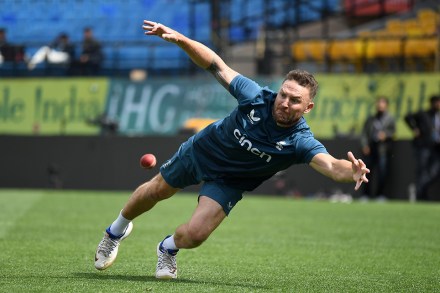
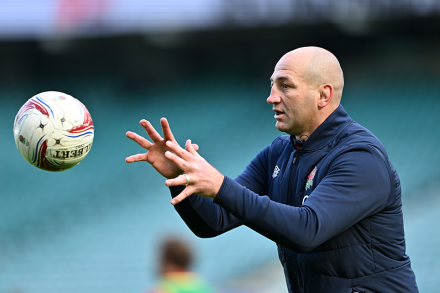
After the failure of Bazball – ending in England’s dismal capitulation on the cricket fields of India – let us give thanks for the emergence of Borthball in front of the Twickenham faithful. And it certainly was much needed: Steve Borthwick’s England rugby team had apparently been trying to convince us that they really weren’t very good at the game before donning Superman cloaks last Saturday to give a classic fooled-you performance against Ireland’s dogged champions. Playing fearlessly with speed, adventure and aggression, this young(ish) England side produced one of the greatest games of the century.