Sport

Not cricket | 5 January 2017

From our UK edition

Sport is a serious matter. If you have any doubts on that score, shed them now, because this is to be a South African year. The South African cricket team comes to England in the summer to play four Test matches, three one-day internationals and three Twenty20 games, and as they do so they will ask a million questions — not only about cover drives and reverse swing, but also about the way to make a society, about the way to redeem a society, about idealism versus practicality, about short-term advantage versus long-term goals and about the nature of justice. There is an argument doing the rounds. It goes like this: South Africa should be banned from participation in international sport because of the government-level discrimination against white athletes.
Hit for six | 5 January 2017

From our UK edition

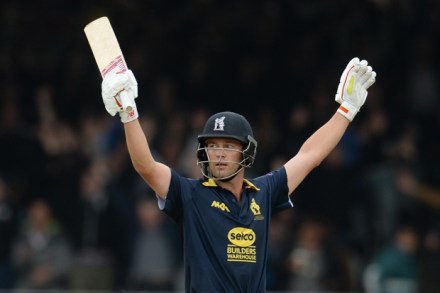
Frankie Howerd, the great, if troubled, comedian, was once asked whether he enjoyed performing. ‘I enjoy having performed,’ he replied. Many top-level sportsmen would say something similar. The satisfaction often comes from having done, not always from doing. Performing offers great rewards, but it can also leave scars that heal slowly, and sometimes not at all. Jonathan Trott was a good cricketer in a strong England team that beat Australia in three successive series between 2009 and 2013. Batting at No. 3, he made a century on his Test debut, and became a dependable, if minor-key player in the side that vanquished the Aussies Down Under two winters later. Then, frightened by the view, he fell off that high wire.

Knowing the score

From our UK edition

When I come home from work and stick my key in the door, there is a pitter-patter of tiny feet as my eight-year-old twin boys run up to me and shout: ‘Paris St-Germain won 3-1! First he scored, then he missed, then…’ They are suffering from a harmless case of sports geekery. I had it myself as a child, and have gone on to hold down a job, albeit in the dying industry of journalism. The only difference is that as a child I wasn’t encouraged to bore my dad with my findings, because helicopter parenting hadn’t been invented yet. A complicating factor in our family is that we live in Paris, and when my sons recite sports statistics in strangely accented French children’s slang I often struggle to understand them, especially at breakfast.

High life | 17 November 2016

From our UK edition

New York   The only thing worse than a sore loser, I suppose, is a sore winner, but thank God we don’t run into too many of those. Thirty years ago, The Spectator and I lost a libel case that cost the then proprietor and yours truly a small fortune. As it turned out, after the plaintiff had gone to that sauna-like place below, everything that I had written was the truth and nothing but. (The hubby of the woman who sued me came clean after her death, but a lot of good that did the Speccie and me.) The sainted editor at the time was Charles Moore, and in view of Justice Otton having taken a great dislike to yours truly, he ordered me to remain at home when the decision was about to be pronounced.

Ziggurat of bilge

From our UK edition

Ella Hickson’s new play analyses our relationship with oil using the sketch format. First, there’s a candlelit soap opera set in Cornwall, in 1889, with a lot of ooh-arr bumpkins firing witless insults at each other. Next, a bizarre Persian scene, set in 1908, where a Scottish footman (who uses the celebrated Edwardian colloquialism ‘OK’) rescues a ditzy waitress from a sex-maniac serving in the British army. Then we move to Hampstead, in 1970, where a female oil magnate is visited by a Libyan diplomat seeking to nationalise her wells by waving documents at her, in her kitchen, while teenage kids pop in and out performing oral sex on each other. (This is one of the most disorganised pieces of stage writing I’ve ever witnessed.

Barometer | 6 October 2016

From our UK edition

Tenement Scots John Cleese referred to the editor of this magazine as a ‘tenement Scot’. Do more Scots live in tenements? — The term tenement became associated in Scotland with 14-storey blocks built in Edinburgh in the 18th and 19th centuries. One collapsed in 1861, killing 35 residents and leading to an Improvement Act which largely did away with the old blocks. — Today, 38% of homes in Scotland are flats or maisonettes, markedly higher than the 21% in England and Wales. But only 14,900 (0.6%) are ‘buildings in multiple occupancy’, with shared facilities like the original tenements. More than a landslide Hungarians voted by 98% to 2% to reject the EU’s plan to resettle a share of refugees in the country.

Another glorious year of County Championship cricket; another glorious failure for Somerset

From our UK edition

Nearly fifty years ago, CR Poole published a short work entitled 'The Customs, Superstitions, and Legends of the County of Somerset'. Inexplicably, he omitted the foremost of these customs: Somerset will never, ever, win the County Championship. For a while this week, I and many others dared to dream this year might be different. This could be the week, the day, the moment, history might be made. Somerset have been tilting for the championship since 1891 and only rarely been in with a chance of glory on the final day of the season. More often, as a dozen wooden spoon finishes attests, the situation has been hopeless but never serious. Today was serious. Today there was a chance. Somerset had done their part, crushing Nottinghamshire in handsome style yesterday.

This looks like the greatest rugby side ever

From our UK edition

British Lions fans of anervous disposition should avoid the telly of a Saturday morning. Live before your very eyes, as the southern hemisphere Rugby Championship unfolds, is the rebirth of an extraordinary new All Blacks side, now without Carter, McCaw, Ma’a Nonu and all. And, scarily, evenbetter than that World Cup-winning side. Warren Gatland, be very afraid. Our own Maro Itoje, the Saracens and England lock, wins every game he plays. The All Blacks win every game they play. How many players eligible for the Lions would get into the current Kiwi starting XV? Probably just Itoje. And how many from the rest of the world would get in? Again, probably just Itoje. It’s a thrilling prospect: the cream of British rugby taking on the world champions at the end of the season.

Club cricketers: Zimbabwe needs you

From our UK edition

Make sure you tell everybody about Zimbabwe,’ said the lady at our block of flats in suburban Harare as we set off on the long journey to the Eastern Highlands and another match, this time at Mutare. We are a ramshackle and elderly cricket team, though we have pulled in a couple of youthful ringers, one an Oxford Blue and another a former Test-match 12th man. But it is a long time since a real England team toured this country — a few ODIs in 2004 I think. Gordon Brown blocked a tour of England by Zim in 2008, and I am told that David Cameron personally made sure that no England side came here. Understandably, perhaps, Cameron felt that a tour would offer some endorsement to Robert Mugabe, though he had no such reservations about doing deals with Saudi Arabia or China.

The Olympics proves it: we are not all equal

From our UK edition

An almost worldwide survey on penis length — the sort of thing I always read with a sense of trepidation and inadequacy — suggested that the countries boasting the largest of these flawed and devious appendages are all located in Africa. Especially West Africa, from the DRC down to the humid and still pristine jungles of Gabon. This suggests to me one of two things — either that the old racist cliché is absolutely true, or that Africans tell bigger lies than anyone else on the planet. Either or both of these explanations are likely to get me into trouble, so I suppose I’d better stop digging. Thing is, I can’t fathom another answer.

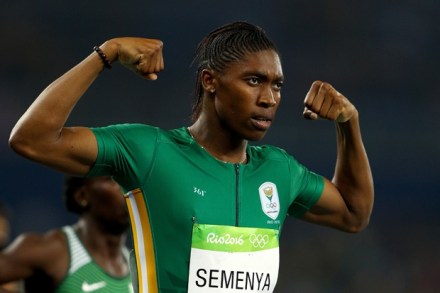
Why I’ll keep cheering for Caster Semenya

From our UK edition

An almost worldwide survey on penis length — the sort of thing I always read with a sense of trepidation and inadequacy — suggested that the countries boasting the largest of these flawed and devious appendages are all located in Africa. Especially West Africa, from the DRC down to the humid and still pristine jungles of Gabon. This suggests to me one of two things — either that the old racist cliché is absolutely true, or that Africans tell bigger lies than anyone else on the planet. Either or both of these explanations are likely to get me into trouble, so I suppose I’d better stop digging. Thing is, I can’t fathom another answer.

The medal machine

From our UK edition

Never forget Atlanta. Every time a British athlete wins a gold medal at the Olympic Games in Rio, remember the Atlanta Games of 1996. I was there, and I saw some great sport — and absolutely none of it was British. Great Britain finished 36th in the medal table, behind Kazakhstan, Algeria, Belgium and Ireland. There was a single British gold medal, and I missed it. It was won by Steve Redgrave and Matthew Pinsent, now both sirs: two enormous boys on the burning deck. For the rest, eight silvers and six bronzes seemed to confirm the nature of our sporting culture: the nation that aimed low and missed. Simon Barnes on Team GB’s Olympic success: Why were we so bad at sport? If you worked as a sportswriter back then, you needed a good answer.

Our (nearly) golden summer

From our UK edition

It seems like a long time ago, but back in the day, when Sir John Major launched the National Lottery, there was a fair bit of sanctimonious tut-tutting from the liberal establishment: it was a tax on the poor who couldn’t be trusted to spend their own money, it encouraged gambling, it was just a bit vulgar. And all that. Well, how’s that drivel looking now? A shedload of Team GB golds later, and how do those who sneered at the lottery feel about it today? Notwithstanding Britain’s staggering achievements, the Games are not perfect, of course: there’s too much track cycling and way too many swimming events. And possibly — whisper this — a bit too much rowing.

Rio, Rio

From our UK edition

Stuff I have learnt after two solid weeks watching the Olympics on TV. 1. Tennis and golf shouldn’t be Olympic sports. Yes, I know we won both and Rose’s final chip on to the 18th green was great to watch. But you can see this sort of thing done with a tougher range of competitors at any number of majors all the time. Olympic medals should be there to reward the Corinthian spirit not just an opportunity for millionaires to add something a bit different to their mantelpiece. 2. I still don’t understand the judging system for the diving but had arse quality been included in the women’s events — as I believe it should — the Italian girl would have done much better. 3.

Letters | 11 August 2016

From our UK edition

The hate is real Sir: It is clearly an exaggeration to call Britain a bigoted country (‘We are not a hateful nation’, 6 August), but downplaying the recent wave of xenophobic and racist incidents across the UK as ‘somebody shouting something nasty on a bus’ is equally wrong. Verbal abuse in itself is worthy of condemnation, yet the character of recorded harassment is actually much more serious. In the past few weeks, Poles in this country were shocked by vulgar graffiti (West London; Hertfordshire; Portsmouth) and hurtful leaflets (Cambridgeshire) urging them to ‘go home’ in most offensive ways possible, while a family in Plymouth fell victim to an arson attack.

How Olympia beat the cheats

From our UK edition

What to do about today’s Olympic drug cheats? Since ancient Greeks did not do chemistry, drugs were not a problem. They could, however, be banned from competing on many other grounds. The system worked as follows. The one-week games, always staged at Olympia, were overseen by a panel of judges from the nearby town of Elis (36 miles away), and it was these judges who determined the eligibility or otherwise of any competitor. Their key requirement was that every contestant turn up at Elis a month before the games began. Here the athletes completed their final training in the facilities provided for the events (various categories of running, jumping, throwing, fighting and riding), under the eye of Elean trainers and judges.

Pitch perfect | 21 July 2016

From our UK edition

One day, many seasons ago, Jon Hotten was on the field when a bowler took all ten wickets. In his memories, the afternoon has the quality of a dream. The ground was deep in the countryside, surrounded by trees. The boundary line was erratic and the sightscreens weathered. The match was won beneath a ‘perfect sky’. Hotten’s prose, simultaneously spare and lyrical, conjures up the scene as magically as Edward Thomas’s poem evokes Adlestrop. What happened to the people who played with him on that day, Hotten wonders. ‘Have they had good lives since then? I hope so. Nothing ties us except that game, but I doubt that anyone who played has forgotten it.

Olympic shames

From our UK edition

 Rio de Janeiro, Brazil ‘Welcome to hell’ was printed on a banner written in English at Rio de Janeiro’s international airport recently. ‘Police and firefighters don’t get paid. Whoever comes to Rio will not be safe,’ the message concluded. It’s fair to say not everyone is feeling the Olympic spirit ahead of the Games that start here next month. Bad news abounds. The city’s mayor made headlines by declaring the security situation ‘horrible’, and body parts were reported to have washed up near the Olympic beach volleyball venue. Then an investigation by Human Rights Watch exposed an alarming number of murders by Rio policemen. Earlier in the month a baddie was-busted out of hospital by his gang mates.

Spectator competition winners: when sportswriting turns purple

From our UK edition

The invitation to supply a report on a Uefa Euro 2016 match written in the florid style beloved of some sportswriters produced entries of inspired awfulness. How about this, from Mike Morrison: ‘The craven defence unravelled like cartoon knitwear, enabling Dottirdottir, the archetype of stoic strategy, to blithely torpedo the decider through the enmeshed architraves of triumph.’ John O’Byrne, Josh Ekroy and Derek Morgan were on impressively toe-curling form too, but were pipped to the post by those entries printed below which earn their authors £25 each. Adrian Fry pockets the extra fiver.

Pakistan’s great leader

From our UK edition

There have been three great captains of Pakistan. The first was A.H. Kardar, the country’s first Test captain. Born in Lahore, and talent-spotted by the senior Nawab of Pataudi, Kardar played for India before Partition. He led Pakistan to victory over India in its second-ever Test match in Lucknow in 1952, and even more famously over England at the Oval Test in August 1954. Uniquely, Kardar won at least one Test match in Pakistan’s inaugural series against each other country. Pakistan’s next great captain was Imran Khan, the all-rounder who inspired his country to a famous World Cup victory in 1992, and now has honourable aspirations to become Pakistan’s prime minister. The third is Misbah-ul-Haq, and he has a claim to be the greatest.