Spending

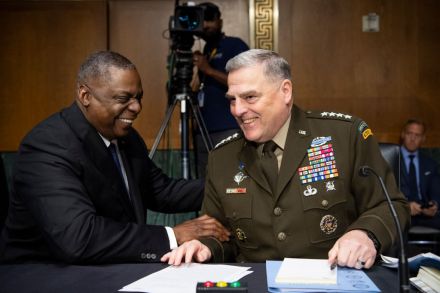
Contra the hawks, Biden’s defense budget keeps ballooning

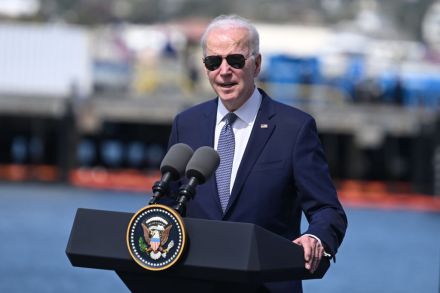
This week we heard a lot about AUKUS, a trilateral initiative between the United States, the United Kingdom and Australia that will revamp the Australian naval fleet with nuclear-powered submarines over the next two decades. President Biden, UK Prime Minister Rishi Sunak and Australian Prime Minister Anthony Albanese made a show of it in sunny San Diego on March 13, where they officially inaugurated the defense agreement and gave speeches about defending sea lanes and the rules-based international order in the Indo-Pacific. But there was another story here: the Pentagon released a torrent of charts and bureaucratic documents on what it would like to see in the coming year’s defense budget.
Don’t expect Republicans to fight lame-duck spending

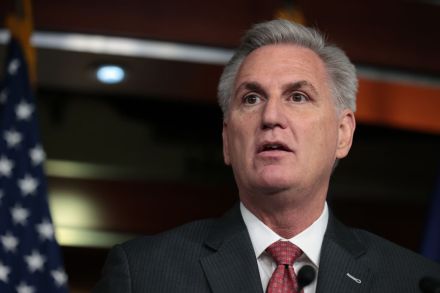
Lame-duck sessions of Congress are rarely uneventful. Whether it’s cramming through spending at the last minute or cramming through even more spending at the last minute, our legislature can always be counted on to rubber-stamp bills that lacked political support before Mariah Carey returned to the airwaves. Leading the charge for the opposition this time around is the self-declared speaker of the House, Kevin McCarthy. A Bloomberg headline recently proclaimed that “McCarthy Draws Line on Spending,” and trumpets seemingly blared out from the heavens heralding that Republicans had — finally — rediscovered their fiscally conservative bona fides. But not so fast: this is a script we’ve seen before.

The debt ceiling battle lurking after the elections

Though many pundits may not be able to see past Tuesday’s midterm elections, as soon as the voters decide which party will hold the reins of Congress, the country will witness its first reminder that elections have consequences. The 2022 contests will have a near-instant effect on US fiscal policy. At some point between mid-December and January, the United States will hit its credit limit and need to either increase it or risk defaulting on its financial obligations. Since the Barack Obama years, Republicans in Congress have turned what used to be a pro-forma vote on the debt ceiling into a political cudgel.

Biden is in no position to attack Liz Truss

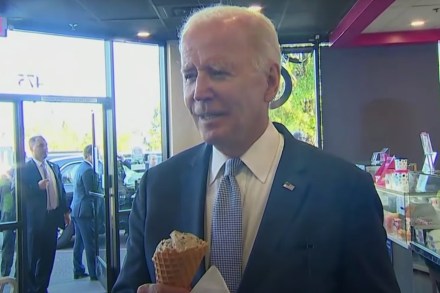
A transatlantic tiff is in the works. During a recent visit to an ice cream shop in Oregon, President Joe Biden lit into British prime minister Liz Truss and her recent (and recently withdrawn) tax proposals. Because this is how we do foreign policy in this country now: spouting off at random while the Chunky Monkey melts all over our hands. "I wasn’t the only one that thought it was a mistake," said Biden of Truss's tax cuts, brandishing a vanilla cone all the while. "I think that the idea of cutting taxes on the super-wealthy at a time when…I disagree with the policy, but it’s up to Britain to make that judgment, not me." And lest the Brits think they were being singled out, Biden also had tough words for the globe's other 193 countries.

klain

What if America doesn’t want to ‘Build Back Better’?

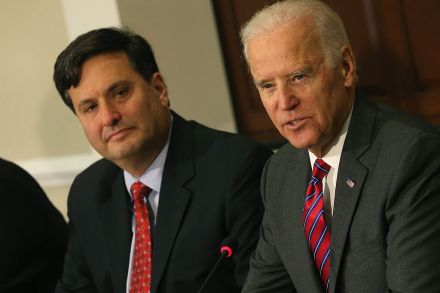
We begin today with the reigning alpha of the self-celebrated political super-staffers. Enter Ron Klain, President Joe Biden's chief of staff, who is a polymath in the D.C. sense that he has both a job and a Twitter account. Klain last week made news when he endorsed a tweet that dismissed our current bout of inflation as a mere problem for the "high class." Cut to Jeff Bezos weeping at the grocery store: "I can't possibly afford any of this!!!" Klain, according to a New York Times profile, is neighbors with Chief Justice John Roberts and lists Twitter as a "hobby," so you can tell he's the well-adjusted sort.

Are we in a recession? Does it matter?

Since the latest growth numbers have come out, much ink has been spilled over the question of whether the economy is in a recession. Perhaps unsurprisingly, the Biden administration tried to get out ahead of Thursday’s release with a press statement noting that back-to-back quarters of negative growth doesn't necessarily mean a recession. Also predictably, Republicans strongly rebuked the idea, saying, “You can’t change reality by arguing over definitions.” Both sides of the debate will continue to play out, and both sides will continue to miss the point. Ultimately, it doesn’t matter very much whether growth goes up or down by 0.2 percent. What matters is the general trajectory of the economy. And on that front, the Biden track record is mixed at best.

democrats abortion

The government didn’t miss inflation, they ignored it

Federal Reserve Chairman Jerome Powell looked calm when he testified before the Senate Banking Committee in February 2021. He’d just been asked by the folksy Louisiana senator John Kennedy whether he had concerns about the dollar supply being the highest it had been since 1946. “Right now, I would say the growth of M2, which is quite substantial, doesn't really have important implications for the economic outlook,” Powell stated. “M2 was removed some years ago from the standard list of leading indicators, and just that classic relationship between monetary aggregates and economic growth in the size of the economy, it just no longer holds. We've had big growth of monetary aggregates at various times without inflation, so something we have to unlearn, I guess.

interest inflation

Return of the congressional earmark zombie

Much like a Hollywood movie monster franchise, earmarks are back in the federal government. Congress’s $1.5 trillion omnibus bill contains pages upon pages of so-called “member-directed spending” for hundreds of pet projects in congressional districts across the country. Senator Mike Braun put the final earmark count at $8 billion, taking up 367 pages of the 2,700-page bill that funds the government through the end of the fiscal year. Congress banned earmarks in 2011 thanks to a rather rare show of bipartisanship by House Republicans and then-President Barack Obama. Congressional bipartisanship then unanimously brought back earmarks last year.

Biden’s budget doesn’t matter

Every year, the president puts forth a budget. And every year, the media diligently reports on it as if it matters to what the government will do over the coming year. Don’t get me wrong: budgets are important. They provide a sense of their crafters’ priorities and a roadmap for achieving their goals. But budgets don’t hold the force of law, which means — in our government — they serve as non-binding blueprints and little else. This is especially true of presidential budgets. That’s because while the budgetary process starts with the president, where it goes from there is determined by Congress alone. During the Trump years, Congress didn’t even bother bringing the president’s budget to a vote.

budget

Conservatives should support ending the debt ceiling

Just in time for the holidays, lawmakers will soon approve another increase to the country’s debt limit, perhaps by as much as $2.5 trillion. And like so many of us this time of year, Uncle Sam will continue running up his credit card, spending money on things he can’t afford and often doesn’t really need. That said, there’s little doubt that the coming debt ceiling hike is a necessary (if self-serving) gift from our nation’s capital. After all, legislators from both parties have already authorized trillions in spending, knowing full well the country’s dismal fiscal situation.

Inflation stays for the holidays

No issue has been more politicized over the last six months than the sudden reemergence of inflation. For those keeping score at home — and many of us are whenever we buy our groceries — the latest report puts the current inflation rate at 6.8 percent, the highest since 1982. How one perceives the inflation threat depends as much on one’s political beliefs as it does on economics. Many conservatives are inclined to see this inflation as a more permanent fixture of the economy, believing it to be a consequence of the ongoing profligacy of the Biden administration. Democrats, in contrast, have tended to characterize the phenomenon as largely transitory and more a result of ongoing supply issues related to the pandemic.

‘Build Back Better’ could limit access to prescription drugs

Much has been written about the expansiveness of the Biden administration’s signature priority: the Build Back Better Act (BBB). The legislation is projected by the Congressional Budget Office (CBO) to spend more than $1.6 trillion in its attempts to address countless Democratic priorities ranging from climate change to the expansion of Medicaid. One aspect of the bill, however, has attracted far less fanfare than it should have: its impact on the cost of prescription drugs. Provisions in the bill would, among other things, impose rebates on drug manufacturers if prices rise faster than inflation. It’s an idea that sounds great in the current moment of creeping inflation, but is ultimately little more than a market distortion likely to produce an array of adverse consequences.

Yes, Build Back Better will raise the deficit

The fate of the Build Back Better plan is now in the hands of the Senate. The House approved the gargantuan $1.85 trillion bill on Friday despite efforts from Republicans to delay the vote. House Minority Leader Kevin McCarthy played the role of Rand Paul or Ted Cruz, railing against the legislation in an over eight-hour-long speech. The Associated Press suggests that McCarthy viewed his talk-a-thon as an opportunity to show his conservative bona fides should Republicans take control of the House in 2022 and he decide to push for the speakership. “This is a tipping point,” McCarthy said on Friday morning as he wrapped up the speech. “This is a point of not coming back. The American people have spoken, but unfortunately, the Democrats have not listened.” Which Americans?

Nancy Pelosi is losing her grip

Top Democrats took a media victory lap last weekend, crowing about the $1 trillion infrastructure bill that finally cleared the House on Friday night after months of false starts and intra-party squabbling. The vote came only after Speaker Nancy Pelosi, in her latest Hail Mary, attempted to satisfy progressive lawmakers by also allowing a procedural vote on the massive social spending bill craved by liberals. Even then, Pelosi was forced to rely on a handful of Republicans to secure a majority. Predictably, the White House was eager to spin the bill’s passage as major win for the Biden agenda, claiming it would energize voters and pave the way for trillions more in government spending just in time for the holidays.

A government of drunken sailors

It seems strange, but just two decades ago the United States government had a balanced budget. Bill Clinton had run for president as a new type of Democrat, calling for an end to the deficits that had so bedeviled George H.W. Bush. Thanks in large part to pressure from Newt Gingrich and the Republican Congress, he pulled it off. Clinton trimmed military spending and signed into law a package of tax increases. This cued haunted house noises in the parlors of center-right think tanks, but Biden also approved more conservative-friendly measures like domestic spending cuts and welfare reform. This bipartisan approach, in conjunction with a galloping economy, led to the unthinkable: budget surpluses for four fiscal years in a row.

drunken sailors

Congress pretends to hold the Pentagon accountable

The Biden administration’s latest $3.5 trillion spending proposal continues to attract attention. With a hodgepodge of Democratic priorities ranging from climate change to Medicare expansion, the bill is the more partisan companion of the administration’s $1 trillion infrastructure plan. Of course, another blockbuster story has been distracting attention from these packages — the difficult withdrawal from Afghanistan. Many in Congress continue to be critical of the administration’s handling of the pullout, and some are determined to use the crisis to their political advantage.

congress defense budget

Who will pay for a mega-spending Biden administration?

Over the last month, Democratic presidential nominee Joe Biden has proposed roughly $4 trillion in new tax hikes. That is meant to the cover, at least partially, the $7 trillion in spending increases he’ll impose if he wins the White House. As part of his tax hike plan, Biden promises his tax increases won’t hit any American who earns under $400,000. But they will. Even the Washington Post analysis of Biden’s tax plan concedes that his tax plan will impact 82 percent of American earners if enacted as proposed.The reason it will hit so many Americans is because of the change he proposes to corporate taxes. There is broad consensus among tax experts that such an increase will lead to corporations ‘reducing investment returns and cutting working wages’.

tax spending