Sparta

Does Nigel Farage think he’s above scrutiny?

From our UK edition

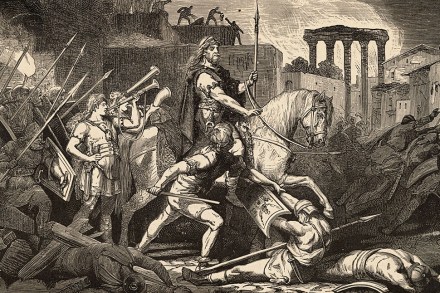
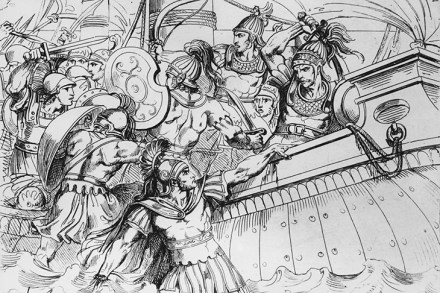
If Nigel Farage is so confident that the £5 million donation he received from a friend is entirely kosher, why is he so frightened of being subjected to the official parliamentary code of conduct on the matter, or does he think he is above such scrutiny? That is a dangerous tightrope to tread. In 406 bc, after a naval battle in the long war between Sparta and Athens, a ferocious storm prevented the Athenian generals from picking up their survivors and the dead. In the law-making democratic Assembly, consisting of all Athenian male citizens over 18 (the dêmos), fury was high, and there was a demand from one Callixenos that the six out of the eight generals who had returned to Athens should be tried en bloc.


The real ‘Thucydides Trap’ Beijing and Washington must avoid

These are good times to be a scholar of the classical world. Last summer, Donald Trump issued an order that all federal architecture needed to be “beautiful,” noting that the Founding Fathers “wanted America’s public buildings to inspire the American people and encourage civic virtue.” George Washington and Thomas Jefferson had therefore “consciously modeled the most important buildings in Washington, DC, on the classical architecture of ancient Athens and Rome.” It was time to go back to these principles, said Trump. From now on “classical architecture shall be the preferred and default architecture for Federal public buildings” in the District of Columbia.

Should America be Venice or Sparta?

Americans never tire of asking themselves whether their country is turning into Rome. A Latin motto on the Great Seal of the United States proclaims a novus ordo seclorum – a “new order of ages.” But in the poem from which that phrase is adapted, Virgil’s fourth eclogue, the words mean a quite exact replay of past events: there will be, for example, another voyage of the Argo and another Trojan War. Our new order might likewise repeat the history of Rome. One philosopher who gave a great deal of thought to new orders and Roman history as a template was Niccolò Machiavelli, particularly in his Discourses on the First Ten Books of Titus Livy.

Andrew Bayliss: Sparta – The Rise and Fall of An Ancient Superpower

From our UK edition

43 min listen

Sam Leith’s guest in this week's Book Club podcast is Andrew Bayliss, author of Sparta: The Rise and Fall of an Ancient Superpower. Andrew tells Sam what we know — and don't know – about these much-mythologised figures from the Ancient world and tells the story of how a tiny city-state punched above its weight, until it didn't. This is Sparta. Produced by Patrick Gibbons.

Boris Johnson is no Pericles

From our UK edition

Boris Johnson’s Unleashed imagines him, like Cincinnatus, leaving his plough, saving Rome, and returning to it. But given that Boris is among the international elite, perhaps Alcibiades (c. 451-404 bc) would fit him better. Athenian elites had long had connections with the other power-brokers of the classical Greek world, Sparta and Persia. Born into such a family, the young Alcibiades, at the death of his father in 447 bc, was placed in the care of the great Athenian statesman Pericles, who chose Socrates as his mentor (we are told he tried to seduce Socrates but failed). A charismatic and handsome young man, he led a life of ‘lawless self-indulgence’ but, as a formidable strategist, he built an alliance to sustain the long war against Sparta, though it was defeated in 418 bc.

What kind of empire is China building?

From our UK edition

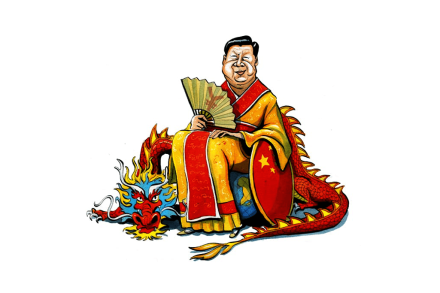
As Britain’s small fleet, headed by HMS Queen Elizabeth, cruises towards the South China Sea, there remains a question over the nature of China’s geopolitical ambitions. When Xi Jinping came to power in 2013 it was assumed that China would follow the relatively unthreatening path begun by Deng Xiaoping. But Xi was intent on following a different agenda. Xi’s brutal clampdown on corruption showed that there was a new sheriff in town. High profile politburo members were imprisoned. Such was the scale that Qincheng Prison began to run out of cells. Expensive wristwatches suddenly disappeared from the arms of modestly paid bureaucrats. The West applauded.

How to fight a good war

From our UK edition

Serifos There’s no high life here, only family life, so I’ve been hitting the books about great Greeks of the past, and they sure make today’s bunch look puny. Philosophers, playwrights, statesmen, artists, poets, orators, sculptors; the ancients had them all. After 2,500 years, they’ve never been equalled. I was once walking around the Greek wing at the New York Met and I ran into Henry Kissinger, whom I knew slightly. He asked me what the population of ancient Athens was. ‘About 20 to 30,000 citizens,’ I answered. He shook his head in amazement. ‘And they produced all this,’ he said.

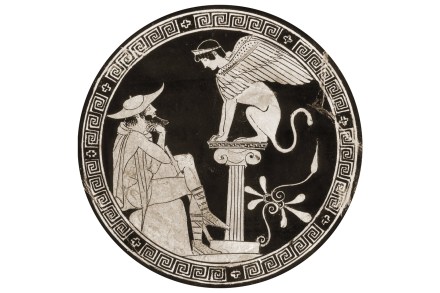
The history of Thebes is as mysterious as its Sphinx

From our UK edition

The Spartans were not the only Greeks to die at Thermopylae. On the fateful final morning of the battle, when Leonidas, knowing that the pass had been sold, ordered the vast majority of the contingents stationed at the Hot Gates to retreat and live to fight another day, two detachments stayed behind to join the 300 in their heroic last stand against Xerxes. Both these detachments came from Boeotia, the fertile plain which stretched directly south of Thermopylae and extended as far as the frontier with Athens. One of these two detachments came from Thespiae, a small but famously cussed city in central Boeotia: 700 hoplites who, alongside the Spartans, fought, died and were lauded as martyrs for Greek liberty. What, though, of the 400 men who constituted the other contingent?