Space

The bliss of un-fame

From our UK edition

In July, astronomers at the Asteroid Terrestrial-impact Last Alert System discovered an interstellar object racing through the solar system at a velocity never before seen in a purported comet. Only the third interstellar object ever observed, and now named 3I/ATLAS, it has become the subject of inevitably extravagant internet theories. This possibly ten-billion-year-old visitor has now ‘disappeared’ behind the sun, though not before the European Space Agency photographed it from Mars as it passed by. It looks like a luminous cylinder. Optical illusion, says Nasa. Interstellar objects enter our unconscious just as phases of the moon do. Who knows if they also, like the moon, exert mysterious influences on terrestrial minds?

The young Tennyson reaches for the stars

From our UK edition

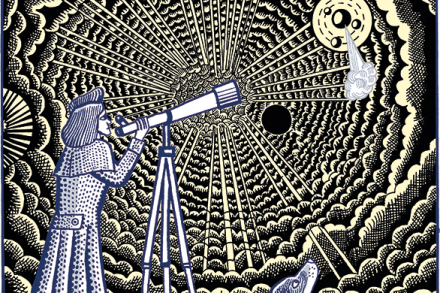
Edward FitzGerald had a good story about rowing across Lake Windermere at the end of May 1835 with his old friend Alfred Tennyson. As they rested on their oars and gazed into the clear, still water, Tennyson recited some lines from his work in progress, ‘Morte d’Arthur’, describing how the Lady of the Lake fashioned Excalibur out of sight: ‘Nine years she wrought it, sitting in the deeps/ Upon the hidden bases of the hills.’ Then he gave himself a little pat on the back: ‘Not bad that, Fitz, is it?’ The lines are better than not bad, as they imagine an invisible process of creation by incorporating several fragments of earlier writing.

The mission to mine the Moon

There will come a time when the richest people who ever lived will be those who control outer space, in particular the Moon and the asteroids. There are vast resources out there, bound in giant rocks hurtling through space, and in the lunar dust. But the first steps will be taken by the brave, and perhaps the reckless in pursuit of a space dream. If you dream of space, nothing can stop you. Not the disagreement of others or the judgement of experts, neither short-sighted investors nor government regulations. One such dream will happen on the Moon’s surface in just a few months.The space company Astrobotic will attempt to land at the Moon’s south pole – a region of extensive shadows where ice may have accumulated and the site of the next US human landing.

The moon

Russia, China and the US are preparing for battle in orbit

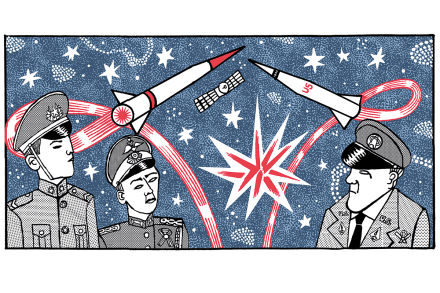
Russia is playing a dangerous game in space. Despite its history it’s a declining space power, having abandoned many of its long-term projects due to lack of money and technology. It effectively crippled much of its space activity when it attacked Ukraine, which was the source of many of its high-tech components. This year has seen its lowest launch rate since 1961 – the year Yuri Gagarin became the first person to go into space. Yet significantly, three of Russia’s eight orbital launches this year (the US has launched more than 100) could be potential anti-satellite weapons. On May 23, Russia launched the Cosmos 2588 satellite from the Plesetsk launch site situated 500 miles north of Moscow. The Cosmos designation is a general term used to obscure the satellites’ purpose.

space

We should be excited about signs of alien life

From our UK edition

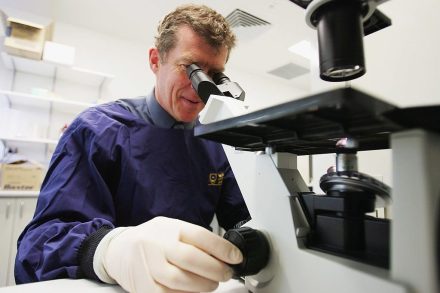
Last week, a team of astronomers led by the University of Cambridge professor Nikku Madhusudhan announced that they had found tentative evidence for a ‘biosignature’ embedded in the light from a distant planet. Scientists and non-scientists around the world tried to interpret the results. Was this it? Was this the moment when humanity could finally claim it had answered that ancient question: are we alone? As an astrophysicist involved in the search for life beyond Earth, I can tell you that the results were not that moment. But that doesn’t make them any less exciting.

Tim Peake makes me cringe

From our UK edition

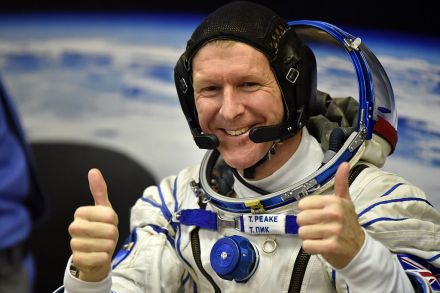
He’s the best-known Briton ever to have boldly gone into space: the first to board the International Space Station, the first to carry out a space walk. Major Tim Peake even ran a marathon while in orbit. So why do I wince every time I hear his name?  When I was growing up, shortly after the Apollo moon landing, the portentous language of that mission – ‘The Eagle has landed’, ‘One small step’ etc – had permeated global consciousness. So when space travel was depicted in popular culture, in music and film, it was often with the atmosphere of an existential psychodrama – in Space Odyssey (Kubrick), Space Oddity (Bowie), ‘Rocket Man’ (Elton).

Will science lead us back to God?

After generations of treating the universe as mere matter to be bent to our will, it seemed inevitable that the future of humanity would be to merge with machines. Billionaires and tech utopians now predict a near future in which the human mind itself might be “downloaded” or transferred into a digital realm, allowing us to overcome death itself by slipping the bonds of our physical existence altogether. Modern-day prophets like Yuval Noah Harari proclaim that we have embarked on a second industrial revolution, though the product this time will not be machines or vehicles or powerful new weapons but human beings themselves. There’s a certain logic to this way of thinking.

science

Why space is the perfect subject for podcasts

From our UK edition

The podcasts I’m recommending to everyone at the moment are Nasa’s Curious Universe and the Royal Astronomical Society’s The Supermassive Podcast. Both have me convinced there’s no topic better suited to the oral medium than space. Not even history. Unless you happen to be an astronaut, you’ll find much of what is described so alien, that your imagination will go into overdrive. What does a Brown dwarf look like? What is the ‘tadpole’ orbit of a quasi-moon? The icy surface of Europa has red furrows which make it look like ‘a giant dragged its fingernails’ across it. How did those furrows get there? You will probably find the images summoned in your head offset the urge to reach for Google.

How Elon Musk changed the world

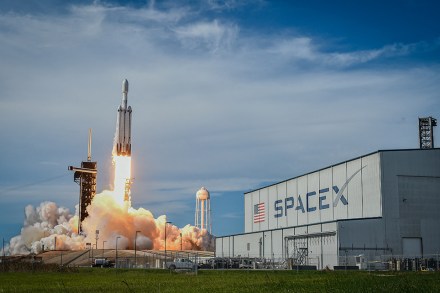
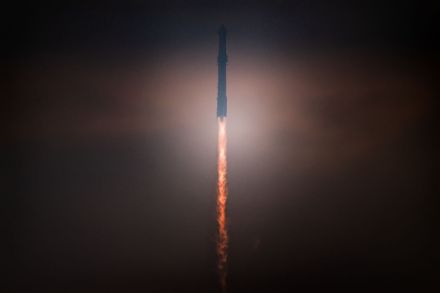
Technological revolutions can only change the world when the new technology becomes cheap enough for it to be widely applied. Just ask Elon Musk. The rocket age began with Germany’s V-2 in 1944, but the single-use technology was so expensive that it required state resources to utilize. Then, last Sunday, SpaceX’s Starship rocket booster, the most powerful ever launched, returned from space and was secured by its gantry for reuse. Thus it became, in the words of the New York Times, “more like a jetliner than a rocket.” It is estimated that reusable rockets will reduce the cost per pound of launching things into space by at least an order of magnitude and a new space age can now begin.

elon musk

Three great minds explore the enigmas of the universe

From our UK edition

It sounds like a Tom Stoppard play. A big-shot philosopher meets a big-shot boffin by way of a big-shot writer to descant on the biggest of big-shot debates – what The Rigor of Angels’s subtitle calls ‘the Ultimate Nature of Reality’.True, William Egginton can’t match Stoppard for punchy one-liners, nor for puns and pratfalls and persiflage. But while his book is as demanding a read as anything published this year, it still leaves you smiling. Over and over again the author reminds you of the shimmering weirdness beneath the experiential surface of what we are pleased to call the real world. There is no shortage of books that pit one thinker against another to tell the history of an argument.

Adam Higginbotham: Challenger

From our UK edition

50 min listen

Sam's guest in this week's Book Club podcast is Adam Higginbotham, whose new book Challenger: A True Story of Heroism and Disaster on the Edge of Space describes the 1986 space shuttle disaster that took the lives of seven astronauts and, arguably, inflicted America's greatest psychic scar since the assassination of JFK. He tells Sam about the extraordinary men and women who lost their lives that day, the astounding engineering involved in the spacecraft that America had started to take for granted, and the deep roots and long aftermath of the accident.

Britain needs to join the new space race

From our UK edition

Elon Musk’s Starship is the biggest rocket ever built. Sending it into space is hard; bringing it back to Earth, in a fit state to be reused, is even harder. The rocket booster, having just carried a craft into space, must not be allowed to crash into the Atlantic and sink to the seabed. Instead, in order for it to be swiftly relaunched, it must fall vertically – back onto a launchpad. But as the rocket approaches touchdown, its engines have to fire towards Earth in order to slow its descent. And the colossal heat and force generated by these engines is enough to cause severe damage to the launchpad and surrounding infrastructure.

Aliens exist? Prove it

From our UK edition

At Wright-Patterson Air Force Base in Ohio there is, it is rumoured, a secret underground room where a crashed alien spacecraft is kept. It’s warm to the touch, buzzing with a strange energy, an indication of technology light years ahead of ours. Meanwhile, over at Groom Lake Air Force Base in Nevada, otherwise known as Area 51, there are apparently more alien spaceships, some intact, as well as the preserved bodies of alien pilots. Is it true? Well, a recent survey indicated that half of the US population believed their government was covering up evidence of aliens. As someone involved in the scientific search for life in space, however, I put that down to poor journalism, a lack of critical thought and shallow scientific knowledge.

Kate Andrews, Adam Frank, David Hempleman-Adams, Svitlana Morenets and Michael Beloff

From our UK edition

40 min listen

On this week’s Spectator Out Loud: Kate Andrews argues vice-presidential nominee J.D. Vance is more MAGA than Trump (1:27); Adam Frank explains how super-earths could help us understand what life might look like on another planet (5:15); David Hempleman-Adams recounts his attempt to cross the Atlantic on a hydrogen ballon (14:31); from Ukraine, Svitlana Morenets reports on the battle to save Kharkiv (20:44); and, Michael Beloff takes us on a history of the Olympics (30:12).  Presented by Patrick Gibbons.

The space race gets serious

We are shifting from the early era of space exploration to a more serious phase extending ever further from Earth’s orbit, focused on key opportunities such as mining and manufacturing as well as military purposes. This newly expanded playing field will determine not only who rules in space, but who ends up dominating Earth. The protagonists include some familiar faces — the US, Russia and the European Union — but much competition will come from emerging powers, notably India and China, both of which look upon the “final frontier” as critical to their economic and military futures. Yet the rise of non-state space entrepreneurs, notably SpaceX, has introduced a fresh and potentially decisive factor to the new space race.

space

Wannabes: are any of them ready?

From our UK edition

36 min listen

On this week's Edition: Wannabes - are any of them ready? Our cover piece takes a look at the state of the parties a week into the UK general election campaign. The election announcement took everyone by surprise, including Tory MPs, so what’s been the fallout since? To provide the latest analysis, The Spectator’s political editor Katy Balls joins the podcast (2:00). Then: Angus Colwell reports on how the election is playing out on social media, and the increasing role of the political ‘spinfluencer’. These accounts have millions of likes, but how influential could they be during the election? Alongside Angus, Harry Boeken, aka @thechampagne_socialist on TikTok, joins us to share their thoughts on who is winning the social media war (15:08).

The moon matters to China

From our UK edition

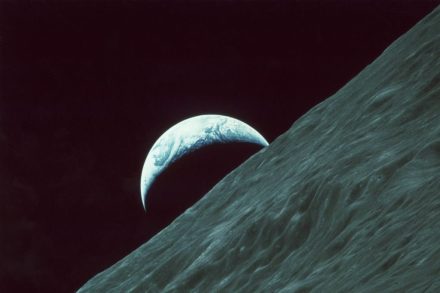
China’s Chang’e-6 moon mission was launched on 3 May. It reached lunar orbit a few days later and began waiting for sunrise over its landing site on the moon’s far side. Chang’e-6 is named after the Chinese goddess of the moon and it will land on Sunday in a crater called Apollo – an ancient double-ringed walled plain caused by an asteroid smashing into the young moon. Apollo has been heavily damaged by subsequent impacts and in many places covered with lava flows and sprinkled with particles from newer impacts. It is as Buzz Aldrin said, a magnificent desolation. It is a region of great geological significance, since it contains rocks from the moon’s lower crust and the deeper mantle – a treasure trove of planetary history.

Letters from Spectator readers, June 2024

The rise of reverse gaslighting Sir — To an otherwise excellent article, I have a small correction. In 1860, the Southern states did not keep Lincoln off the ballot. Unlike today, where voting ballots are printed by the states, in 1860, voters were not presented with official ballots at polling stations that allowed them to check off which candidate they were voting for. Instead, a nineteenth-century ballot or “political ticket” was a slip of paper, provided by each party, listing their candidates for whatever offices were up for election. This allowed voters to easily “vote the ticket” for their party without having to know the names of every candidate and office.

letters

Inside the May issue: technology

Western governments seem ill-prepared to grapple with rapidly advancing technology. Watch any congressional hearing where a crusty congressman tries to keep pace with Silicon Valley’s top “autists” if you need further evidence — and read Spencer A. Klavan’s analysis of the high-skill but low-status rejects uniting into a formidable social class. The Silent Generation and boomers simply cannot keep up. The Space Race is back on — and tycoons are eager to cash in on the final frontier. Shane Cashman dives into the new wild west of explorers and entrepreneurs commercializing the great unknown. Lionel Shriver brings us back to earth with a look at the electrical grid and our government’s push for green energy and electric vehicles.

technology

Is the West ready to face the challenges of advancing technology?

The theme of this month’s edition is technology. The advancement of space exploration, defense technologies, artificial intelligence and the like should excite us. Yet the geopolitical issues they present are great and Western governments seem ill-prepared to grapple with them. Watch any congressional hearing where a crusty congressman tries to keep pace with Silicon Valley’s top autists if you need further evidence — and read Spencer A. Klavan’s analysis of the high-skill but low-status rejects uniting into a formidable social class on p.12. The Silent Generation and boomers simply cannot keep up. The Space Race is back on, as tycoons seek to cash in on the final frontier.

space technology