South america

Why Joe Biden’s Latin America policy is failing

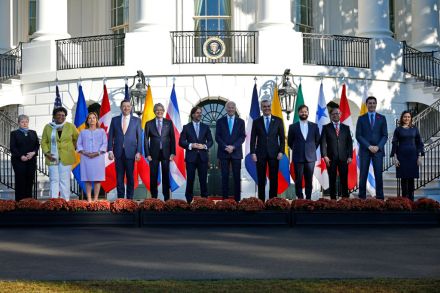
At the opening ceremony of the Summit of the Americas in Los Angeles last year, President Joe Biden announced the Americas Partnership for Economic Prosperity, which the White House described as “a historic new agreement to drive our hemisphere’s economy recovery and growth and deliver for our working people.” The plan has become the administration’s signature Latin America policy. As noted by the White House, the region matters not solely because it’s where the US is situated, but because it also accounts for 32 percent of global GDP. Even more so, the region is rich in resources that are crucial in the development of emerging technologies.

latin america

Venezuelans voted to annex Guyana. What’s next?

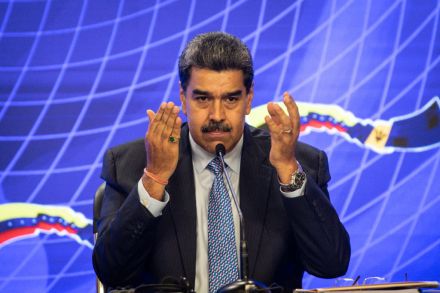
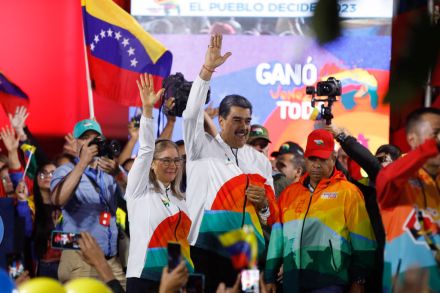
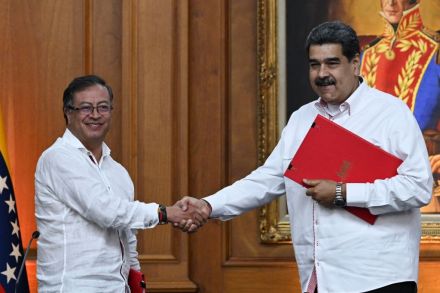
Venezuela’s Nicolás Maduro carried out a controversial referendum on whether more than two-thirds of Guyanese territory is Venezuelan land this Sunday, challenging the international community and making a mockery of the Biden’s administrations rapprochement. The results for the referendum are in, with all of the propositions receiving more than 95 percent approval, according to the country’s electoral council.

guyana

What does Javier Milei’s win in Argentina mean to America?

Javier Milei, a messy-haired bombastic libertarian economist, won Argentina’s presidential elections against socialist minister of economics Sergio Massa this Sunday. With the backdrop of inflation that the International Monetary Fund projects will trail only that of Zimbabwe and Venezuela by the end of the year, Milei triumphed with over 55 percent of votes in the runoff with more than 94 percent of votes counted, according to data from the country’s National Electoral Chamber. In a brief speech before the results were announced, Massa, who came first in the October 22 election that led to the run-off, said, “Milei is the president elected for the next four years,” adding that he had called Milei to personally congratulate him on his victory.

javier milei

Escaping the city in Argentina

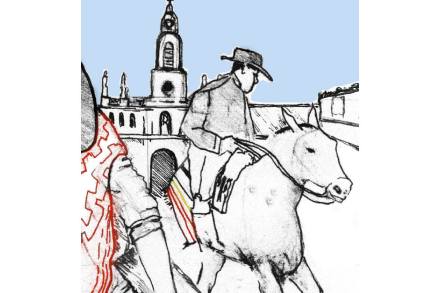
Planning a foreign trip is a bit like watching a trailer for a film. The research is a preview of coming attractions. I almost never made it to San Antonio de Areco, a charming country town about seventy miles northwest of Buenos Aires, because it seemed extravagantly expensive and complicated to visit. But trailers can be misleading, perseverance is a virtue, and Areco, as the locals call it, turned out to be the highlight of my visit to Argentina last summer. With just a week to spend in the world’s eighth largest country by land area, my plan was to spend four days in Buenos Aires and three in a small town, a place I hoped would give us an idea of what the country’s gaucho heartland is about.

argentina

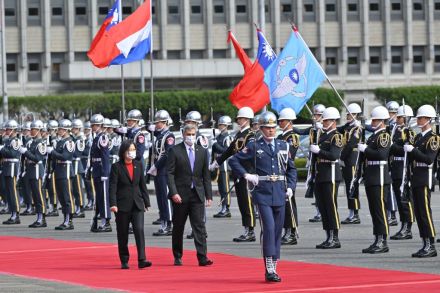
The Paraguay predicament over Taiwan

On April 30, Paraguayans will go to the polls to select a new president. Though elections in the landlocked South American nation do not typically make headlines around the world, this vote carries outsized geopolitical importance: it could mean Taiwan loses yet another country to China. Opposition candidate Efraín Alegre of the Authentic Radical Liberal Party, or PLRA, has said that, should he win, he will retract Paraguay’s recognition of Taiwan as a country. At present, Paraguay is the largest of just fourteen countries to have formal diplomatic relations with Taiwan and the only one in South America. Paraguay first recognized Taipei in 1957 while under the dictatorship of Alfredo Stroessner.

paraguay

The Pink Tide returns to Latin America

As the dust settled on Jair Bolsonaro’s seismic victory in Brazil back in 2018, one might have spared a thought for those dedicated to the cause of international socialism. Having bathed in the glory of the so-called "Pink Tide" and the commodities boom of the early 2000s that allowed socialist governments such as Hugo Chávez's Venezuela to seemingly prosper, any hopes that Latin America would forever unify in the cause of left-wing anti-imperialism seemed well and truly dashed. In many of the continent’s wealthiest countries, right-of-center politicians had swept to power with a view to restoring their nation’s former glory. These included Bolsonaro in Brazil, Sebastian Piñera in Chile, Ivan Duque in Colombia, and Mauricio Macri in Argentina, among others.

Bolsonaro isn’t finished yet

From our UK edition

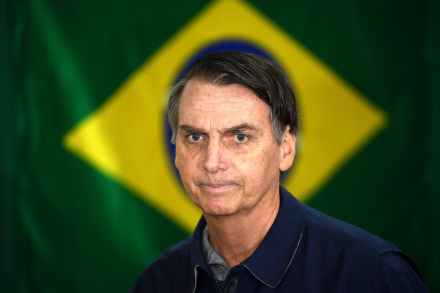
São Paulo The polls got it wrong again. In the first round of Brazil’s presidential election on Sunday, challenger Luiz Inácio Lula da Silva (Lula) got 48.4 per cent of the vote, 5.2 points ahead of the incumbent Jair Bolsonaro. Polls had predicted a possible first-round win for the insurgent. But – with neither candidate gaining a majority – they will now face a run-off election on 30 October. Bolsonaro hasn't just flirted with the idea of a coup, he's wined and dined it Lula has the lead and remains sanguine about victory. But the momentum is with Bolsonaro, the populist former army captain whose chaotic administration has polarised Brazil.

Nazi on the run: The Disappearance of Josef Mengele, by Olivier Guez, reviewed

From our UK edition

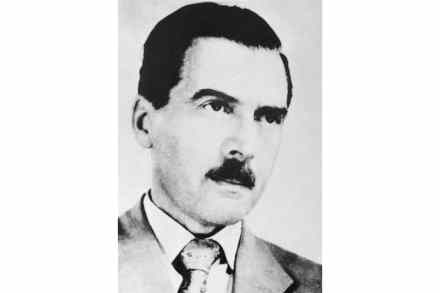
Who would have thought that someone would write a novel about Josef Mengele, the Auschwitz doctor and infamous experimenter on live human bodies? Other characters in the French writer Olivier Guez’s story are also from the Nazi gang of debased criminals: Adolf Eichmann, Franz Stangl, the concentration camp commandant, and Klaus Barbie, the Butcher of Lyons. This is a historical novel, and Guez has researched it well. He invests the structure of events with his imagination and has Mengele relate his experiences throughout his long avoidance of capture. There’s a vivid sense of reality about the crazed, unrepentant eugenist’s attempt at an acceptable fugitive way of life, and Guez holds our attention by building dramatic suspense.

Bogotá in full bloom

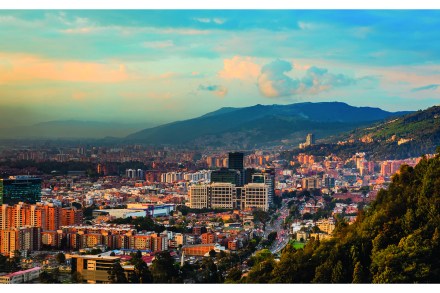
Everyone comes to Bogotá looking for something. It’s always been that way. A thousand years ago, indigenous traders traveled to the markets in the Bogotá savanna to barter with the Muisca and exchange gold, emeralds, salt and cotton. The Spaniards arrived five centuries later in search of the treasures of conquest and the mythical city of gold that now lends its name to the international airport: El Dorado. The great revolutionary Simón Bolívar came in search of the capital of his South America republic Gran Colombia and to liberate the continent from Spanish rule. I didn’t know what I was looking for when I first arrived in Bogotá.

Bogotá

How long can Peru’s new socialist leader last?

From our UK edition

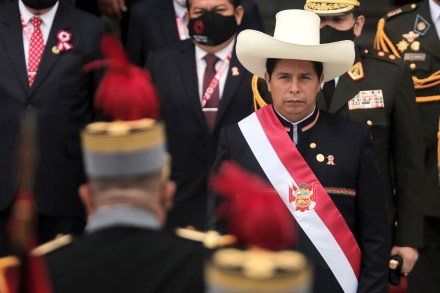
The symbolism could hardly have been clearer when Pedro Castillo was sworn in yesterday as Peru’s new President on the country's 200th anniversary of independence. For arguably the first time in its history, Peru has a head-of-state who personifies the national majority — a campesino hailing from a particularly impoverished region of the northern Andes — rather than a member, real or honorary, of the largely white Lima elite. Given Peru’s persistent, stark inequality, drastically exacerbated by the pandemic, perhaps the biggest surprise is that the electorate has waited until now to vote in such a radical left-populist.

Lost city of fantasy

From our UK edition

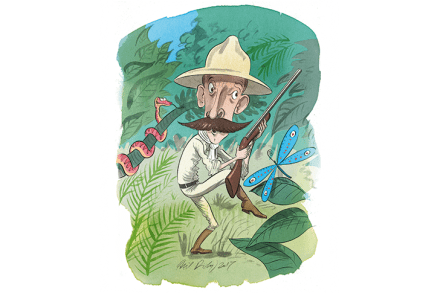
The new film The Lost City of Z is being advertised as based on the true story of one of Britain’s greatest explorers. It is about Lt-Col Percy Fawcett. Greatest explorer? Fawcett? He was a surveyor who never discovered anything, a nutter, a racist, and so incompetent that the only expedition he organised was a five-week disaster. Calling him one of our greatest explorers is like calling Eddie the Eagle one of our greatest sportsmen. It is an insult to the huge roster of true explorers. Had the advertisement been about a soap powder, it would fall foul of the Trade Descriptions Act. Percy Fawcett joined the army immediately after school, with a commission in the artillery in 1886. The next 20 years involved garrison duty in Ceylon and postings in Malta and England.

Venezuela’s doomed love affair with socialism continues

From our UK edition

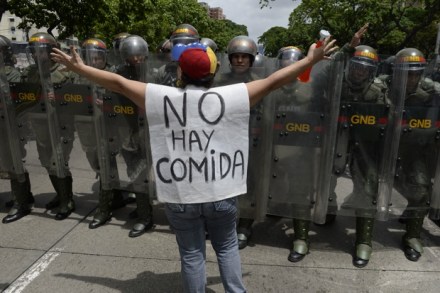
It’s hard to imagine now but just decades ago Venezuela was the richest country in South America. The late President Hugo Chávez’s social programs thrived on record oil revenues; Venezuelan industry was left underdeveloped but poverty was glitteringly - yet only temporarily - relieved. Now that the price of oil has plummeted, the country’s hollow economy is dependent on imports it does not have the cash to buy. Normally reliable Chinese lenders are having second thoughts. Inflation has hit triple digits. Venezuela’s economy is in utter recession and is projected to contract eight per cent this year, making it officially the slowest-growing economy in the world. The litany of consequent disasters is almost routine now.

Wings of desire

From our UK edition

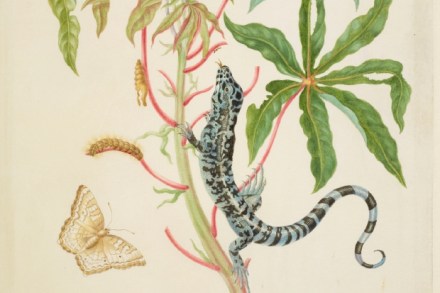
Maria Sibylla Merian was a game old bird of entrepreneurial bent, with an overwhelming obsession with insects. Born in Frankfurt in 1647, she sacrificed her health and financial stability in pursuit of her passion. It carried her halfway across the globe and earned her lasting renown among a handful of cognoscenti. Merian was 15 when Jan Goedart published the first of his three volumes of Metamorphosis et historia naturalis insectorum and is unlikely to have seen the book until later. Goedart’s purpose, based on close observation of a range of insects, was a fuller understanding of insect life cycles. It was the same purpose to which Maria Merian devoted herself — even resorting to selling snakes, lizards, a tortoise and a crocodile to fund her compulsion.

Marvellous, murderous city

From our UK edition

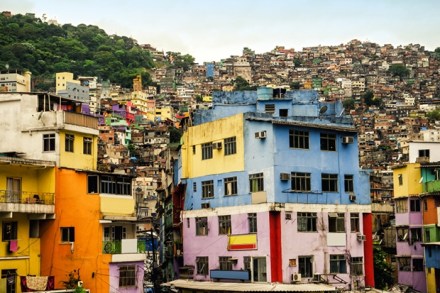
When Stefan Zweig first arrived in Rio de Janeiro in 1936, he was overwhelmed not only by the city’s magnificent landscape but also by its ordered architecture and city planning. This encounter he would later describe as being ‘one of the most powerful impressions of my whole life’. In his Brazil: Land of the Future, a book that was an exercise in wish-fulfilment masquerading as travelogue, Zweig believed the country to be the embodiment of ‘future civilisation and peace in our world’. Over 70 years later Brazil held the world’s worst record for homicidal violence: for every ten people killed, one was a Brazilian. Rio, the cidade maravilhosa (marvellous city), may have retained its beauty in spite of being hemmed in by favelas, but it was now damned.

The murderous gangs who run the world

From our UK edition

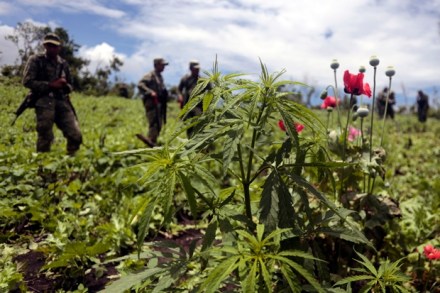
Rosalio Reta was 13 years old when recruited by a Mexican drug cartel. He was given a loyalty test — shoot dead a man tied to a chair — then moved into a nice house in Texas. Soon he was earning $500 a week for stakeouts and odd jobs, but the big money came from slitting the throats of the gang’s enemies, which paid a $50,000 bonus. Four years later he was arrested after 20 murders; his only remorse was over accidentally sparking a massacre that left him fearing his bosses might exact revenge on him. Such bloodstained stories of obscene violence in pursuit of obscene wealth fill the pages of the Italian journalist Roberto Saviano’s investigation into the cocaine trade.

One day the Condor and the Eagle will fly wing-tip to wing-tip

From our UK edition

The pub was disappointingly empty, so I took my first pint of the evening upstairs, where some sort of New Age society was holding a public talk and discussion. I gave the woman seated just inside the meeting room my £5 entry fee and found a spare seat at the back next to a big bloke with a beard. In the five minutes or so before the talk began, I counted 47 other people in the room, all of them white. Five chaps had advanced male pattern baldness, another had very obviously dyed hair (black). The total number of beards was six, including a goatee. Average age, at a guess, was 50. About ten people were over 70. Only three people had chanced a check or patterned jumper, dress or top; the rest wore plain — boring shades of brown mainly. Only one person was morbidly obese.

Peru’s Indians are repressed with more efficiency than blacks ever were in South Africa

From our UK edition

In The Spectator of 21 March a column by Toby Young caught my eye. Discussing the pros and cons of selective schools, Toby found it hard to reach an emphatic conclusion; and for what it’s worth I find it hard too — but, then again, what do I know? It was his international comparisons that engaged me. It was not the point he was trying to make, but Toby quoted a statistic which speaks volumes about the continuing oppression of the indigenous peoples of South America. In educational attainment tests, Peru has the world’s worst ‘variance’ explicable by the children’s backgrounds, or so the OECD have found. ‘Variance’ means departure from the average.

A horse ride from Buenos Aires to New York? No problem!

From our UK edition

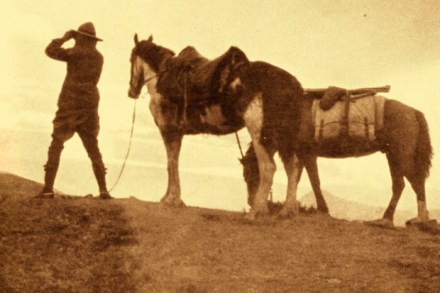
Aimé Tschiffely was what I have seen in other contexts called a ‘doublehard bastard’. In the middle of the 1920s, this Swiss-born schoolteacher at the age of 30 feared that he was getting stuck in a groove and that he wanted ‘variety’. So he set out on a solo horse-ride from Buenos Aires to New York City. Tschiffely wasn’t even much of a horseman at this point. But he had the notion that the wild Criollo horses of Argentina — descendents of the Spanish horses transported to the continent by the Conquistadors in the 16th century and brought to excellence by their survival in that unforgiving environment in the centuries since — were the hardiest horses for long riding in the world. Everyone else thought he was mad.

Fog around the Falklands

From our UK edition

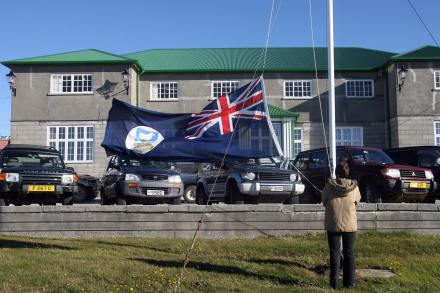
For the populist president of Argentina, Cristina Kirchner, the ban on Falklands-flagged ships agreed by the Mercosur summit in Montevideo is a diplomatic triumph. It comes after a string of similar moves throughout the region aimed at tightening the noose around the Falklands. For example, HMS Gloucester was denied access to Montevideo in 2010 and, in an effort to strengthen Brazilian-Argentinian ties, Brazil did the same when HMS Clyde sought to dock in Rio de Janeiro. In reality, ships from the Falklands can switch flags before they enter any regional ports, but Argentina’s intent is to isolate the islands — and bring fellow South American nations along with them in the process. In which case, the default British response of talking war is beside the point.

From the archives: The Great Communicator stumbles

From our UK edition

It's been 25 years since the Iran-Contra affair – the scandal about the US government selling arms to Iran and using the proceeds to fund the Nicaraguan rebels. It saw Ronald Reagan's approval rating drop from 67 per cent to 46 per cent, and fourteen memebers of his staff were indicted. In a piece that appeared in The Spectator exactly a quarter of a century ago, Christopher Hitchens explains how the Reagan administration was unable to contain the story. The end of the line, Christopher Hitchens, 29 November 1986 If you wish to understand the fire that has broken out in the Washington zoo, and penetrate beyond the mere lowing and baying of the trapped and wounded beasts, you must master three key concepts in the capital’s vernacular.