South america

Big Red

From our UK edition

‘Dear mother, I’m feeling quite ill, From all of these bits off the grill; Nostrils and tits and unspeakable bits, Balls haven’t come yet, but they will!’ So wrote my late father-in-law, Cyril Ray, as he ran up the white flag after one asado too many during a trip to Argentina many years ago. And nothing has changed: I’m the least vegetarian person I know, but by the end of a ten-day trip to Buenos Aires and Mendoza, the merest whiff of woodsmoke had me reaching for the lettuce sandwich. The traditional Argentine asado — a loose term that can mean ‘short rib’, ‘grill’ or ‘barbecue’ — is a long, drawn-out affair. On Sundays, when families traditionally eat together, it can last all afternoon.

Cameron vs Kirchner

From our UK edition

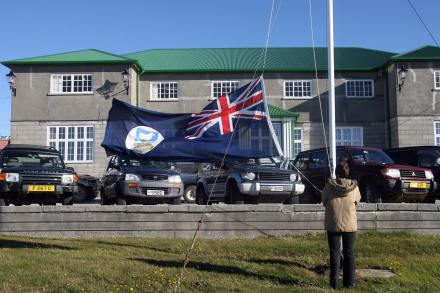
After stating the obvious at PMQs this week — that the Falklands would remain sovereign British territory as long as they want to be — David Cameron has come under heavy fire from the Argentine President, Cristina Kirchner. As today's papers report, she yesterday described our PM as "arrogant," and said his comments were an "expression of mediocrity and almost of stupidity". But there is nothing new in the British position, which has always been that there can be no negotiations over sovereignty unless and until such a time as the Falkland Islanders so wish.

Glutton for punishment

From our UK edition

With its vast areas of barely explored wilderness, and its heady mix of the sublime, the bizarre and the lushly seductive, South America would appear to have all the ingredients to attract the travel writer. Yet the recent travel literature on the continent has been surprisingly scant and taken up by lightweight, gung-ho tales of not especially remarkable adventures. Fortunately there is John Gimlette, whose first South American travel book, At the Tomb of the Inflatable Pig, captured with great wit and learning the quirkiness of Paraguay. He has now produced a no less remarkable portrait of the highly idiosyncratic countries known collectively as Guiana, the ‘Land of Many Waters’.

Daylight for the 33

From our UK edition

As Alex says, the rescue of the Chilean miners has to be the "feel-good story of the year". The first, Florencio Avalos, was winched out of his underground cell at 0310 British time, and a further four have been delivered to the surface since. With 28 more miners to come, this is by no means over – but a much happier end is in sight than many would have believed, 68 days ago.

What lies beneath

From our UK edition

There’s the pretty-much-mandatory South American setting, the gloomy reflections on the nature of reality and unreality, along with a clutch of wildly unreliable narrators. There’s the pretty-much-mandatory South American setting, the gloomy reflections on the nature of reality and unreality, along with a clutch of wildly unreliable narrators. It even has the added cachet of having been written in Spanish by a Canadian and then translated into English. If ever there was a book that demanded to be hurled across the room by anyone who’s not a regular user of the word ‘ludic’, this surely is it.

Future foreign policy

From our UK edition

If the Tories win power (still a big “if” these days), William Hague will walk into King Charles Street, be greeted by the FCO’s Permanent Secretary Peter Ricketts, meet his new staff and be briefed on the Office he will lead and the foreign challenges Britain faces. There will be plenty on his plate. Calls from foreign dignitaries, preparations for forthcoming summits, a discussion of key priorities, and suggestions for how to reorganise the machinery of government. There will also be a need to prepare the FCO’s contribution to a cost-cutting exercise.      But there ought to be an early discussion about how the world is changing and the new context of Britain’s foreign policy.

Slum-dwellers and high-flyers

From our UK edition

James Scudamore is evidently fascin- ated by borderline personality disorder. His characters veer between moments of machismo-fuelled rage, extravagant eloquence and intense introspection. The Amnesia Clinic (2007), which earned him the Somerset Maugham Award for writers under 35, was set in Ecuador and depicted the tribulations of adolescence. For his second, bolder novel, he crosses the Andes to the even more turbulent setting of Brazil and heaving, torrid Sao Paolo. There are striking similarities between the books — among them a passion for the South American landscape and the quest for personal identity — but the naive charm of The Amnesia Clinic is here replaced by a more brutal force.