Song

The many versions of ‘Come Saturday Morning’

From our US edition

Wedding season has begun. First out of the gate this year was my young first cousin once removed, who entered marital bliss in a lovely Catholic ceremony in the small western New York city of Lockport, hometown of the logorrheic novelist Joyce Carol Oates and the supermodel cum hemorrhoid-cream spokeswoman Kim Alexis. As I sat nursing a non-alcoholic beer (I should’ve stuck with water) at the reception I awaited the father-daughter dance, and not only for its poignancy. I have paid attention to these ever since reading a newspaper article several years back that said Eric Clapton’s “Wonderful Tonight” was then the second-most-popular song for this wedding-reception custom. Hmm.

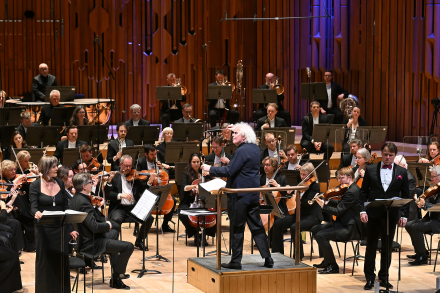
Rattle’s glorious Janacek

The Czech author Karel Capek is probably best known for his plays: high-concept speculative dramas such as R.U.R. and The Insect Play, bristling with wit and ideas. But he paid his bills as a newspaper columnist, and he seems to have been pleasantly surprised when Janacek approached him about turning his ‘conversational, fairly unpoetical and over-garrulous play’ (Capek’s words) The Makropulos Affair into an opera. Capek licensed Janacek to adapt it as the composer saw fit, in words that have the authentic ring of the working journalist – ‘because I simply wouldn’t get round to revising it myself’. No fear on that count. The Makropulos Affair is a brisk, nervy play but Janacek, at 69 (there’s hope for us all), was an old theatrical hand.

Josquin changed musical history – why don’t we hear more of him?

Stepping into the Sistine Chapel, the choir loft is probably the last thing you’d notice. ‘Loft’ is, frankly, a stretch for what amounts to a small alcove with a wooden bench, carved out of the chapel’s wall. But if you made your way up there and ran your hand over the stone you’d feel something unexpected. Etched into the wall in haphazard graffiti are hundreds of names. In most cases the carvings are all that remain of centuries of singers from the papal choir. But one is different: ‘JOSQUINJ’. Chances are it’s the only surviving signature of Josquin des Prez — a composer whose name and legacy are carved just as deeply into the history of music itself. This August marks the 500th anniversary of Josquin’s death.

Perfect English songs in fresh new colours: Roderick Williams sings Butterworth

Another week, another online concert; and since orchestral music seems likely to be confined to screens and stereos for a while longer, one might as well try and experience something new. But not too new — I’ve pretty much had it up to here with the present. The Hallé orchestra is currently streaming a collection of Shropshire Lad songs by George Butterworth, conducted by Sir Mark Elder and sung by the baritone Roderick Williams in orchestral versions of his own creation. That seems ideal: music by the most perfect of English classical songwriters, in fresh and unfamiliar new colours. And time spent with an artist as likeable and intelligent as Williams is never wasted.

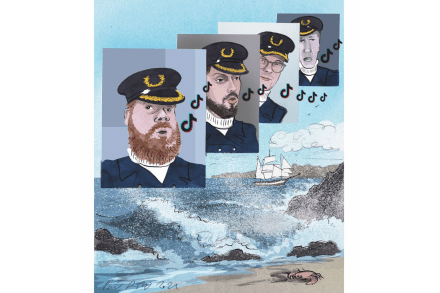
From ancient Greece to TikTok: a short history of the sea shanty

Many things are now normal that would have seemed unlikely a year ago. But even in this strange new world the sudden rise of the sea shanty is, perhaps, strangest of all. It all started in December when Nathan Evans, a postman from North Lanarkshire, posted a video of himself online — a lone figure filmed in no-frills close-up, hoodie high under the chin, beanie pulled down to the eyes — singing the 19th-century whaling song ‘Wellerman’. A trickle of views became a storm, thousands turning to millions (now billions) and just like that sea shanties went from kitsch, Last Night of the Proms novelty to global phenomenon. The song went viral — the centre of a new internet craze: #ShantyTok. Fast forward a few months and Evans, whose song went to No.