Social media

Beware the risks of tyrannical tech

“Just think about it. Our whole world is sitting there on a computer. It’s in the computer, everything: your, your DMV records, your, your social security, your credit cards, your medical records. It’s all right there. Everyone is stored in there. It’s like this little electronic shadow on each and every one of us, just, just begging for someone to screw with, and you know what? They’ve done it to me, and you know what? They’re gonna do it to you.” — Sandra Bullock as Angela Bennett, The Net, 1995 A few weeks ago, I called the local Domino’s. The man who answered asked whether my address is an apartment or a private residence. I live in a fairly remote Michigan community of about 8,000 people.

A state of virtual war

My husband came into the living room the other day as I was sitting on the couch, scrolling on my computer — doomscrolling to be more accurate. “What are you doing?” he asked. “Are you watching... war?” We laughed at the absurdity of the comment but he wasn’t wrong. That’s exactly what we had been doing for days. Watching war on social media. Needless to say, it was a challenge to focus on this piece. As the conflict escalated rapidly in Ukraine, I couldn’t tear myself away from the drama as it unfolded on Twitter. Putin seemed backed into a corner, desperate and using many of the same barbaric tactics he used in Syria. Bombing hospitals. Bombing kindergartens. Killing civilians.

war

Ukraine and the war for your mind

Deterrence works. Russia's nukes are the only thing keeping the US from full-out war in Ukraine just six months after retreating from Afghanistan. The unprecedented propaganda effort by Ukraine and its helpers in the American mass media to drag the US and NATO directly into the fight has failed — so far. But the struggle — the one for your mind space — is not over. To understand what follows, you have to wipe away a lot of bull being slung your way. Insanity is not the only explanation for Putin’s actions of the past few weeks.

ukraine

Watch out for Ukrainian social media propaganda

Stop me if you’ve heard the one about the Ukrainian beauty queen who volunteered to fight the invading Russian forces. If you’ve been on social media these past few weeks, you’ve probably seen the striking photo of the woman clad in tactical gear and holding a rifle. “We are living in a materiel world, and I’m a materiel girl,” the stunner says to the viewer through her steely glare. Or the one about the Japanese ambassador to Ukraine kitted out in his ancestor’s samurai gear and ready to defend his adopted homeland? You’ve surely heard about the “Ghost of Kyiv,” a Ukrainian fighter pilot who has been terrorizing his Russian counterparts, accomplishing the feat — uncommon in contemporary air combat — of becoming an ace.

propaganda

Ukraine and the art of viral war

The sky is dull and gray, the sun obscured by clouds. The camera pans down past some desolate Soviet housing blocks. Some wintry, apocalyptic trees line a road. It could be Kyiv, it could be Bucharest, it could be any city where the residents liberally pepper their words with the -sky suffix. Suddenly, a flash of metal across the sky, a fighter plane roars into shot, then out again. The caption proudly declares, “This is the Ghost of Kyiv, the bravest fighter pilot in the Ukrainian Air Force. He has downed six Russian planes just today.” You don’t know that much about Ukrainian fighter pilots, but placed among a million other viral clips of heroic Ukrainians fighting against Goliath, you think it seems believable enough. You retweet it. You send it down group texts.

The algorithm myth: why the bots won’t take over

From our UK edition

Google once believed it could use algorithms to track pandemics. People with flu would search for flu-related information, it reasoned, giving the tech giant instant knowledge of the disease’s prevalence. Google Flu Trends (GFT) would merge this information with flu tracking data to create algorithms that could predict the disease’s trajectory weeks before governments’ own estimates. But after running the project for seven years, Google quietly abandoned it in 2015. It had failed spectacularly. In 2013, for instance, it miscalculated the peak of the flu season by 140 per cent. According to the German psychologist Gerd Gigerenzer, this is a good example of the limitations of using algorithms to surveil and study society.

Job vacancy: social media editor

From our UK edition

The Spectator is looking to hire a new social media editor to oversee our channels and to drive engagement online. Responsibilities Posting and scheduling stories on all major social media platforms. Writing social posts quickly and accurately after articles are published. Repurposing written content from online into creative posts for social media platforms. Giving feedback to staff about performance data from social media posts. Job requirements Experience of creating engaging social posts and managing social accounts.A sensitivity to controversy and an ability to drive engagement without resorting to clickbait or lowering our intelligent tone online. A proven track record of building communities online.

Joe Biden in the metaverse

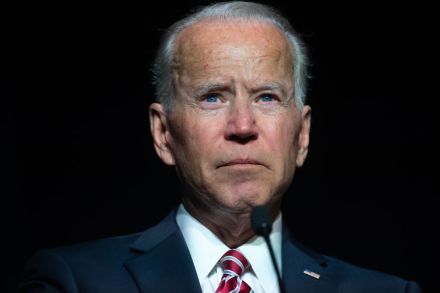
Meta is meant to be better — better than Facebook, better even than reality. In the future, a second Edward Gibbon may wonder not just whether it was a good idea for the federal government to encourage Mark Zuckerberg and a handful of talented techies to launch a Revenge of the Nerds coup against the minds and manners of America, but also what it was about reality that made us want to escape it so badly in the first place. There has never been a society more blessed than that of the United States.

metaverse
curse-tablet

Twitter has taken the place of the ancient curse-tablet

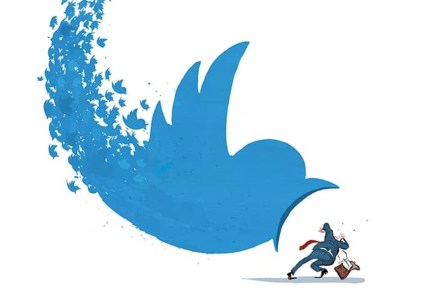
Twitter and other easily accessible means of online communication have encouraged the public to believe that Their Voice Will Be Heard. When it isn’t, they express their frustration through abuse and threats or by blocking roads. In this way, the mentality of the ancient curse-tablet lives on. In the Ancient world, the purpose of the curse was to “bind” the person you disliked — i.e. frustrate them from achieving the end they wanted and you did not. It was written on a thin lead plate, rolled up tight, sometimes twisted (to “hobble” the victim) and pinned (to constrain him), then placed into the tomb of someone who had died before his time. The belief was that the dead man, resentful of his early demise, would be happy to enact the curse against the named victim.

What really happened to Politics For All

From our UK edition

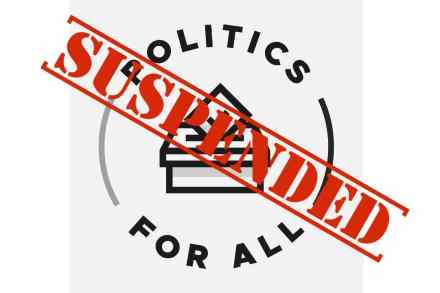
On 2 January I woke up late to the sound of my phone buzzing continuously and a sense that something had gone badly wrong. The first message was from a friend. ‘Having a nice holiday?’ he wrote, above a screenshot of my political Twitter account covered in block letters: ‘Suspended.’ My reaction was to swear in just the way my dad does whenever he crashes his car. Politics For All was a news aggregation service I started two years ago when I was 17. It took the most salient lines from news articles and posted them across social media, always pointing readers to the original publication. The aim was to engage a younger audience in politics by summarising stories in a more accessible way.

My strange encounter with foot fetishists

From our UK edition

Around five years ago I started to receive requests online for photos of and details about my feet. I’ve been asked for foot pictures intermittently ever since. Most of the gentlemen are upfront about what they’re after (‘send foot pic plz’), but one man went above and beyond in his pursuits. Posing as an academic, he sent several emails to my work account claiming dozens of women in the British media had submitted their shoe size to help him with a research project. He was just waiting for my details to finish his ground-breaking study. Although I never responded, I commend his efforts. I was never able to work out what triggered this attention from foot fetishists, but now I think I’ve figured it out.

I’m sharing my boyfriend with 60,000 other people

From our UK edition

I fell in love with a social media influencer. I could say there are three people in our relationship but I’d be lying. There are 63,423. Imagine a world in which your partner’s private life is his professional life: with thousands of fawning acolytes all vying for his approval, all competing for online traction — a traction that comes from your other half’s thumbs. His fingers hover over the phone rather a lot, giving updates into whatever he’s up to. It’s a little disconcerting. Life with an influencer can be challenging. Every trip must be documented, every meal photographed prior to consumption.

Marjorie Taylor Greene’s Twitter ban is nothing to celebrate

From our UK edition

Marjorie Taylor Greene is nuttier than M&M World. Not your garden-variety conservative, or even a conservative at all, but a conspiracy theorist who rode these febrile times into a seat in Congress. She describes American Airlines Flight 77 as ‘the so-called plane that crashed into the Pentagon’ on 9/11, remarking that ‘it’s odd there's never any evidence shown for a plane in the Pentagon’. She suspects the 2018 California wildfires were started by a Rothschild-funded ‘laser beam or light beam coming down to Earth’ in order to help Democrats build a high-speed rail project. Her Facebook account has liked a post proposing ‘a bullet to the head’ for Nancy Pelosi.

A New York senator declares war on the First Amendment

A new year, a new assault on free speech in America. New York Senator Brad Hoylman claims that legislation he's introduced into the state senate targets Big Tech algorithms to keep them from promoting “controversial and harmful content.” Yet the bill seeks to “protect” public health by making almost any social media comment going against Hoylman’s beliefs illegal. Hoylman passes himself off as a defender of the public good by vowing to take on Big Tech, which he accuses of profiting by deliberately stoking controversy. He specifically mentions anti-coronavirus vaccine posts “as a false statement of fact or fraudulent medical theory that is likely to endanger the safety or health of the public.

Am I being impersonated by an actor from Colorado or a mining company?

From our UK edition

Someone else with my name is wreaking havoc with my attempts to control the Twitter account I don’t want. Obviously, I haven’t been on Twitter other than to stick my toe in briefly, then pull it back out after realising how very cold it is in there. But I can’t work out how to deactivate my account. I’ve tried many times but it is beyond me, so I have had to stay on Twitter but not actually go on Twitter. This position was holding up fine, until I started getting emails telling me someone had logged into my account and if that wasn’t me I should do something about it.

The good and bad news about the Online Safety Bill

From our UK edition

If you care about free speech, the just-published report of the Joint Committee on the Online Safety Bill – a cross-party parliamentary committee composed of six MPs and six peers – is a mixed bag. This is the Bill which began life as a White Paper under Theresa May. Its aim? To make the UK the safest place in the world to go online. It will achieve this by subjecting social media platforms and internet search engines to state regulation, empowering Ofcom to impose swingeing fines on companies that fail to observe a new ‘duty of care’. Let’s start with the good news.

Both parties want to control what you say on the internet

The long slog towards government regulation of social media is snaking its way towards reality. The House and Senate hold hearings this week on bills enacting rules on Facebook, Twitter, TikTok and YouTube. Many of these proposals revolve around Section 230 of the Communications Decency Act, a rather innocuous 1996 law protecting online platforms from civil liability for hosting and moderating third-party content. Section 230 includes language praising “the vibrant and competitive free market” existing for the internet and tech companies, without state or federal government rules. It’s all about to change twenty-five years later, with both major parties seeking to get their pound of ideological flesh from Big Tech.

control

Can GETTR go the distance?

Where to go these days in social media when you want to MAGA and shake off Big Tech’s shackling of free speech on woke corporate giants such as Facebook and Twitter? You have a few choices, including one just announced by Donald Trump, TRUTH Social, which is set to launch in 2022. In addition to Parler, an app favored by Dan Bongino, a prominent Trump supporter, TRUTH Social will compete with GETTR, which is run by Trump’s ex-advisor Jason Miller, who left his unofficial job with the Trump Organization to run the fledgling Twitter clone. The OG Twitter alternative is Gab.

gettr

I’ve been back one week and the good old US of A has never seemed more depressing

From our UK edition

New York Don’t let anyone tell you the Bagel is worse off than Kabul, where three people were recently shot dead by Islamist gunmen for playing music at a wedding. No siree, people over here are shot every day and night but not for playing music at a wedding. Give New York credit where it’s due. The city is a bloody horror if you’re living way uptown, way downtown, or in the Bronx, with the rest of Gotham experiencing a level of street crime not seen in a decade. Robberies and felonious assaults are up 15 per cent in a year and gun arrests by a whopping 20 per cent. In the subway violent crime per ride is twice as high as in 2019.

Letters: The contentious issues of religious conversion

From our UK edition

Hard to reconcile Sir: Although not an Anglican, I appreciate Michael Nazir-Ali’s dilemma (‘A change of mind and heart’, 23 October) and know many Anglicans whose loyalty to the C of E is being severely tested. But insofar as his theology is classically Protestant and evangelical, it is difficult to see how the former bishop can reconcile it with the teaching of the Roman Catholic Church on the sacraments, the office of the Pope, the role of Mary, purgatory and justification, to name but a few contentious issues. He speaks of how ‘what Anglicanism in its classical form has held most dear is being fulfilled in the progression of the Ordinariate’.