Social class

My fascist moment on the ship of failures

From our UK edition

There are no roads from the Peruvian river port of Iquitos, but the rich take aeroplanes. Those who cannot pay to fly may pay the premium for the 40ft motorised express canoes that take only a day to roar to and from the upriver port of Yurimaguas with its bus station. But losers in the global race cannot afford speed. For them there are only the big, slow, hot, lumbering cargo boats: nearly four days’ journey from Iquitos to Yurimaguas. So the moment a passenger walks up the gangplank and strings their hammock between the iron rafters of the open--sided deck, we can guess he or she is not one of life’s winners. Anyone who was wouldn’t travel this way. No less than among the rich there is social stratification among the poor, and the river fast shakes people down.

We need to invent something better than Machu Picchu

From our UK edition

Don’t know if you’ve noticed, but middle-class rules now require that every dinner party cheeseboard must contain at least two cheeses which aren’t very nice. Typically one will be a veiny French cheese which is not as good as Stilton; another may be that foreign thing with rind on it which isn’t nearly as good as Cheddar. I was baffled by this for a long time, until I realised that these cheeses are not bought to be eaten, but to signal the sophistication of the occasion. Economists might call them Veblen cheeses. (One day someone should make an inedible cheese called Veblenne. They’d make a fortune.

Downwardly mobile

From our UK edition

Last year, I found a pair of trainers in our communal recycling bin: Nike Air Max in black and grey size 10, very smart and hardly worn. I’d been wearing them a week when the teenager who lives in the flat below pointed at them and laughed. He told me that he’d discarded them because they were scuffed. This is where I’ve got to, I thought: wearing trainers that I found in a bin on a council estate. Such foraging isn’t un-usual for us. The sideboard in our kitchen, the bookshelf in the hall and the big mirror in our bedroom were all found on our street. I worry that we might be dropping out of the middle class entirely. Our daughter, who goes to the local primary school, now has a strong south London accent.

A touch of class | 7 July 2016

From our UK edition

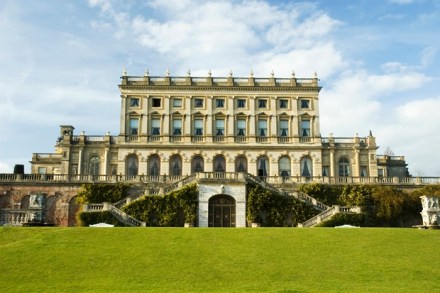
Cliveden is a good review for a divided country and I have waited, not too long, for it to feel resonant for Spectator readers; it aches with class-consciousness. It has food pens dependent on your status — whether you are eating in the National Trust grounds, or the swanky (I love this word; it’s so bitter) hotel inside the ‘manor’. And even if you are staying in the swanky manor, famous as the venue where John Profumo exploited the not-recovering child-abuse victim Christine Keeler — don’t call me a sighing Guardianista, I have done my research and she once aborted a child with a pen — in a swimming pool, you have signage to soothe your comparative class wretchedness, for you do not have a country house of your own.

A sad new British status symbol: the second passport in the bedside drawer

From our UK edition

I suppose I could probably get a Polish passport. Both of my maternal grandparents were Poles, displaced by war and Holocaust. Neither ever went back, because neither had anything to go back for. So a passport is the least they could do. The buggers owe me a house. There’s Lithuania on the other side, but that would probably be a bit of a stretch because it’s been over a century. A German passport might be doable, though, through my considerably, if not entirely, German wife. I daresay they’d let me tag along. Ja. Danke. Or a Scottish one, should the time come. When the time comes. Choices,-choices, choices. This is the trend.

Not thick or racist: just poor

From our UK edition

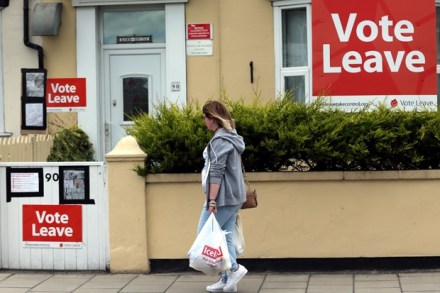
The most striking thing about Britain’s break with the EU is this: it’s the poor wot done it. Council-estate dwellers, Sun readers, people who didn’t get good GCSE results (which is primarily an indicator of class, not stupidity): they rose up, they tramped to the polling station, and they said no to the EU. It was like a second peasants’ revolt, though no pitchforks this time. The statistics are extraordinary. The well-to-do voted Remain, the down-at-heel demanded to Leave. The Brexiteer/Remainer divide splits almost perfectly, and beautifully, along class lines. Of local authorities that have a high number of manufacturing jobs, a whopping 86 per cent voted Leave. Of those bits of Britain with low manufacturing, only 42 per cent did so.

A new home for Old Labour

From our UK edition

On the eve of last year’s general election result, many pundits predicted the demise of Britain’s two-party system. The likeliest outcome was another hung parliament in which one of the smaller parties — the Lib Dems or the SNP — held the balance of power. These same pundits pointed to the steady decline in membership of the two main parties, as well as the success of insurgent parties in the European and regional elections, as evidence of this sea change. In the event, the pundits were ridiculed for getting it wrong. Yet is it possible they were just a year too early? The surprise Brexit win in yesterday’s EU referendum looks like it may bring about some kind of political realignment.

Aristotle vs the civil service

From our UK edition

The civil service is to be allowed to find out what job applicants’ ‘socio-economic background’ is. What abject drivel is this? Among all the different sorts of wisdom that Aristotle discussed, ‘practical wisdom’ was to the fore. It was for him neither a science nor an art, but ‘a reasoned ability to act with regard to the things that are good and bad for men’. It was especially vital for public servants. One of the characteristics of practical wisdom was the capacity for successful deliberation.

The game of the name

From our UK edition

You have to pity the Welsh woman who was last week prevented by the Court of Appeal from naming her daughter ‘Cyanide’. An unusual choice, admittedly. And the mother’s defence — Cyanide is a ‘lovely, pretty name’ because it was the drug Hitler used to kill himself ‘and I consider that this was a good thing’ — didn’t help. But given some of the names being foisted on kids these days, Cyanide almost seems sensible. Naming your child was once simple: you picked from the same handful of options everyone else used. But modern parents want exclusivity. And so boys are called Rollo, Emilio, Rafferty and Grey. Their sisters answer to Aurelia, Bartolomea, Ptarmigan or Plum.

Diary – 23 March 2016

From our UK edition

Killing time in a Heathrow first-class lounge, I notice how many men adopt an unmistakable ‘first-class lounge’ persona. They stand like maquettes in an architect’s model (feet apart, shoulders squared, defining their perimeter) and bellow into mobiles like they’re the first person ever to need ‘rather an urgent word’ with Maureen in HR. Along with this ‘manstanding’ comes the ‘manspreading’ of jackets, laptops and newspapers (FT for show; Mail for dough) over a Sargasso Sea of seats. In many ways, ‘first-class-lounge persona’ echoes ‘country-house-hotel face’ — the affectations couples embrace during weekend mini-breaks.

The smelly, snobbish death of the public loo

From our UK edition

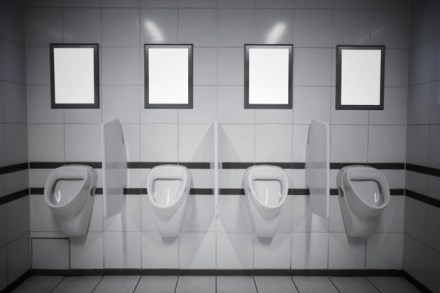
I blame Nancy Mitford: she made the English so frightened of saying ‘toilet’ that now they have hardly any left — of the public variety, that is, the sort that traditionally proved so useful to anyone who wanted to do a daring thing like leaving the house. I’m quite happy with ‘toilet’ personally, being from Belfast, where pretending to be ‘U’ is a greater source of potential embarrassment than simply being ‘Non-U’ like everyone else. Still, once the waspish Miss Mitford tagged talk of the ‘toilet’ or the ‘lavatory’ as an unshakeable indicator of one’s place in the class system, I can see why many people preferred to shut up about the subject altogether. Not any more.

Want to leave the EU? You must be an oik like me

From our UK edition

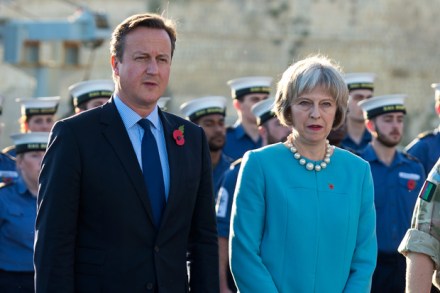
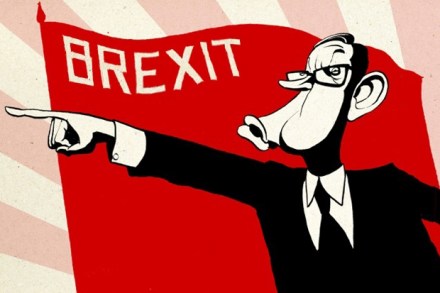
If you need to know how properly posh you are there’s a very simple test: are you pro- or anti-Brexit? Until the European referendum campaign got going, I thought it was a no--brainer which side all smart friends would take. They’d be for ‘out’, obviously, for a number of reasons: healthy suspicion of foreigners, ingrained national pride, unwillingness to be ruled by Germans having so recently won family DSOs defeating them, and so on. What I also factored in is that these people aren’t stupid. I’m not talking about Tim Nice-But-Dims here. I mean distinguished parliamentarians, captains of industry, City whiz-kids, high-level professionals: the kind of people who read the small print, sift the evidence and take a considered view.

Don’t act white, act migrant

From our UK edition

A black head teacher told me a story of his early days at a failing inner-city school. The job was a thankless one and everybody was waiting anxiously for the arrival of the new ‘super-head’ (the school had gone through three leaders in two years). In the playground it was leaked that the new head was an old-school type from Jamaica. During his first encounter with the students, they asked him how many children he had. He told them he had one and that she lived with him and his wife. ‘No sir, how many do you have in Jamaica?’ they asked. He replied: ‘None.’ They jeered, ‘Oh sir you’re not a yard man, not a real Jamaican — you’re acting white.’ This, I’m afraid, is typical.

The questions you don’t ask at the BBC

From our UK edition

There was a remarkable scene in one BBC Today programme morning meeting in about 1995, as all the producers gathered together to discuss what stories would be on the following day’s show. The big story was the European Union; the splits occasioned by the EU within the Tory party and the battle, on the part of racist neanderthal xenophobes, to keep us out of the Exchange Rate Mechanism, from which we had ignominiously exited three years before. The meeting cackled and hooted at the likes of Bill Cash and his assorted fascists on the Eurosceptic right. ‘They think the Germans are determined to dominate Europe!’ and ‘They’re just racists!’ and ‘They’re all old Monday Club little Englanders!’ How everyone laughed.

Barometer | 18 June 2015

From our UK edition

Dropping the Clangers The Clangers made a comeback on BBC television. Some Clanger facts: — The actors doing the voices worked from a script in English, even though they were playing seemingly unintelligible noises on the swanee whistle. It was a good job the young viewers didn’t understand Clanger-language, because the creatures were known to tell each other to ‘sod off’. — The last Clanger episode, made after a gap of two years, was made specially to be broadcast on the evening of 10 October 1974, polling day in the second general election of that year. It consisted of the Clangers being taught how to play party politics, but rejecting the concept. It was written by co-creator Oliver Postgate after he become angry about the miners’ strike.

The best way to end the ‘poshness test’

From our UK edition

There’s a warning buried in the detail of the new report by the Social Mobility and Child Poverty Commission on why top companies employ so few applicants from comprehensive schools: ‘Though this study provides valuable insights into barriers to the elite professions, there are nevertheless some limitations associated with the chosen research methodology. As a small-scale qualitative study, the aim is to explore issues and generalisability is limited.’ But most pundits who’ve commented so far missed this caveat. ‘New research… reveals the privileged choose and look after their own,’ wrote Owen Jones in the Guardian. ‘They don’t like accents that sound a bit, well, “common”.

In praise of the pit bull

From our UK edition

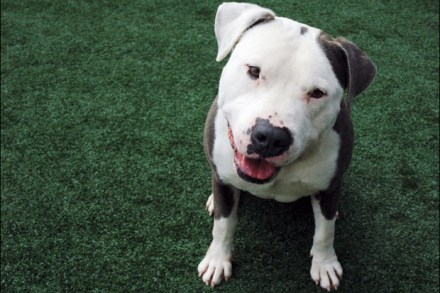
Last night I saw a woman dancing with a pit bull terrier. It was about 9 p.m. and her curtains were open, lights on. Music must have been playing, though I couldn’t hear it through the glass, because she was singing as she danced the dog about, leaning back to balance his considerable weight. Her arms made a seat for him, as you might carry a child, his paws on her shoulders. The woman gazed down lovingly at the dog, who looked embarrassed but patient, as if this wasn’t his first dance and wouldn’t be his last. I watched them for a while, standing unseen in the street, half-wondering whether to take a photo — not for fun or for Facebook, but to show to all the crosspatch busybodies who support the ban on ‘devil dogs’.

Letters | 23 April 2015

From our UK edition

Enemies within Sir: I thought Matthew Parris was typically incisive in his last column, but perhaps not quite as much as the person who wrote its online headline, ‘Scotland knows the power of a common enemy. We English don’t’ (18 April). It is true that ‘the wish to be the underdog’ is a defining urge of our age, even in relatively prosperous polities such as Scotland and Catalonia. But Parris is wrong when he claims that the closest the English come to the ‘Braveheart feeling’ is in their collective memory of the second world war. If only that were true. Would any other country make so little of its crucial role in the defeat of the most evil ideology the world has known?

Dear Mary: When is it all right not to bring something to a dinner party?

From our UK edition

Q. A wonderful and generous woman invites me, on a regular basis, to dinner parties at her house. What is an appropriate gift for an impoverished artist to take along on such occasions? I am always told by her that I shouldn’t have brought anything but my rigid British upbringing is telling me otherwise. — T. R., Florence A. As a rule grandees have present fatigue. They already have wall-high supplies of scented candles and chocolates and find flowers irritating due to the nuisance of having to find a vase. They are not ungrateful for the ‘thought’ but for practical reasons, they prefer guests to walk in empty-handed.

Blame Tony Blair for Labour’s new stupidity about wealth

From our UK edition

Peter Mandelson’s famous quote about New Labour being intensely relaxed about people getting filthy rich has a suffix that is often mischievously omitted: he added ‘so long as they pay their taxes’. But there are a few more things which many Labour members would have put on the end: so long as you don’t earn it by advising Central Asian dictatorships, so long as you don’t hang around with Russian oligarchs, so long as you don’t make it from the Saudis. Tony Blair and Peter Mandelson got filthy rich all right. But the whiff they gave off while doing so has only served to regenerate a very Old Labour disgust of wealth.