Slavery

Italy owes Wales reparations for the wrongs of the Roman Empire

From our UK edition

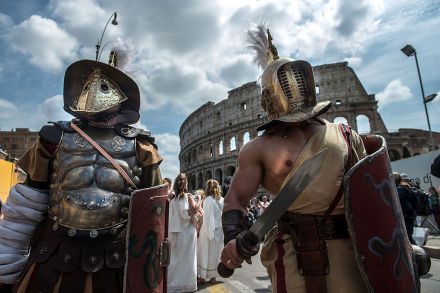
There’s talk of reparations in the air. Lobbyists from around the world are demanding sin-payments from former colonial powers. Let me add my voice to the clamour on behalf of this island’s indigenous Celtic people. My family are from Llanelli in Carmarthenshire and I believe that my compatriots have an excellent case to make against the Roman empire. This is not an extinct claim – the money is still in play. Britain was invaded by Julius Caesar in 55 BC and his visit was followed up a century later by the Emperor Claudius and his mob. The Roman occupation, which involved the military subjection of the Celtic peoples, lasted for about four centuries.
Russell Brand’s brain fog over Edward Colston

From our UK edition

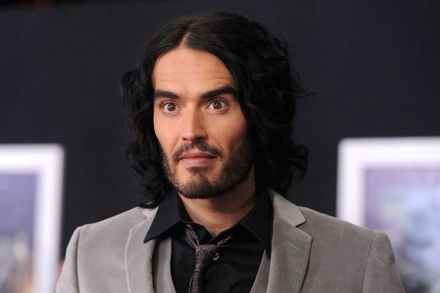
Back in the day when celebrities didn’t pontificate on the news but kept their political opinions to themselves, Russell Brand used to be a stand-up comedian. These days, he’s known more for his radical politics (and his former squeeze Katy Perry) than he is for his comedy. Naturally, Brand had plenty to say about last week’s removal of Edward Colston’s statue in Bristol. Indeed, so informed was he on the subject that he had to remind himself of Colston’s name in his video lecture. Miss S was rather alarmed to hear that Brand appears to think Hitler and Churchill were as racist as each other and that he considers himself an authority on this matter because, ‘I’m a white person and I’ve got service people in my family history.

Horrors of the plantation

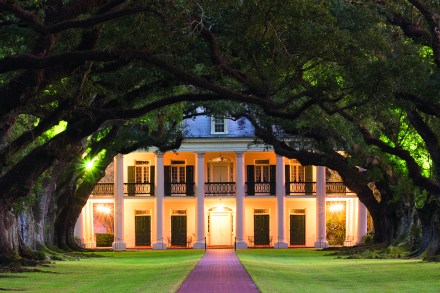
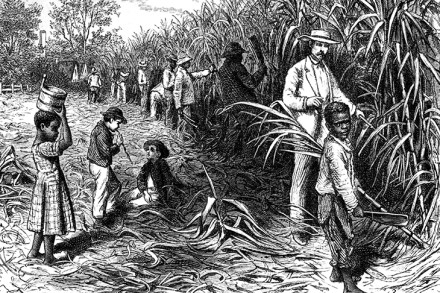
I am not American and I am not descended from British slave owners, but I was shocked when I read a letter from the 1860s that my Irish great-grandfather wrote to his brother from Peru, acknowledging receipt of a ‘shipment of Chinese coolies’ in the guano trade. John Cummings III of Louisiana is also of Irish origin, and his ancestors never owned slaves either. But in 2014, Cummings, a retired lawyer, and his wife Donna used $8.6 million of their own money to create the Whitney Plantation Museum at Wallace, just under an hour from the French Quarter of New Orleans. The Whitney museum is America’s first and so far only museum of slavery. My cousin and I drove there from New Orleans on a bitter winter’s day. There is no café.

plantation

Liverpool University shouldn’t cancel William Gladstone

From our UK edition

After the fall of the statue of slaver Edward Colston in Bristol, it was only a matter of time before attention turned, once again, to England’s other great slave-trading city of Empire, and the figures behind it. William Gladstone is one of Liverpool’s most famous sons. One of the great Liberal politicians of the age, he was prime minister on four separate occasions in the mid to late 1800s. There are a few reminders of this dotted across the city today, but the most notable are the halls of residence that bear his name, belonging to the University of Liverpool. The university has now announced that it will rename the halls after receiving a letter from a group of students demanding it be changed.

Europe’s eye-popping first glimpse of the Americas

From our UK edition

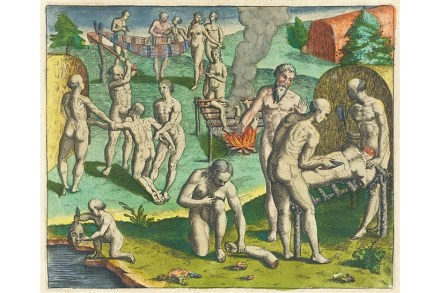
Coronavirus has cast a dampener over this year’s Mayflower 400 celebrations due to a hidden enemy with which the Pilgrim Fathers were all too familiar: within months of their arrival in America more than half of them had died of a disease whose principal symptom was violent coughing. There was no official artist on the Mayflower. Its ragtag party of Separatist Puritans had only been granted a charter on condition that their religious affiliation, banned in England, was not formally recognised.

Fear and loathing in Jamaica: Caribbean slaves turn the whip on their masters

From our UK edition

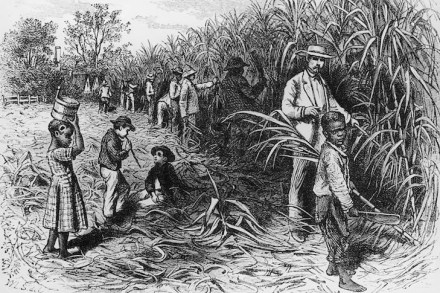
In the shadows of the British Enlightenment lurked the Caribbean sugar plantations. Masters routinely raped their slaves, punished minor wrongdoings by forcing one to shit in another’s mouth and even burnt some at the stake while growing the cane destined to sweeten the tea tables of London salons, Oxbridge dons or Hampshire parsons. It’s from this civilised viewpoint, top-down and half the world away, that we still tell the story of the abolition movement, William Wilberforce and the House of Commons, the great breakers of chains. But slaves were perfectly capable of fighting for their own freedoms, as the Harvard historian Vincent Brown shows in Tacky’s Revolt, his careful reconstruction of an understudied footnote in Jamaican history.

Sue the Normans!

From our UK edition

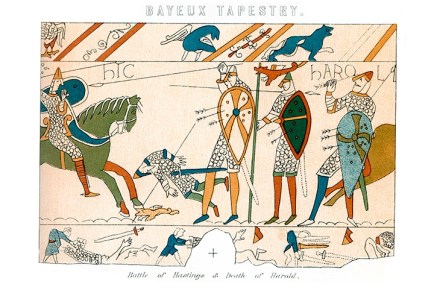
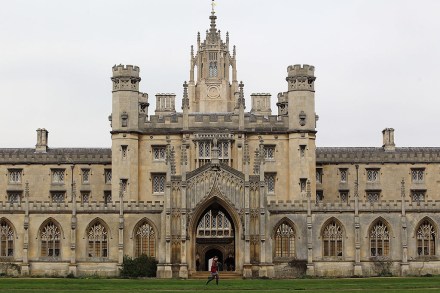
Restorative justice for the victims of colonialism is an idea whose time has come. A few years ago, the Indian diplomat Shashi Tharoor suggested Britain pay India compensation to atone for centuries of colonial rule. ‘I’d be quite happy if it was one pound a year for the next two hundred years,’ he said. In April, Cambridge University announced a two-year study into how buildings and wine cellars might have been constructed on the backs of slaves. ‘There is growing public and academic interest in the links between the older British universities and the slave trade, and it is only right that Cambridge should look into its own exposure to the profits of coerced labour during the colonial period,’ said Vice-Chancellor Stephen Toope. Too right.

Cambridge’s slavery inquiry will raise more questions than it answers

From our UK edition

Can the past hold the present to ransom? Can we be culpable for our predecessors’ actions? Knotty questions of this kind have long been debated in British universities. But now these abstractions are finding new and controversial expression. Yesterday, the University of Cambridge made headlines by launching an academic investigation into its historical relationship – direct or otherwise – with the slave trade. The panel will spend two years scrutinising whether Cambridge profited from ‘the Atlantic slave trade and other forms of coerced labour during the colonial era’. For academics, the enquiry will certainly be interesting. But serious problems inevitably arise when historical discoveries are deemed to have moral consequence for the present.

The moral folly of slavery reparations

Undergraduates at Georgetown University have voted to pay reparations to descendants of slaves the school once owned. Meanwhile, Democratic candidates for the 2020 US presidential nomination unanimously support creating a commission to study slavery’s impact on African Americans, with a reparations program as a possible outcome. These are the latest victories of an international movement for reparations which, despite its flawed and misguided justifications, continues to grow. Reparations means compensation from Western European and American governments for the systems of African chattel slavery once practiced throughout the Americas. Campaigners also cite post-slavery racial injustices against ‘Afro-descendants’, and the colonization and genocide of Amerindian peoples.

reparations

Double trouble | 21 March 2019

From our UK edition

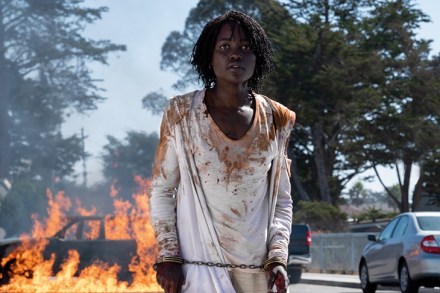
Us is a second feature from Jordan Peele after his marvellous debut Get Out, which was more brilliantly satirical than scary and may well be the best ever horror film for non-horror people (i.e. me). Us has also garnered five stars everywhere, as well as, at the time of writing, a 100 per cent rating on the aggregate review site Rotten Tomatoes, so I’m out of step, I know, but I found it disappointing. The second act is essentially a zombie-style, home-invasion splatterfest that goes on and on and on. Allusions that you think will pay off don’t. It’s ultimately baffling and although I’m fine with baffling as a rule, if I’m going to sit through a zombie-style splatterfest it would have to be for a good reason. The opening is terrific.

Ralph Northam’s family owned at least 84 slaves

The First Lady of Virginia, Pam Northam, wife of Ralph, got herself in hot water this week for handing out cotton to black students while they were on a tour. But the Northams have form when it comes to messy race relations. There’s the whole blackface or KKK costume school photograph business. Then there’s the blacking up as Michael Jackson thing, which Ralph admitted to. Oh, and Ralph Northam’s family owned at least 84 slaves. Northam maintains that he learned about his family’s slave ownership in 2017. That story is harder to believe once you see that three out of the four grandparental lines of his family owned slaves. Two branches owned at least two dozen. Let’s take a tour of the family genealogy.

ralph northam slaves

Capitalism in America: A History

From our UK edition

Donald J. Trump has sparked some soul- searching among US historians: has this happened before? Does it mean America has changed? Cue the self-laceration, cue the book deals. Two impressive volumes illustrate both agreement and disagreement, both concurring that America represents the search for something — but the jury’s out as to precisely what. Capitalism in America: A History is by an Economist writer (Adrian Wooldridge) and a former chair of the Federal Reserve (Alan Greenspan), so you can guess where they’re coming from. The book celebrates the American thirst for self-improvement and argues that the country has long benefited from a ‘creative destruction’ driven by the market and entrepreneurs. Here’s the story.

The burden of freedom

From our UK edition

It’s 1830, and among the sugar cane of Faith Plantation in Barbados, suicide seems like the only way out. Decapitations and burnings are performed with languorous cruelty. Women give birth and are sent straight back to work after lying their ‘tender-skinned newborns down in the furrows to wail against the hot sun’. Esi Edugyan’s third novel does not retreat to softer ground after her last, Half-Blood Blues, dealt with Nazi ideology. Both Germany and Barbados have chapters in their histories when humans were treated like mere creatures. Hope arrives with the plantation master’s brother, Christopher ‘Titch’ Wilde, a scientist, inventor and abolitionist. Titch chooses a slave boy, George Washington Black, to be his apprentice.

The Brazilian paradox

From our UK edition

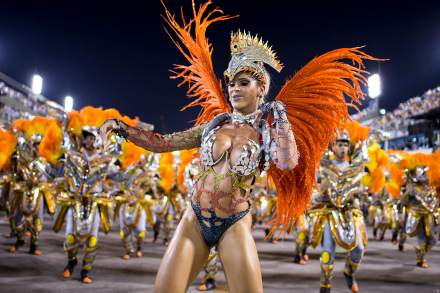
As the great Bossa Nova musician Tom Jobim liked to say, Brazil is not for beginners. This tends to be the case for biographies too: an admiration for the protagonist comes first. But once one has a taste for the flair, language and music of Brazil, the extraordinary tale of the pressure cooker that forged it heaves into view. Five centuries of pharaonic boldness and brutality meander through this hefty tome. In relating the events that shaped Brazil’s vast and unlikely realm, the authors seek to dispel the ‘fairytale’ myths that continue to distort reality. Take cachaça, Brazil’s national liquor. The reader may consume it in a genteel setting in a caipirinha cocktail.

A Shout in the Ruins is a panorama of the Civil War and beyond

We’re in Virginia, in the 1850s. A girl called Emily is tormenting her dog, Champion, and her father’s teenage slave, Rawls. Seeing this, Emily’s father, Bob, beats her with his belt and kicks the dog. Of Rawls, Bob says: ‘Now leave him be so he can get about my business!’ A girl, a dog, a slave, and a slave-owner.The owner addresses the girl with words and violence, and abuses the dog. He helps the slave get down from the fencepost he’s standing on. But he does not talk to the slave. He talks about the slave. Thinking this over, Rawls looks at Emily,‘sprawled out and wailing in the grass’, and envies her. Her pain is temporary; his is permanent.

Soaked in blood and symbolism

We’re in Virginia, in the 1850s. A girl called Emily is tormenting her dog, Champion, and her father’s teenage slave, Rawls. Seeing this, Emily’s father, Bob, beats her with his belt and kicks the dog. Of Rawls, Bob says: ‘Now leave him be so he can get about my business!’ A girl, a dog, a slave, and a slave-owner.The owner addresses the girl with words and violence, and abuses the dog. He helps the slave get down from the fencepost he’s standing on. But he does not talk to the slave. He talks about the slave. Thinking this over, Rawls looks at Emily,‘sprawled out and wailing in the grass’, and envies her. Her pain is temporary; his is permanent.

Brotherly love | 28 September 2017

From our UK edition

Jane Harris’s novels often focus on the disenfranchised: a maid in The Observations, a woman reduced by spinsterhood in the Victorian era in Gillespie and I, and now, a young slave in this third novel. Disenfranchised they may be, but her protagonists don’t lack agency. The narrator of Sugar Money is Lucien, a slave who is barely in his teens and whose voice is startlingly optimistic. In Martinique in 1765, Lucien and his older brother, Emile, are tasked by their French master with returning to Grenada — where they once lived — and smuggling back 42 slaves who are living under the rule of English invaders at a hospital plantation in Fort Royal. Emile is realistic about the scale of the challenge, but Lucien views it as a great adventure.

Raising Cain

From our UK edition

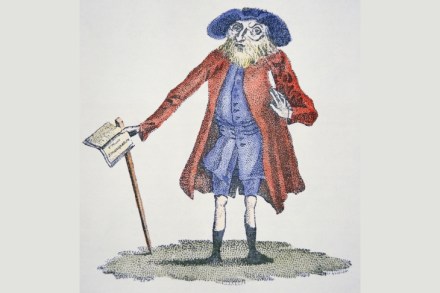
It is a pretty safe bet that for every 1,000 people who know of William Wilberforce, no more than the odd one might have heard of Benjamin Lay. In many ways this is understandable enough, but if anyone deserves to muscle in on the mildly self-congratulatory and largely middle-class pantheon of Abolitionist Saints, it is the gloriously improbable and largely forgotten Quaker throwback and hero of Marcus Rediker’s generous and absorbing act — his own phrase — of ‘retrospective justice’. There was probably only one period of English history in which Lay would have found himself at home, and that period, along with all the hopes and aspirations it had given birth to, had ended 20 years before he was born.

The Chloe Ayling story masks slavery’s sad truth

From our UK edition

Do you believe Chloe Ayling? She is the 20-year-old glamour model whose dramatic story has been all over the newspapers throughout August. She claims to have been lured to a fake photoshoot in Italy, injected with ketamine, stuffed inside a suitcase and shoved into the boot of a car. So far, so just about credible. But the story becomes ever more bizarre. Ayling says she was then driven to a farmhouse, where she was threatened with being sold via an online auction as a sex slave to a man in the Middle East, who – we must assume – has a taste for busty blonde British babes. Not only was he willing to stump up £273,000; he was also prepared to ‘feed her to tigers when he became bored’. In a thrilling twist, Ayling then apparently managed to charm her captor.

The ‘sex worker’ myth

From our UK edition

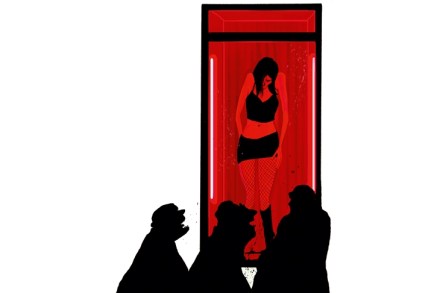
In the midst of all the outrage about modern-day slavery, usually vulnerable men forced into manual labour, there is actually a far worse form of abuse going on in the UK. It happens in every city, town and even village. It’s endemic to every culture and region of the world, and yet these days we justify it in the name of ‘liberation’. We’ve become accustomed to thinking of prostitution as a legitimate way of earning a living, even ‘empowering’ for women. We call it ‘sex work’ and look away. We should not. For the last three years I’ve been investigating prostitution worldwide to test the conventional wisdom of it being a career choice, as valid as any other.