Shooting

All four of my kids will learn to shoot

From our UK edition

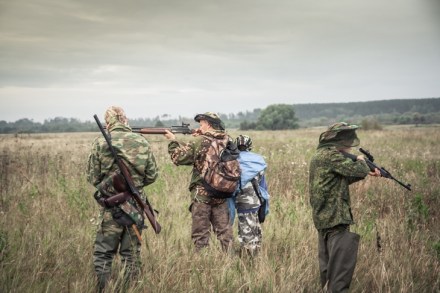
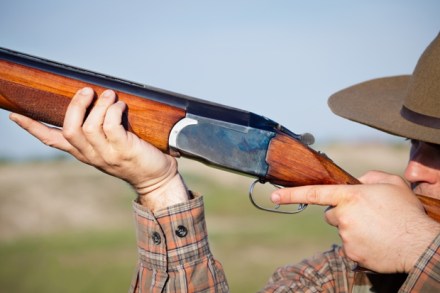
I spent Monday morning being taught how to use a shotgun at E.J. Churchill, a shooting ground in High Wycombe. If you’re a member of the Royal Society for the Protection of Birds you probably won’t approve, but it gets worse. I was with my friend Merlin Wright and we had taken our 12-year-old sons with us so that they could learn how to shoot, too. Needless to say, after they’d hit a few clays they were completely hooked and couldn’t wait to take aim at the real thing. Merlin brought his own gun and is an experienced shot, but I’m a bit of a novice. Until two years ago I’d never been on a proper grouse shoot. Its appeal was immediate.

Why Scotland’s rural communities need grouse shooting

From our UK edition

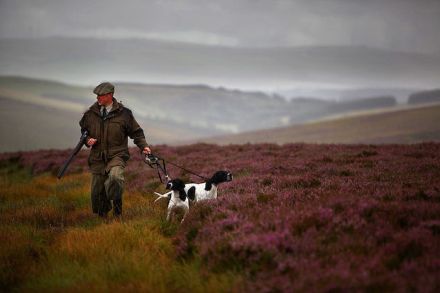
Tomorrow, 12 August, is the 'Glorious Twelfth': the official start of the grouse-shooting season. This normally means plenty of tweed and guns heading north, in cars, in planes, and on the railways. This year, however, there's something of a spanner in the works. Just weeks before the start of the season, ScotRail announced that they would be banning all guns on their trains. This is despite the fact that unloaded, properly licensed firearms are allowed on trains, as long as they are carried ‘in accordance with the law’. The sticking point here, however, is the part that says ‘with prior permission of the train company’.

Don’t grouse about grouse

From our UK edition

The vast Bubye Valley Conservancy in southern Zimbabwe is slightly larger than County Durham, as well as much hotter and drier. Yet both contain abundant wildlife thanks almost entirely to the hunting of game. In Bubye Valley, it’s lions and buffalo that are the targets; in the Durham dales, it’s grouse. But the effect is the same — a spectacular boost to other wildlife, privately funded. Bubye Valley was a cattle ranch, owned by Unilever, until 1994 when it was turned over to wildlife. A double electric fence was put round the entire 850,000-acre reserve. Gradually the buffalo, giraffe, wildebeest, zebra and antelope numbers grew.

Britain’s countryside is about far more than ‘good versus bad’, or ‘us versus them’

From our UK edition

Last month, an article appeared in The Telegraph under the headline ‘Head of Wildlife Trust faces call to resign over hunting past’. An alternative headline could have been: ‘Anti-hunting activists have whole worldview turned upside down’, because that is really the only story here. The hunting past of Mike Bax, head of the Kent Wildlife Trust, is simply proof of what every pragmatic conservationist already knows: that hunting, shooting and fishing go hand in hand with conservation. Mr Bax has been a dedicated member of the Kent Wildlife Trust for 30 years. During that 30 years he has also hunted with a pack of beagles, which, if you don’t know, are small hounds that prior to the hunting ban would gamely hunt hares.

Sherry to start

From our UK edition

Someone came up with a century-old quotation plangent with irony and sadness: ‘The year 1916 was cursed: 1917 will surely be better.’ That was Tsar Nicholas II. Poor fellow: tragedy for him and his family, tragedy down the decades for tens of millions of his subjects. Its spectre is still haunting Russia. Although we raised a toast to the tsar’s memory, tragedy was far from our minds as we welcomed the latest New Year in a mood best described as eupeptic pessimism. Not hard to do: Dorset is one of the least dyspeptic places on earth. My friends who live there sometimes try to discourage me from praising their sweet especial rural scene.

Is factual accuracy too much to ask from BBC presenters like Chris Packham?

From our UK edition

On Sunday evening, the BBC presenter Chris Packham took to social media to tell the world that they should support his anti-shooting campaign because declining populations of lapwings are ‘still being shot’. Unfortunately for him, this is utter tosh. No one is shooting lapwings, as Packham acknowledged five hours later in an apology on Twitter. 12 hours after that, a similar retraction appeared on his Facebook page. Yet even now, almost 48 hours on, neither of the original posts have been deleted. This fixation with the passing of mere hours may sound petty, but in the context of social media 48 hours is a lifetime. Packham has 48,608 followers on Facebook and 175,000 followers on Twitter, all of whom have had 48 hours to see these posts and react.

How can the BBC be allowed to break their own editorial standards?

From our UK edition

I recently had the misfortune of featuring in a BBC documentary that repeatedly breached the corporation’s own editorial standards. I happened to be at the gym when word reached me that BBC Inside Out London wanted to interview me the following day. It was late in the evening, and I was told that the documentary was looking at game shooting and game meat, and the growing popularity of both in London. Not an anti-shooting piece at all, I was assured. Arriving at Regent’s Park for the interview, the team from the Beeb were decidedly furtive. There was much fiddling with phones and muttered conversations between interviewer and producer, in which I clearly heard someone say: ‘Surely he needs to see it in order to have right of reply?’ ‘See what?

Dear Mary | 29 September 2016

From our UK edition

Q. When an invitation to shoot arrives in the autumn, I have a sense of both excitement and dread. The dread is because at the end of the day, metropolitans request that the guns must each tip to the gamekeeper a sum far higher than would be the norm for traditional country folk. Indeed, in a ritual of trumping one another they often double the going rate. The shoot owner rarely intervenes since he is obviously keen for his keeper to receive as much as possible. It leaves someone like me (I am 20 and without a City salary) in an awkward situation. Either I put myself very much out of pocket or I reject the demands and risk seeming tight in front of the rest of the party. Which should I do? — Name and address withheld A.

Field studies | 8 September 2016

From our UK edition

Think back to any time you spent outside at school, and you’re most likely to recall a muddy sports field. At my school, one of the few times we were let loose into the surrounding countryside was when we took our Duke of Edinburgh’s award. Apart from that, the vast majority of our time was spent inside at our desks. Is that a good thing? The official curriculum might not factor in the great outdoors, but many schools have come to realise the benefits — both long-term and short-term — that being outside brings to their students. Traditionally, private schools have led the way in teaching youngsters about the ways of the countryside. Many state schools, however, are now following their example. Take West Rise, a state junior school just outside Eastbourne.

Is there any hope for the two worst problems in America: racial mistrust and gun crime?

From our UK edition

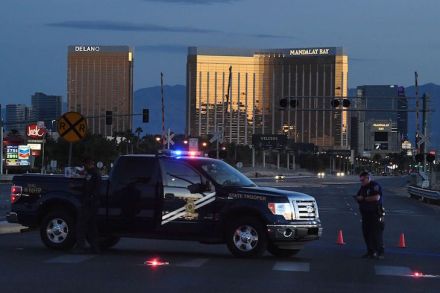
The Dallas shooting brings together two of the worst problems in American politics: racial mistrust and guns. It also shows that both problems are intractable. Most Americans like the idea that if something’s wrong they can fix it. Hard experience suggests otherwise. First, race. The old heritage of slavery, followed by a century of segregation and the continuing reality of widespread racism, often makes the rhetoric of equality and democracy ring hollow. White fear of blacks is common, and has contributed this year to Donald Trump’s success. Second, guns. The Constitution’s Second Amendment gives citizens the right to bear arms.

The Force is still with me

From our UK edition

My initial reaction on learning that my secondary school had compulsory CCF — Combined Cadet Force — on Wednesday afternoons was one of horror. As an ‘army brat’, the child of an officer, I was mortified to be following in my father’s footsteps and completing assault courses and weighted swims every single week. However, my view of the CCF was to change dramatically over the following five years. At 14, I aimed to be the coolest camo-clad teenager for our first day. On the evening before, we lurked in our boarding houses and laboriously pinned in our trousers, practised ‘messy buns’ and pouted in a mirror while sporting red lipstick. Unfortunately, my father had other ideas.

Your problems solved | 28 January 2016

From our UK edition

Q. For the past two New Year’s Eves we have ducked an annual party given by some acquaintances, who are very nice although the husband is a bore. His wife has recently been unwell and they have decided to corral us New Year refuseniks for a curry supper, date to be confirmed when all are available. We do not want to go, but would hate to upset the wife. Is there any way to avoid going convincingly, other than last-minute flu or a fictitious crisis? —J.M., London SW3 A. Compromise with an enthusiastic call to the couple inviting them to you for drinks à quatre. Explain that you would love to see them but your diary is offering no windows for the curry, and you don’t want to hold up the other refuseniks.

High life | 31 December 2015

From our UK edition

This is going to be one hell of a year, hell being the operative word. It will be the year the greatest Greek writer since Homer turns 80 (but we’ll keep quiet about that for the moment). Our world is so stuck in reverse that a woman who was stabbed in Miami during the Art Basel shindig, and was bleeding and begging for help, was mistaken for an artwork and ignored. The woman survived but will art? Conceptual art must be the biggest con since Bernie Madoff and then some. And speaking of con artists, I’ve never had any respect for Mark Zuckerberg, someone who is reputed to have copied the idea for Facebook from a couple of ex-classmates, and who now pledges the majority of his $45 billion fortune to charity thereby generating a public relations bonanza.

The Spectator’s Notes | 3 December 2015

From our UK edition

Speaking on the Today programme on Monday, Sir David Attenborough, who wants a global agreement to control carbon emissions, pointed out that ‘Never in the history of humanity have all the people of the world got together to deal with a particular problem and agreed what the solution could be. Never, ever, ever.’ He is right. But he seemed to defy the logic of his own observation. They never have. Probably, since the truth is best arrived at through disagreement, they never should. The key point is that they never will. So it is a waste of time to try. When someone commits suicide, those close to that person naturally reproach themselves. In politics, and similarly contested areas of life, people reproach others too.

Are we being given the full story about the Planned Parenthood shooting in Colorado?

From our UK edition

There is someone obviously grotesque about making a pro-life statement by shooting three people dead, as a gunman appears to have done at a Colorado abortion clinic. The policeman he shot was a family man, with two children, a former iceskating champion. The clinic is run by Planned Parenthood Federation; it says it has no idea whether it was deliberately targeted for its provision of abortion services, but it would be very odd if it were a purely random attack. But there’s a context for all this. A few months ago, pro-life activists released footage of the way PPF harvests aborted foetuses for their body parts which were then sold. The videos, I gather, are gruesome; it’s difficult to look at them and to avoid the very patent humanity of those foetuses.

Diary – 10 September 2015

From our UK edition

During our annual odyssey around the Scottish Highlands, I read Tears of the Rajas, Ferdinand Mount’s eloquent indictment of imperial expansionism in India. One of Ferdy’s themes is that the British lived in the country without ever attempting to make themselves of it. How far is that true of sporting visitors to Scotland? The SNP’s persecution of landowners gains traction from the fact that guests in shooting and fishing lodges encounter only keepers, gillies, stalkers. We disport ourselves within a social archipelago utterly remote from the mainland of the society in which it lies. In our defence, however, that is what tourists do everywhere in the world, much to the advantage of host nations.

French cowardice knows no bounds

From our UK edition

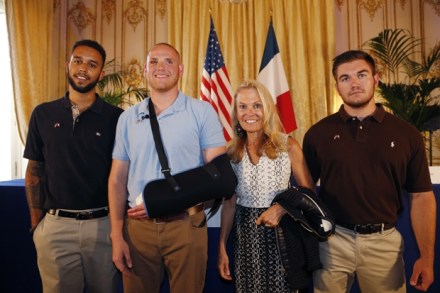
Boy, am I glad I’m not a Frenchman. Last week’s dramatic incident on board a Paris-bound train, in which a terrorist atrocity was narrowly averted by a group of heroic passengers, is a stain on French manhood to rival the Battle of Agincourt. I’m not referring to the incompetence of the French security services, who seem unable to stop terrorists roaming the country, shooting people at will. I’m talking about the response of the French men on the train when they became aware that a crazy-looking Middle Eastern man was stalking the carriages, armed with an assault rifle. The vast majority hid under their seats.

Young guns

From our UK edition

The Honourable Society of Odd Bottles began proceedings with a report on the activities of our junior branch. These youngsters are not yet eligible to become drinking members, but they are chosen because of their unremitting hostility to vermin and their burgeoning enthusiasm for killing game. Young Charlie, the Nimrod of his generation, has been prodigiously active. It is surprising that there is a single grey squirrel still alive in Somerset. Any rat that comes his way goes no further. He is also mightily effective against rabbits and pigeons, which he enjoys scoffing, after he has skinned or plucked them. Charlie has inherited a .410: the fifth generation of his family to use it. It is a notoriously fickle calibre, the excuse I always use when I miss with one.

Max Hastings’s diary: The joys of middle age, and Prince Charles’s strange letters

From our UK edition

I am living in rustic seclusion while writing a book. Our only cultural outing of the week was to Newbury cinema to see, transmitted from the National Theatre, Arthur Miller’s A View From the Bridge, object of rave reviews. We respected the piece but did not enjoy it. Granted, appreciation of all major works of art requires an effort by the viewer, listener, reader. But a pleasure of getting older is to be unafraid of waving the white flag. We resist modern-dress Shakespeare or worse, opera. We will cross continents to avoid the music of Harrison Birtwistle or the art of Damien Hirst. We are ardent Trollopeians, incorrigibly middlebrow.

Shooting does more to protect wildlife than the RSPB

From our UK edition

Today, the Glorious Twelfth, is the one day of the year most anticipated by game shooters – the start of the grouse season. But, as the first grouse make their way to restaurants and butchers across the country, a battle is being fought on the moors. The entire sport of grouse shooting is under attack because there are only three breeding pairs of hen harriers left in England – birds that the RSPB argue are endangered due to the actions of those with a vested interest in protecting red grouse from predators. A campaign to ban grouse shooting – complete with an e-petition to Defra – is being orchestrated by Mark Avery, formerly conservation director of the RSPB.