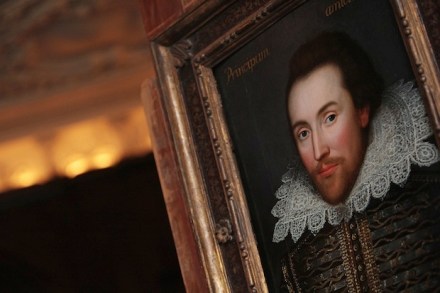
Shakespeare

All you’ll ever need to know about the history of England in one volume

Here is a stupendous achievement: a narrative history of England which is both thorough and arresting. Very few writers could pull it off. Either they’d have an axe to grind, or they’d lose perspective, or they’d present a series of anecdotes, or they’d end up in a Casaubonish pursuit of other historians’ errors. In fact, to get it right, you’d ideally be a mature and accomplished author, steeped in the facts, who was nonetheless tackling English history for the first time. Which is more or less what Robert Tombs, a professor of French history at Cambridge, is. ‘A writer of history ought, in his writings, to be a foreigner, without

Spectator books of the year: Roger Lewis on hating Sheridan Morley

Sheridan Morley was an old enemy of mine, so I was thrilled to see him brilliantly denounced and called to account by Jonathan Croall in his first-class book about writing a book, In Search of Gielgud: A Biographer’s Tale (Herbert Adler Publishing, £10.95). Morley is called an ‘arrogant, self-important and spectacularly lazy hack’, whose work was ‘sycophantic and severely lacking in depth’. One almost feels sorry for the old boy. Staying with the theatrical theme, Covering Shakespeare by David Weston (Oberon Books, £14.99) is a highly recommended rollicking account of being a jobbing actor. ‘I always thought I’d do Bottom one day,’ says Weston, who was Ian McKellen’s understudy as Lear, ‘but it was

Donmar’s Henry IV: Phyllida Lloyd has nothing but contempt for her audience

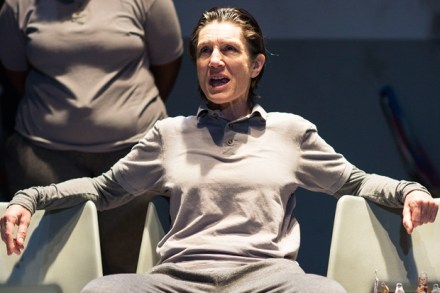
The age of ‘ladies first’ is back. Phyllida Lloyd reserves all the roles for the weaker sex, as I imagine she thinks of them, in this hybrid play assembled from Henry IV (i) and (ii). It’s a twin-layered production that poses as a piece of am-dram mounted in a women’s nick. The Donmar has been refitted, in and out, to resemble a prison. (Quite an expense. And there’s no interval either, so there are no bar profits to subsidise the fancy-dress party.) As we arrive we’re barked at by ushers attired as screws who harry and scold us into our plastic seats. Nothing surprising in this uppity aggression. Contempt for

It's time England asserted its modern national identity

Taking tea at four, strawberries and cream, Wimbledon on a hot summer’s day, Christmas carols round the tree, street parties for a Queen’s Jubilee: the images of England are often nostalgic and middle class. To some, England, our England, is summed up in the poems of Rupert Brooke, and turned into childhood mystery in the sympathetic portrait of the Shire in The Hobbit. England is The Wind in the Willows, kindness to animals, appreciation of nature’s rich and gentle abundance in a rain swept temperature island.  It is Alice in Wonderland, tales that recognise children are on their own important journey in their own right. We are seafarers and stay at

The fascinating history of dullness

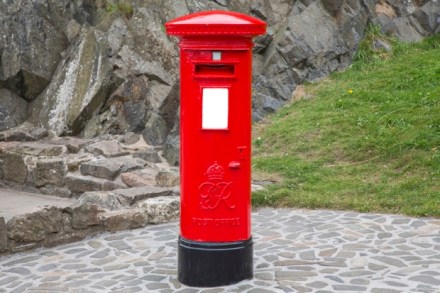
At least I’ve got my husband’s Christmas present sorted out: the Dull Men of Great Britain calendar. It is no doubt intended ironically, as travelling the country photographing old pillar-boxes, for example, does not strike me as being in the least bit dull. I had thought that dull, in reference to people, was a metaphor from dull in the sense of ‘unshiny’. ‘Dieu de batailles!’ as the Constable of France in Henry V exclaims of the English, ‘where have they this mettle?/ Is not their climate foggy, raw and dull?’ But I was quite wrong, as so often. It started off (in the form dol) meaning ‘foolish’. In English almost as

Does a tart like Manon have a place in the Royal Ballet repertoire?

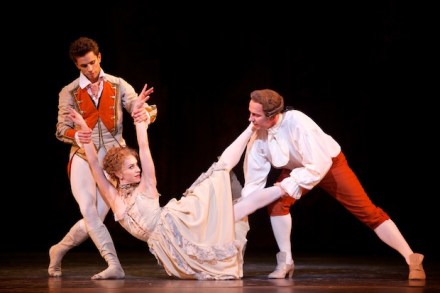
What can the Royal Opera House be insinuating about its target audience? No sooner had Anna Nicole closed than Manon opened the new ballet season. Kenneth MacMillan’s gold-digger turns 40 this year but her promiscuous allure shows no signs of failing punters with money to burn on sex thrills. I once took my partner to see Sylvie Guillem as Manon. His verdict was, ‘Too immoral’. I guess he got MacMillan’s point rather well. Manon has no heart at all, she is deliciously low. Since 1974 she has dodged bullets when powers-that-be proposed that a conscienceless tart had no place in the Royal repertoire. But ballerinas led the defence, seeing that

The Matter of Scotland: Try, try and try again.

PG Wodehouse, who was only the twentieth century’s greatest English-language novelist, once remarked that there existed just two ways to write: “One is mine, making a sort of musical comedy without music and ignoring real life altogether; the other is going right deep down into life and not caring a damn.” I feel something similar about theatre. I can – and do – enjoy a comedy or farce and, blimey, there’s always room for laughter in this – or any other – world. But, in general, I prefer my theatre punishing and draining and liable to leave you exhausted and feeling like the marrow’s been sucked from your bones. I don’t go to

You’re never too old, they say. But I am

For my 49th birthday treat, I went to see Shakespeare in Love at the Noël Coward theatre in London. Expensive but worth it: spry, funny, uplifting and moving but also, for all the surface froth, quite a deep meditation on the creative process and the enduring power of art. What everyone secretly loves best about it, though, I suspect, is the way it so shamelessly flatters their intelligence. We’re all aware that Shakespeare wrote a sonnet that begins ‘Shall I compare thee to a summer’s day?’; that Marlowe was stabbed to death in a pub brawl; that Malvolio wears yellow stockings and cross garters. This is basic, middlebrow general knowledge.

Flight MH17: the unctuous Bishop James Jones shows off on ‘Thought for the Day’

Perhaps it’s my imagination, but every time the Rt Rev James Jones, former Bishop of Liverpool, pops up on Thought for the Day I hear an undertone of disappointed ambition. The same goes for Lord Harries, ex-Bishop of Oxford and, like Jones, once spoken of as a future Archbishop of Canterbury. It’s as if they’re saying: look how much poetry and gravitas I can pack into three minutes! I’d have been jolly good at Lambeth… listen to ‘Thought for the Day from the Rt Rev James Jones’ on Audioboo

Why it's good to remember that Bach could be a tedious old windbag

When I was first learning about classical music, 50 years ago, the scene was more streamlined than it is now. Beethoven was king, with Brahms and Mozart next in line, and Haydn slowly establishing himself. Mahler was the new kid on the block; Bruckner was largely unknown and mistrusted. If one wanted the full symphony orchestra experience in late romantic music, it was to Tchaikovsky that most promoters turned. Tchaikovsky cycles, Beethoven cycles, Haydn’s ‘London’ symphonies, Mozart’s last three symphonies were the way to guarantee a crowd, with general knowledge of all Beethoven’s music — string quartets, piano trios, Lieder — at an all-time high. Now Bach is king. In

‘Basta’ must be the Queen’s English — a Queen used it

My chickens do not usually come home to roost so rapidly. Only a fortnight ago I wrote that ‘some people use basta in English, but to my ears it sounds like saying ciao — inauthentic’. Then I went back to reading Jane Ridley’s Bertie, the life of Edward VII (and how much I enjoyed it too). What should I find on page 357? I found Queen Alexandra writing about what she would wear at the coronation in 1901. ‘I know better than all the milliners and antiquaries,’ she wrote. ‘I shall wear exactly what I like, and so shall all my ladies — Basta!’ I can hardly accuse a queen of England of speaking

Paul Johnson’s diary: Boris would make a great PM – but he must strike now

I feel an intense antipathy for Vladimir Putin. No one on the international scene has aroused in me such dislike since Stalin died. Though not a mass killer on the Stalin scale, he has the same indifference to human life. There is a Stalinist streak of gangsterism too: his ‘loyalists’ wear masks as well as carry guns. Putin also resembles Hitler in his use of belligerent minorities to spread his power. Am I becoming paranoid about Putin? I hope not. But I am painfully aware that he would not matter if there was a strong man in Washington. As it is, President Obama is a feeble and cowardly man who

Shakespeare invented Britain. Now he can save it

[audioplayer src=”http://traffic.libsyn.com/spectator/TheViewFrom22_10_April_2014_v4.mp3″ title=”Fraser Nelson and Angus Robertson debate the shared values of the English and Scots” startat=32] Listen [/audioplayer]‘What country, friends, is this?’ We’ve been wrestling with Viola’s question almost from the moment she asked it. It was barely a year after Shakespeare had scribbled out those words, in the first Act of Twelfth Night, that James VI of Scotland inherited England’s throne, beginning a 400-year confusion over national identity that has led to the present referendum on partition. The new monarch wanted to amalgamate his two realms. In his first address to the House of Commons, James asked — in his noticeably Scottish accent — ‘Hath not God first united these

Michael Craig-Martin pokes a giant yellow pitchfork at the ordinary

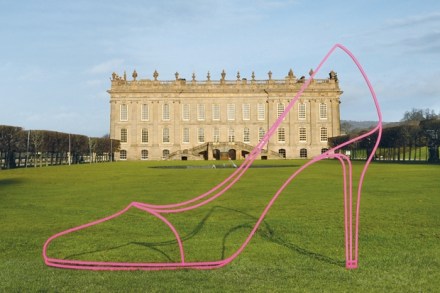
Visitors to Chatsworth House this spring might wonder if they have stumbled through the looking-glass. The estate’s rolling parkland has been invaded by an army of vibrantly coloured, outsized garden tools, whose outlines seem to hover, mirage-like, over the landscape. These painted-steel 2D ‘sculptures of drawings’ are the brainchildren of the conceptual artist Michael Craig-Martin. Craig-Martin finds poetry in the everyday and here he has taken 12 commonplace objects — a wheelbarrow; a spade; a lightbulb — and transformed them into something extraordinary. He also believes that context is everything when it comes to art and the works have been carefully positioned. While ‘High Heel’ (above) speaks to the decadence

Radio that makes you feel the wind on your cheek

After a walk in Richmond Park beset by rush-hour traffic, the Heathrow flight path and a strange swarm of flying ants (strange because so early in the year), it was unsettling to come back in and switch on and listen to Kirsty Gunn’s spring walk for this week’s The Essay on Radio 3 (which I heard as a preview but you can now catch on iPlayer). Gunn lives in Sutherland in the far north of Scotland close to the River Brora, and has a view from her back windows that stretches for 500 square miles with no other house or sign of human life in sight. ‘There’s nothing out there,’

Why are Shakespeare’s women so feeble?

There’s a problem, as we all know, with female roles in the theatrical canon, and it reaches all the way back to the Bard. Shakespeare’s women lack the richness and variety of his male characters. Modern theatre practitioners have tried all kinds of ploys to correct this imbalance. Next month the RSC launches a season of dramas, Roaring Girls, written during Shakespeare’s lifetime and featuring women in pivotal roles. This is bound to reopen the question of Shakespeare’s approach to women and their subordinate position in his work. It’s easy to argue that Shakespeare’s art simply reflects his habitat. Wealth, freedom and influence were the preserve of men, so he

Letters | 7 November 2013

Counting on the country Sir: I spent many hours helping to canvas for local Conservative candidates before the last two elections (‘The countryside revolts’, 2 November). I was motivated to do so because of the Labour government’s prejudice against the rural community. The Conservative party offered a chance to redress this prejudice through repealing or amending legislation on small employers, hunting, communication, transport, fuel, immigration and the EU. But progress on these issues has been negligible. We see no action on the Hunting Act, and no action to stop the harassment of country people by vigilante pressure groups, despite managing a more robust reaction to anti-fracking campaigners. Huge effort has

James Delingpole: I'm in love with Shakespeare — and with David Tennant's Richard II

‘Dad, it’s three hours long,’ says Boy, worriedly. ‘Yeah. And whose bloody fault is it we’re going?’ I want to reply but don’t because I know, as a dad, you’re not supposed to say discouraging things when your child has asked you to take him to see his first ever Shakespeare play at the RSC. Still, I can’t pretend I’m happy with the arrangement. Partly it’s the cost of the tickets: £50-plus each, with no student discount for Boy because the show has long since sold out and you don’t get special deals on last-minute returns. Partly it’s just that, well, it’s the theatre and I’m not that keen on

Alexander Waugh's diary: Shakespeare was a nom de plume — get over it

Researching a new book on Shakespeare’s sonnets, I stumbled upon an astonishing piece of hitherto unnoticed evidence in a 16th-century book by a sex-maniac clergyman from Cambridge. I shall not bore you with the details; suffice it to say that William Covell (the author and S-MC in question) revealed in words not especially ambiguous by Elizabethan standards that ‘Shakespeare’ was a nom de plume used by the courtier poet Edward de Vere. Now a lot of people have been saying this for a very long time — so stale buns to that, you may think — except that no one has yet noticed that the matter was revealed in a

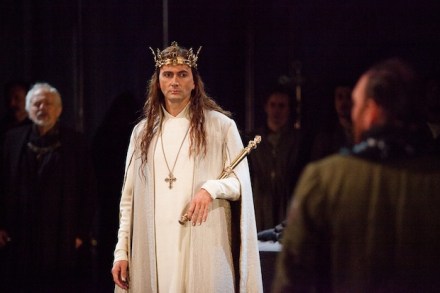
David Tennant plays Richard II like a casual hippie

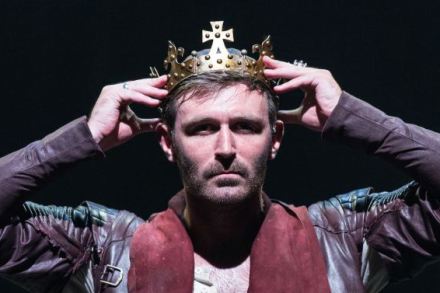
Gregory Doran, now in command at Stratford in succession to Sir Michael Boyd, launches his regime with Richard II, intending to stage the complete Shakespearean canon over the next six years, ‘making every play an event’. What’s really good is that the plays will also be seen on tour, in London, online and ‘live on screen in cinemas and classrooms nationwide’. It’s taken too long for the publically funded RSC to put live ‘streaming’ in place; Richard II, broadcast on 13 November, will be the first play so honoured. With David Tennant in the title role this may already be a sell-out, but encore screenings are already planned in many