Senegal

Vigilante justice: Pure Men, by Mohamed Mbougar Sarr, reviewed

Like the Booker, the Prix Goncourt’s laureates now tend to veer between diamonds and duds. One of the strongest recent novels to take France’s premier book award was, in 2021, The Most Secret Memory of Men by Mohamed Mbougar Sarr, from Senegal. Almost a West African Possession, it sent its narrator on a quest for a cult writer named T.C. Elimane – inspired by the Malian novelist Yambo Ouologuem – who had vanished after claims of plagiarism shredded his reputation. A combination of mystery, satire and cultural inquiry, it spotlit the fate of African authors who are lionised and then forsaken by the Parisian literary elite. The Goncourt coup has prompted English-language publishers to revisit Sarr’s backlist.

A brutal education: At Night All Blood is Black, by David Diop, reviewed

Alfa Ndiaye, a Senegalese soldier fighting for France in the trenches of the Great War, is consumed by bloodlust, which you’d think might be an asset under the circumstances. But after watching the protracted, gruesome death of his friend and ‘more than brother’, Mademba, a switch is flicked in Alfa’s mind. He becomes, in effect, a sadistic serial killer, until war itself cannot provide sufficient cover for his extremity. David Diop’s powerful novel, not much more than novella length, is full of echoes and portents. Over the course of his self-justifying narrative, Alfa says ‘God’s truth’ so often that the notion is drained of meaning.

This is what cinema is for: Netflix’s Cuties reviewed

Cuties is the subject of a moral panic and a hashtag #CancelNetflix. It tells the story of Amy (Fathia Youssouf), an 11-year-old Franco-Senegalese girl living in Paris, who learns that her father is taking a second wife. (Polygamy is widespread in west Africa, but you wouldn’t know it from mainstream cinema. You wouldn’t know much from mainstream cinema.) The film deals with the lead-up to the wedding. Amy watches the suffering of her mother (the superb Maïmouna Gueye), who must prepare the house for the interloper, scattering cushions over the marital bed, and the bombast of her small brother, who eats cereal and is learning to be a misogynist. (I suspect the baby will get there too, in the end. But he will have to learn to talk first.

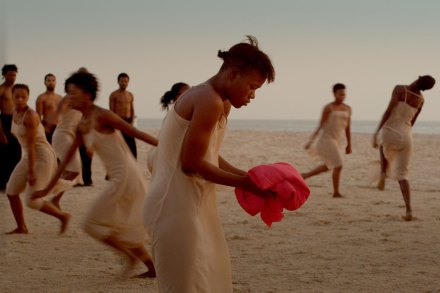
Vigour and verve from a unique new Rite of Spring: Dancing at Dusk reviewed

Dancing at Dusk captures the final rehearsal of a new version of Pina Bausch’s The Rite of Spring. It’s only the third time a company other than Bausch’s own has been handed the reins to this piece, and it’s a treat to see its raw, convulsive rhythms reinterpreted by a new generation of performers. Filmed on a beach in Toubab Dialaw, Senegal, it features a cast of 38 dancers from 14 African countries, assembled to bring a fresh lens to Bausch’s 1975 cult classic, itself a modern reckoning of a decades-old ballet. (Bausch’s original famously underscores the misogyny of the sacrificial virgin, doomed to dance herself to death.