Scotland

Margaret Tudor – queen, regent and hapless intermediary

From our UK edition

The history of princesses and queens has become well-trodden ground in the women’s history genre, particularly the Tudors. Linda Porter’s The Thistle and the Rose, a life of Margaret Tudor, queen consort to James IV and mother of James V, provides a refreshing change in subject. Margaret has had to share the stage with some of the most famous names and voices of the 16th century: Henry VII and his queen, Elizabeth of York; Henry VIII and his wives; and, of course, her namesake, Margaret Beaufort, the formidable Tudor matriarch who deftly helped place her son, the victor of Bosworth, on the throne.

Echoes of Tom Brown’s School Days: Rabbits, by Hugo Rifkind, reviewed

From our UK edition

The year is 1993 and 16-year-old Tommo has been moved from a day state school of 2,000 pupils in brown blazers that ‘when it rained… smelled of shit’ to Eskmount, an elite Scottish boarding school, where boys wear kilts and put their ‘cocks on your shoulder’ when you’re working in the library (easier in a kilt) and routinely hang ‘smaller kids in duvets... out the window’. The horseshoe effect in schooling terms: the more expensive, the more savage. Hugo Rifkind’s Rabbits opens with a bang: ‘When the shotgun went off under Johnnie Burchill’s brother’s chin, word had it, the top of his head came off like the top of a turnip lantern.’ It is reminiscent of Donna Tartt’s The Secret History.

The Scottish Tories need a better election strategy

From our UK edition

It is no surprise that the Scottish Conservative manifesto launch was centred on independence. While Scotland’s Tories talk about the SNP’s obsession with the subject, they are a little less happy to mention their own preoccupation with separatism. It’s rather more awkward for the Scottish Conservative and Unionist party to admit that, without independence on the table, their role in Scotland becomes a little less clear.

The good old ways: nature’s best chance of recovery

From our UK edition

Britain is one of the most nature-depleted places on Earth. The consequences for human wellbeing and resilience, as well as for non-human life, are grave. Conservationists and others say it doesn’t have to be this way. But when it comes to recovery, what should we aim for? How much can we know about what was once present? How much is it practicable or sensible to restore? What does recovery, let alone ‘rewilding’, really mean in a rapidly heating world? Sophie Yeo does not have the answers to all of these questions. Nobody does. What she does offer in Nature’s Ghosts are insights that could help shape a better informed and more constructive debate.

Why has Douglas Ross resigned as Scottish Tory leader?

From our UK edition

11 min listen

Just when you thought this election campaign couldn’t get any more tumultuous, Douglas Ross has announced he will resign as Scottish Conservative leader. He had lost the support of his colleagues – particularly those in Holyrood – following his decision to effectively take over a Westminster colleague’s constituency when that MP was seriously ill in hospital. Why now?  Michael Simmons speaks to Isabel Hardman and Katy Balls. The Spectator will be hosting a special Live edition of Coffee House Shots in the aftermath of the election. Taking place on Thursday the 11th July - a week after the election - at 7pm here in Westminster, you can join Fraser Nelson, Katy Balls and Kate Andrews as they try to dissect the election results, a new government, and what comes next.

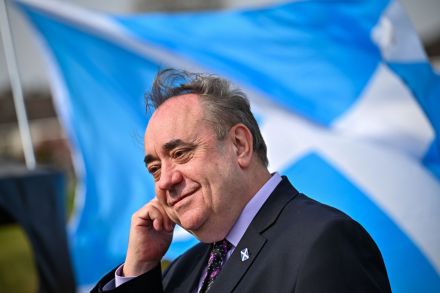
Alex Salmond: We are not splitting the SNP vote

From our UK edition

Is Alex Salmond feasting on the misery of an SNP that, having hit its high watermark, is now having to work hard to hold onto its Westminster seats? Not at all, according to the Alba leader, who told Andrew Neil on Times Radio today that he was in fact trying to help the cause of his former party by going after pro-independence voters who would otherwise have stayed at home. In so doing, of course, he was not-so-subtly suggesting that the SNP aren’t giving voters a reason to turn out at all.  There’s 20 per cent of people who are either going to stay at home or going to vote for a unionist party.

Scotland’s religious collapse

From our UK edition

Last week, I had a drink with a Catholic priest friend who works with young people in custody. Inevitably, our talk turned to how radically unchurched they are – not badly disposed to Christianity, just unfamiliar with much of the doctrine and almost all the forms of worship, even though many had a Catholic granny or a non-practising parent. He mused over the startling speed of the secularisation of society. ‘Protestantism has collapsed,’ he said, and not in any triumphalist spirit. ‘Most people believe in or at least want to believe in some form of afterlife’ And so it has turned out in Scotland. The latest census, published last month, shows that for the first time a majority of Scots identify as ‘no religion’ whatsoever.

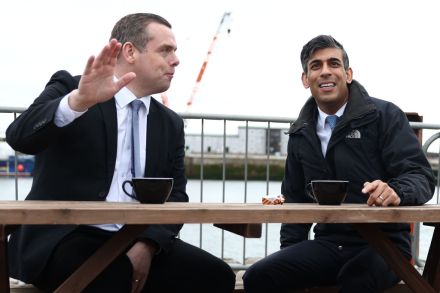
Sunak won’t be much help to the Scottish Tories

From our UK edition

The first few days of this general election campaign have been characterised by Rishi Sunak’s dismal campaign management. From wet suits and sinking ships, his whistlestop tour of the four nations seemed more like a box-ticking exercise than anything else. The key to any Tory success is to augment the notion that independence is still a threat A prime minister from the Conservative and Unionist party must find some way to appeal to Northern Ireland and Scotland, the two parts of that union which in the longer term still represent a realistic flight risk. It was, however, hard not to reflect on Sunak’s irrelevance in these parts of the UK. Irrelevant in Northern Ireland because the party – making up less than 1 per cent of the vote – effectively does not participate.

Why are Scottish nationalists so thin-skinned?

From our UK edition

Scottish nationalists are not happy. What’s new, I hear you ask. Did they lose another leader? Has Sainsbury’s been selling Somerset strawberries in Stornoway supermarkets? Nothing quite so grave, but they are displeased nonetheless. The cause is Rishi Sunak, who has offended them with his Big Serious Speech at Policy Exchange on Monday. It was just a single reference, but that is the most Sunak has done to confront the SNP since he entered No. 10.

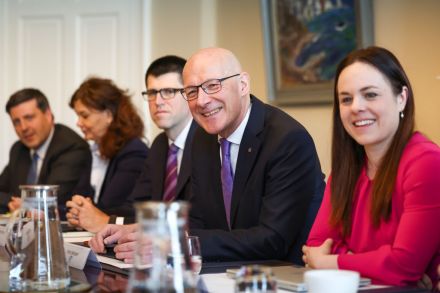
Can John Swinney turn it around for the SNP?

From our UK edition

John Swinney, newly inaugurated First Minister of Scotland and Leader of the SNP, has been in the job for a week. What have we learnt since he took up the job, and can he turn things around for the party in time for a general election?  James Heale speaks to Lucy Dunn and Fergus Mutch, former SNP adviser. Produced by Megan McElroy.

The Lisa Cameron Edition

From our UK edition

32 min listen

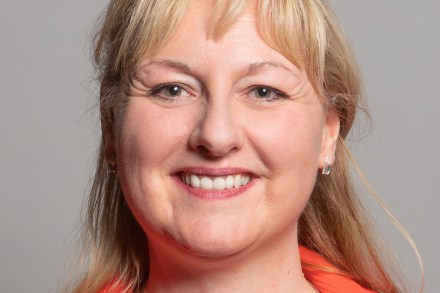
Dr Lisa Cameron was born in Glasgow and grew up in East Kilbride, the constituency she now represents. After three elections under the SNP, she memorably defected to the Scottish Conservatives in 2023. At the time, Humza Yousaf described it as the least surprising news he’d had since becoming first minister.  On the podcast, Lisa tells Katy about the need for increased investment into mental health provision, her defection from the SNP to the Tories and why Scottish independence is a failed experiment.

Europe has no answer to its immigration problem

From our UK edition

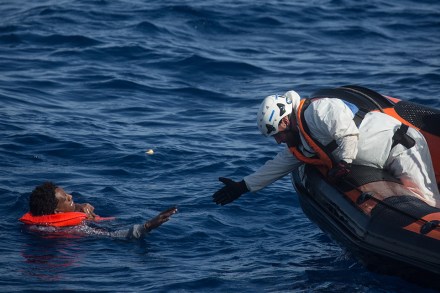
Pulling off the rhetorical trick that Brexit would undermine the Northern Ireland Good Friday Agreement, Michel Barnier, the EU negotiator, said in 2018 that the agreement meant removing borders not only from maps, ‘but also in minds’. Even a single CCTV camera on the North-South roads was considered a threat to the peace process. Now it turns out, which is grimly amusing, that the Irish government has not banished the border from its mind. The Republic is upset that asylum seekers are crossing the border that it does not believe in, fleeing the threat of deportation to Rwanda from the United Kingdom. It talks of sending them back, ignoring a recent decision of its own courts that Britain is not a safe country.

Humza Yousaf quits – what next?

From our UK edition

14 min listen

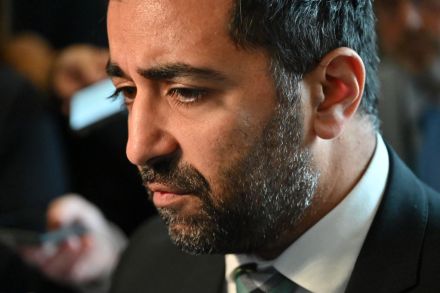
Scotland's First Minister Humza Yousaf has just announced his intention to resign. Lucy Dunn speaks to Katy Balls and Spectator contributor Iain Macwhirter about how the past few weeks have led to this point and what to expect from an SNP leadership contest.

Humza Yousaf quits – sparking SNP leadership contest

From our UK edition

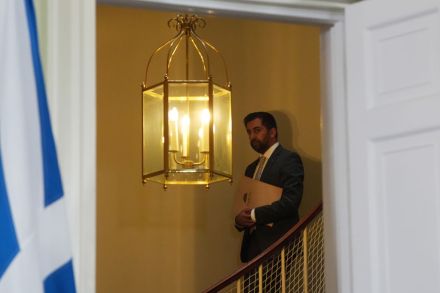
Humza Yousaf is stepping down as first minister of Scotland. After feverish speculation over the weekend, Yousaf has announced this lunchtime in a press conference at Bute House that he intends to stand down from the role once an SNP leadership contest has taken place to find his successor. Acknowledging the events that had led up to this moment, Yousaf said he had ‘clearly underestimated the level of hurt’ that ending his party’s power-sharing agreement with the Greens caused the SNP’s minority partner. He said trust was ‘fundamental’. Yousaf went on to say that from his discussions over the weekend with figures in the Scottish Greens and Alba, he had found there was a path through that would allow him to win the two confidence votes this week in his leadership.

Can Humza Yousaf hang on?

From our UK edition

11 min listen

Humza Yousaf faces the biggest crisis of his leadership to date – with his fate in the hands of former SNP leadership rival Ash Regan. Will Humza step down before he is pushed? Or is there a narrow gap through which the First Minister can fight on? Lucy Dunn speaks to Fraser Nelson and Katy Balls.

Can things get worse for the SNP?

From our UK edition

16 min listen

It's been quite the week for the SNP. Questions remain over the future of the Sandyford gender clinic, 'the tartan Tavistock'; the Scottish government ditched its flagship climate change target; and former party chief executive, and husband of Nicola Sturgeon, Peter Murrell was rearrested on embezzlement charges.  What does this all mean for the SNP? Lucy Dunn speaks to Iain Macwhirter, columnist at The Times, and Shona Craven, columnist at The National.

We must never lose the treasured Orkneys

From our UK edition

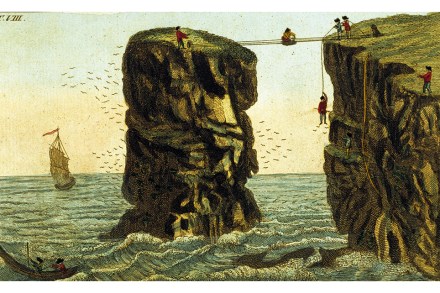
When, last summer, a group of Orcadians declared they’d like to leave the UK and join Norway, it became clear just how little most of us in the south understand Orkney. Friends who know I go there often ask me where it is (somewhere near the Hebrides?), how many Orkney islands there are, and whether they are mountainous or flat. As Peter Marshall explains at the start of this astonishing tour de force, the 70-odd Orkney islands lie just 25 miles north of Scotland, separated from the mainland by the Pentland Firth – the point, he says, at which ‘the North Sea meets the Atlantic, a place of hidden, treacherous whirlpools, and one of the world’s most powerful tidal currents’.

Who uses Grindr? 

From our UK edition

Meet market Who uses the gay dating app Grindr?  – The site claims 27m users worldwide, 80.5% of whom identify as gay. – 13m users are active on a monthly basis. Some 923,000 are paid users. – 80% are younger than 35. – 39% are single. – 48% are in the US. – The average user is on the site for 60 minutes per day. – The ‘explore’ feature – which allows users to see who on the app lives in a particular town or city – is accessed more in London than any other city in the world. – Grindr accounts for 3% of global use of dating apps. The most popular is Tinder, which accounts for 27% of global use. Source: grindr/businessofapps.

Scotland’s Hate Crime Act may have done us all a favour

From our UK edition

Scotland's Hate Crime Act (HCA) has, by common agreement, been an unmitigated disaster. Less than a week old, there are already calls for it to be repealed – like the equally misconceived but more awfully named Offensive Behaviour at Football and Threatening Communications (Scotland) Act 2012. The police are now clearly hesitant of arresting anyone for hate crime The police have been swamped with thousands of complaints, many vexatious, all of which they are pledged to investigate. JK Rowling has blown the doors off with her ‘arrest me’ tweets, but the First Minister, Humza Yousaf, attracted more hate crime complaints in the first two days than she did. SNP Ministers like Siobhan Brown have been ridiculed for misrepresenting their own law.

Portrait of the Week: hate crimes, surprise knighthoods and flaming rickshaws

From our UK edition

Home The Hate Crime and Public Order Act came into effect in Scotland, making it a crime to communicate or behave in a manner ‘that a reasonable person would consider to be threatening or abusive’, with the intention of stirring up hatred based on age, disability, religion, sexual orientation, transgender identity or being intersex. The Scottish government offered online training to 500 Police Scotland ‘Hate Crime Champions’. The author J.K. Rowling named ten people who call themselves women that she called men. Police Scotland said complaints had been received about her, but that but no action would be taken. Rishi Sunak, the Prime Minister, said: ‘We should not be criminalising people saying common sense things about biological sex.