Scotland

What is ‘Q Manivannan’ doing in British politics?

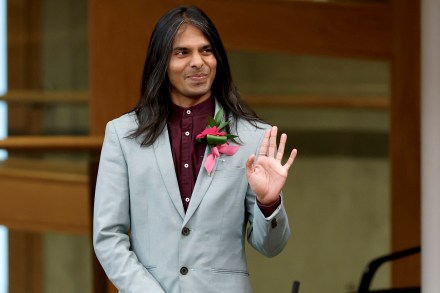
In an age full of nepobaby second-generation politicians posing as "outsiders," new Green Party MSP "Q Manivannan" is the real thing. Indeed, the St. Andrew’s postgraduate is so much of an outsider that he doesn’t even hold British citizenship or permanent residency, and is unable to take up paid employment as a condition of his student visa. "Q" was allowed to stand for office last month because the Scottish government – the Wuhan Lab of terrible ideas in UK politics – recently changed the rules allowing foreigners with only limited leave to remain to compete in elections. Although Manivannan faced a probe into his visa, the powers-that-be ruled that being a politician wasn’t a real job.

Fact check: are the NYT’s experts right about UK immigration?

Yesterday’s release of immigration figures by Britain's Office of National Statistics didn’t make for particularly pleasant reading. While net migration had fallen to around 200,000 in the 12 months to June, much of this was down to an unusually high exodus of people, with 693,000 leaving the country over the same period. Many of those leaving were under the age of 30. That news, however, seemed to prompt something approaching gloating over at the New York Times, which published a piece yesterday headlined: "The British Public Thinks Immigration Is Up. It’s Actually Down, Sharply." To labor the point, the piece was accompanied by a picture of anti-migration protestors in Scotland. The not-so-subtle subtext being: what a bunch of gammon thickos the anti-migration lot are in the UK.

immigration

The Art of the Dealmaker-in-Chief

Who really thought Donald Trump’s America was about to join the stampede of first-world powers promising to recognize Palestine at the United Nations?  "Wow!" He exclaimed this morning on Truth Social. "Canada has just announced that it is backing statehood for Palestine. That will make it very hard for us to make a Trade Deal with them."  All over the world, commentators convinced themselves that Trump’s expression of concern on Monday about "real starvation" in Gaza meant he was pivoting with global opinion and against Israel.  It turns out, however, that Team Trump is not for turning when it comes to the Middle East. Marco Rubio, the US Secretary of State, has accused the countries now embracing Palestinian statehood of falling for "Hamas propaganda".

Trump deals

Exploring Edinburgh, from Princes Street to Pitlochry

I’m blinking through floor-to-ceiling windows that perfectly frame a pristine view of Edinburgh Castle, standing magnificent against an improbably cloudless Scottish sky. The elegant writing desk in the Archibald Signature Suite at 100 Princes Street hotel has all the makings of an elevated “work-from-home” set up, but the scenery – and the collection of aged single malt I know to be upstairs – make concentration an uphill battle. This luxury townhouse right on, you guessed it, iconic Princes Street was made for luxuriating, not hunching over laptops. Ducking into the entrance on Princes Street feels exclusive, like knowing a secret.

pitlochry

A journey through Edinburgh’s gothic past

When Guillermo del Toro’s new film adaptation of Frankenstein makes its bloody advent on Netflix later this year, the backdrop for 19th-century body snatching and resurrection may look familiar to many viewers. It was shot last year on Edinburgh’s Royal Mile and images from the set suggest that, as ever with del Toro, this will be a hallucinatory and haunting exercise in Gothic extravagance. If so, he has picked the perfect city on which to unleash Frankenstein’s monster. Edinburgh is a place that wears its long and often violent history like a velvet cloak.

Edinburgh

Pure shores: a Scottish sea safari

In the narrow strait between Jura and Scarba, the sea does strange things. Standing waves barrel over phantom surf breaks. Steely waters seethe and swirl, as if stirred by invisible hands. No wonder the gulf’s name, Corryvreckan, means “cauldron of the speckled seas” in Gaelic; this is the world’s third largest whirlpool, classified as “unnavigable” by the Royal Navy. Yet here I am, aboard a thirty-seven-foot rigid inflatable boat (RIB), riding the rapids. Skipper Sandy Campbell cuts the engine so we can try “boat surfing,” the swell dragging us apace past Scarba’s looming quartzite cliffs. Islanders of old dreamt up mystical explanations for this phenomenon.

Hebrides

Imperfections in wood lead to perfection in carvings

I am married to a wood snob. When we bought our house in 1999, my husband insisted that all the shelves (he is an antiquarian book dealer, so there are miles of them) should be made of “real” wood, with not an inch of Medium Density Fibreboard. The price made me squeal. But a quarter of a century on, while friends’ MDF shelving droops like cables between telegraph poles, ours remains beautifully strong and straight. Callum Robinson would understand why this matters, and he demonstrates it in his new book, Ingrained.

wood

In search of the quintessentially British afternoon tea

It is a strange coincidence that both my sister and I, born and raised in Scotland, have married Americans. I live in New York. Lily lives in Nebraska. But we were both in our mother country over the summer visiting family and keen to make the most of our British culinary tradition. There is more to miss than you’d think. Diluting juice, which the English call “squash,” fruit flavoring added to water. A Sunday carvery, roasted meat and potatoes, with gravy and vegetables, complete with Yorkshire pudding. Fish and chips. Real chocolate. Decent Indian food. Breakfast cereal not coated in fructose. Tea worthy of the name. And above all, freshly baked scones. Americans may think they have scones rhyming with “stones.

tea

Hogmanay in Edinburgh is a marvelous experience

The city of Edinburgh, Scotland’s capital, really comes into its own twice a year. Firstly is August, when its streets are thronged with revelers and amateur PR types (“four stars in the Scotsman!”) promoting their wares at the world-famous performing arts festival. And then the second comes at the end of the year, during the New Year’s Eve period of Hogmanay, which sees anyone claiming long-distant Scots ancestry taking part in the revels for a day or two, just as it seems anyone in Boston on St. Patrick’s Day suddenly remembers their long-lost Uncle Padraig or Great-Aunt Shelagh. In any case, Hogmanay in Edinburgh is a marvelous experience, freezing cold aside, and best experienced from the surroundings of somewhere comfortable.

hogmanay edinburgh

The bold new vision for Edinburgh’s National Galleries of Scotland

What do you generally think of when you hear the words “Scottish art”? There are the usual clichés of course, of large-scale landscape paintings depicting gorse and heather and startled-looking wildlife, or alternatively there are the portraits of various noblemen and worthies, many of whom have the well-fed hue that living high on the hog imbues. If you head to Edinburgh’s National Galleries of Scotland — often simply known as “the National” — and visit the traditional collection in the neoclassical building right in the center of the city, near the castle and major shopping streets, you won’t be disappointed by the eclectic selection of Old Masters and Scottish masterpieces alike.

national
Orwells

Orwells, a place to get away from it all

On the edge of Glasgow’s West End, the posh bar scene melts away for just a moment at Elderslie Street, where Orwells has sat since the 1980s — though the location has hosted a pub since 1877. To give you an idea of the bars I usually frequent: until moving to Scotland last year, I did not. Bars were not a place I passed time. Bars are expensive. The company is unpredictable, the menus too often full of candy-colored cocktails with “funny” names like “Screaming Orgasm” that taste like anything but. Yes, I know I sound like a killjoy. My drink of choice: a $15 handle of Burnett’s lovingly tipped into a slow-sipped White Claw in the comfort of a friend’s home. You will not find trendy concoctions at Orwells. On my first visit, Eighties hair metal blared from the jukebox.

The Witchery weaves Halloween magic in Edinburgh

Halloween traditions might hail from All Hallows’ Eve, the Christian celebration preceding All Saints’ Day, but that has roots in Samhain — a Celtic pagan festival. Long before Westerners carved pumpkins come fall, the Scots were sticking knives into "neeps" (turnips). Disguised children ("guisers") warded off evil spirits on the streets of Scotland centuries before brats in Gryffindor scarves demanded Twinkies.  There could hardly be a better place to spend the spookiest time of the year than Edinburgh, with its reliably moody weather and litany of imposing buildings. Those seeking to be truly disturbed need simply research the capital’s very real history of witch hunts, public executions and plague.

witchery edinburgh

Trainspotting at thirty: an interview with Irvine Welsh

A lot of new books grow old fast. It isn’t even the fault of their material, necessarily, but their milieu. Hour by hour, the means of cultural production are accelerating at an evaporative rate. Today more than ever before, irrelevancy looms large over the shoulder of the novelist. It’s an environment within which thirty days of relevance is a feat, but thirty years? A fiction in and of itself. Yet, throughout three decades of cultural churn, the words of Irvine Welsh have remained steadfast; as culturally relevant and artistically avant-garde as the day they first hit the shelves.

Irvine Welsh

Scotland by sleeper

Traveling internationally these days is a bit like how Dicky Umfraville, a character in Anthony Powell’s Dance to the Music of Time, describes aging: being punished for a crime one hasn’t committed. After taking my pre-departure COVID test, alerting the British government to my whereabouts for the next week (no small undertaking given I’d be in a different bed every night), and proving all this plus my vaccination status to the British Airways check-in desk at JFK, I finally settled in my seat and supplemented my mandatory mouth-muzzle with an eye mask as though bound for Gitmo, not Heathrow. An hour into the flight, the woman in front of me started bawling: a panic attack brought on by mild turbulence.

scotland

Hail Mary

Sexual intercourse, Philip Larkin wrote, was invented in 1963, ‘between the end of the Chatterley ban and the Beatles’ first LP.’ Cunnilingus, according to Josie Rourke’s Mary Queen of Scots, was brought to Scotland in 1565 by a silver-tongued seducer named Robert, Lord Darnley, who seems to have acquired a taste for it at the court of Elizabeth I. The invention of intercourse, Larkin wrote, came ‘rather late for me’. But in Rourke’s telling, cunnilingus arrives north of the border just in time for Mary. She marries Darnley and, despite the obstacle of his alcoholism and homosexuality, bears him a son. In 1603, when Elizabeth I dies without issue, Mary’s son, a feeble and tyrannical slobberer obsessed with witches, becomes James I of England.

mary queen of scots

As Robert the Bruce, Chris Pine smolders like a castle the morning after its sacking

Old age, Bette Davis said, ‘ain’t no place for sissies’. Neither was the Middle Ages. They were the Dark Ages, a world lit only by fire, in part because you had thrown the innards of your enemy onto the flames. The roads were terrible, and the primeval forest had recovered the farmland once worked by retired Roman legionaries. No wonder Dante’s traveler got lost in the woods in middle age. In Britain, civilization collapsed when the Romans went south. A long night of Scandinavian noir ensued, as raiders with names like Erik Bloodaxe set the social tone. For nearly a millennium, no one in England built a flushing lavatory, because there were no drains to hook it up to. Everyone stank. The peasants were especially revolting, and the nobles were notably ignoble.

chris pine outlaw king

Give me Shakespeare’s Macbeth over Jo Nesbo’s any day

It must have seemed a good idea to someone: commissioning a range of well-known novelists to ‘reimagine Shakespeare’s plays for a 21st-century audience’. The first six novels have come from irreproachably literary authors of the calibre of Jeanette Winterson (The Winter’s Tale) and Margaret Atwood (The Tempest). Now, however, we have something a little different: Jo Nesbo, the Norwegian crime writer, has recast Macbeth as a thriller, allegedly set in 1970, though this timeframe should not be taken too literally. The plot is very loosely connected with Shakespeare’s. The location is a crumbling city in a dystopian country where many of the names have a Scottish ring.