Science

Debunking the Antarctica myths

From our UK edition

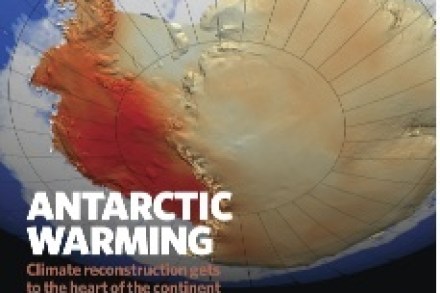
In January 2009, Nature magazine ran the a cover story (pictured) conveying dramatic news about Antarctica: that most of it had warmed significantly over the last half-century. For years, the data from this frozen continent - with 90 percent of the world’s ice mass - had stubbornly refused to corroborate the global warming narrative. So the study, led by Eric Steig of the University of Washington, was treated as a bit of a scoop. It reverberated around the world. Gavin Schmidt, from the RealClimate blog, declared that Antarctica had silenced the sceptics. Mission, it seemed, was accomplished: Antarctica was no longer an embarrassment to the global warming narrative. He spoke too soon.

Perchance to dream

From our UK edition

This book reads like an interesting after- dinner conversation between intelligent friends. That said, it is a rambling conversation, and although it is extremely entertaining, it does not add up to much. Its ostensible subjects are two instances of scientific intelligence being brought to bear on the possibility of defying, or surviving, death. In the first case, John Gray investigates those, such as Freddie Myers and Henry Sidgwick, who formed the Society for Psychical Research. In the second instance, Gray tells again the bizarre story of the cult of Lenin, and Leonid Krasin’s belief that, if Lenin’s body could be kept in a state of cryonic suspension, there might dawn a glad day in which Comrade Lenin could return to life.

Care or cure?

From our UK edition

Cancer is usually associated with death. For the cancer specialist, however, cancer is more about life: not just patients’ lives; the cancer itself often lives the life of Riley. If it has a life, then, it is entitled to a biography. Here, Siddhartha Mukherjee, an obviously compassionate oncologist, provides that biography. The basis of any biography is the story.

From the archives: What do you mean ‘Happy Christmas’?

From our UK edition

A more scientific view of proceedings, courtesy of a Yale professor writing for The Spectator's Christmas issue in 1994:What do you mean ‘Happy Christmas’?, Robert Buck, The Spectator, 17 December 1994 It is the time of year when the pursuit of happiness is at its most frantic. People believe they should be happy in the holiday period because they are surrounded by tradition, mercantile enthusiasm and a desire to return to childhood, where, for the most part, it did not require an effort to be happy. Is the experience of happiness only psychological? We know that the reductionist trends of science must be leading towards a molecular theory of practically everything. Will Christmas get scrunched down to a molecular evil?

New Life-Form Discovered

From our UK edition

In California: Hours before their special news conference today, the cat is out of the bag: NASA has discovered a completely new life form that doesn’t share the biological building blocks of anything currently living in planet Earth. This changes everything. At their conference today, NASA scientist Felisa Wolfe Simon will announce that they have found a bacteria whose DNA is completely alien to what we know today. Instead of using phosphorus, the bacteria uses arsenic. All life on Earth is made of six components: carbon, hydrogen, nitrogen, oxygen, phosphorus and sulfur. Every being, from the smallest amoeba to the largest whale, share the same life stream. Our DNA blocks are all the same. But not this one. This one is completely different.

A harmful double standard

From our UK edition

Professor David Nutt, the former Chief Drugs Adviser to the Government, has sparked controversy again today by pronouncing that alcohol is more harmful than heroin, crack, powder cocaine and methamphetamine. His findings are based on a paper published today, which builds on a 2007 journal that explored the same issues. So, is Professor Nutt right? If he is, what should the consequences be for public policy and, in particular, our systems of drug classification and alcohol taxation?   To find out, it is worth returning to Professor Nutt’s 2007 academic paper.  The relative harm of drugs is measured according to nine meters, taking into account the various aspects of physical harm, dependence and wider social harms.

Learning to listen

From our UK edition

How Music Works opens with a blizzard of reassurances. First, John Powell establishes his ordinary-bloke credentials by means of a slightly tortured analogy between many people’s attitude to music (‘pleasure without understanding’) and the time he went to the chip shop after the pub and realised he couldn’t tell the Chinese owner exactly what gravy was. He then lays out in some detail what prior knowledge of musical theory, maths and science we’ll need for what follows: absolutely none. The message, in other words, is a firm ‘Don’t panic’. This might be a book of musicology by a classically trained composer and physics professor, but it’s aimed squarely at the novice. And from there, Powell proves as good as his word.

A plague of infinities

From our UK edition

Stephen Hawking is the most distinguished living physicist, who despite the catastrophe of motor neurone disease has been twice married, is a bestselling author and a media super-star. He is blessed with an extraordinary intellectual energy and fearless resilience. One might also add chutzpah. In The Grand Design he aims to give a concise and readable answer to the ‘Ultimate Question of Life, the Universe, and Everything.’ In fact he offers three such questions: ‘Why is there something rather than nothing? Why do we exist? Why this particular set of laws and not some other?’ It will come as no surprise to learn that he fails to provide a satisfactory solution to any of them. Had he succeeded, you would have already heard it on the news.

In and out of every dive

From our UK edition

Robert Coover’s Noir is a graphic novel. Robert Coover’s Noir is a graphic novel. Not literally, in the contemporary sense in which the phrase is used to designate a highfalutin words-plus-pictures album; but figuratively, in that its language cannot help but be converted, in the reader’s inner eye, into a series of monochromatic images, images suggestive less of a film than of, precisely, the layout of some neo-noir comic-strip. Frank Miller’s Sin City, for instance. Like Miller, Coover pulverises the film noir aesthetic to a hallucinatory essence. In a conceit subsequent pasticheurs will find it hard to improve on, he actually has the nerve to name his private eye Philip M. Noir (‘M’ presumably standing for ‘Marlowe’).

Smoking Bans = Fewer Heart Attacks? Up To A Point, Lord Copper

From our UK edition

Oh my, what a credulous press corps we have. Selectively credulous that is. Put it this way: if a report compiled by a Philip Morris board member suggested smoking was good for you it wouldn't be taken terribly seriously. But let an ASH board member - in this case Dr Anna Gilmore - put together a report that says the smoking ban in England & Wales "caused" a "dramatic" fall in heart attacks and the newspapers will be happy to be spoon-fed their reporting. Now, you may say that the existence of the report is itself news. Perhaps so. But, again, the provenance of the report matters too and should be borne in mind.

Faith under fire

From our UK edition

Giles St Aubyn, in this long, scholarly book, sets out to chronicle the shifts in the Christian churches from the scientific revolution of the 17th century, and the Enlightenment of the 18th, to the apparent triumph of secularism in the 20th. H. H. Asquith, as leader of the Liberal party, was not an enthusiastic Christian. Nor did the Labour Prime Minister Clement Attlee waste much time on religious concerns, which bored him. What mattered was the NHS and the welfare state, which saved men’s bodies rather than their souls. The Reformation had shattered the universal Catholic church of the Middle Ages, leaving in its wake what the Catholic apologist Blaise Pascal called ‘the thousand bizarre sects of Protestantism’.

A cosmic comedy

From our UK edition

Not long ago I had an email from a friend, wondering if I’d yet read the new Ian McEwan. Not long ago I had an email from a friend, wondering if I’d yet read the new Ian McEwan. ‘Talk about a bolt from the blue,’ she said. ‘McEwan does slapstick. I never saw that coming.’ She added (unfairly, I thought) that you might class On Chesil Beach as slapstick of an unintentional sort, but her point holds. Here, in a book around a scientific theme of considerable seriousness — global warming and renewable energy — McEwan has written the closest thing he’s ever done to a farce. Told in three chunks, spaced at intervals between 2000 and 2009, Solar is the story of a Nobel-prize-winning physicist on a slow slide to disaster.

Array of luminaries

From our UK edition

In November 1660, on a damp night at Gresham College in London, a young shaver named Christopher Wren gave a lecture on astronomy. In the clearly appreciative audience were 12 ‘prominent gentlemen’, who in discussions afterwards, possibly over a drink or two, decided they would meet every week to talk about science and perform experiments. In a flash, this informal gathering coalesced into a society, which they called ‘a Colledge for the Promoting of Physico-Mathematicall Experimentall Learning’. As Bill Bryson writes in his introduction, ‘nobody had ever done anything quite like this before, or would ever do it half as well again.’ In 1662 Charles II granted them a charter, and the society became the Royal Society.

Addle-pated modernist

From our UK edition

In 1564 a book was published calculating that there were 7,409,127 demons at work in the world, under the administrative control of 79 demon-princes. Eight years later, Michel Eyquem de Montaigne began to write his Essays, a book which still seems to speak to us directly with all the force of rational understanding and an identifiable human personality. If Montaigne marks the beginning of modernity, it is because he tells us exactly what he is like; how he sees the world, fallibly and yet honestly; and because there was no book in the world like it before, and we are still writing books rather like it today. Montaigne, in common with all great authors, has continued to be infinitely applicable.

What about Climategate?

From our UK edition

A reader writes to complain that I haven't written anything about "Climategate" (please, can we stop the use of the suffix "gate"?). Well, the main reason I haven't is that climate change is even more crushingly tedious than health policy, the European Union or, for that matter, just about anything else. Worse, the bad faith of the participants, on both sides, and their certainty on matters about which we cannot possibly or plausibly be certain is dispiriting. That being the case, Megan McArdle writes my reaction to this "scandal" for me: Scientists are human beings.  They react to pressure to "clean up" their graphs and data for publication, and they gang up on other people who they dislike.

The teacher you wish you’d had

From our UK edition

Sometimes you can become too well known. For years Richard Dawkins was a more than averagely successful media don, an evolutionary biologist, fellow of New College, writer of popular science books and tousle-haired face of rationalism on countless television shows. It was a good living, and kept us all entertained, but for Dawkins it wasn’t enough. So he wrote The God Delusion, an unambiguous attack on religion and the religious. I should probably say at this stage that I am not a believer, but it does seem to me that if people want to believe in a god or gods, that’s very much up to them. In his stridency, Dawkins inadvertently aligned himself with the fundamentalists he hates so much: he became identified as a sort of fundamentalist atheist.

Poisoned spring

From our UK edition

Say Goodbye to the Cuckoo, by Michael McCarthy Wings and Rings: A History of Bird Migration Studies in Europe, by Richard Vaughan On a May night in 1967, walking home down a Dorset farm track, I counted the song of 13 nightingales. Today in those woods no nightingale is heard. For 40 years I visited a bridge on the Dorset Stour to watch sand martins nesting in the riverbank. Since 1984 they have vanished. In 2002 I wrote a letter to the Times, headed ‘The last cuckoo’, to note that for the first time in decades I had not heard the cuckoo arriving on the button (17 April in Dorset, 18 April in Somerset), My letter was not printed.

Darwin — from worms to collops

From our UK edition

By all accounts a modest and retiring example of his species, Charles Darwin would surely have been more astonished than flattered by the honours done him during this year’s bicentennial celebrations. By all accounts a modest and retiring example of his species, Charles Darwin would surely have been more astonished than flattered by the honours done him during this year’s bicentennial celebrations. An avalanche of major exhibitions, international conferences, TV and radio series — everything, indeed, short of a movie starring Brad and Angelina — is accompanied by a perfect tsunami of books made saleable by association with the bald, bearded sage of Down House.

The romance of the jungle

From our UK edition

It is so sad to read about the Mato Grosso now, at least it is for anyone who, like me, was a boy in the 1950s. When the vast rain forest of the Amazon makes the news at all it is in stories about economic predation, logging and genocide. The Mato Grosso has shrunk and become a victim, which for us was the ultimate in adventure, romance, and horror, with all of it so safely far away.

Barking up the wrong tree?

From our UK edition

The Vanishing Face of Gaia: A Final Warning, by James Lovelock He Knew He Was Right: The Irrepressible Life of James Lovelock and Gaia, by John Gribbin and Mary Gribbin James Lovelock is an English scientist, recip- ient of many awards, and he is a pleasant writer, moderate in tone and conciliatory towards his critics. In the late 1960s he became famous in New Age circles for his Gaia theory. The name, which is that of the old Greek goddess of Earth, was suggested to him by William Golding, his neighbour and pub companion in their Wiltshire village. It was immediately popular, and so was the image that Lovelock attached to it, of a self-regulating planet that has been working throughout its existence to develop the atmosphere, climate and other conditions necessary for sustaining life.