Science fiction

Here in Texas, Hell has frozen over

From our UK edition

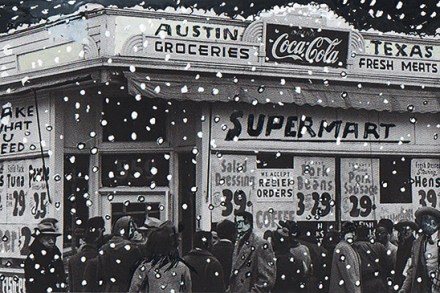
Austin ‘If I owned Texas and Hell,’ General Phil Sheridan famously said, ‘I would rent out Texas and live in Hell.’ Although the weather was unusually warm for the season in central Texas we guessed something was up when, in broad daylight with hawks about, our normally crepuscular attic mice risked running down a porch pillar and gathering the spilled seed from bird feeders. They vanished completely days before the snowstorm struck. Sadly, some of our birds were not so prescient. We watched a bewildered Audubon’s warbler, which could no longer fly, hopping about in the snow. Either it had lost the main flock continuing south, or good weather had persuaded it to stay. Trying not to frighten it, my wife made sure it was fed.

Out of this world | 28 March 2019

From our UK edition

Like someone who has bought a first computer, then reads the manual from front to back but never actually gets around to switching the thing on, Robert A. Heinlein appears in his late fifties to have come across a how-to book about sex. Thereafter an instant expert, he wrote novel after novel brimming with it, much of it laughably theoretical and, well, wrong. Famously, to those who managed to get through an interminable book called The Number of the Beast (1980), he describes a kiss in the voice of a young woman: ‘Our teeth grated, and my nipples went spung!’ Nor were these the only breasts and nipples under discussion. The book is full of lubricious references to them, and other women’s parts, invariably objectified.

‘They’re finally going to play my music’

From our UK edition

According to his friend and fellow-composer Ernest Reyer, the last words Berlioz spoke on his deathbed were: ‘They are finally going to play my music’. It has taken time, but he was right. A century and a half later, Berlioz 150 is the watchword of the hour. That is as it should be. Berlioz was a devotee of the ancient world (‘I have spent my life with that race of demi-gods’), where it was believed that at the moment of death one might be granted foreknowledge of the future. Why has it taken so long? In his native France there were plenty of reasons. As a forceful, witty but sardonic music critic he inevitably put Parisians’ backs up with his attacks on modern Italian music, which he regarded as frivolous, formula-ridden and fatally undramatic.

Close to the bone

From our UK edition

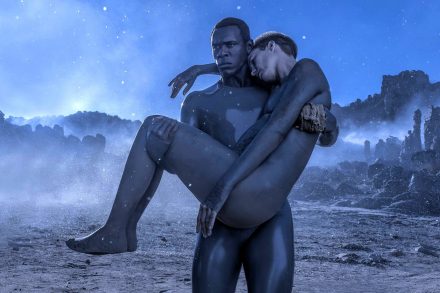
Does J.G. Ballard’s ‘disquieting equation’, ‘sex x technology = the future’, still hold? Not in Lidia Yuknavitch’s novel, which imagines a society better described by the formula ‘the future = technology – sex’. There is no procreation in it, and any manifestation of sexuality is a crime. Its inhabitants have left Earth for a space station, a hi-tech prison only the rich can afford, moving away from ‘a lunar landscape of jagged rocks, treeless mountains, or scorched dirt’, the scene of endless wars fought by child soldiers, where ‘technology is seized by those who kill best’.

Angel and demon

From our UK edition

Read cover to cover, a book of essays gives you the person behind it: their voice, the trend of their thinking, their tastes and the nature of their engagement with the world. So, here are two, one from each end of the human spectrum. Think of Milton’s Archangel Raphael, intellectually wide-ranging, lucid, informative and fair, and you have Francis Spufford. Think of his darkly glittering Satan — vivid, passionate, partisan and fatally persuasive — and you have Martin Amis. Read these books together and you have, in essay terms, a Miltonic whole. These are collections of what might be called ‘pre-loved’ pieces, not originally designed to cohere, so they have been washed and brushed for resale.

No pain, no gain

From our UK edition

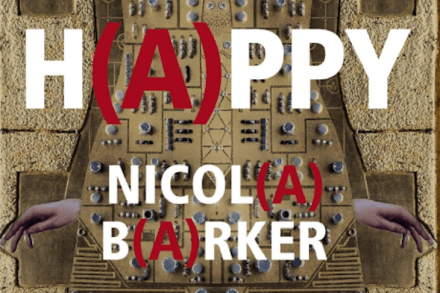
It is an unexpected pleasure when fiction has a soundtrack to accompany the work of reviewing. H(A)PPY is ‘best enjoyed in conjunction with Agustin Barrios: The Complete Historical Guitar Recordings’, Nicola Barker advises before her text gets underway. It’s tempting to dismiss this as a gimmick. But Barrios’s music strikes a deep chord with the rebellion at the heart of Barker’s 12th novel. Born in the 1880s, the Paraguayan’s playing was ridiculed because he preferred his guitar strings to be made of steel rather than fashionable gut. His dissonant art, like Barker’s today, could not be accused of courting admiration.

No end in sight

From our UK edition

Are you a deathist? A deathist is someone who accepts the fact of death, who thinks the ongoing massacre of us all by ageing is not a scandal. A deathist even insists that death is valuable: that the only thing that gives life meaning is the fact that it ends — an idea not necessarily embraced by someone about to be murdered on video by an Isis fanatic. But what is the alternative? There has never been one, which is why until recently no one needed to coin the term ‘deathist’. But now many tech entrepreneurs and scientists take a different view: death, they say, is simply an engineering challenge. Biotechnology should, in principle, be able to reverse the wear-and-tear on cellular machinery in our bodies and keep us in our prime indefinitely, barring violent accident.

Snap, crackle and pop

From our UK edition

As you go into the new Wellcome Collection exhibition, Electricity: The Spark of Life, you might have in mind a sentence from Mary Shelley’s original electrifying novel Frankenstein; Or, the Modern Prometheus: ‘I collected the instruments of life around me, that I might infuse a spark of being into the lifeless thing that lay at my feet.’ A copy of the 1831 edition of her book, with its startling anatomical frontispiece, awaits you, among many other wonders. The exhibition, a collaboration between the Wellcome, the Teylers Museum of Haarlem and the Museum of Science and Industry, Manchester, is packed with electrical instruments, together with models, artefacts, books, film loops and pictures.

Cheating death

From our UK edition

2016 was probably the year even the most optimistic of us — those who can genuinely square the new populist politics with a bright future for truth-seekers, scientists and rational thinkers — gave up on the possibility of time travel. Surely, on every rally stage there should have been at least one white man from the future (it’s generally a white man for the simple statistical reason that if you’re a woman or a non-white man and go travelling in time, there’s only about 0.

Low life | 5 January 2017

From our UK edition

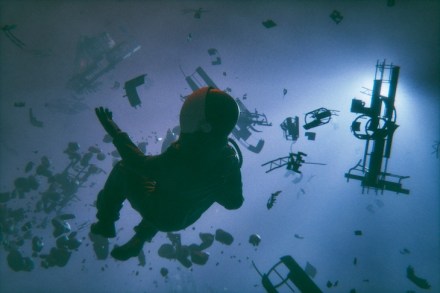
On the Monday before Christmas, the black dog came around again and I couldn’t get out of bed. I lay all day staring at the wall. Depression has little to do with sadness, I think. It’s blankness. The same thing happened to me about 15 years ago. I was like a prize gonk for the four or five weeks it took for the Prozac to work, which it did, and since then I’ve managed to foster and sustain all the illusions I need to keep me buoyant. I couldn’t get out of bed on the Tuesday either. I was adrift in outer space. But I knew I must pick up the phone and make an appointment to see someone with a prescribing pad. It’s easier said than done, though, getting an appointment to see a doctor during the festive period.

The cryonics game

From our UK edition

Cults, the desert, natural disasters. Artists, bankers, terrorists. Cash machines, food packaging, secret installations. Mediaspeak and scientific jargon. Crowds and capital. Language and death. Just as it used to be possible to play Ballard Bingo with the work of the late 20th century’s other great literary monomaniac, so Don DeLillo’s themes have remained astonishingly consistent in the 45 years since Americana, his first novel, appeared.

The heavens are falling

From our UK edition

The dystopian novel in which a Ballardian deluge or viral illness transforms planet Earth has become something of a sub-genre, and Clare Morrall’s astute and vigorously imagined novel follows on from the best of them, such as Margaret Atwood’s MaddAddam trilogy and (most recently)Emily St John Mandel’s Station Eleven and Antonia Honeywell’s The Ship. Intriguingly, the future that Morrall imagines very much resembles the past. Following 50 years of climate catastrophe, and the spread of the population-depleting Hoffman’s disease, the only hope for humanity’s survival is to find ways of ‘living with the weather’, or learning ‘skills that don’t depend on failing technology’.

Man of many worlds

From our UK edition

By the kind of uncanny coincidence that would tickle his psychogeographically minded friends Iain Sinclair and Peter Ackroyd, Michael Moorcock’s publishers have recently moved offices to the same corner of London occupied by his latest novel, The Whispering Swarm; and just as their rather swanky embankment premises are called Carmelite House, so does the religious order provide Moorcock with one of his key characters. It is a Carmelite monk who leads the book’s teenage protagonist, one ‘Michael Moorcock’, from an ABC teashop to a mysterious enclave just off post-Blitz Fleet Street.

The trailer for the new Star Wars film suggests it could be the best yet

From our UK edition

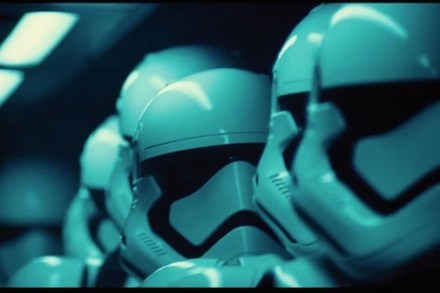
If the Fast & Furious team made Casablanca 2 ('Morocco Drift') it would be a more artistically credible, better acted, and more entertaining movie than Star Wars: Episode I - The Phantom Menace. Vin Diesel’s Victor Laszlo may have gained an impressive set of guns fighting for the Czech resistance since we last saw him - shame, too, about the hair loss - but at least he wouldn’t spend even one second of the film talking about 'midi-chlorians'. In his decision to revisit the Star Wars universe and create a trilogy of prequels, George Lucas looked upon the epic vista of his cinematic triumph and decided to open-cast strip mine it for cash.

God, aliens and a novel with a mission

From our UK edition

They say never work with children and animals. They could just as well say don’t write about aliens and God. A raft of readers hate sci-fi, and probably more sheer away at the very idea of a novel about a missionary. And yet… And yet The Book of Strange New Things works. It is in many ways extraordinary; its narrative drive, its lack of sentimentality, its occasional (emotional) brutality, its humour (albeit rare) all add up to a novel which is both intelligent, thought-provoking and as readable as a potboiler. Peter, ex-junkie, loving husband, cat-lover, sets off on a journey. The novel opens with his farewell to his wife, and we gather that he will be gone a while and that he might be in danger.

MaddAddam by Margaret Atwood – review

From our UK edition

The two opening volumes of Margaret Atwood’s trilogy have sold over a million copies. One of them managed to be shortlisted for the Man Booker prize in the nadir year that D.B.C. Pierre’s Vernon God Little won. Entitled Oryx and Crake (2003) and The Year of the Flood (2009), they depict planet Earth after humankind has been obliterated by a pandemic triggered by a newly devised pharmaceutical that arouses sexual rapture and retards ageing. A bioengineered humanoid species, the Children of Crake, however, survive: ‘free from sexual jealousy, greed, clothing and the need for insect repellent and animal protein’.

Alienation effect

From our UK edition

‘To give you an idea of the way people here consume stories, I have put this book together as a human would’ writes the alien narrator of Matt Haig’s novel The Humans. Professor Andrew Martin is not Professor Andrew Martin at all, but rather a Vonnedorian sent to destroy all evidence on Earth that Martin has solved the Riemann Hypothesis. This mathematical breakthrough, think the Vonnedorians, would lead to technological advances not safe in the hands of the violent and primitive humans. They must be stopped. Martin is murdered and his laptop destroyed. His wife, Isobel, and son, Gulliver, must also be killed; but perhaps a little predictably, what happens instead is that our alien begins to fall in love. The greatest danger to this novel is its narrator.

Blast from the past: The Teleportation Accident reviewed

From our UK edition

He'd probably agree with Edward Gibbon's assessment of history as 'little more than the register of the crimes, follies, and misfortunes of mankind' but Ned Beauman's instinct as to why we do what we do is a lot more basic. We're motivated by sex: whether we're having it or - as is more often the case in Beauman's world - not having it. And he might have a point. Take for example Ernst Hanfstaengl who described his former buddy, a certain Adolf Hitler, as "a man who was neither fish, flesh nor fowl, neither fully homosexual nor fully heterosexual... I had formed the firm conviction that he was impotent, the repressed, masturbating type." A committed Freudian might call that motive enough.

China’s labours

From our UK edition

This review will not be kind. But let’s not start that way. Ground lies between. Rewind. Am I the only person to find being addressed like this intensely irritating? China Mieville’s new book Railsea is full of it. Some books are so wrought with references, intertext, allusion that can only manifest itself through repeated syntactical anomalies, that they earn themselves glowing reviews for being incomparable, perhaps perverse. Many will read Railsea and wax lyrical about it; to do otherwise could suggest that the cleverness of it all has simply washed right over. This is a risk I am willing to take. Railsea, I am informed, is a work of Weird Fiction. The story peters out in all directions; not a lot actually happens.

RIP Ray Bradbury, 1920 – 2012

From our UK edition

The revered science fiction, horror and mystery writer Ray Bradbury has died aged 91. He was best known for Fahrenheit 451, his blockbuster of 1953. He became known as a curmudgeon, and was something of a Luddite. He was a virulent opponent of the internet, which he viewed as a transient nonsense, doomed to fail. He refused to allow his books to be sold in digital editions, a stance which was curtailed last year when his publishers made it a condition of his contract. His recalcitrance was perhaps borne of his love of the printed book and of old fashioned libraries. He maintained that libraries were one of the few places that children and adults could ‘meet people’ (in the pages of books).