Safe space

The idea of a university as a free space rather than a safe space is vanishing

From our UK edition

I’ve always admired the liberal Muslims in the Quilliam Foundation. It is hard to take accusations of betrayal from your own community. Harder still to keep fighting when the thought feeling keeps nagging away that out there, somewhere, there are Islamists who might do you real harm. But Quilliam keeps fighting. To mark the launch by students of the Right2Debate campaign, which seeks to make universities live up to their principles and respect the right to speak and dispute, they have collected accounts from atheists and secularists of the wretched state of higher education. I should pause to explain that last sentence to the confused. You might have assumed that universities would be the last institutions in the country to censor.
Don’t blame the students. They’re a product of a Britain that’s losing its love of free speech

From our UK edition

In the past 12 months a curious thing has happened: student politics, for decades the most irrelevant, cut-off sphere of public life, has become headline news. The explosion of campus censorship – the primary means through which twentysomething politicos vent their political passions today – is followed, reported on and critiqued by greying commentators on a daily basis. The shock-horror headlines about the rise of 'no platforming' and the sclerotic growth of speech-policing 'safe spaces' seem a little strange. Not least because the No Platform policy – introduced by the National Union of Students in 1974 – is about as old as some of the commentators currently filling column inches with their castigations of the illiberal yoof.

From safe spaces to NSFW: why ‘safe’ is the word of 2015

From our UK edition

‘Makes me feel sick,’ said my husband, referring not to the third mince pie of the morning (in Advent, supposedly a penitential time of preparation), nor to accepting a glass of champagne after having earlier accepted a glass of whisky at another house. No, what made him feel sick was the seasonal greeting: ‘God bless, and be safe.’ For once, I agreed with him. It was bad enough to be exhorted to drive safely or even stay safe during periods when terrorists had eased off a bit (after peak IRA, but before 2001). But now, with a fashion for shooting civilians in unexpected places, to be told to be safe makes no more sense than to be told to be rich. Yet safe is the word of 2015.

Free speech is so last century. Today’s undergraduates demand the ‘right to be comfortable’

From our UK edition

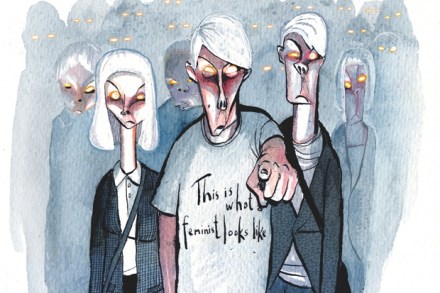
At No 5 in the Spectator's most-read articles for 2015 is Brendan O'Neill's cover piece describing 'Stepford Students': those who want to shut down debate when it involves people they disagree with and arguments they don't like. Brendan spotted this phenomenon in 2014 but his article returned to our best-read list this year as more and more people cottoned on to the trend for 'safe spaces' and no-platforming in our universities. And it spawned a website edited by defiant Stepford Students. Have you met the Stepford students? They’re everywhere. On campuses across the land. Sitting stony-eyed in lecture halls or surreptitiously policing beer-fuelled banter in the uni bar. They look like students, dress like students, smell like students.

Why ‘safe’ is Dot Wordsworth’s word of the year

From our UK edition

‘Makes me feel sick,’ said my husband, referring not to the third mince pie of the morning (in Advent, supposedly a penitential time of preparation), nor to accepting a glass of champagne after having earlier accepted a glass of whisky at another house. No, what made him feel sick was the seasonal greeting: ‘God bless, and be safe.’ For once, I agreed with him. It was bad enough to be exhorted to drive safely or even stay safe during periods when terrorists had eased off a bit (after peak IRA, but before 2001). But now, with a fashion for shooting civilians in unexpected places, to be told to be safe makes no more sense than to be told to be rich. Yet safe is the word of 2015.

How FHM readers lost their safe space

From our UK edition

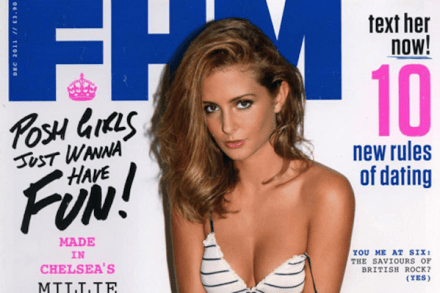
'A victory for feminism,' came the cries this week, as news broke that FHM was to close after 20 years. Then came a rush of virtue-signalling males proclaiming that they were surprised anyone still read that old misogynistic rag. Of course how many people actually read it is now becoming pretty clear, yet it was a question I found myself asking strangers while I was working as an intern at FHM in the summer of 2011, on a project meant to help rebrand the lads' mag. The magazine was stuck in a funk after its 90s heyday and struggling to connect with millennials. Not as classy or as cool as GQ or Esquire, as useful as Men's Health or as plain smutty as Zoo or Nuts, FHM had lost its way.

Here’s what happens when you create a ‘safe space’ at a pro-life event

From our UK edition

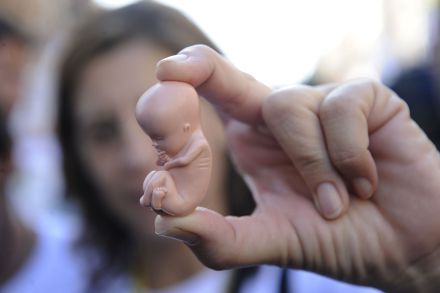
You know all that stuff about 'safe spaces', places on university campuses where you’re not allowed to say or do anything mean or that could possibly be construed as mean about anyone in case it hurts people’s feelings, especially if you’re a minority of some description? Well, I got the chance to try it out myself the other day. I was at a gathering in Dublin of pro-lifers – I’d been asked to be one of the speakers at their annual event – and it was all going well. There had been a nice young woman talking about hostels for single mothers. There was also a professor of law from Trinity, Dublin, who discussed the background to the Eighth Amendment, which extends equal right to life to both mothers and their unborn offspring.

British universities have a duty to defend the ‘unsafe’ space

From our UK edition

In the ever-noisier debate about campus censorship, one party has been noticeably silent: the universities themselves. Last week, the journalists Julie Bindel and Milo Yiannopoulos were forbidden to debate (on the topic of free speech) by Manchester Students’ Union. Manchester University made no comment. The week before that, Oxford’s SU banned from Freshers’ Fair copies of a student magazine designed to ‘publicise ideas people are afraid to express’; again, the university stood back. Nor did Warwick University intervene when the secularist Maryam Namazie, in the same week, was disinvited by Warwick SU. (After an outcry, they shamefacedly un-disinvited her.) Universities seem to assume that students should be left to sort out these kerfuffles by themselves.

Meet the Cry-Bully: a hideous hybrid of victim and victor

From our UK edition

In the 1970s, there was a big difference between bullies and cry-babies. Your mum would have preferred you to hang around with the latter, but sometimes the former had a twisted charisma so strong that you found yourself joining in the taunts of ‘Onion Head! ’ at some poor unfortunate creature sporting a cranium of a somewhat allium caste. After a bit, of course, if you had anything about you, you realized what a knob you were being and went off to sample the more solitary, civilized pleasures of shoplifting and reading Oscar Wilde with the bedroom curtains closed. But you could be certain, as you festered in your pilfered Chelsea Girl vest, that bullies were bullies and cry-babies were cry-babies and never the twain would meet.