Russia

RFK Jr. is as mad on foreign policy as he is on vaccines

Did you know that the Biden’s State Department is run by neocons? Or that Biden’s foreign policy is “bellicose, pugnacious and aggressive”? Ask the people of Afghanistan suffering under the Taliban or the millions of Ukrainians trying to fend off an imperialist Russia. They would tell you that that is news to them. Those assessments come not from the soft-isolationist right, but rather from Democratic presidential candidate Robert F. Kennedy Jr., who joined Elon Musk, David Sacks, Tulsi Gabbard, Michael Shellenberger and others for a Twitter Spaces chat on Monday.

rfk jr kennedy

Is it too late to save America?

Regular readers may recall how fond I am of a mot from the British diplomat, author and art collector Edgar Vincent, the first (and, as it happened, the last) Viscount d’Abernon: “An Englishman’s mind works best when it is almost too late.” When I first encountered Lord D’Abernon’s saying, I was impressed by its slightly disabused cheerfulness. “Whew,” I thought. “As usual, some impending disaster was neatly avoided at the last moment by the wit and pluck of the doughty Brits.” The drama of the near-escape added to the sweetness of relief. Surely we Yankees — most of whom, until recently, were basically displaced Brits — could also be counted on to display the requisite derring-do at the critical moment. Could we though? “Almost too late.

america
vladimir kara-murza

Lawmakers demand Vladimir Kara-Murza’s release

The legacy of John McCain was on full view in the halls of Congress this week, where a bipartisan group of lawmakers repeatedly invoked his legacy to demand that Russia release a journalist detained for criticizing Vladimir Putin. One year ago, Vladimir Kara-Murza, a Russian political dissident and journalist, was arrested by Putin’s regime on trumped-up charges of spreading false information about Russia’s military during a speech he gave in McCain’s home state of Arizona. To commemorate his detention, and to call for his release, the McCain Institute hosted an event in the nation’s capital where lawmakers from both parties — who served jointly with McCain for almost 100 years between them — rallied to Kara-Murza’s defense.

In defense of America the arms dealer

As the world enters a new era of great power competition, countries are arming themselves at a rate unseen since the end of the Cold War. The war in Ukraine, China’s increasing belligerence and angst over rogue states like Iran and North Korea are driving defense spending and weapons purchases the world over. Amid all this, the United States does not have the luxury of being too picky as to who among its friends gets the weapons they need to defend themselves. Nor can Washington continue to avoid drastic reforms to its arms export controls to face the challenges of the twenty-first century. Standards are necessary — they are what should set America apart — but they must not become so onerous that the security of the US and its partners suffer.

media leak tows security state

The security state says jump. The media asks ‘how high?’

The tacit alliance between operatives of the national security state and corporate media burst into view last week when the New York Times and the Washington Post did the FBI’s job for it by tracking down the leaker of documents that detailed, among other things, the extent of American and allied involvement in the Ukraine war.  That Bellingcat, the shadowy, government-funded open-source intelligence group, played a role in helping to identify the twenty-one-year-old Air National Guardsmen Jack Teixeira proves (once again) that many media outlets are now de facto agents of the national security state.

The valiant Vladimir Kara-Murza

Vladimir Kara-Murza dies hard. He has withstood not one but two poisoning attempts by Vladimir Putin's government. He has withstood the targeting of Russia's officials. And he has borne the ramifications of the West's turn away from confrontation with a regime he understands for its villainy. Now, Kara-Murza is facing what could be a final challenge — a trial against him based on the 2022 laws against "misinformation" about the Russian military in the Ukraine war, by an authoritarian regime bent on silencing all its critics and sending them into the dark quiet of a cell where they will end their days. Kara-Murza is forty-one, the father of three, a former advisor to assassinated Putin critic Boris Nemtsov and a longtime advocate against the regime.

vladimir kara-murza

Who will save Republicans from themselves?

What’d I miss? The week I chose to take off (thanks to my colleagues for keeping the DC Diary show on the road) was the worst for Republicans in a while. The last Republican president and the party’s 2024 frontrunner was arrested and charged in Manhattan. In a high-stakes, big-spending Wisconsin Supreme Court race, voters delivered a thumping progressive victory and a clear thumbs down to the Republican stance on abortion in the Dobbs era.  Meanwhile, GOP donors are reportedly going wobbly on the man many hoped would swoop in and save the party. Ron DeSantis is struggling to make himself heard over the Trump-arrest cacophony.

Use Russia’s money to destroy Russia’s military

After thirteen months of war, Ukraine’s infrastructure is in a dire state. Its armies are preparing for a counteroffensive, and its economy is not likely to fare any better this year than it did in the last. Kyiv will need more money from the West — and the West will have to provide. The need is clear, but the will, in the United States and Europe, less so. Thankfully there is a way around this looming problem, courtesy of the Central Bank of the Russian Federation.  Representative Stephanie Bice of Oklahoma has submitted the Make Russia Pay Act, which authorizes the federal government to seize, deem as forfeited, and liquidate Russian assets that are currently frozen in the US.

vladimir putin hawks

Andrey Kurkov brings clarity to the Ukraine invasion

"War and books are incompatible,” decided Andrey Kurkov, one month into Putin’s war against Ukraine. Reading his Diary of an Invasion, it’s not hard to see why he thinks so. Homes are evacuated; air raid sirens go off day and night. You get shelled. There is a never-ending cascade of bad news: about friends, about war crimes, about the possibility of nuclear catastrophe. The loss of luxuries. No tonic water, no whiskey-and-soda. There isn’t much time to think. Kurkov’s book came to the attention of the West when it was published in the UK last September. Since then, it has emerged as one of the first serious works of literature to come out of Ukraine since the invasion.

kurkov

A history lesson for Joe Biden

Some moderately clever people, reflecting on the confusing morass of current events, knowingly quote George Santayana’s most famous observation: that those who cannot remember the past are condemned to repeat it. Since the past is largely an almanac of unfortunate (not to say horrific) events, the idea that we are “condemned to repeat it” concentrates the mind in approximately the way Dr. Johnson said the prospect of hanging in a fortnight tends to do. But of course the past never really repeats itself. When it comes to history, Heraclitus rules: you cannot step into the same river twice, mon brave. Moreover, as that sage of Ionia said, “the true nature of things loves to conceal itself.

Vladimir Putin

Putin and Xi: authoritarian bros

Relationships between dictators are bound to be a bit strange, but Xi Jinping and Vladimir Putin’s stands out for its theatrical quality. Meetings are carefully choreographed for maximum propaganda effect. Lavish gifts and gilded state rooms are the norm. Fluent in the language of autocratic flattery, the two always have gushing praise for each other. In 2019, before traveling to Russia, Xi said that Putin was his “best and bosom friend,” while just a year earlier Putin praised Xi as being a “remarkable thinker” and “a good friend I can count on.” Leading up to this week’s visit, Putin referred to Xi as his “good old friend,” and recalling Confucius, wrote, “Isn’t it a joy when a friend comes from afar!

putin xi authoritarian bros
war

How to win the war that everyone is losing

Russia is losing the war in Ukraine. So is Ukraine. And so are we. Imagine the good guys win tomorrow. What exactly will we have won? Ukraine was the poorest country in Europe even before the war. Afterward it will remain as dependent on American dollars as it is now — and on American arms. Russia will not have disappeared, after all. The last war-torn and impoverished country that required open-ended American support was Afghanistan. Yet all the weapons and funds we lavished on Hamid Karzai and Ashraf Ghani failed to keep the Taliban at bay after we left. The money also didn’t help with Afghanistan’s corruption problem. Will it help with Ukraine’s? In 2021, Transparency International ranked Ukraine second only to Russia as the most corrupt country in Europe.

There’s no excuse for Russia’s downing of a US drone

A US MQ-9 Reaper drone’s propeller was hit by a Russian Su-27 fighter jet over the Black Sea on Tuesday, causing the drone to lose control and crash. Before the fighter made contact with the drone, it and its wingman released fuel in what was likely an attempt to impair the American aircraft. The drone was in international airspace — which Russia seems to acknowledge — leaving no justification under international law for Moscow’s aggressive actions. Whether or not the physical contact was premeditated remains unknown. The Kremlin claims the drone’s “sharp maneuvers” caused it to crash and that its jet did not hit it.

vladimir putin army

Why South Africa is cozying up to Russia and China

Vladimir Putin’s invasion of Ukraine opened the most dramatic divide between East and West since the Cold War. Most of these divisions were clear beforehand — Hungary and Turkey were longtime thorns in the side of NATO, for example. Yet South Africa’s warming ties with Russia and China seemed to come out of nowhere. South Africa's initial reaction to the invasion was the same as much of the Western world, demanding that Russia leave Ukraine. That did not last, however. South African President Cyril Ramaphosa said on March 17 that “The war could have been avoided if NATO had heeded the warnings from amongst its own leaders and officials over the years that its eastward expansion would lead to greater, not less, instability in the region.

The coming fight over the government’s surveillance powers

You've been warned: a fight over the government’s ability to spy on its own citizens is coming to Congress. Section 702 is up for renewal again in December. Section 702 grew out of an illegal post-9/11 program called Stellarwind, exposed by NSA whistleblower Tom Drake. It refers to a provision of the Foreign Intelligence Surveillance Act (FISA) that was enacted in 2008. It authorizes the government to collect the communications of non-Americans located outside of the United States for the purpose of obtaining foreign intelligence information. But the program also allows for the incidental collection of information about Americans who may be communicating with the targeted foreigners.

Drinking with soldiers in Ukraine

Getting into Ukraine can be tricky, especially if you don’t speak Ukrainian or have a national television network paying your way. I recommend the latter: it seems slightly easier and they have hair and wardrobe budgets. I cross into Chop on a short train carrying a mix of old couples and young kids. When I get off I’m directed to a booth manned by soldiers, who ask my business. Journalist, I say. The guard asks for press credentials. The best I can do is a copy of the magazine, but reading The Spectator is apparently something he’s unwilling to do and I’m waved through immediately. Russian spies, take note. I have two hours to kill before my train to Lviv, so I do what anyone would do — wander the blacked-out streets in search of a drink.

ukraine
germany

Germany’s folly: Berlin has miscalculated on Russia and China

The notion that closer trade connections with the West will necessarily set less enlightened nations on a course toward prosperity and liberty is nonsense, but convenient nonsense. Germans have a phrase for it — Wandel durch Handel, change through trade — often given as a justification for their business dealings with Russia and China. Unfortunately, the change they triggered was in Germany. In one case it has been for the worse; in the other it appears to be headed that way. To start with Russia, it’s true that Germany’s ultimately disastrous dependency on natural gas from the east has its origins in the Ostpolitik years: by 1989 the Soviets were supplying West Germany with around a third of its gas.

Washington’s yes-men in Japan

It was nighttime in Davos, 8:31 on January 18 to be exact. Japanese journalist Ganaha Masako had been standing out in the cold for three hours near the entrance to a building which, she had heard, was being used as a venue for a World Economic Forum event that evening. Ganaha had picked up on some additional chatter. Klaus Schwab, the head of the WEF, was rumored to be inside. It was a long shot, but Ganaha wanted to ask Schwab some questions about globalism. And then, suddenly, Schwab appeared. Fleshy cheeks jiggling slightly as he shuffled along the snow-dusted sidewalk, he stepped cautiously out of the WEF event forum with a few handlers. Ganaha pointed her camera at Schwab and asked him for an interview. He ignored her and kept shuffling along.

One year of war in Ukraine: six experts predict what will happen next

As the war in Ukraine enters its second year, today seems as a good time as any to reflect on its first, and see what the future might hold. Six foreign policy experts from across the spectrum of opinion offered their thoughts to The Spectator. As the war in Ukraine enters its second year, how do you foresee the conflict ending? Ted Carpenter: There are several possible outcomes, but the most likely is a ceasefire without a formal peace accord. That move would end the bloodshed, but it would leave the underlying disputes unresolved. Such an outcome would be similar to the armistice that ended the Korean War. It also would create the world’s largest and most dangerous “frozen conflict.

ukraine war nato

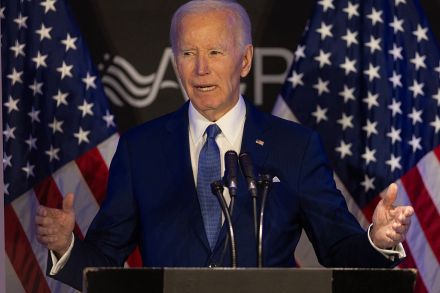
The contrast between Biden’s and Putin’s speeches

The contrast between the two presidents could hardly be starker. One is dwelling in his own dream palace, indulging fantasies about a return to superpower status while transforming his dismal fiefdom into a larger North Korea. The other is on a roll, creating a new grand alliance to prevent his foe from claiming suzerainty over Ukraine and engaging in further territorial predation. In his state of the nation address on Tuesday, Vladimir Putin served up his usual nauseating soup of anti-Western conspiracy theories, complete with references to Ukraine’s “neo-Nazi regime” and a Western “totalitarian” mission. If anyone knows anything about totalitarian impulses, it’s Putin himself.

leader loser