Russia

To Move the World, by Jeffrey Sachs – review

From our UK edition

Jeffrey Sachs is the world’s best-connected development economist. An academic with highly developed communication skills, he has always managed to secure access to policy makers and to offer them advice. His record is controversial. Back in the 1990s he worked on Russia’s transition from a command to a capitalist economy. He advocated the approach that Yeltsin adopted — shock therapy. The result was pensioners on the streets selling off furniture, jewellery and even their clothes to raise cash for food. Whilst there were many other factors at play, it now seems obvious that China’s transition to capitalism was better handled. China didn’t take Sachs’s advice.
Russia: A World Apart, by Simon Marsden – review

From our UK edition

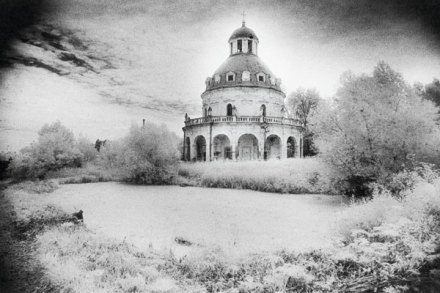
Here are acres of desolate countryside, pockmarked by once great estates, ravaged by rot. Could it be much bleaker? Many aristocrats  fled Russia during the Revolution. Even Tolstoy’s family were affected, and while his estate today survives intact, that of his daughter-in-law and countless other members of the 18th- and 19th-century nobility were left to ruin in overgrown fields across the entire country. This book, part travelogue (Duncan McLaren), part photography book (the late Simon Marsden), restores these buildings and their monuments to our consciousness. Or at least what’s left of them. Many of the estates which lie between Moscow and St Petersburg have been eaten away by fire or scavengers. Some are simply lost.

Why Russia’s diplomats should learn swimming-pool etiquette

From our UK edition

The first couple of evenings there was just me and a middle-aged couple swimming decorously up and down. On the third day it changed. There were three more people, spread out at the shallow end. You would not have thought that an extra three people in a decent-sized pool could have caused such irritation and havoc. They contrived to occupy an inordinate amount of space and move around in a way that caused maximum disruption. Sometimes they swam widths; sometimes diagonals. They would stop and change direction without warning. Sometimes they floated with their toes under the rail, or disappeared under water and surfaced far too close for comfort. And when they swam, they swam splashily, in a clumsy, improvised way. The two other length-swimmers generally left before I did.

The Enchanted Wanderer and Other Stories, by Nikolai Leskov – review

From our UK edition

Though underestimated in the English-speaking world, Nikolai Leskov is one of the greatest of 19th-century Russian writers. Donald Rayfield has described him as ‘Russia’s best-kept secret’. Richard Pevear’s excellent introduction to this selection includes Anton Chekhov’s account of how Leskov — ‘his favourite writer’ — said to him at the beginning of his career, after a night of carousing, ‘I shall anoint you with oil as Samuel did David.  Write.’ This little scene, which could be from one of Leskov’s own stories, perhaps offers a clue as to why he is not more widely recognised.

Arraigning a corpse

From our UK edition

Part 1 “Russian Justice” A judge at Moscow’s Tverskoi District Court stopped the trial of Sergei Magnitsky (above) yesterday – but not because the defendant was dead. Magnitsky’s demise was of no concern to the judge. It did not bother him in the slightest. The court merely postponed proceedings until 4 March when the world will see something rarely seen since the Middle Ages: a prosecutor arraigning a corpse. The Putin regime – that mixture of autocracy and gangsterism – is desperate to discredit the late Mr Magnitsky and his employer, Bill Browder of Hermitage Capital. If you don’t know the story, I’ll explain why. Browder exposed corruption in Russian companies. The Russian authorities did not approve.

Dreaming of the Cold War

From our UK edition

I’m thoroughly enjoying the playground spat between the USA and Russia. The Americans have banned Russians with dodgy human rights records from visiting the country, but have no such objection to travellers from Iran, Pakistan or Somalia dropping by, no matter how psychopathic they might be. In retaliation, the Russkies have voted to halt their most valuable export to the USA – that of small Russian children, who are used by middle class Americans as mantelpiece ornaments and garden furniture. I assume that adopting a little black child from, say, Malawi, is now considered a little de trop. Whatever, there seems to be a yearning, on both sides, for this row to be ratcheted up as far as it can possibly go, with tit for tat acts of spite flung hither and thither.

Liam Fox: all weaker Eurozone members should leave the single currency simultaneously

From our UK edition

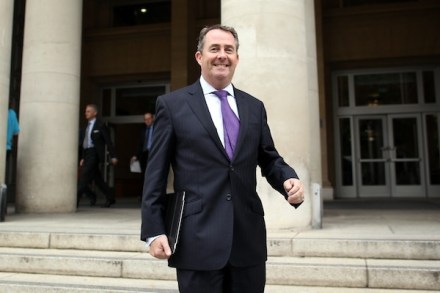
Since leaving the Cabinet, Liam Fox has acted as a cross between a scout and an out-rider for various of his former Conservative Cabinet colleagues. In a speech in Oslo tomorrow, he’ll argue that the only way to deal with the Euro crisis is for all of those countries who cannot realistically cope with the demands of the single currency to leave in one go. Otherwise, he argues the markets will simply pick the weaker countries off one by one. Fox is certainly right that if Greece left, or was forced out, of the single currency, Spain and Italy would then find themselves under intense—and, probably intolerable—market pressure. But I suspect that the Eurozone lacks the political and economic awareness to make the kind of clean break that Fox is proposing.

The Jimmy Savile scandal and Alexander Solzhenitsyn

From our UK edition

‘The line dividing good from evil cuts through the heart of every human being… This line is not static within us; it sways to and fro over the years. Even in a heart imbued with evil, it allows a small bridgehead of good to remain. And it permits a small niche of evil to survive even in the kindest of hearts.’ These words were written by Alexander Solzhenitsyn, seeking to explain why The Gulag Archipelago was necessarily ambiguous. But they also fit elements of the Savile scandal, which is being prejudged in increasingly black and white terms. Charles Moore’s observation that this grim affair is a ‘dreadful warning’ about the perils of fame is compelling: ‘when you are up, no criticism, when you are down (and dead), no mercy.

The Myth of the European Court of Human Rights’ “War on Britain” – Spectator Blogs

From our UK edition

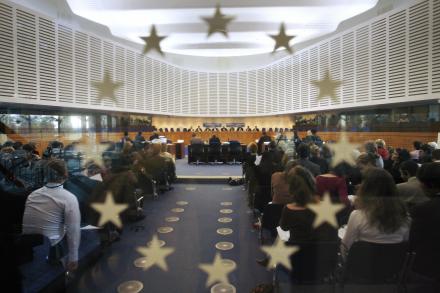
You rarely hear people defending the European Court of Human Rights. It is, according to British mythology, a meddlesome beast populated by dimwit judges of dubious foreign provenance whose rulings are invariably ninnyish, ignorant and intolerable in equal measure. I prefer to think of the court as the last protector of individual rights often threatened by hostile governments. Sometimes that hostile government is our own. The court - and really this cannot be stressed often enough - offers protection from the state. Restraining government's worst instincts is a noble calling and if our judges cannot or will not do it then praise be that the european justices are not so feeble-minded. As for the charge the European court is unelected and unaccountable.

To Russia with love

From our UK edition

A surprisingly large turn-out last night for the launch of the Conservative Friends of Russia, given the recent 'Pussy Riot' trial mess. A notable absence from the Kremlin ambassador's garden was Sir Malcolm Rifkind, the group's Hon. President. There was also a distinct absence of parliamentarians. Lumbering up to the plate was John Wittingdale, whose proclaimed love of the motherland goes beyond his Russian girlfriend. The Chairman of the Culture Select Committee has been known to be close to the country for years and extolled his love of Russian literature to the two hundred strong crowd. He mentioned the latest Putin controversy and did indeed declare himself a music fan.

Our Pussy Riot outrage is monumental hypocrisy

From our UK edition

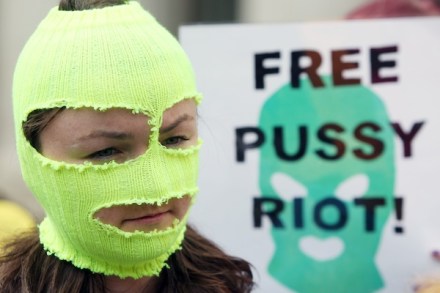
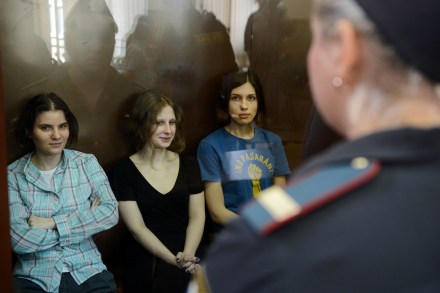
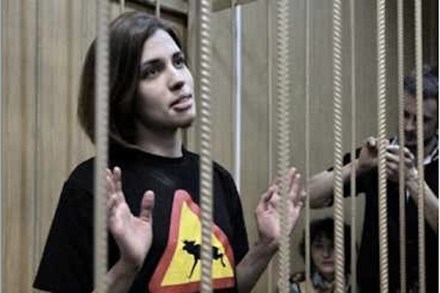
So, two years in prison for the members of Pussy Riot as a consequence of their foul and insulting behaviour inside a church. The western world is outraged and takes the severity of the sentence as evidence that Russia is a totalitarian state where everyone does as Putin wants. Thank God we’re not like that over here, huh? We live in a democracy where one is free to lampoon all religious belief without punitive action descending upon us by the state. Which will be news to Andrew Ryan, among others – he was sentenced to 70 days in jail for setting fire to a copy of the Koran. And the two men who received one year in prison for spray painting a poppy, on the side of a mosque.

Yes, Pussy Riot were – and are – right – Spectator Blogs

From our UK edition

One of the happiest things about writing for the Spectator is that there is no editorial line. Indeed the editor is always pleased by an intra-mural rammy. So there's this: Dennis Sewell's argument that Pussy Riot, the only all-girl Russian punk band you're likely to have heard of, have been asking for trouble and deserve some of the trouble they're receiving is the lamest sort of counter-intuitive, concern-trolling journalism. It helps pay the bills, mind you, so there's that too.

Why Pussy Riot were wrong

From our UK edition

The three members of Pussy Riot have been sentenced to two years each in prison today for hooliganism after performing a 'punk prayer' protesting against Vladimir Putin in Moscow's main cathedral. The sentencing has been denounced as disproportionate and the charges as trumped up, but in last week's issue of the Spectator, Dennis Sewell asked whether the western media had forgotten that what the band did was still wrong. Sewell first explained that the trio's treatment by the Russian legal system was indeed unfair: In case you’re still in doubt about my position, let me remove every scintilla of ambiguity. What has been done to the trio was wrong, wrong and viciously wrong.

Why a rough guide is better than none

From our UK edition

Like the most desperate of priests, and the most marginal of activists, Nick Cohen wants us all to be like him. He’s an angry journalist who can’t imagine why everyone doesn’t think like an angry journalist. In What lonely planet are they on? Cohen attempts a take-down of travel guide publisher Lonely Planet, implying that they’re all liberal lefties, happy to whitewash the crimes of dictators in order to sell more books. To do so he cites the work of Thomas Kohnstamm, a Lonely Planet author who admits making stuff up (though, here and elsewhere, Kohnstamm maintains that the job he was commissioned for was a desk-edit, rather than a research trip).

Judo diplomacy

From our UK edition

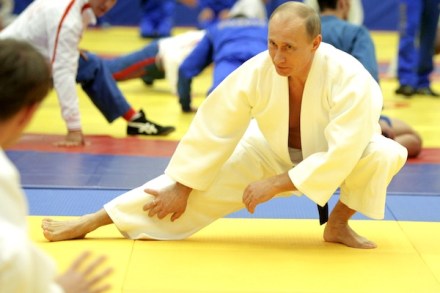
While the ladies' beach volleyball is exciting Boris ‘glistening otters’ Johnson and the peeking Prime Minister, another event could be about to get very political. President Putin is set to arrive in town on Thursday: yes there will be bilateral meetings, but he’s really here for the judo. At a time when UK/Russian relations are particularly low, one Russian Embassy source jokes that perhaps diplomacy should be a little more hands on and that Putin should challenge fellow judo fan William Hague to a match. Sadly this will remain a pipe-dream, which is just as well - we would not want Hague’s old judo partner - Lord Sebastian Coe - to get jealous.

UN observers enter Mazraat al-Qubeir

From our UK edition

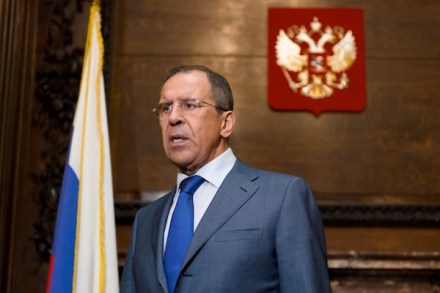
Russian foreign minister Sergey Lavrov has said that ‘some foreign players’ are provoking opposition to the Assad regime while ‘demanding the international community take decisive steps to change the regime’. He also reiterated that Russia ‘will never agree to the use of force in the UN Security Council’, which would seem to impede Lord Owen’s plan that the West, led by the Turkish military, can intervene in Syria with Russia’s blessing. Meanwhile, UN observers recently entered Mazraat al-Quberir, scene of an alleged massacre of villagers. Journalists accompanying the observers report that there is evidence of killing (remnants of burnt flesh and bloodied clothing), but any bodies have been removed.

Hero or villein?

From our UK edition

‘Not one word’, exclaimed Turgenev of Tolstoy, ‘not one movement of his is natural! He is eternally posing before us!’ The recurrent underlying theme of A.N. Wilson’s prize-winning biography of Tolstoy, now re-issued after a quarter of a century, is the novelist as grand impersonator. Wilson (a prolific novelist himself) believes that there is a strong impulse in novelists to don masks or test alter egos, and that this impulse rioted in Tolstoy’s character. Throughout his long life Tolstoy switched between playing at sad orphan, landowner, libertine, crazed gambler, spiritual elder, holy fool, paterfamilias, historian, village idiot, cobbler and dissident.

Searching for a saviour

From our UK edition

The central themes of Russian history have remained constant for over a millennium.  Russia’s vast spaces and lack of any natural borders have always made her inhabitants terrified of invasion. And to protect the country against invaders, and to preserve its unity, Russia’s rulers seem always to have felt it necessary to assert their authority with great brutality. All this is at least hinted at in the very first introduction to Russian history. The Primary Chronicle, compiled in Kiev around 1113, tells us that there was no law among [the Slavs], but tribe rose against tribe…  Accordingly they …  said to the people of Rus [who were probably Scandinavians]: ‘Our whole land is great and rich, but there is no order in it.

Siege mentality

From our UK edition

The mirrored sunglasses worn by Putin on the cover of Angus Roxburgh’s The Strongman give the Russian president the look of a crude mafia boss, while the half-face photo on the cover of Masha Gessen’s book makes him appear both more ordinary and more sinister. This hints at the difference of the authors’ approach. Gessen focuses on the trajectory of a postwar Soviet boy growing up in a shabby communal flat, fierce and vengeful in street fights, who dreams of joining the KGB. This dream was fulfilled: Putin got a boring job as an agent in East Germany, and ten years after returning home he surprisingly became the most powerful man in Russia — which, 12 years later, he remains. His years in the KGB taught him secrecy.

McCain’s on the warpath (again)

From our UK edition

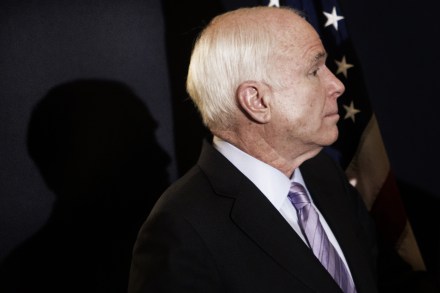
Senator John McCain was on the radio again this morning, urging us to intervene on behalf of Syria's rebels. ‘It's not a fair fight,’ he said, as if that were a good reason to wade in. McCain, a former prisoner of war, is to humanitarian intervention what Mother Teresa was to helping the sick. He never misses a chance to promote a good scrap in the name of freedom and democracy. He cheered on western involvement in the wars in Serbia, Afghanistan, Iraq and Libya. In McCain's worldview, there is no conflict or international problem which cannot be solved by the application of American military power. When running for president in 2008, he made war-mongering noises towards Russia in defence of Georgia over South Ossetia.