Russia

Putin is at it again – this time with the midterms

From our US edition

Like a reckless gambler whose roulette system has worked in the past, Vladimir Putin can’t resist trying to hack US elections. He’s at it once again, in the midterms, one source close to the intelligence community tells Cockburn. ‘The GRU [Russian military intelligence] is up to its usual tricks in the midterms but the NSA [the National Security Agency, responsible for electronic spying] knows and is mitigating.’ Our source says it’s the ‘usual Russian Intelligence playbook’ familiar from the presidential election: propaganda on social media with ‘some GRU active SIGINT [signals intelligence] collection, also known as hacking, in the mix’.

putin russia gun

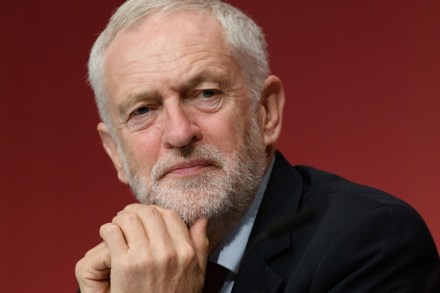
Corbyn’s Salisbury response is straight from the Trump playbook

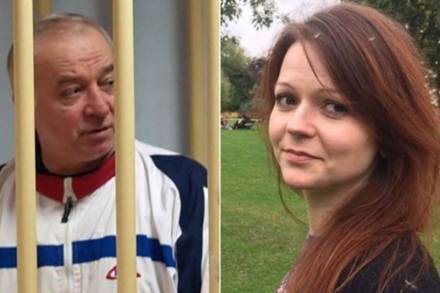
It is deeply weird that Jeremy Corbyn will not condemn Russia for carrying out a chemical weapons attack on British soil. Actually, it’s beyond weird. It’s astonishing. Earlier this year, Corbyn saw the same intelligence that convinced everyone else – including his closest comrade John McDonnell – that the Salisbury novichok poisoning of Sergei Skripal and his daughter Yulia was carried out by Russian agents and approved at the highest levels within the Kremlin. This same evidence was deemed sufficient grounds by 27 countries to expel more than a 150 Russian diplomats.

Jeremy Corbyn and Novichok: what did the Labour leader really say?

Jeremy Corbyn's spokesman this afternoon caused something of a stir when he insisted to journalists that the Labour leader had always said that the evidence from the Salisbury attack pointed to direct or indirect Russian involvement. This didn't seem quite right: Corbyn attracted a great deal of opprobrium for failing to blame Russia for the attack at the time. It's worth going back over what precisely the Labour leader did say after the attack - and what he didn't. On 12 March, when Theresa May made her first statement to the Commons about the matter, she told MPs that 'the government have concluded that it is highly likely that Russia was responsible for the act against Sergei and Yulia Skripal'.

Desperate Donald

Donald Trump’s Twitter feed was oddly silent as the news came that his former campaign manager and his former lawyer were going to jail. Perhaps his staff have finally seized control of his phone. Perhaps his lawyers have convinced him that every time he tweets on anything relating to the Russia investigation, he is dancing on a precipice, with special counsel Robert Mueller just waiting to push him off. Whatever the reason, this was the equivalent of Trump entering a stunned, catatonic state, while his world spins out of control around him. The President merely tweeted to note that he was going to a Make America Great Again rally in West Virginia, slipping into a warm bath of affirmation from his most loyal supporters: ‘Thank you West Virginia!

The plight of the returnee

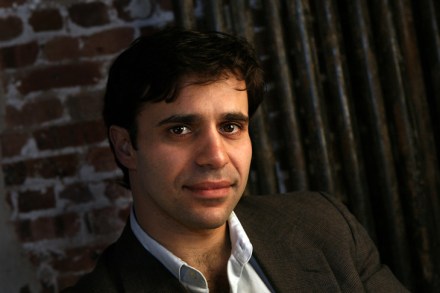
If the 20th century popularised the figure of the émigré, the 21st has introduced that of the returnee, who, aided by a combination of Skype, social media and cheap air travel, doesn’t so much exchange countries as exist between them. ‘I was an émigré. I had left. Now I’d returned,’ announces Andrei Kaplan, somewhat incredulously, in Keith Gessen’s vigorously funny second novel. An inverted Pnin, Andrei is a Russian-American academic, making a living by moderating online discussion groups for a professor who, in due course, compares Pushkin, Gogol and Dostoevsky to Kanye West. Failing to find a tenured job, Andrei moves to Moscow, where he was born, to care for his ailing grandmother. The city is unrecognisable.

You can’t go home again | 16 August 2018

If the 20th century popularised the figure of the émigré, the 21st has introduced that of the returnee, who, aided by a combination of Skype, social media and cheap air travel, doesn’t so much exchange countries as exist between them. ‘I was an émigré. I had left. Now I’d returned,’ announces Andrei Kaplan, somewhat incredulously, in Keith Gessen’s vigorously funny second novel. An inverted Pnin, Andrei is a Russian-American academic, making a living by moderating online discussion groups for a professor who, in due course, compares Pushkin, Gogol and Dostoevsky to Kanye West. Failing to find a tenured job, Andrei moves to Moscow, where he was born, to care for his ailing grandmother. The city is unrecognisable.

The British government must not let Russia off the hook

On the day that Alexander Litvinenko was poisoned, Arsenal were hosting CSKA Moscow for the second leg of a Champions League group stage match. The game ended a goalless draw with the home side left frustrated by a series of squandered chances. Watching the game that evening from his box above the stands was Boris Berezovsky, the billionaire tycoon who had fled Russia six years earlier and been given political asylum in Britain. Two boxes over and former KGB officer Andrei Lugovoi was also watching the game. As he would later claim, Lugovoi had travelled from Moscow the day before to watch his home team in action. But Lugovoi also had business to attend to in London.

The magnificent Atkinsons: rigours of travel in 19th-century Russia

Russia has always attracted a certain breed of foreigner: adventurers, drawn to the country’s vastness and emptiness; chancers, seeking fortunes and new beginnings in the Russian rough and tumble. Romantics, all of them, men and women in search of soulfulness and authenticity — the experience of life lived on and beyond the edge of the civilised world’s conventions. Thomas Atkinson was all those things — in addition to being a self-taught architect and stonecutter of middling skills, a decent watercolourist, a stoic traveller of apparently inexhaustible curiosity, and a bigamist.

At constant risk of violent death

Russia has always attracted a certain breed of foreigner: adventurers, drawn to the country’s vastness and emptiness; chancers, seeking fortunes and new beginnings in the Russian rough and tumble. Romantics, all of them, men and women in search of soulfulness and authenticity — the experience of life lived on and beyond the edge of the civilised world’s conventions. Thomas Atkinson was all those things — in addition to being a self-taught architect and stonecutter of middling skills, a decent watercolourist, a stoic traveller of apparently inexhaustible curiosity, and a bigamist.

The rehabilitation of Assad

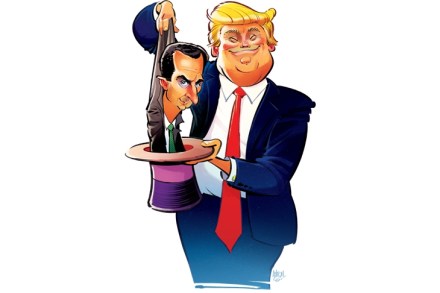
Amid the confusion and the almost deafening cries of treachery and collusion over Donald Trump’s relations with Russia, few noticed the most tangible outcome of this week’s Helsinki summit. In the lead-up to his face-to-face talk with Vladimir Putin, senior US and Russian diplomats — in close coordination with leaders from mutual ally Israel — brokered a deal among all the warring parties (bar the Islamist terrorists) finally to end the devastating seven-year Syrian civil war. As is often the case with Trump, the hype tends to drown out the message but it was there for anyone paying close enough attention. The US, Russians and Israelis have agreed on a solution to Syria. His name is Bashar al-Assad.

Donald Trump’s fight is against globalisation and the left – not Vladimir Putin

From our US edition

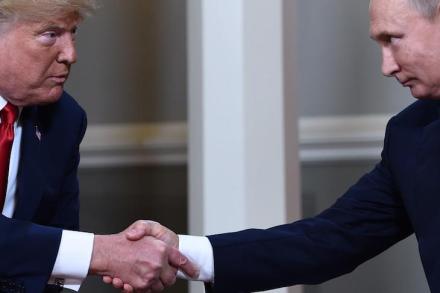
History somehow isn’t moving toward its predetermined end, and this has driven Western liberals completely mad. The theatrical overreaction to Donald Trump’s joint press conference with Vladimir Putin in Helsinki is just the latest proof. Before the Trump-Putin summit, pundits warned that Trump might recognise Crimea as Russian territory. He did nothing of the sort. But he did give Putin the benefit of the doubt when the Russian leader, in a carefully chosen phrase, said the ‘Russian state’ had not interfered in the 2016 election. Trump’s equivocation—‘My people came to me, Dan Coates came to me and some others, they said they think it's Russia. I have President Putin. He just said it's not Russia.

Erdogan, Trump and other fragile egos: Theresa May’s unenviable foreign policy dilemmas

Given the way her Cabinet ministers are behaving at the moment, Theresa May is really rather used to dealing with fragile egos. This will come in handy over the next month when the Prime Minister has to go from what promises to be an extremely tricky Nato summit straight into Donald Trump's visit to the UK. As James says in his politics column this week, the challenges of these events, along with the ongoing problems both in the Cabinet and Parliament over Brexit, will make July one of the hardest months of May's premiership to date. But trying to tell her warring ministers to shut up seems easy compared to the foreign policy challenges that the Prime Minister is facing. They would not be easy for any leader.

England’s diverse World Cup team is something to celebrate

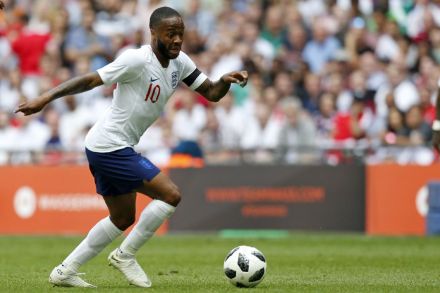
England kick off their World Cup campaign today by putting their faith in youth as they take on Tunisia: Gareth Southgate's squad have the lowest average age and the fewest caps won of any of the 32 teams at the tournament. Only three of the squad – Gary Cahill, Ashley Young and Jamie Vardy – had even been born when Gazza’s tears captured a nation’s hearts at Italia ’90. Yet while the team's youth has been the subject of much hype, another factor about this England squad has not captured any headlines: this is the most ethnically diverse squad that England has ever taken to the World Cup.

How Nato is fighting back against Russian fake news

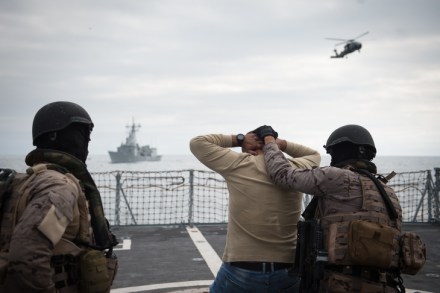
At first, the Spanish marines are just a distant dot on the horizon. A few minutes later their speedboat is on our starboard side. The marines clamber aboard, disarm the irregulars who’ve seized this Romanian frigate, and secure the helicopter landing pad on the windswept stern. Watching from a safe distance, you’d never know this was just a wargame. As a Romanian sailor told me, as I struggled to control my seasick stomach, the way you fight in a real war depends upon the way you train. Welcome to Sea Shield, a naval warfare exercise involving 21 ships and 12 aircraft from seven Nato allies: Bulgaria, Greece, Romania, Spain, Turkey, the US and the UK. And welcome to the Black Sea, the front line in the new Cold War.

The Spectator Podcast: Putin’s Losing Game

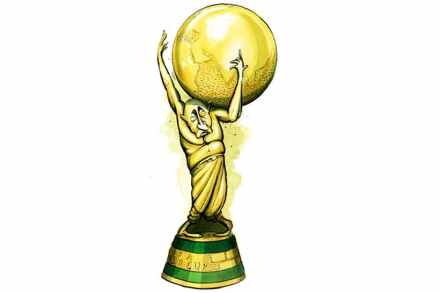
In this week’s episode, we talk about Russia’s hidden fragility, and ask, is Putin surviving on luck? We’ll also be getting to the bottom of Trump’s tariffs – is there really no rhyme or reason to them? And last, with all that’s going on in the world, is kindness what we all need more of? The Russia World Cup is due to start in a week, and as the streets of Moscow are cleaned up in preparation, things seem to be going pretty well for Putin’s Russia. Russia has been asked to fill the void left by Trump in the Iran nuclear deal, Russophile parties are wreaking havoc to the EU establishment across Europe, and Russia’s involvement in Syria has established the country as a serious power broker in the region.

Argentina, why not boycott the entire World Cup? | 6 June 2018

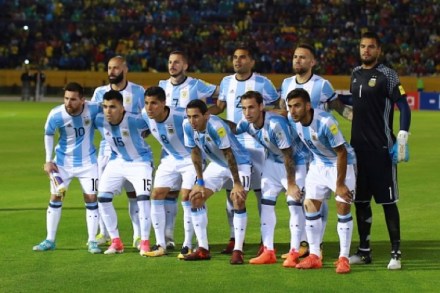
I am all for taking ethical stands, but if you are going to do so it does help to show a little bit of consistency.    Today, Argentina cancelled its World Cup warm-up game against Israel in protest, it seems, at Israel’s occupation of the West Bank.   According to striker Gonzalo Higuain, the players ‘have done the right thing’ in refusing to play – and have been warmly applauded by the Palestinian Football Association. So, the Argentinians will miss out their proposed stop in Israel and proceed directly to the World Cup in, er, Russia.

Roll up, psychos

Describe the Night opens in Poland in 1920 where two Russian soldiers, Isaac and Nikolai, discuss truth and falsehood. Next we’re in Smolensk, 2010, where some strangers scream at each other about a hire car. Next Moscow, 1931 (or 1937 — the surtitles are illegible), where Nikolai, now a top soldier, asks Isaac, now a successful screen-writer, to audition his wife for a movie. Isaac improvises a scene with the wife and then fondles her bottom as they perform a weirdly sexless dance that is supposed to symbolise something, but it’s unclear what because everything that preceded the dance was indecipherable. Then the interval. I looked for enlightenment in the programme notes and discovered what the play is supposed to be about. It’s fascinating stuff.

America is in the middle of a Russian influence campaign – not at the end

From our US edition

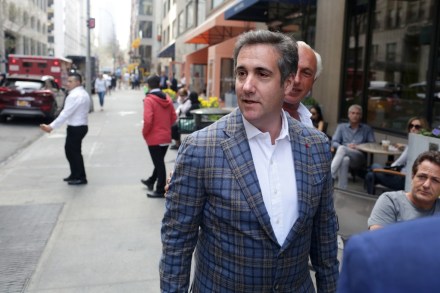
Donald Trump's longtime personal attorney Michael Cohen is playing a starring role in a riveting drama featuring the President, Special Counsel Robert Mueller, Putin-connected oligarchs, shady vory v zakone-adjacent moneymen, and American and Russian corporations seeking influence with the Trump Administration. For Americans, this is a new lurid political drama, but it’s one London has seen up close for two decades. It’s the story of the inevitable consequences that result when Russian money, influence and corruption slither up on Western shores.

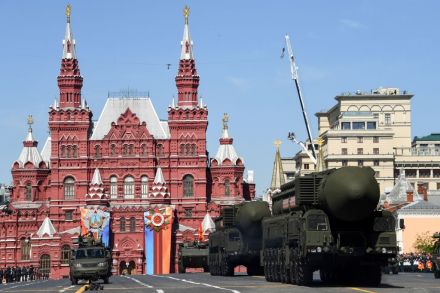
Putin shows off his ‘dagger’ on Victory Day

It’s difficult to think of a good comparison from the thousands of public holidays, festivals, galas and pageants around the world by which to describe Victory Day celebrations in Russia. Remembrance Day is too sombre, Bastille Day too jolly.  The day on which Russians remembers the nasally voice of Joseph Stalin coming over the wireless to announce the end of the war is a curious mix of solemnity and jubilation. In St.

High life | 3 May 2018

New York ‘What do we do with these men?’ thundered a New York Times headline. It was followed by a frothing-mouthed, overwrought hissy fit worthy of an Oscar in the overacting category. The men in question are the usual suspects: media people and Hollywood types who have been accused by the weaker sex of sexual harassment. Oh boy! Is this place going nuts or what? Spring is here, the girls are in their summer dresses — not really, they all wear leggings — and all one hears about is the bestiality of the stronger sex. The question is: who is next? The bookies are having a field day. ‘Under what terms should they be allowed to return to normal life?’ asks a female Times hack. As there is no American gulag, why not shoot the bastards and be done with it?