Russia

The Kremlin’s plan to destabilise the West

From our UK edition

On Sunday, Russia released its new National Security Strategy. In many ways, it picked up from where the 2015 version left off — on a crusade to politicise and polarise every aspect of Russian culture. This is not a strategy for the country’s security but for the government: the document sets out to mobilise the Russian nation, even Russian identity itself, against western bogeymen at home and abroad. Apart from some more sober references to ecology and partnership with China, most of the strategy reads as a paranoid diatribe against Russia’s oft-cited ‘internal and external enemies’. They loom large on nearly every page, lurking within discussions of national interest, societal cohesion, economics and strategic stability.

What does Vladimir Putin have on Joe Biden?

In May 2017, TIME magazine published a cover showing the White House being infected and taken over by Russian onion domes. The image meant to suggest that Donald Trump was a sleeper agent on behalf of Vladimir Putin. This sort of thinking was the driving force behind four years of media hysterics and seemingly endless cable news segments portraying Trump as a Russian puppet. ​With Joe Biden, naturally, the media has adopted a distinctly different tone — especially when it comes to the President’s relations with Russia: this despite six months of Team Biden’s complacency towards Russia, bad actors and even Putin himself. Gone are the accusations of ransom and pee tapes, or treachery — even as Russia makes aggressive moves on the world stage and towards the United States.

putin biden

Is critical race theory in the US military ‘dangerous’?

After renewing their Cold War-era alliance earlier this week, Beijing and Moscow challenged the US military hegemony by claiming American global dominance was 'over' and threatening to strike back if any 'boundaries are crossed.' GOP lawmakers on the House Armed Services Committee told The Spectator that the Defense Department's focus on critical race theory under the Biden administration is ‘stupid and wacko’ while the Sino-Russian powers are on the march. Xi Jinping and Vladimir Putin met Monday during a virtual summit to extend their cooperation treaty between their respective countries, both of which have strained their ties with the US ever since the treaty was initially signed 20 years ago.

armed services critical race theory

Why an EU-Russia summit was always going to fail

From our UK edition

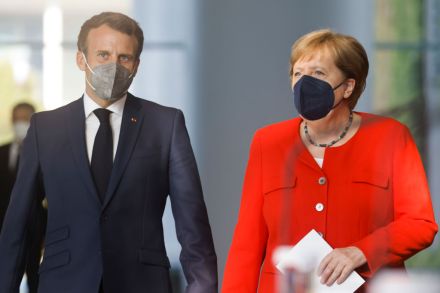
When Emmanuel Macron and Angela Merkel unilaterally proposed a European Union summit with Vladimir Putin, they managed to open deep fault lines in the continent over the EU’s Russia policy. Soon afterwards, Macron and Merkel were forced into an embarrassing reversal, largely by the countries of Central Europe, and had to cancel the proposed summit. In the process the two world leaders highlighted that this was not the right time for a summit, that the EU is divided over Russia, and that this kind of initiative plays into Russia’s misunderstanding of the Union. The suspicion must be that Macron and Merkel wanted to emulate the success of Joseph Biden’s recent meeting with Putin. It certainly did not seem like they had a specific and sensible agenda in mind.

The real reason Putin targeted HMS Defender

From our UK edition

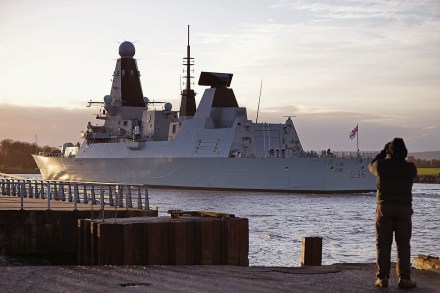
When military personnel talk of ‘theatres’ they mean a zone of conflict. Moscow seems to take the term increasingly literally, though, regarding spin as an essential tool of martial statecraft. This was especially visible in yesterday's claims that its Border Guard ships fired warning shots and Black Sea Fleet Su-24 bombers dropped OFAB-250 fragmentation bombs because the Royal Navy destroyer HMS Defender ‘intruded’ onto Russia’s ‘territorial waters.’ After which, Moscow smugly noted, Defender ‘left’ those waters. Except that very little of that seems to be true. First of all, the waters in question were off Cape Fiolent, at the southern tip of the Crimean peninsula.

HMS Defender: What’s behind the Navy’s Russian incident?

From our UK edition

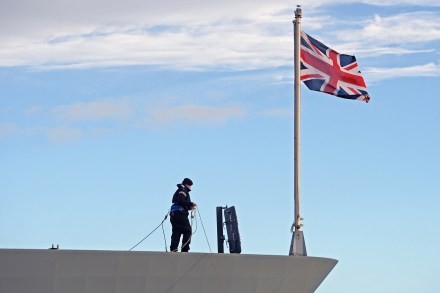
Assuming that reports are accurate, the world has just witnessed the most serious escalation between the UK and Russia since the poisoning of Sergei Skripal three years ago. Russian bombs and gunfire were reportedly discharged near HMS Defender, currently patrolling the Black Sea. The Kremlin has justified the supposed aggression by stating that the ship had strayed into Russian waters. The UK, meanwhile, has denied that any such incident took place.  https://twitter.com/DefenceHQPress/status/1407670812262518785?ref_src=twsrc%5Etfw Russia's justification, if indeed it did what it claims it did, is based on a false premise. The coastline in question does not, in fact, belong to Russia — Defender was positioned off the Crimean peninsula.

How Russia lurched from vaccine victory to Covid crisis

From our UK edition

Russia made headlines last August when it triumphantly unveiled its pioneering coronavirus vaccine, Sputnik V. But now, nearly a year on, it has a more dubious claim to fame – as the anti-vax capital of the world. For months now, sparkling clean pop-up clinics offering jabs to the public, with no appointment needed, have been open for business in shopping centres and food halls across the country. With three domestic formulas approved and millions of vials in reserve, there is no shortage of doses for anyone who wants one. And yet, Russians just aren't signing up.  New data from research giant Morning Consult, based on 75,000 weekly interviews with people across the globe, has found the nation has the highest level of vaccine scepticism of anywhere surveyed.

Biden and Putin have left Britain out in the cold

From our UK edition

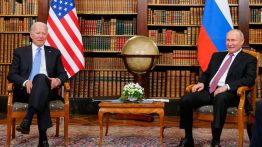
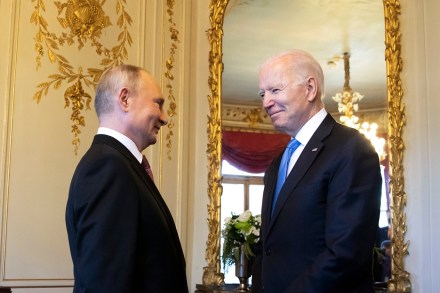
It would probably be wrong to say that Joe Biden and Vladimir Putin got on like a house on fire. But the results of the Geneva summit, which observed all the rules of Cold-War era summitry – from the venue to the formality of the arms-control and confidence-building agenda – far exceeded the deliberately doom-laden forecasts. In the space of around four hours at the Villa La Grange, the leaders of the United States and Russia effectively normalised relations that for the best part of four years had been bouncing around at rock-bottom, and dangerously so.

Why the Biden-Putin summit wasn’t a waste of time

From our UK edition

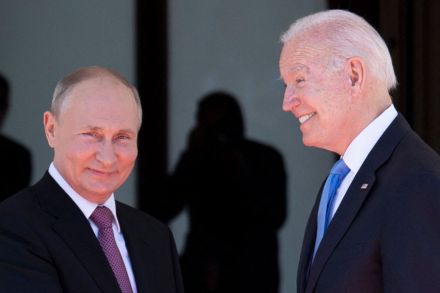
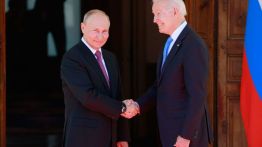
The meeting between U.S. president Joe Biden and Russian president Vladimir Putin in Geneva started cordially enough. A quick handshake, toothy smiles for the cameras, and some standard words of diplomacy. 'I would like to thank you for the initiative to meet today,' a slouching Putin told an attentive Biden. 'Still, U.S.-Russian relations have accumulated a lot of issues that require a meeting at the highest level, and I hope that our meeting will be productive.' Putin's words were something of an understatement. U.S.-Russia relations are scraping the bottom of the barrel and may very well be at their lowest point since the early 1980s, when Washington and Moscow were turning Europe into a parking lot for intermediate-range missiles.

Euro 2020: Finland and Russia’s less than epic rematch

From our UK edition

Finland: 0 Russia: 1 (Zhukov, 45) Following an earlier, epic, encounter between these two plucky teams, Adolf Hitler commented: 'We have only to kick in the door and the whole rotten structure will come crashing down.' He had noted the parlous performance of the Red Army during the initial stages of the 1939 Winter War and thus convinced himself that invading the USSR would be a doddle.  We have those Finns to thank, then, sort of, for the Allies' eventual victory. Famously, they routed the Red Army because they had the sense to wear white gear in the snow, while the commies wore green. It was a game of two halves, mind, and the Ruskies won in the end.

The Biden-Putin summit was a diplomatic nothingburger

There was a time when summit meetings between the presidents of Russia and the US were world-historical events on which the balance of world peace rested. Today — not so much. Joe Biden and Vladimir Putin didn’t even manage to fill the five hours allotted for their talks in Geneva today in large part because they simply didn’t have much to talk about. Russia today threatens no US vital interests, commands no alliances or strategic resources and remains a world power in only two areas, both inherited from the Cold War — its large nuclear arsenal and its UN Security Council veto.

biden putin

Can Joe Biden get real about Russia?

President Biden’s description of President Putin as a 'worthy adversary’, in advance of their summit today, was a sensible move. On the one hand, it restores the basic civility necessary for any diplomatic exchange, after Biden’s unfortunate 'killer’ remark. After all, the conduct of international relations by a superpower is a serious matter — and part of Biden’s own international prestige lies in his restoration of dignity to the US presidency after the flamboyant excesses of Trump.

putin russia

Joe Biden’s summer vacation

Tomorrow, The Committee will bundle up Joe Biden, titular president of the United States, and take him for a nice ride across the big, big ocean in a very shiny airplane. Weeee! No details have been released yet about what flavors of ice cream he will enjoy, but The Committee’s press arm has been full of stories with titles like 'Three things to watch on Biden's first foreign trip’. This is not a difficult assignment. The big boys and girls who arrange Joe’s play-dates have told all his favorite friends in the media exactly what to say. And just a couple of days ago they surprised Joe with an article in one of his favorite newspapers, the Washington Post. It was just so nice. A couple of the minders got together and wrote the article and then put Joe’s name on it.

joe biden vacation

Why Russia and China are competing to woo Belarus

From our UK edition

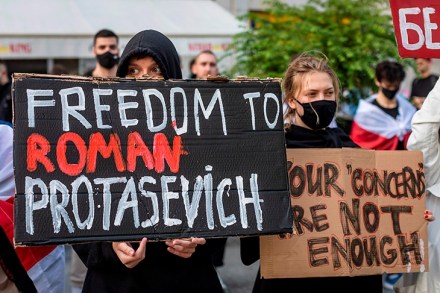
Belarus's president Alexander Lukashenko has been roundly condemned following the arrest of Roman Protasevich, but he still has one ally. Lukashenko spent the weekend at Sochi, on the Black Sea, where he was hosted on president Vladimir Putin’s yacht. The two leaders greeted each other with a hug. After dolphin spotting, the pair wrapped up a deal on the release of a $500 million (£350m) loan to Belarus which will help blunt the effect of fresh western sanctions. The announcement followed a celebration in Minsk earlier in the week for the 100th anniversary of the Chinese Communist party, where ambassador Xie Xiaoyong lauded the bilateral relationship between China and Belarus.

For journalists like Protasevich, free speech is a matter of life and death

From our UK edition

Last August I wrote a column in The Spectator’s US edition urging Donald Trump to take a leaf out of Alexander Lukashenko’s book and campaign for re-election on a vodka-and-sauna approach to managing the pandemic. Belarus was one of a handful of European countries not to impose a lockdown last year, with the President urging his citizens to have plenty of vodka and lots of saunas to avoid infection.

Why sanctions against Putin and his allies don’t work

From our UK edition

An ‘act of aviation piracy’ was how Ryanair boss Michael O’Leary described the forcible grounding of one of his planes in Minsk by Belarusian authorities in order to arrest a dissident who was on board. ‘A shocking assault on civil aviation and an assault on international law,’ said the UK Foreign Secretary Dominic Raab. The Taoiseach Micheál Martin, en route to Brussels for an emergency meeting, called for EU heads of state to deliver a ‘very firm and strong response’ to Belarus’s President Alexander Lukashenko. But what response can the West actually make that will put an end to lawless behaviour by Lukashenko — and, more importantly, by his on-and-off ally Vladimir Putin? Where to hit where it really hurts?

The sweet smell of success: the story behind Chanel No 5’s popularity

From our UK edition

This is a curious book, by turns profound and whimsical. Karl Schlögel, a professor of Eastern European history at Frankfurt, begins by stating he didn’t know anything about his chosen subject of perfume beyond going into department stores and duty-free shops to encounter a ‘peculiar mélange of scents... the light and sparkle of crystal, the rainbow of colours, mirrors and glass’. Although he always felt this to be an alien environment, he was also repeatedly captivated. Then by chance he discovered a link between Chanel No. 5 and the Soviet perfume Red Moscow.

Russian memoirs are prone to a particular form of angst

From our UK edition

Perhaps the secret to understanding Russian history lies in its grammar: it lacks a pluperfect tense. In Latin, English and German the pluperfect describes actions completely completed at a definite point in the past... Early Russian had such a tense, but it was erased. This grammatical lack costs its speakers dear. Russian history never becomes history. Like a stubborn page in a new book, it refuses to turn over. Thus wrote the Soviet dissident and writer Igor Pomerantsev, my father, during his exile in London in the 1980s. When I returned to Russia in the 2000s I had the sense that beneath the Potemkin democratic veneer, Putin’s Russia was actually a case of history repeating, and retrod my parents’ route back to England.

Germany’s Belarus blindspot

From our UK edition

Everything about the video seemed wrong. ‘It's likely his nose is broken because the shape of it has changed and there's a lot of powder on it. All of the left side of his face has powder,’ said the father of Belarusian journalist Roman Protasevich. The details of the story are now known: the exiled activist’s plane was diverted while en route between two EU capitals. The Ryanair flight was grounded, the pilot having been fed false reports of a bomb threat while a Soviet-era jet stalked the plane. Protasevich and his girlfriend were then removed by Belarusian forces and the flight was sent on its way.  https://twitter.com/mediazona_by/status/1396898057858555909?

The Belarus hijacking reveals the West’s complacency

From our UK edition

On Sunday evening an act of appalling state kidnapping took place over the skies of Europe. Four alleged KGB officers and a Soviet-era MIG-29 fighter jet forced a Ryanair flight, travelling between two EU capitals, to divert to Minsk. The hijacking was a carefully planned, outrageous operation. The Belarusian KGB (sadly not an anachronism) had claimed there was an explosive device onboard, but their real target was Roman Protasevich, a 26-year-old journalist. Protasevich is the founder of the NEXTA telegram channel, which supported and covered the anti-government protests that erupted in Belarus last August after falsified presidential elections.