Russia

See this Russian hip hop star before they arrest him: Oxxxymiron’s Beauty & Ugliness reviewed

From our UK edition

Grade: A+ I was going to review hyperpop chanteuse Charli XCX’s album this week, but it was such boring, meretricious, grandstanding 1980s retread electropop vacuity that I thought, nah, even if it is headed to the top of our ravaged charts. So have this instead. Oxxxymiron is Russia’s No. 1 hip-hop artist. Yes, Russian hip hop is indeed an oxxxymiron, much as would be Serbian reggae or Iranian gospel, but never mind. He’s a youngish Jewish bloke born in Leningrad, with a degree in Middle English from Oxford University, and is hugely popular in his home country. Is it any good, this album released late last year? It’s darker and nastier than US hip hop, full of menace and those icy synths the Russians seem to adore even more than their Iskander missiles.

The day I nearly brought RT down

From our UK edition

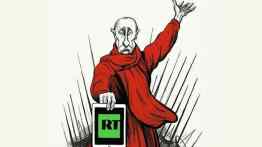
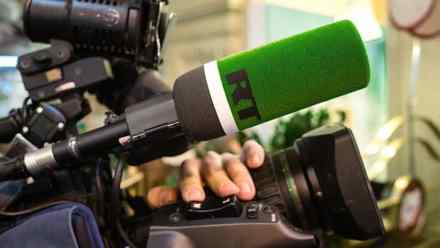
It is interesting to watch Ofcom finally remove the broadcasting licence from the Russian propaganda channel Russia Today (RT). I almost managed to do the job myself about 12 years ago. Back in the 2000s, a number of bad regimes were rushing into the broadcasting space to try to give themselves a better international image. The Chinese Communist party set up a London branch of its state television network called CCTV, apparently unaware of the hilarity this would cause in the English language. Meanwhile, the Iranian government started PressTV to push the ayatollahs’ views of the world. It set up its propaganda channel from a roundabout on the Hanger Lane gyratory system, proving again that totalitarian regimes are not always brilliant.

The West needs to spread doubt and fear

From our UK edition

Zakhar Prilepin is a well-known novelist in Russia and an ultra-nationalist warrior in Donbas. Once a member of the National Bolshevik party (yes, the left/right implications of its name are as bad as they sound), he is now a strong Putin supporter. He appeared on Russian state TV last Sunday to emphasise that the Russians should not try to appear nice and humane to the West (not a clear and present danger, one would have thought). Prilepin argued that Russia’s approach should be as harsh as possible: ‘If they [the West] are seriously afraid of the conflict with Russia, of WWIII, of nuclear war or the escalation of the conflict, we should be convincing them that we’re ready for it, that we love it, that we like to make war.’ I regret to say he is completely right.

Portrait of the week: Spring statement, weapons for Ukraine and no more free-range eggs

From our UK edition

Home Britain had provided Ukraine with more than 4,000 Next Generation Light Anti-tank Weapons, the Ministry of Defence said. Shell reconsidered its decision to pull out of investing in the large Cambo oil field, 75 miles off the west coast of Shetland. The government was expected to put into special administration Gazprom Marketing & Trading Retail Ltd, with which several councils have contracts to buy gas, though it does not come from Russia. Among those seeking to buy Chelsea Football Club, on sale after the sanctioning of its owner Roman Abramovich, a group called the True Blue Consortium was given support by John Terry.

Inside Putin’s mind: the lessons of Chechnya

From our UK edition

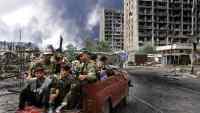
As far as Vladimir Putin is concerned, ‘we are nobody, while he who chance has enabled to clamber to the top of the pile is today Tsar and God’. So said Anna Politkovskaya, the eminent Russian journalist, in her book Putin’s Russia. She continued: ‘In Russia we have had leaders with this outlook before. It led to tragedy, to bloodshed on a huge scale, to civil wars. I want no more of that.’ She wrote those prophetic words almost two decades ago. A reporter for the Russian newspaper Novaya Gazeta, Politkovskaya came to prominence during the second Chechen war. Her accounts of that conflict, which officially lasted from 1999 to 2000, revealed Putin’s war against separatist rebels in the Caucasus as a hideous, corrupt sham.

Turkey’s dilemma: whose side is Erdogan on?

From our UK edition

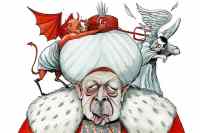
Istanbul Vladimir Putin’s ill-conceived blitzkrieg in Ukraine has failed thanks, first and foremost, to the guts of Ukrainian soldiers and civilians. British and US-supplied anti-tank weapons have played a crucial role, too. But it’s Ukraine’s Turkish--made TB2 Bayraktar drones that have been the war’s most unexpectedly effective weapon. Unexpected not just because of their battlefield killing power but because the father-in-law of the TB2’s inventor and manufacturer is Recep Tayyip Erdogan – the only European leader to have once described himself as a friend of Vladimir Putin. Erdogan, with a foot in the East and West, has emerged as the war’s key power-broker – and his loyalty is being actively courted by both Moscow and Washington.

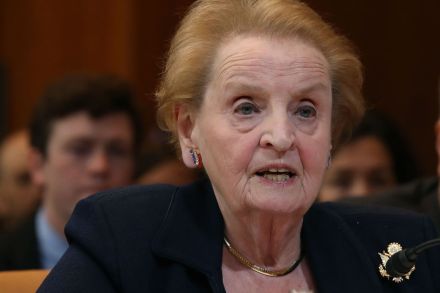
Madeleine Albright was an idealist overpowered by cynics

People die at random, of course, but it seems poignant that Madeleine Albright has died at the very moment the liberal post-Soviet world has met its own, more violent, end. Her term as Bill Clinton’s secretary of state coincided with the moment America, the most powerful nation in the history of the world, sat, unknowingly, at its own apogee. The Soviet Union was newly gone. America stood peerless and unchallenged. The attacks of September 11, 2001, and the twenty years of War on Terror that followed, were still unthinkable. China’s GDP rivaled Italy’s, not America’s. Even offhand, Albright could describe America as the “indispensable nation.” Charles Krauthammer had called it early — this was the “unipolar moment.

Volodymyr Zelensky’s sitcom is now as sad as it is funny

There are few world leaders braver than Volodymyr Zelensky. Ukraine's president spends his time holed up in his capital, defending his homeland from an onslaught of invading Russian troops. He's addressed every major parliament in the West to plead for weapons and aid. Joe Biden calls him weekly; Emmanuel Macron has started to dress like him. Given his present international standing, it's incredible to think that just six and a half years ago, Zelensky was settling down to watch himself play the president of Ukraine in the premiere of Servant of the People, the sitcom which set the stage for his political career.

How will the battlefield stalemate end in Ukraine?

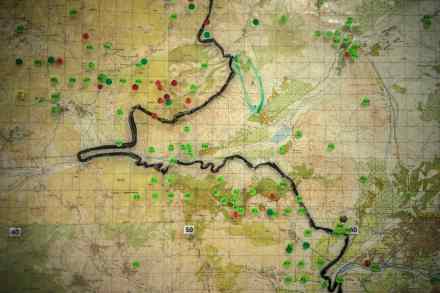
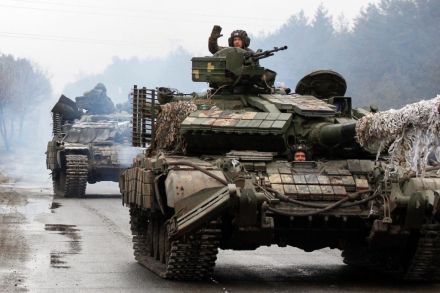
The simplest description of the war in Ukraine is this: stalemate, accompanied by constant, deadly bombardment. For the Ukrainians, that bombardment is aimed at the Russian military. For the Russians, it is aimed mostly at civilian targets, a deliberate strategy that is also a war crime. Russian artillery shells, cluster bombs and cruise missiles are killing tens of thousands of Ukrainian civilians and destroying their homes, schools and businesses. Meanwhile, Ukraine’s counterattack is imposing huge, irreplaceable losses on Russia’s army, killing soldiers, destroying their equipment and liquidating incompetent military leaders who come to the front to untangle the mess. Russia’s initial war plan failed, abysmally.

stalemate

The drone era has arrived

From our UK edition

The Ukrainian airforce has so far held out in the battle for the skies. Russia continues to rely on missiles for deep strikes into Ukrainian territory while the defenders have been able to contest the airspace by employing drones. Ukraine has proven a turning point in the age of drone warfare. The first great drone superpower, the United States, used its unmanned aerial vehicles in places like Afghanistan where few fighters had the technology to shoot them down. But Ukraine isn’t primarily using drones to hunt people, loitering over targets for days; rather, it's using them to go after Russian armoured vehicles and supply columns. This seems like a strategy designed particularly for Russia.

Old man yells at gas prices

President Joe Biden has lashed out at fossil fuel companies, accusing them of using high gas prices to “pad their profits at the expense of hardworking Americans.” These are the same fossil fuel companies, by the way, that two years ago were charging a measly average of $1.84 a gallon. They’re also the same fossil fuel companies that in 2020 donated $1.6 million to Biden’s presidential campaign. But no matter. If nothing else, Biden’s inveighing against Big Oil takes me back to my more youthful days when progressives were less afraid to run hard against what they called “the polluters.” Back then, every oil derrick was a seething Deepwater Horizon just waiting to explode and blackface the local terns and herons.

Is Germany already backsliding on Russia?

From our UK edition

Just three weeks after Chancellor Olaf Scholz announced that Germany would directly arm Ukraine, Europe’s economic powerhouse is running out of weapons to send. 'We’re delivering Stingers. We’re delivering Strelas. The Defence Minister has looked at what we can deliver but honesty also requires us to say: we don’t have enough,' Foreign Minister Annalena Baerbock told the Bundestag last week. 'If we could conjure up more weapons to send, then we would.' Scholz then appeared to revert to an old German habit: trumpeting the importance of diplomacy as an end in itself.

yemen

What’s the difference between Yemen and Ukraine?

Millions of innocent civilians uprooted from their homes. Residential areas turned into dust, rubble and wire. Thousands of people killed in errant airstrikes. Store shelves emptied of basic staples. A humanitarian crisis dominating the everyday lives of a large swath of the population, who just want to escape the shelling and the fighting. This is the scene the world now equates with Ukraine, which has been subjected to a barbaric war of choice courtesy of Russian president Vladimir Putin. Yet for one poverty-stricken nation more than 2,400 miles to the south, this has been the grim reality for years.

Where Europe ends and the war begins

On a nondescript bridge in the northeastern Hungarian town of Záhony, the European Union ends and the war begins. Even amid the turmoil in Ukraine, the local border crossing is strangely quiescent. The flood of cars from the early days of the war has slowed to a trickle, and big eighteen-wheelers continue to cross over from Hungary into Ukraine. There are only two signs that something is amiss: a small notice on the door of the nearby Penny Market asking customers to help Ukrainian refugees, and a massive billboard of Hungarian prime minister Viktor Orbán’s stern face, promising voters that he will keep Hungary safe and peaceful.

viktor orban eu hungary

How much is Europe (still) paying Putin for oil?

From our UK edition

When sanctions were imposed on Russia there was a big exception: Europe was still buying and paying for oil – leading to a bizarre situation. The West was doing everything it could to help Ukraine while still sending Putin hundreds of millions of dollars a day. But how much was that revenue worth to the Kremlin? As sanctions began to hit Russia, the price of Brent crude (the oil benchmark) soared to $130 a barrel, the highest since the 2008 financial crisis: an increase of over 90 per cent. It’s fallen since then but today it's still sitting between $107 and $115 dollars a barrel – well above where it had been weeks ago. But are these price rises making money for the Kremlin?

Boris’s Brexit-Ukraine comparison was a mistake

From our UK edition

After years of post-Brexit rancour, the last few weeks have been a striking display of European (not just EU) unity. Britain was the first to send arms to Ukraine, now the EU is (for the first time) buying weapons so it can follow suit. No one forced Norway’s strategic wealth fund to disinvest all Russian assets, but it chose to. Even Switzerland is marching in lockstep with the sanctions. Putin had counted on European divisions, which had certainly been on display when Germany was still going ahead with the Nord Stream 2 pipeline, in defiance of protests and pleas from Eastern Europe and the European parliament.

Andrew Sullivan searches for spirituality

It was daunting preparing to meet Andrew Sullivan, considered one of the cleverest, most fearless journalists of his generation. There is the academic pedigree: the scholarship at Oxford — where he was also president of the union and a celebrated actor — followed by the PhD in political theory at Harvard, where he produced an iconic treatise on the work of British mid-century philosopher Michael Oakeshott, performed the entirety of Hamlet all by himself — "a whacked-out mid-1980s" version — and modeled for Gap. And there is the journalistic firepower. At twenty-eight, in 1991, Sullivan became the youngest ever editor of the New Republic, America's most august political magazine.

Putin and the Muslim world

From our UK edition

Several thousand Muslim Chechen fighters are reportedly massing on the edge of Kiev. Syrian volunteers, filmed this week holding assault rifles and chanting pro-Moscow slogans, are en route to the Ukrainian frontlines. Is Vladimir Putin running out of Christians for his war machine? The number of Russian battlefield casualties has certainly been high. Up to 7,000 Russian infantry have been killed since the invasion began, according to US estimates. That would put Russian casualties at more than the entire American losses in 20 years of fighting in Afghanistan and Iraq. As many as 14,000 Russians may have been injured.

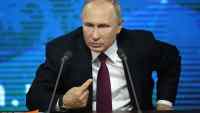
It doesn’t matter if Putin is mad

From our UK edition

Mike Tyson put it simply: ‘Everyone has a plan until they get punched in the mouth’. And Vladimir Putin has just experienced a blistering one-two: fierce resistance on the battlefield, trashing his plans for blitzkrieg, followed by the rabbit punch of international sanctions that will soon rock the whole of Russian society. ‘Putinism’ is not an ideology that can command intellectual or spiritual loyalty if it doesn’t deliver. It is not an ‘ism’ like Marxism. It is simply a Mephistophelean deal with the Russian people: if I can have double-glazing and a half-decent smartphone, you can have yachts and palaces. That deal is now off the table.