Russia

Macron vs Putin: this summer’s Olympic battle

From our UK edition

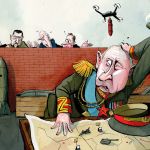
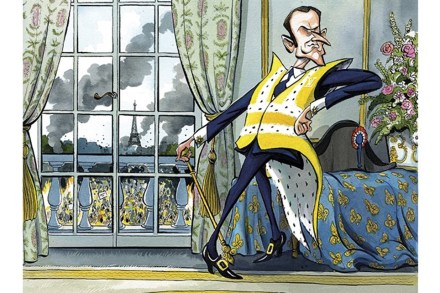
Dixmont, Yonne Last summer, Emmanuel Macron lashed out at France’s constitution because it prevents him from running for a third consecutive term in office. It is, he told his entourage, a ‘disastrous stupidity’. The majority of the French people would disagree. Macron’s approval ratings are dire, and a poll at the start of this month revealed that the youngest president in the history of the Fifth Republic has the support of only 7 per cent of the under-35s. Should anyone be surprised? Immigration is out of control, farmers have marched on Paris and teachers are at the end of their tether because of classroom intimidation. Anti-Semitic acts have surged since Hamas attacked Israel in October and drug cartels are extending their reach into towns and cities.
Portrait of the Week: Tory phishing, tension over Rafah and Cameron in America

From our UK edition

Home The review by Dr Hilary Cass of gender-identity services for people under 18 called for an end to prescribing powerful hormone drugs; warned that children who change gender may regret it; and found that many had experienced trauma, neglect and abuse. More than 150,000 patients had to wait more than 24 hours in A&E before getting a hospital bed last year, a tenfold increase on 2019. Rachel Reeves, the shadow chancellor, suggested that Labour could plug the gap in its spending commitments by getting more taxes sooner from non-doms. Five Bulgarians admitted in court to stealing more than £50 million in fraudulent claims for Universal Credit. Britain held talks with the European Commission on making Gibraltar part of the Schengen area.

Will Biden support Ukraine’s attacks on Russia?

From our UK edition

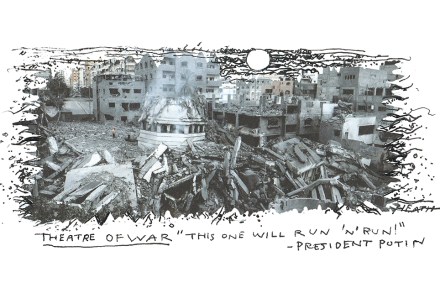
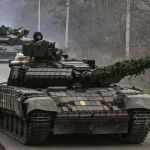
This time last year, Volodymyr Zelensky was touring western capitals, calling for weapons and money to launch a decisive summer offensive. Nato eventually provided Leopard and Challenger tanks, Bradley infantry fighting vehicles, M777 howitzers, Himars rocket artillery and Patriot air defences – but too little, too late. The much-vaunted offensive went nowhere, despite a mutiny by the Wagner Group and widespread disarray in the Russian army. Instead, Soledar, Bakhmut and Avdiivka were seized. Today, Russian missile assaults are intensifying, not receding. In March, Russia hit Ukraine with 264 missiles and 515 drones. A relentless bombardment of Kharkiv is making Ukraine’s second city uninhabitable.

Portrait of the Week: hate crimes, surprise knighthoods and flaming rickshaws

From our UK edition

Home The Hate Crime and Public Order Act came into effect in Scotland, making it a crime to communicate or behave in a manner ‘that a reasonable person would consider to be threatening or abusive’, with the intention of stirring up hatred based on age, disability, religion, sexual orientation, transgender identity or being intersex. The Scottish government offered online training to 500 Police Scotland ‘Hate Crime Champions’. The author J.K. Rowling named ten people who call themselves women that she called men. Police Scotland said complaints had been received about her, but that but no action would be taken. Rishi Sunak, the Prime Minister, said: ‘We should not be criminalising people saying common sense things about biological sex.

The horrors of the Eastern Front

From our UK edition

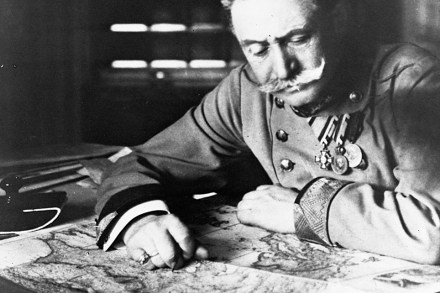
Ten years ago David Cameron, as prime minister, pledged £50 million for the centenary of the first world war. The focus was on ‘capturing our national spirit in every corner of the country, something that says something about who we are as a people’. Beyond a celebration of the Tommy on the Western Front and a belated acknowledgement of colonial Britain’s sacrifice, it was a missed opportunity. There was little attempt to better understand the region where the war began – and where, according to Nick Lloyd’s exhaustive The Eastern Front, it never really ended.

Mike Lynch has little chance of escaping US jail

From our UK edition

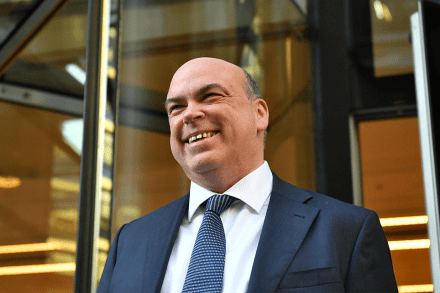
As I’ve said before, I hold no brief for Dr Mike Lynch, the founder of the Cambridge-based software firm Autonomy, who faces US fraud charges over the $11 billion takeover of his company by Hewlett-Packard (HP) in 2011. But I watched with foreboding as US marshals bagged Lynch under the lopsided 2003 US-UK extradition treaty and flew him to California – after the then home secretary Priti Patel declined to halt the process – and a judge there changed his pre-agreed bail conditions to place him under armed house arrest. Now, having comprehensively lost the argument that as a UK citizen running a UK company he should have been tried in British courts, Lynch is pleading ‘not guilty’ to a San Francisco jury.

Meet the Russians in Serbia who voted against Putin

From our UK edition

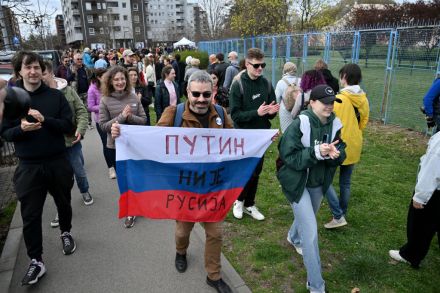
Today, Russians in Serbia are heading to the polls to cast their vote and protest against what many see as a sham presidential election. A polling station in the capital Belgrade opened this morning at 8am, but many decided to turn up at ‘Noon against Putin’, a protest called by the late Russian opposition politician Alexey Navalny.  Tens of thousands of Russians have settled in Serbia since the start of the war in Ukraine. Like millions of other Russian exiles around the world, they are eligible to vote in this weekend’s polls—which are almost certain to hand Vladimir Putin another six years in power. With no credible opponent and only one possible result, I asked Russians why they are bothering to show up at the polls.

wars

Lessons from costly wars past

Money is often a substitute for strategy in US foreign policy. We spent $2 trillion in Afghanistan, only to lose the country the minute our troops began to pull out. How much will it realistically cost, then, to beat Russia in Ukraine? Will the next $100 or $200 billion do the trick? This is not a question that supporters of war-spending ask themselves. As in Afghanistan, spending is a way to defer thinking about actually winning — or facing the serious possibility of losing. Our aid buys delay, not results. Ironically, while the specter of World War Two is invoked every time there’s a conflict, our experience then teaches the same lesson as recent attempts to purchase victory.

BRICS

Nixing BRICS: how to counter the China-led alliance

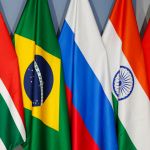
Americans are used to exercising influence through international entities such as NATO, the World Trade Organization or the World Bank. Each of these groups was set up with American leadership or at its instigation; all have been used to advance Washington’s vision of global liberal-democratic capitalism. No comparable international organization or collection of nations has been influential since the Soviet Union’s collapse. That may be changing. The so-called BRICS alliance (its founding countries were Brazil, Russia, India, China and South Africa) recently added new members Iran, Ethiopia, Egypt and the United Arab Emirates.

Pope Francis’s Ukraine war faux-pas

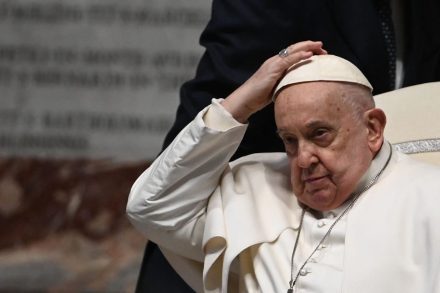
If you didn’t know any better, you might think that Pope Francis was no longer welcome in Ukraine. His recent interview with a Swiss broadcaster, excerpts of which were released over the weekend, has caused a whirlwind of disappointment and anger in Ukrainian policy circles as well as with some of Ukraine’s staunchest supporters in the West. The subject of derision: whether Ukraine should do a little less fighting and a lot more talking. Asked to comment about the debate between those who seek a negotiated end to Russia’s two-year-long war in Ukraine and those who oppose such a stance, Pope Francis chose the side of dialogue.

pope francis

Russia will not attack Nato

From our UK edition

There is a lot of war fever about. In January, Grant Shapps, Britain’s tiggerish defence secretary, said the UK was in a ‘pre-war’ period. The West’s adversaries in China, Russia, Iran and North Korea are mobilising, he said. Not wanting to be outdone, Shapps’s Labour shadow John Healey wrote in the Daily Telegraph: ‘If Putin wins, he will not stop at Ukraine.’ Timescales for when this conflict will come vary. Shapps said it could come within the next five years, whereas the estimates of European politicians range from three to eight years. Nato’s top military official warned that Europeans must be ready for a conflict with Russia within two decades. An Estonian military officer told Sky News that war with Russia was a matter of ‘when, not if.

Victoria Nuland was the Kremlin’s princess of darkness

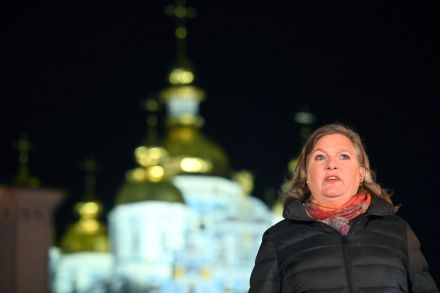
It was not a Super Tuesday for either Senator Kyrsten Sinema or State Department official Victoria J. Nuland. Each announced that they were stepping down from their positions. Sinema is declining to run once more in Arizona for the Senate. Nuland is exiting her post as the number three official at State, where she was widely seen as the champion of a hawkish approach to foreign policy. Sinema delivered a mawkish message that essentially blamed the American people for failing to recognize, let alone value, her valorous attempt to restore American power and prosperity. Nuland, by contrast, had to be satisfied with a statement from secretary of state Antony J. Blinken: “She always speaks her mind.

victoria nuland

Why Latvia is expelling its Russian speakers

From our UK edition

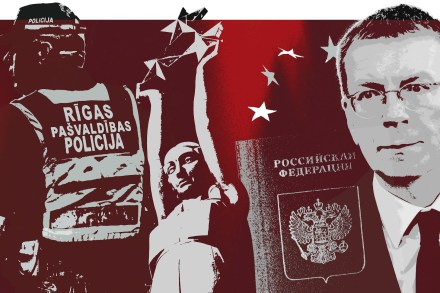
Riga, Latvia At the age of 74, Inessa Novikova, who is ethnically Russian, was told she had to learn Latvian or she’d be deported. ‘I felt physically ill when the policy was announced,’ she tells me when we meet in an office close to Riga’s city centre. ‘I’ve lived here peacefully for 20 years.’ There was no requirement for her to seek Latvian citizenship after the Cold War ended. Then, it was acknowledged that ethnic Russians, who make up a quarter of Latvia’s 1.8 million population, would co-exist with ethnic Latvians. But when Vladimir Putin invaded Ukraine, this arrangement ended. If Latvia’s ‘non-citizens’ had Russian citizenship, as Inessa did, they now had to apply for a new ‘EU residence’ permit, which meant learning Latvian.

A free spirit: Clairmont, by Lesley McDowell, reviewed

From our UK edition

Commentary on the young Romantics can be curiously puritanical. Not on saintly John Keats, who died too young to cause any trouble. But Byron and Shelley? Beastly to women, negligent as parents, destructive as friends, oblivious to their own privilege. Feminist observers tend to resemble the English visitors to Geneva in 1816 who borrowed telescopes to spy on the renegade inhabitants of the Villa Diodati across the lake, hoping to be scandalised. A central character in the summer that saw the birth of Frankenstein was the only non-writer of the villa’s gathering, Byron’s young lover and Mary Shelley’s step-sister, Claire Clairmont.

Bombed-out bank shares are a failure of modern capitalism

From our UK edition

When I read news of a fresh strategic plan for Barclays, I seem to hear a ghostly rustling from the corner cupboard in the living room. Could it be a forlorn protest from the dusty bundle of share certificates that are the last vestiges of my late father’s lifelong service to Barclays from junior clerk to deputy chairman? They were a modest farewell reward – 40 years ago, in the era before mega-bonuses for senior executives – that might once have been swapped for a country cottage but today would barely yield enough to pay for his upcoming centenary dinner. Even the Qatari sheikhs have sold down their Barclays holdings in despair.

Harry Mount, Lara Prendergast, Catriona Olding, Owen Matthews and Jeremy Hildreth

From our UK edition

29 min listen

On this week's Spectator Out Loud, Harry Mount reads his diary, in which he recounts a legendary face-off between Barry Humphries and John Lennon (00:45); Lara Prendergast gives her tips for male beauty (06:15); Owen Matthews reports from Kyiv about the Ukrainians' unbroken spirit (12:40); Catriona Olding writes on the importance of choosing how to spend one's final days (18:40); and Jeremy Hildreth reads his Notes On Napoleon's coffee. Produced by Cindy Yu, Margaret Mitchell, Max Jeffery and Natasha Feroze.

Alexei Navalny won’t be the last of Putin’s martyrs

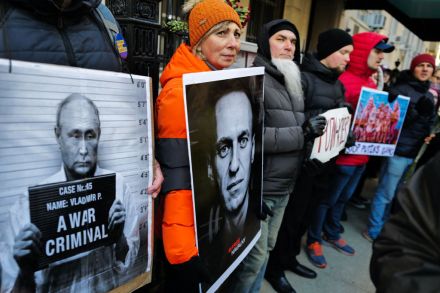
Alexei Navalny, Russia’s most prominent opposition leader and a constant irritant to Russian president Vladimir Putin’s regime for more than a decade, has died in a remote penal colony in the Arctic Circle at the age of forty-seven. The news was greeted with shock, outrage and sadness across the US and Europe and came at a time when the West’s most high-profile politicians and security figures were in Germany for the annual Munich Security Conference.   There’s no denying Navalny’s bravery. Most high-profile Russian figures who criticize Putin and live long enough to tell the tale choose to live a life in exile. Navalny, however, was never interested in that option.

alexei navalny
navalny opponents

Will the West make Putin regret the death of Navalny?

The death of Alexei Navalny, announced a week after Vladimir Putin's sit-down interview with Tucker Carlson and reported as senior officials gather for a security summit in Germany, is an expression of the ruthlessness of the Russian authoritarian. Add Navalny to the list of foes Putin's regime has assassinated — the most prominent since Boris Nemtsov was shot to death while crossing a bridge — and know that so long as the current regime is in power, it will continue to assassinate anyone who rises up against it. Whether they die by poison or bullet or walking in a prison yard north of the Arctic Circle, it's all the same to him. Navalny's defiant stand in opposition to the corrupt Putin regime is the definition of courage.

tucker carlson groceries

Why Tucker Carlson should have been less excited about his groceries

Tucker Carlson has been radicalized by a Russian supermarket. There’s a sentence you never expected to read. As part of his tour of Moscow, the week before Putin critic Alexei Navalny “died in prison,” the firebrand commentator visited a grocery store and was stunned by the low prices. “That’s when you start to realize,” Carlson marveled: …that ideology maybe doesn’t matter as much as you thought… Corruption… If you take people’s standard of living and you tank it through filth and crime and inflation, and they literally can’t buy the groceries they want, at that point maybe it matters less what you say or whether you’re a good person or a bad person, you’re wrecking people’s lives and their country.

How foreign policy will impact the 2024 election

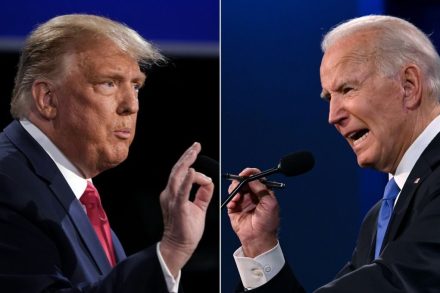
Donald Trump’s long march through the Republican primaries leaves little doubt about the inevitability of a Biden-Trump rematch in November — court cases and old age notwithstanding, of course. Unlike previous contests, foreign policy looks set to be at top of mind for many voters. Which, if you’re a Biden supporter, isn’t great news. In a recent AP poll, four in ten American adults named foreign policy as issues the government should work on in 2024. The president’s decisions abroad broadcast weakness, lack of direction and myopia, traits that have come to define his first term. The deadly and chaotic withdrawal from Afghanistan was only a sign of things to come, as more conflicts and crises sprang up around the world.

policy