Russia today

Is Russia Today finished?

As the British authorities debate whether to ban the propaganda channel of a savage imperialist power, Russia Today is making a decent first of banning itself. Workers have been walking out for a week. The invasion was too much even for staffers who had spent years demeaning themselves by licking the boots of a dictatorship. Even if Sky and YouTube had not effectively closed the channel by pulling it from their platforms, RT would have faced extreme difficulty in continuing to broadcast from London, one ex-staffer told me. About half his former colleagues had quit, including large numbers of production staff the Russians needed to keep the channel on air. One had a Ukrainian family and was sick at the slaughter his paymasters had unleashed on his relatives.

Why we shouldn’t ban Russia Today

Nadine Dorries, the Culture Secretary, has written to Ofcom urging it to keep the situation with Russia Today ‘very carefully under review' given events in Ukraine. At PMQs, Keir Starmer called for the government to ask Ofcom to review RT’s license.  But if RT lost its broadcast license in the UK, then Putin would use this as an excuse to kick out the BBC and other British broadcasters. Just look at how Russia closed the Moscow office of Deutsche Welle, the German public service broadcaster, and ended the accreditation of its journalists after a German-language version of RT was taken off air in Germany. The least-worst option would be for guests to refuse to go on RT given the credulous way in which it reports Kremlin propaganda.

Alan Rusbridger’s curious Russia Today appearance

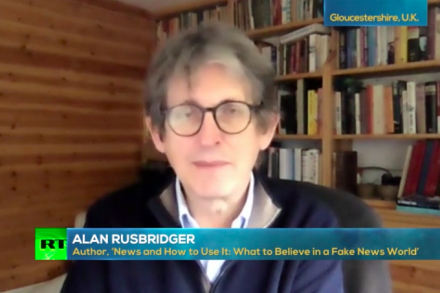
Alan Rusbridger's book 'News and how to use it' is intended as a guide of 'what to believe in a fake news world'. Which makes the former Guardian editor's appearance on Russia Today (RT) somewhat curious.  RT is the Kremlin's state-controlled TV network. It has a history of downplaying stories that paint Russia in a bad light. It also has a habit of reporting with relish stories that make western countries look bad. In 2019, RT was fined £200,000 by Ofcom after an investigation found that the channel had failed to preserve due impartiality in seven news and current affairs programmes. According to David Remnick, editor of the New Yorker: ‘RT is darkly, nastily brilliant, so much more sophisticated than Soviet propaganda.

Low life | 24 August 2017

My mother has various chronic illnesses and finds it almost impossible to remain both immobile and awake during the day. At night she can’t sleep owing to hallucinations caused by her Parkinson’s medication. I think she is also subject to a general delusion that the house is overrun with mice. There is hardly a drawer or cupboard without a wizened lump of cheese set in a trap. Otherwise, she is sane and serene and while her forgetfulness is infuriating to her, its origin doesn’t seem to be organic. She’s 87. I’ve been staying with her for the past few days. Also visiting is my mother’s sister, aged 91. Apart from her deafness and a bad foot necessitating sticks, push trolleys and an electric cart for mobility, she’s right as rain.

High life | 23 March 2017

A cloudless sky, crunchy spring snow, longer, warmer days. I’ve finally got in some good skiing, twisting around moguls like an arthritic champ. It’s all in the mind, as my old wrestling coach used to tell me. If you think the other guy’s better, you’re bound to lose to him. The same goes for the slope. If it scares you, stay in the club and have another drink. Otherwise, attack it with gusto and feel like a champ again. The same applies to the fairer sex. If you’re too nervous to speak to her, keep moving. We have four of the prettiest young women at The Spectator, all taken alas, and I’ve managed not to make a fool of myself with any of them (well, a tiny bit with one of them, but what the hell, no one’s perfect).

Stop the sabre-rattling

I have been wondering these last few weeks whether it would be cheaper to excavate a basement and buy a Geiger counter and iodine tablets, or emigrate to New Zealand. Call me frit, but I don’t like the way things are heading. Probably the second option is easier: Armageddon outta here, etc. I can re-enact Nevil Shute’s On the Beach from some rocky cove near Dunedin, waiting for the fallout to arrive. I was sentient only during the latter stages of the Cold War but from what I can remember, the two sides, them and us, behaved for the most part with a degree of rationality and common sense. (I like my politicians to be pragmatic rather than charismatic, which is why, if you were to ask who my favourite Soviet despot was, Brezhnev would always be the answer.

Russia Today is Putin’s weapon of mass deception. Will it work in Britain?

Anyone making the journey to Westminster by public transport will be confronted by a series of posters warning them about the state of British media. The word ‘redacted’ is in large letters, and readers are advised to look up a website for ‘the ad we can’t show you here’. If you do, you see a picture of Tony Blair advocating war. ‘This is what happens when there is no second opinion,’ the webpage says, advising people to ‘question more’. This is how Russia Today, the Kremlin’s fast-growing English language broadcaster, is selling itself: as the challenger to an out-of-touch establishment. At a time when there’s a widespread distrust of political elites, it’s not a bad line.

Welcome to crypto-currency land

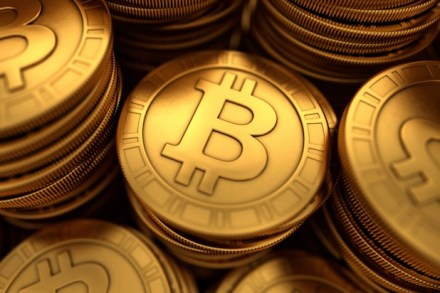
These online crypto-currencies have made the financial world more fun. It’s all so gloriously bonkers. First there was Bitcoin, the ‘peer-to-peer’ online payment system founded in 2009. Almost nobody understood how it worked or what a Bitcoin actually was — something to do with chains of code, computer ‘mining’, and a ledger system — but that didn’t stop anti-government types everywhere embracing the idea. A decentralised currency that politicians and bankers cannot manipulate and spoil — what’s not to like? Following Bitcoin, all sorts of junior crypto-currencies have popped up, mushroom-like, across the web.