Royal academy

Tracey Emin at her most operatic

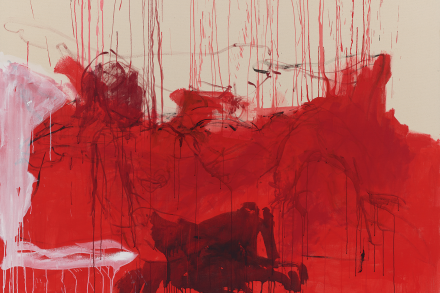
I feared this summing-up of Tracey Emin’s career might be self-congratulatory – biennale here, damehood there. But it’s Emin at her most operatic, facing mortality after surviving extensive surgery for bladder cancer in 2021. Blood and suffering are its subjects: the broken body, and the ascension of the spirit. The Young British Artists are getting on for 60, and Emin embraces it. Arranged in the centre of the exhibition is a ‘corridor to the afterlife’, inspired by an Egyptian tomb, dark and narrow. Along one side are sexy Polaroids she took of herself 26 years ago, along the other, gruesome hospital selfies. You might not want to look too closely at the latter, but the dialogue between the two is strong. ‘You thought you had problems?

How sure are we that all the Michaelina Wautiers at the RA are by her?

Roll up, there’s a new old master in town. Or a new old mistress, if you prefer. Michaelina Wautier (1614-89) is revealed here as a painter who excelled within the genres of her time: flower painting, portraiture, emblematic tronies, and, if the scholars are right, classical epic, too. The new Royal Academy show cracks open the received idea of what a Flemish woman operating in the decades immediately after Rubens and Van Dyck could achieve. Her c.1650 self-portrait at the easel is a confident statement. She is enthroned under a mantel of lusciously painted black velvet, which looks restrictive, but emerging from it comes her agile, three-dimensional painting hand. Her beauty is incidental, an aspect of her concentration and skill.

I’ve had it with Anselm Kiefer

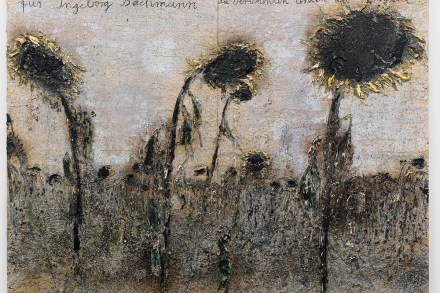
August is always a crap month for exhibitions in London. The collectors are elsewhere, the dealers are presumably hot on their heels, and the galleries are filled with makeweight group shows staged to hold the fort until the end of the holidays. This year, however, even events of that kind are thin on the ground: many establishments have simply shuttered for the month – and given the dire state of the art market, I’m inclined to wonder how many will reopen come September. The doom-auguring sunflower paintings here would look great on the cover of a Metallica record Still, I caught the two Anselm Kiefer shows running concurrently.

Wonderfully intimate: The Drawings of Victor Hugo, at the RA, reviewed

You feel so close to Victor Hugo in this exhibition. It’s as if you are at his elbow while he sighs at his standing desk at the top of his house on Guernsey, where he held France constantly in view as he worked. Here, frustrated by Les Misères (working title), he has thrown down his pen and moved to his art table, sloshing great washes of sepia ink across paper to form lowering clouds. And there, daydreaming, he has cut out a stencil of a castle, and placed it on a cloud of ink. (Hmm, ‘castle on a cloud’ – could make a nice lyric for a song one day…) Here is a person thinking with their pen – or rather, letting their pen think with them There is a wonderful intimacy to his travel sketchbooks, full of minutely well-observed brickwork and staircases.

Was Brazil the real birthplace of modernism?

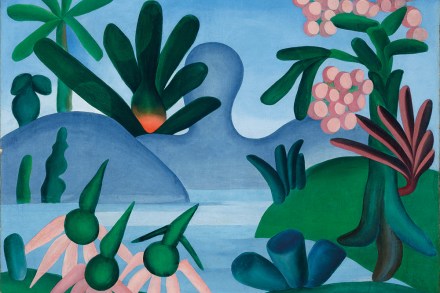
A paradox of art history: to understand the artists of the past, it helps to study how, and where, they conceived of the future. If today we foresee the future in the East, previous generations looked westward. In the last century, Europeans, having inherited a seemingly aged and decrepit civilisation, determined that the future of art was to be found in the New World. That much is well known. But this did not always mean America. Indeed, the true cognoscenti had a different country in mind: Brazil.

How a single year in Florence changed art forever

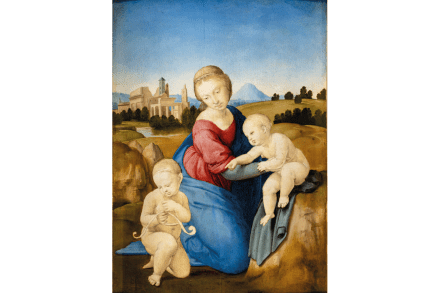
The story goes that one day early in the 16th century Leonardo da Vinci was strolling through Florence with a friend. Near the Ponte Santa Trinita they came across a group of gentlemen disputing a point in Dante’s Divine Comedy. Seeing Leonardo, they asked him to explain the passage. At that same moment, Michelangelo Buonarroti also happened to hurry by, and Leonardo beckoned the sculptor over to interpret it for them. But Michelangelo, feeling he was being mocked, rounded on Leonardo: ‘Explain it yourself, you who tried to cast a horse in bronze, and couldn’t do it, and had to abandon the project in shame!’ With that he turned on his heels and stalked off, leaving Leonardo standing in the street embarrassed and furious.

How Michael Craig-Martin changed a glass of water into a full-grown oak tree 

‘Of all the things I’ve drawn,’ Michael Craig-Martin reflects, ‘to me chairs are one of the most interesting.’ We are sitting in his light-filled apartment above London, the towers of the City rising around us, and we are discussing a profound question, namely, what makes an object a certain type of thing? Or to put it another way, what makes a chair a chair? Craig-Martin’s career has been characterised by what he calls ‘my object obsession’. There will be chairs on view in the grand retrospective of his work which is about to open at the Royal Academy, but by no means only chairs. The galleries will be filled by a cavalcade of mundane bits and pieces, among them safety pins, filing cabinets, forks, smartphones, pliers, light bulbs and buckets.

Insipid show of a weak painter: Angelica Kauffman, at the Royal Academy, reviewed

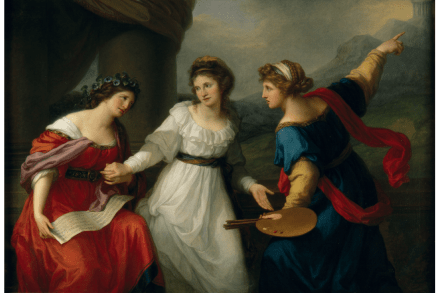
Angelica Kauffman’s funeral in Rome in 1807 was designed by her friend Canova on the model of Raphael’s. The corpse of ‘the great Woman, the always illustrious holy and most pious… was accompanied to the Church by two very numerous Brotherhoods… followed by the rest of the Academicians & Virtuosi who carried in triumph two of her Pictures’. At the Royal Academy in London, the account of her obsequies was read out at the general assembly and entered in the minutes; as a founding member of the institution – one of only two women so honoured, with Mary Moser – Kauffman was gone, but not forgotten. Kauffman was a decorative artist at heart.

The shock of the nude

Early in the 16th century, Fra Bartolomeo painted an altarpiece of St Sebastian for the church of San Marco in Florence. Though stuck full of arrows, the martyr was, according to Vasari, distinctly good-looking in this picture: ‘sweet in countenance, and likewise executed with corresponding beauty of person’. By and by the friars of San Marco discovered through the confessional that this image was giving rise to ‘light and evil thoughts’ among women in the congregation. It was removed and eventually sold to the King of France (who was presumably less bothered by that sort of thing). So even during the heyday of Michelangelo and Raphael depictions of human bodies without any clothes were not necessarily all about art.

An extraordinary woman: The Art of Lucy Kemp-Welch, at Russell-Cotes Art Gallery, reviewed

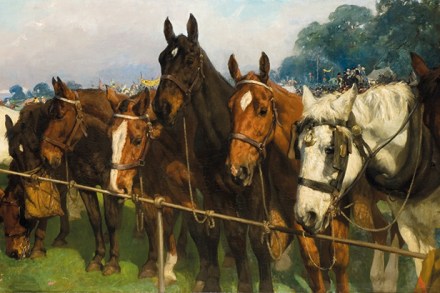
In March 1913 two horse painters met at the Lyceum Club to discuss the establishment of a Society of Animal Painters to raise the profile of their genre. Of the two, it was Alfred Munnings whose profile needed raising. Lucy Kemp-Welch had been a celebrity since her twenties when her 5x10ft canvas ‘Colt Hunting in the New Forest’ caused a sensation at the 1897 RA Summer Exhibition and was purchased by the Chantrey Bequest for the new National Gallery of British Art on Millbank. She threw herself into every activity she depicted, whether rounding up colts or hauling timber The daughter of a Bournemouth solicitor, Kemp-Welch had been riding and sketching horses since the age of five and had developed a photographic memory for catching them in action.

Joshua Reynolds’s revival

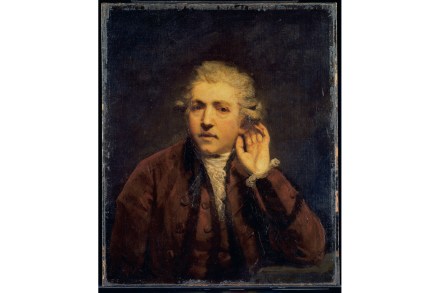
In front of the banner advertising the RA Summer Exhibition, the swagger statue of Sir Joshua Reynolds (1723-92) by Alfred Drury stands garlanded with flowers. But the Academy he founded won’t be marking his tercentenary with a retrospective, just a small display and a series of artists’ lectures. For an anniversary show, you have to travel to his native Devon. Ever since the Pre-Raphaelites dubbed him ‘Sir Sloshua’, Reynolds has been out of fashion Ever since the Pre-Raphaelites dubbed him ‘Sir Sloshua’, Joshua Reynolds has been out of fashion: blame the outmoded ideals of beauty he promoted in his Discourses and his role as portraitist to the Georgian establishment.

Brilliant and distinctive but also relentless: William Kentridge, at the RA, reviewed

William Kentridge’s work has a way of sticking in the mind. I can remember all my brief encounters with it, from my first delighted sight of one of his charcoal-drawn animations, ‘Monument’ (1990), in the Whitechapel’s 2004 exhibition Faces in the Crowd to my awestruck confrontation with his eight-channel video installation I am not me, the horse is not mine (2008) in Tate Modern’s Tanks in 2012. That marked a high point for the Tanks, since when they’ve tanked.

As cool and refreshing as a selection of sorbets: RA’s Milton Avery show reviewed

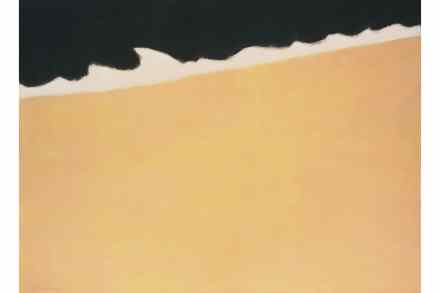
‘I like the way he puts on paint,’ Milton Avery said about Matisse in 1953, but that was as much as he was prepared to say. Contemporary critics tried to ‘pin Matisse’ on him as if art criticism were a branch of police work. He resisted, and remains a slippery customer. Post-impressionist or abstract expressionist? Colour field painter with added figures? To those who view art history as the march of progress towards modernism, he looks like a backslider. Clement Greenberg thought as much, dismissing him in 1943 as ‘a “light” modern who can produce offspring of Marie Laurencin and Matisse that are empty and sweet with nice flat areas of colour…’ Ouch.

His final paintings are like Jackson Pollocks: RA’s Late Constable reviewed

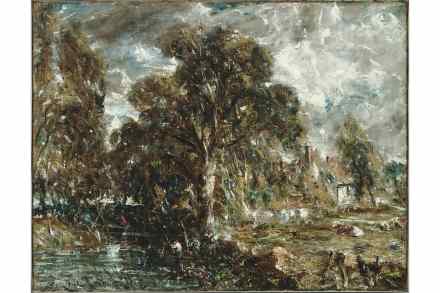
On 13 July 1815, John Constable wrote to his fiancée, Maria Bicknell, about this and that. Interspersed with a discussion of the fine weather and the lack of village gossip, he added a disclaimer on the subject posterity would most like to hear about: his art. ‘You know that I do not like to talk of what I am about in painting (I am such a conjuror).’ Perhaps by that he meant he did not like to give away how he did his tricks. As Late Constable, the magnificent exhibition currently at the Royal Academy, makes clear, he was a true magician with paintbrush and palette. Before your eye he performs astonishing transformations. Take, for example, the little oil sketch ‘Rainstorm over the Sea’, c.1824–8. It’s a picture of a sudden squall.

How I was stitched up by the Royal Academy

Recently I found myself cancelled by the Royal Academy. It was a strange affair, and this is how it happened. I’m an artist who makes a living out of creating intricate hand-embroidered portraits and flowers. I was working in my garden one afternoon last month when a glance at Instagram took me aback. My friend Laura was defending me against… well, I didn’t quite understand who or what. Laura was at work and couldn’t talk, so it was only later that evening that I began to realise what was going on. It turned out that some keyboard warriors had mounted a witch-hunt against me with the intention of getting me banned from the RA, which sells my work in its shop. My transgression?

Why the Royal Academy is wrong to consider selling their precious Michelangelo

How much does a Michelangelo cost? It is, as they say, a good question, meaning: nobody really knows. The reason for this odd state of affairs is that almost none of them have ever been bought and sold on the open market, which is how the prices of most things are established. It’s hard to think of many examples of his sculptures being traded in that way over the past 500 years. Strangely, the main exception is the ‘Taddei Tondo’, otherwise known as ‘Virgin and Child with the Infant St John’, which, reportedly, some members of the Royal Academy are suggesting the RA should sell. If that were to happen, which I very much hope it does not, we might learn the answer to the conundrum. Probably it would be a very large sum indeed.

We’re wrong to think the impressionists were chocolate boxy

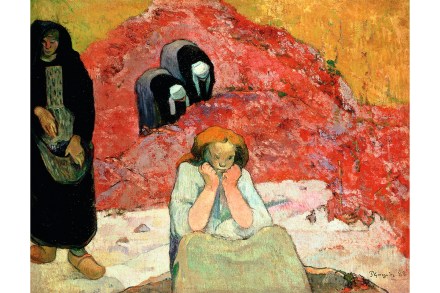
One Sunday evening in the autumn of 1888 Vincent van Gogh and Paul Gauguin went for a walk. They headed out of Arles into the countryside and when they looked back towards town they saw a sunset so splendid that each was inspired to paint a masterpiece. One of these, Gauguin’s painting bearing the timely title ‘Human Misery’, is among the star exhibits in a new exhibition at the Royal Academy. All the works in this show come from a delightful small museum in the northern suburbs of Copenhagen, housed in the early 20th-century mansion from which it takes its name, Ordrupgaard. This was the dwelling of Wilhelm Hansen (1868–1936), a mover-and-shaker in the Danish life insurance business and an avid collector of what was then modern art.

Keeping it real | 4 July 2019

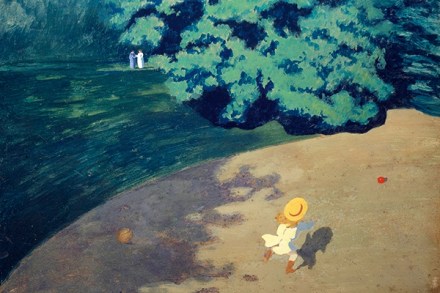
Félix Vallotton (1865–1925) was a member of the Nabis (the Prophets), a problematically loose agglomeration of painters, inspired by Gauguin and Émile Bernard, the school of Pont-Aven. Broadly speaking, this entailed an alleged allegiance to spirituality and anti-naturalistic flat colour. The Nabis — a secret group moniker —were heterogeneous, a broad church that seldom sang from the same hymn sheet. As we can see from Vallotton’s inadvertently emblematic ‘The Five Painters’ (1902–3): Vallotton stands to the left and Ker-Xavier Roussel stands to the right. Below, seated, are Bonnard, Vuillard and Charles Cottet.  Like many group paintings, it is an identity parade of posed and wooden mugshots. It is formally incoherent.

Privates on parade | 28 February 2019

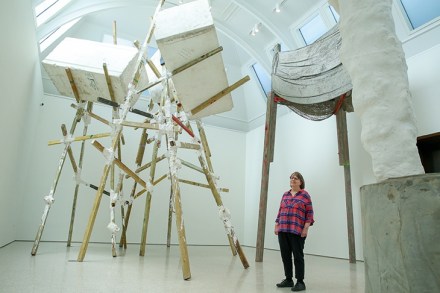
‘Those who can, do; those who can’t, teach.’ If there’s an exception to prove Shaw’s rule, it’s Phyllida Barlow. The 40 years the sculptor spent teaching at the Slade, where her pupils included Rachel Whiteread, have not only left her creative energies intact, but completely failed to keep a lid on them. After turning Tate Britain’s Duveen Galleries into a cross between a lumberyard and an enchanted forest in 2014, then filling the British Pavilion to bursting point at the 2017 Venice Biennale, the septuagenarian who can conjure a sculptural wonderland from the contents of your local branch of Travis Perkins has been let loose on the Royal Academy’s Gabrielle Jungels-Winkler Galleries. Unusually for Barlow, it’s not a jungle in there.

The odd couple | 31 January 2019

The joint exhibition of Michelangelo Buonarroti and Bill Viola at the Royal Academy is, at first glance, an extremely improbable double act. Viola is one of the contemporary-art stars of the later 20th and early 21st centuries. He was one of the first to achieve fame in the new medium of video art, and is still its best-known exponent. While Michelangelo, as they say in showbusiness, needs no introduction. But there’s more to this bromance, across eras and continents, between a 16th-century Florentine and a contemporary Californian than might immediately be apparent. The more you think about the pairing, and follow the argument of the curator Martin Clayton, the more analogies between the two appear.