Roger scruton

Roger Scruton on Soros and Hungary

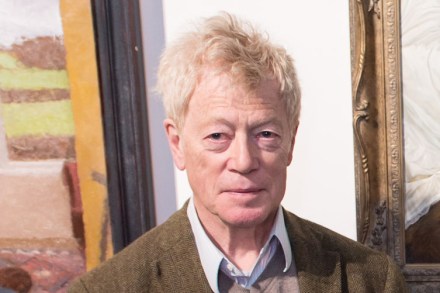
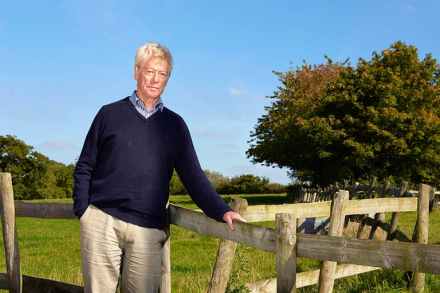
‘It’s complete nonsense,’ Sir Roger Scruton told me last November. ‘It’s all fine. It’s only social media, isn’t it?’We were talking after the British government had appointed Scruton, Britain’s most eminent public intellectual, as the unpaid chairman of the Building Better, Building Beautiful commission. The appointment had unleashed a wave of outrage from the hard left — which, this being the age of Jeremy Corbyn, is also Her Majesty’s Opposition. Scruton was assailed as a homophobe, an apologist for date rape and eugenics, and, in a touching display of interfaith harmony, as both anti-Semitic and an Islamophobic. All of the accusations selectively misrepresented his statements, sometimes to the point of fiction.
roger scruton soros hungary

Roger Scruton’s sacking exposes the Tories’ cowardice

From our UK edition

So the New Statesman decided to interview Sir Roger Scruton. Perhaps there are those who think that Scruton should not have agreed to be interviewed by the New Statesman, the left-wing magazine being unlikely to conduct a fair interview. But Scruton was the magazine’s wine columnist for many years, and under the editorship of Jason Cowley the magazine has been a slightly fairer and less battily leftwards publication than it was of old. But today the magazine’s deputy editor, George Eaton, took to social media to announce the results of what he is parading as a 'gotcha' interview. The interview – which Eaton conducted himself – was, he promised, positively crammed full with ‘a series of outrageous remarks’.

Home truths | 21 February 2019

From our UK edition

The creation of a commission to examine beauty in new building created a stir in the media, with the chairman subjected to a hate storm of unusual turbulence even by the standards that he regularly has to endure. Hate storms arise when powerful interests are threatened, and this was no exception. There is hardly a person in this country who is not aware of what Milan Kundera has called the ongoing ‘uglification of our world’ and who does not hope that something might be done about it. No one I talk to denies the need for a large number of new houses. But they all hope that this need can be reconciled with our deep-seated desire for beauty. Kant wrote that in judgments of beauty we are ‘suitors for agreement’.

In defence of Roger Scruton

From our UK edition

Once identified as right-wing you are beyond the pale of argument,’ wrote Sir Roger Scruton. ‘Your views are irrelevant, your character discredited, your presence in the world a mistake. You are not an opponent to be argued with, but a disease to be shunned. This has been my experience.’ Unfortunately, that experience is due to intensify for the 74-year-old conservative philosopher. Last weekend, the government announced it had set up a commission to try and make new housing developments ‘beautiful’ and appointed Sir Roger as its chair. It’s one of the few sensible things the present government has done; so, of course, it’s caused a scandal.

Life ‘n’ Arts Podcast: Knight of the Living Philosophers

From our UK edition

In this week’s Spectator USA Life ‘n’ Arts podcast, I’m casting the pod with Sir Roger Scruton, the knight of the living philosophers. Of course, Scruton is more than a philosopher. He has written widely and well on subjects as various as wine and Wagner, fox-hunting and free trade, and he has three new books out this month. The philosopher has Conservatism: An Invitation to the Great Tradition. The musician — there are two pianos at hand in Scruton’s study — has an essay collection, Music as an Art. And the fiction writer has his second collection of short stories, Souls in the Twilight.

Is being green good for business?

From our UK edition

On Monday 11th September, The Spectator hosted a round table discussion over lunch about whether being green is good for business. Guests included: Philosopher Sir Roger Scruton, Shaun Spiers, CEO of Green Alliance, Mark Saxon from Coca-Cola Great Britain, journalist Harry Mount, Tom Robinson, founder of Adaptavate, Bill Wiggin MP, Peter Aldous MP, Neil Parish MP, Scott Mann MP and Anthony Marlowe of Edelman. Fraser Nelson chaired the discussion. A podcast was recorded on the same day, which can be played above. Recent bedtime reading for Sir Roger Scruton was a 50-page treatise by an art historian on the design of the classic Coke bottle, whose twists, it transpires, were designed specifically to foil counterfeiters.

Losing our religion

From our UK edition

Sir James MacMillan’s European Requiem, performed at the Proms on Sunday, isn’t about Brexit. The composer had to make this clear in a Radio 3 interview just before the broadcast, because the BBC was just itching to cast the work — a melancholy score, despite its thunderous drumbeats — as a lament for us leaving the EU. That would have been neat, given that the second half of the concert consisted of Beethoven’s Ninth, whose ‘Ode to Joy’ has been clumsily appropriated by Brussels. Incidentally, some Remainers in the audience chattered through the symphony’s first three movements, impatient for their Big Tune.

Letters | 15 June 2017

From our UK edition

Divining Rod Sir: Please congratulate Rod Liddle on being the only commentator who accurately forecast the uncertain general election result (‘This is the worst Tory campaign ever’, 27 May). His prediction of the ‘stickiness’ of the Labour vote and the likelihood that Ukippers would return to the Conservatives in the south, where they mostly were not needed, were especially prescient. Mr Liddle goes to show that instinct, common sense and a sceptical nous are worth more than all the pseudoscience of polling. Well done him. Poor old us! Dr Barry Moyse North Petherton, Somerset Our lefty deplorables Sir: An astonishing 41 per cent of the British electorate voted for Jeremy Corbyn to become prime minister.

A whirlwind life

From our UK edition

The dust cover features one of the best-known caricatures of Richard Wagner, his enormous head in this version opened like a boiled egg, with a photograph of Simon Callow either emerging from his skull or sinking into it. The idea is that rather than just writing another book on this over-biographised figure, Callow will let us know what it was like actually to have been him, something he also tried in his one-man show at the Linbury Theatre, Inside Wagner’s Head. Callow tells us that he has been a lifelong Wagnerian, but that only in the last four years has he investigated him as a man, reading the most important biographical and, especially, autobiographical works, together with a fair number of critical studies.

Why we need a second referendum – on the EEA

From our UK edition

Roger Scruton once observed, in his astute way, how important national feeling was to democracy: 'Democracy is a form of government that depends upon a national, rather than a credal or tribal idea of loyalty. In a nation state the things that divide neighbours from each other – family, tribe and religion – are deliberately privatised, made inessential to the shared identity, and placed well below the country and its well-being on the list of public duties. It is this, rather than any Enlightenment idea of citizenship, that enabled nation states so easily to adopt democracy. In a place where tribal or religious loyalties take precedence, democratic elections, if they occur at all, occur only once.

Is more multiculturalism really the cure for the EU’s problems?

From our UK edition

Germany is on its feet again; the country’s answer to Ukip, Alternative Für Deutschland, made huge gains at the polls, winning a presence in three state assemblies. The shadow of Auschwitz looms over all European politics on the subject of immigration and race, but obviously more so in Germany, and many people are worried. Their growth in popularity may have something to do with the chancellor’s decision to invite one million and counting people from the wider Middle East, in an gesture historians will probably see as the grandest act of folly of early 21st century history. Some people are worried that, along with FN, Ukip and Trump, AfD are extremists who represent a threat to the established order.

Welcome to the new-look Spectator Life – that’s already making the front page news

From our UK edition

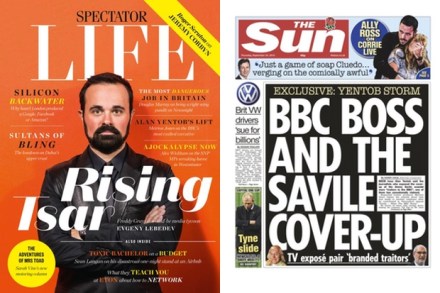
I wanted to let you know about the new issue of Spectator Life that’s out today – free with the latest issue of the Spectator. It’s my first issue in charge as editor and I’m pleased to say that one of our stories – a profile of Alan Yentob by ex-Newsnight producer Meirion Jones – has made it on to the front page of today’s Sun. It’s a great read. The Sun has splashed on the allegation that Yentob branded Meirion and his fellow producer Liz MacKean 'traitors to the BBC' after they publicly complained about the Beeb’s decision to pull the film they’d made exposing Jimmy Savile as a paedophile a year before he died.

Venice Notebook

From our UK edition

Almost all of Venice’s greatest treasures are on public view. Anyone who visits can look across from the Doge’s Palace to the island of San Giorgio Maggiore, or take the vaporetto to see Palladio’s astonishing church. But it’s harder to sneak inside the doors of the monastery in San Giorgio, one of the city’s 118 islands. It is now home to Fondazione Giorgio Cini, a cultural institution and retreat sufficiently magnificent and isolated to have hosted the G7 meetings of 1980 and 1987. Last week it hosted the Alpine Fellowship, a gathering of philosophers, artists, writers and musicians. This year tackled the question of self-expression in the age of instant communication.

‘The truth is hard’: an interview with Roger Scruton

From our UK edition

To the extent that Britain has philosophers, we do not expect them to address issues of any relevance to the rest of us. They may pursue some hermeneutic byway perhaps, but not the urgent or profound issues of our time. Roger Scruton has always been an exception in this regard, as in many others. He has spent his adult life thinking and writing about the nature of love, the nation state, belonging, alienation, beauty, home and England. But even his closest readers may gulp at the relevance of his latest subject matter. His new novel, The Disappeared, is set in the north of England and centres on the recent rape-gang cases. It’s a gripping, disturbing narrative dealing with abduction and abuse but also love, escape and a type of redemption.

A radical plan to ease Britain’s housing shortage – double the population of London

From our UK edition

Roger Scruton writes in today’s Daily Telegraph, a sentence that in itself fills me with a sense of Wa – harmony, order. He writes: ‘Whether or not our political class has the ability or the will to control immigration, we have to accept that many of the millions who have come to this country in the last two decades are here to stay, and will need to be housed. Without a massive expansion of the housing stock, prices will continue to rise and the pressure on planning laws and infrastructure will become increasingly difficult to manage. As a result we face a question that concerns every resident of Britain, and which must be addressed with true public spirit: how we should build.

My new affair is thrilling, expensive — and might just break my neck

From our UK edition

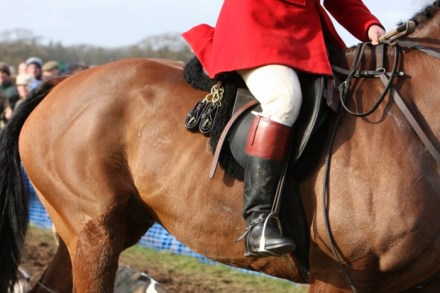
I have fallen in love with an unsuitable male. My wife isn’t totally happy about this relationship because she recognises how dangerous it is. The problem with Eddie is that his vices are my vices. He’s reckless, an adrenaline junkie who likes always to be up front. Really, a most unsuitable companion for a skinny, breakable family man fast approaching 50. And did I mention how expensive he is? It’s as bad as having a high-class mistress or a serious cocaine habit, but I’m powerless to resist. I love hunting. I love my mount Eddie Stobart. When I’m riding to hounds, all my worldly cares vanish. It makes me feel like I’ve finally discovered the point of existence. Tragic, isn’t it? It’s tragic because I know I could quite easily die — or worse.

Spectator letters: On the Pope, Jesus and Mandy Rice-Davies

From our UK edition

Papal blessing Sir: In his excellent article on Pope Francis (‘Pope idol’, 11 January), Luke Coppen mentions the satirical rumour that the new pontiff had abolished sin. It could never be said, however, even in a spoof, that he has abolished the Devil, whom he has named and shamed on a number of occasions. What Coppen calls ‘the cockeyed lionisation of Francis’ is surely itself a trick of the Devil: so too the ‘older son problem’ — the disgruntlement of obedient Catholics at Francis’s embrace of sinful prodigal sons and daughters. Virtue is surely its own reward, and no one who has experienced grace hankers after the fleshpots of Egypt.

Italians for Maggie

From our UK edition

Now that the forces of evil have transformed Silvio Berlusconi into a condemned man, there remains just one person on the planet who can save Italy: Roger Scruton. If the famous philosopher were just to come to Italy to deliver a single speech, his very words would be enough to set in motion la rivoluzione. That at least is the view of the Circolo Culturale Margaret Thatcher, a group whose mission it is to establish at long last, after all those centuries lived without one, a proper Anglo-Saxon Tory party in Italy. So far it has failed, but its members, like all true believers, have not lost their faith. A year or so ago, Tullia Vivante, the presidentessa of the Thatcher Circle, an effervescent widow in her seventies, decided to enlist my support in getting Scruton to come to Venice.