Rock

The Spectator’s Music of the Year 2023

From our US edition

Teresa Mull, assistant editor A Cat in the Rain by the Turnpike Troubadours The Turnpike Troubadours are back with a new album that sounds a lot like their old ones, which is why I like it so much. A Cat in the Rain has been heralded as “a triumphant comeback,” and indeed, as a fan who’s followed (or tried to, anyway) the Red Dirt band’s ongoing drama, I was surprised and delighted to welcome the return of Evan Felker’s rustic voice singing some fresh, but still familiar-feeling, songs. The lyrics have a gentler, humbler feel to them — overcoming alcoholism by laboring on a cattle ranch and rekindling with the wife you divorced to produce two kids will do that to a man, apparently.

turnpike troubadours music

Keef at eighty (Yes, really)

From our US edition

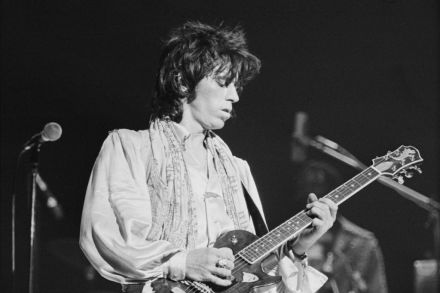
Most of us have at one time played the you-couldn’t-make-it-up game. What were the odds back in, say, 1973, that millions of us would casually engage in Jetsons-style video chats, conduct business at the swipe of a thumb, or consider the prospect of a space-tourism flight courtesy of Virgin Galactic? Or for that matter, rue the fact that the all-conquering Oakland Athletics might fall so low as to become the worst team in baseball last season, with a dismal 50-112 record? Perhaps the biggest shock to someone contemplating the future in 1973 might have been the knowledge that Keith Richards, the guitarist and primary creative force of the Rolling Stones, would still be alive and well at the time of his eightieth birthday on December 18, 2023. Wrecked. Sick. Zombielike. Undead.

keith richards

Stereophonic is a love letter to creation

From our US edition

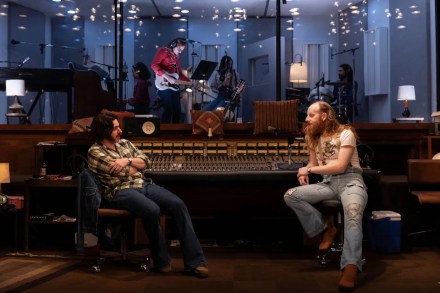
A chart-topping album. A drummer that can’t stand up straight without the aid of his giant bag of coke. Bickering bandmates and lovers. A rock band on the verge of break-up. These are some of the things on offer in just the first few minutes of Stereophonic. While I’m far from The Spectator’s resident theater critic, I do see my fair share of plays each year. Sometimes I’m compelled to write about them, but only when I’ve found something truly delightful. So let me start by saying this: Stereophonic is the best play I’ve seen in years.  On its surface the play is the story of a mid-Seventies rock band coming to terms with success while navigating tumultuous internal relationships with each other.

stereophonic

Virgin on the astonishing: Madonna, at The O2, reviewed

When I was a kid listening obsessively to AC/DC and Iron Maiden and Black Sabbath, I despaired of music writers. How come none of them – except the staff of Kerrang! magazine and a couple of writers on Sounds – could see the majesty and splendour of this music? Why were they always banging on about flipping Echo and the Bunnymen and Joy Division, or harking back to old man Dylan? These days, all three of those bands are to some degree or another as revered. Not everyone loves them, but you won’t find many serious critics – even those who don’t personally care for ‘Whole Lotta Rosie’, ‘The Number of the Beast’ or ‘War Pigs’ – who’ll simply write them off as worthless. ‘A wandering worthless exercise’, wrote NME of Madonna’s Like a Virgin.

Mick Jagger at eighty: the beginnings of a Rolling Stone

From our US edition

Among the other jewels in the crown of Sir Mick Jagger’s songwriting career is a number he and his longtime creative partner Keith Richards knocked off in December 1963 to promote the Kellogg’s company products. Don’t laugh — it’s an infectious little tune in its way, even if the key lyrical message — “Wake up in the morning/ There’s a pop that really says/ Rice Krispies for you and you and you!”) falls some way short of the same duo’s “(I Can’t Get No) Satisfaction,” which followed barely twelve months later. But then Jagger, who turns eighty on July 26, was always a quick study. Last year’s four-part EPIX documentary series My Life as a Rolling Stone may be numbingly banal (“They set the bar for what a rock ’n’ roll band should sound like, look like..

mick jagger

Jenny Boyd goes beyond the muse

From our US edition

The beautiful muse to great male artists is a tricky figure, omnipresent in history but a bad fit for our fussy time. From Edie Sedgwick to Zelda Fitzgerald, and even some male ones, such as Neal Cassady, they’ve always been part of artistic scenes. In the scene of great Sixties rock, one of the most important was Jenny Boyd. She may not be as well-known as Yoko Ono, or her sister Pattie, who was married to George Harrison. But she may have been as influential. She was in the backstages, the bedrooms and the jam sessions with some of the most iconic musicians of all time. Shortly after traveling around India with the Beatles, she married (then divorced and remarried) Mick Fleetwood. Later, Donovan would write a love-sick song about her, "Jennifer Jupiter." So would Mick Jagger.

Jenny Boyd

Tina Turner was greater than a rock star

From our US edition

Even rock and roll can have produced few stranger paths than the one that led a then physically unprepossessing, raspy-voiced African-American named Anna Mae Bullock from her early days as a devoutly Baptist sharecropper’s daughter in Depression-era Tennessee, to her final years as a practicing Buddhist living in a whitewashed mansion overlooking the dove-blue haze of Lake Geneva. That was the life trajectory of the artist known to the world as Tina Turner, who died Wednesday at the age of eighty-three.

tina turner

Rock ’n’ roll Dolly Parton’s political wake-up call

From our US edition

You know something dire is happening in the world if Dolly Parton’s feathers are ruffled. Dolly, an American sweetheart known for her blonde, bouffant hair, downhome, sweet and simple honesty (and a couple other big things), has released some songs from her upcoming rock album, Rockstar. And golly Dolly, are they ever feisty. The fact that Dolly is releasing a rock ’n’ roll album at all points to a serious cultural reckoning. Dolly, now seventy-seven years old, is more known for such innocent hits as “Love Is like a Butterfly” and “Coat of Many Colors” than for having a black-leather edge associated with sex and drugs. Yet such are the times we live in.    At the ACM Awards a couple weeks ago, Dolly debuted “World on Fire” from Rockstar.

dolly parton

When Salvador Dalí met Alice Cooper

From our US edition

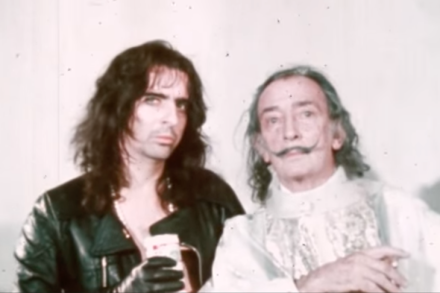
It was the ultimate summit between the two kings of pop-art camp, and one of the weirdest celebrity encounters even by the standards of 1970s New York. Salvador Dalí might have been the century’s most notorious modernist, but by the spring of 1973, when he was turning sixty-nine, his reign as the high priest of surrealism had descended into self-parody. Paintings such as his 1931 “The Persistence of Memory,” with its array of limp watches set in a barren landscape, had once sharply polarized critical opinion. For years, people saw Dalí either as a beacon of intellectual and emotional freedom, or as a madman who was more interested in money than art.

salvador dalí alice cooper

Confounding and fantastic: 100 Gecs, at O2 Forum Kentish Town, reviewed

Let me introduce you to the two poles in pop and rock. One is marked by authenticity, musicianship, a certain traditionalism. This is the pole that in critics’ discourse is called ‘rockism’ – the assumption that rock (or, at least, real people playing real instruments) is the normative state of music. The other is artificiality, brashness, a disdain for heritage – a celebration of everything that is inauthentic, where a good idea is worth 100 guitar lessons. And that pole is known as ‘poptimism’. Poptimism is why you end up with learned essays in the New Yorker analysing the singer Ariana Grande nicking a doughnut from a shop with reference to the work of John Ruskin. (Yes, that really happened.

The new master of the American Whine: Ezra Furman, at Edinburgh Festival, reviewed

The American Whine is one of the key vocal registers in rock and roll. You can trace that thin disaffected quaver through the decades from the Shangri-Las to Lou Reed, from Jonathan Richman to Neil Young. Inveigling, needy, smart-assed, it’s as vital a part of the DNA of the medium as a black leather jacket and a souped-up Chevrolet. Ezra Furman, I’m pleased to report, is in possession of a vintage whine. Furman is a Jewish transgender woman who composes with compassion, wit, empathy and anger from those particular personal viewpoints. She wrote the soundtrack to Netflix blockbuster Sex Education and has just released an eloquent sixth solo album, All Of Us Flames.

As good, and inventive, as modern rock music gets: Black Midi’s Hellfire reviewed

Grade: A+ The difficult question with Black Midi was always: are you listening to them in order to admire them, or because you actually enjoy the music they make? By which I mean when you’ve finished listening to them is it a sense of admiration which lingers in the mind, or are you captivated by one or another of their songs? Previously it has tended to be the former – and there is an awful lot to admire. If you add superlative musicianship to a certain witty and anarchic imagination, you end up with this rather deranged, occasionally irritating, millennial mash-up of styles, where jazz fusion meets post-punk, James Brown, Beefheart, clever prog and pretty much anything else which, however briefly, flits through the consciousness of their auteur, Geordie Greep.

Only traces of their eerie early spirit remain: Kings of Leon, at OVO Hydro, reviewed

A few years ago, I spoke to Mick Jagger and asked him which of the (relatively) new crop of rock groups he rated. It was a short list, I recall, and not hugely inspiring, but Kings of Leon made the cut. ‘They have a kind of Texas weirdness that you don’t find in a lot of modern rock bands,’ he reckoned. ‘I like their quirkiness, and the fact that you can hear the countryish and blues thing behind them, but it’s not that obvious.’ Aside from the fact that they are from Tennessee, not Texas, it felt like a reasonably astute summation of Kings of Leon’s appeal when they first broke through in the mid-2000s.

I’m a tourist in my own town

‘Just when I thought I was out, they pull me back in,’ groans a weary Al Pacino in The Godfather III. This is what it feels like being in/out (I’m not sure which) of the Sex Pistols. Oscar-winning director Danny Boyle has filmed a six-part drama about the life and crimes of my childhood buddy and Pistols guitar hero Steve Jones, based on his autobiography Lonely Boy. So, here we go again with endless rounds of interviews, with such profound questions as, what was Sid/Malcolm really like? Why is Johnny so angry? Will you ever play again? No! First off, it’s New York for the drama’s US premiere, courtesy of Vanity Fair. Not very punk I know.

A joy – mostly: Nick Mason’s Saucerful of Secrets, at Usher Hall, reviewed

Drummers are patient chaps, in the main. Think of Ringo in Peter Jackson’s recent Beatles docuseries, Get Back. Lolling around peaceably for days on end as Lennon and McCartney bash about, looking for clues. Drummers twiddle their thumbs behind their kit while the musos fret over chords and key changes, waiting for the moment when they will be called upon to hit skins with sticks and make a song worth hearing. In 2018, admirably urbane Pink Floyd drummer Nick Mason finally lost patience. The band has effectively been finished since 1994, and following the death of keyboardist Rick Wright in 2008, Mason was caught between Roger Waters and David Gilmour, the two rutting stags of the group’s legacy.

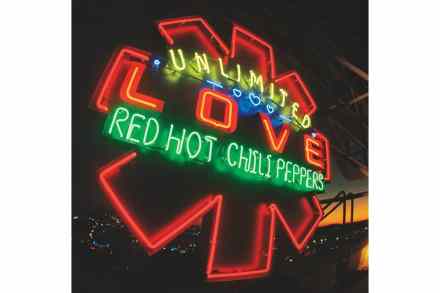
The awfulness of the Red Hot Chili Peppers has always felt weirdly personal

Squaring up to the prospect of a new Red Hot Chili Peppers album, I’m reminded of a vintage quote by Nick Cave: ‘I’m forever near a stereo saying, “What… is this garbage?” And the answer is always the Red Hot Chili Peppers.’ I can empathise. I don’t habitually harbour animus against artists I dislike, but something about the sheer scale of the Red Hot Chili Peppers’ awfulness has always felt weirdly personal. Despite the kind of success that looks mightily impressive in a Wikipedia stat dump – 100 million record sales, multiple Grammy wins, numerous number ones – the Californian rock band have always been tricky to tolerate, let alone love. The reasons for this are manifold.

No one should be doing indie rock at 43: Band of Horses’s Things Are Great reviewed

Grade: B That thing, ‘indie rock’, is so well played and produced these days, so pristine and flawless, that it has become almost the antithesis of what it was back at the end of the 1970s, when the term was invented. Then it referred to bands who released stuff on small independent labels because the big labels wouldn’t take them on. Shouty, angsty and angular, or just weird and beloved by the befringed dolorous yoof, in their anoraks or donkey jackets, the whole thing had a pleasing DIY feel to it, even if it sometimes grated. These days ‘indie’ just tends to mean anodyne power pop played by whining blokes who haven’t had a shag for ages. So it is, I think, for Seattle’s Band of Horses.

The buzz band of 2022 sound like they’re from 1982: Yard Act, at Village Underground reviewed

One of the curiosities of modern pop’s landscape is that no one knows any longer how to measure success. An artist can be a huge live draw, but make no impact on the charts; they can be consistent chart-toppers but minnows among the streamers; they can stream by the bazillion, but have no live following to speak of. The metrics of success are so unrelated to each other that anyone can prove anything these days: any band can be the biggest young band in Britain right now. Yard Act are one of those biggest young bands in Britain. Their debut album was a No. 2 hit at the start of this month. Properly big, right? Well, no, perhaps not. For one, it stayed in the chart for only two weeks.

A fond remembrance of Meat Loaf

From our US edition

The death of the singer and actor Meat Loaf at the age of seventy-four may not have been wholly unforeseen, but it has nonetheless led to great sadness. The artiste born Marvin Lee Aday engendered enormous affection from both his peers and his millions of admirers. His music and outsized stage persona had a heroically go-for-broke quality that was mirrored in his offstage existence by bankruptcies and a rollercoaster career. But his records sold millions, and, almost as an afterthought, he appeared in some of the major cult films of the twentieth century. A music journalist once christened him "the uncoolest man in the universe" for releasing the album Bat Out Of Hell, a collaboration with Jim Steinman, in 1977.

The quiet radicalism of the Chieftains

Pop quiz time: which act was named Melody Maker Group of the Year in 1975? The answer is not, as you might expect, some testosterone-fuelled blues-rock outfit or a hip gang of proto-punk gunslingers, but a gaggle of semi-professional Irish musicians who performed trad tunes sitting down, dressed for church in cardigans, sensible shoes, shirts and ties. The Chieftains were so far from rock and roll they met it coming back the other way. On the cover of Irish Heartbeat, a later collaboration with Van Morrison, they could be mistaken for a loose affiliation of farmers, minor office clerks and earnest ornithologists waiting for a bus outside the town hall. It was a brilliant disguise. The Chieftains wore their radicalism lightly, but radical they were.