Rock

The appeal of doom, stoner and sludge metal

It was odd, walking around Camden Town during Desertfest – the annual weekend-long celebration of doom, stoner and sludge metal (we’ll come to what they all are later). Odd in particular to see so many men wearing tall, brightly coloured pointy hats: the kind your mum rolled and stapled for you out of a piece of card. While surveying the floor of the Electric Ballroom from the balcony, I eventually asked the chaps next to me what was with all the wizard hats. One looked at me as though I was an idiot. ‘They’re not wizard hats. They’re gnome hats.’ Oh, right. Why are they wearing gnome hats, then? Again surprise at my ignorance. ‘Because of the Belgian band. Gnome.’ Of course. Silly me. The sound of Desertfest would be cosily familiar to the parents of attendees.

It’s time to redefine what we mean by classic rock

Classic rock used to be an American radio genre made up of bluesy guitar bands from the past. It spawned Fathers’ Day compilation albums, a magazine and endless lists where ‘Stairway to Heaven’, ‘Bohemian Rhapsody’ and ‘Free Bird’ argued among themselves about which was the public’s favourite. But that’s not classic rock any longer; that’s heritage rock, music by the dead or dying. When the radio format was invented, the bands it celebrated were largely extant, or only recently departed; the oldest of the musicians were not yet 40. Their music was both current and nostalgic because new groups were still nicking from them, and their songs weren’t yet period pieces.

Flexible and imaginative: Wednesday at the Roundhouse reviewed

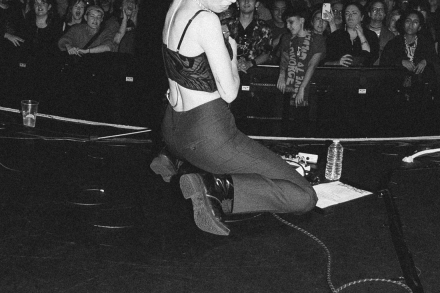
How is it that two things that are fundamentally the same can be completely different? Two bands, each harking back to a specific historical reference point in heavy music, each using distortion and volume as an important part of their presentation. Standing just outside the big old turntable shed’s main room you could just hear them and easily imagine Wednesday and Airbourne following each other on some festival stage and sharing the same audience. Not so much inside the room, though. Wednesday, however they might care to describe themselves, are currently a grunge band, but with a singer-songwriter, Karly Hartzman, who dwells more in introspection and observation than rage and self-flagellation.

No band should play Ally Pally

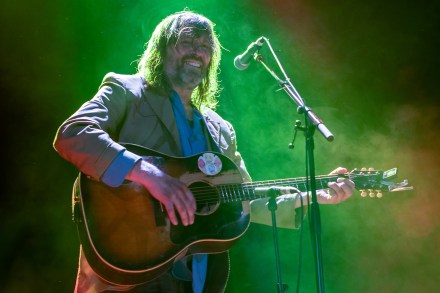
The last time Gillian Welch and David Rawlings played in London it was a different world: the world of David Cameron and Barack Obama and a Manchester United at the top of the Premier League. Welch and Rawlings have changed, too: Welch is silver rather than red, and Rawlings as grizzled as a bear. Welch was in brown floor-length dress and Rawlings in suede jacket and cowboy hat. With a rather younger upright-bass-player, Paul Kowert, the trio looked like farmers trying to save their land from The Man in some Taylor Sheridan TV series. And then they started singing. Welch and Rawlings have released records under their own names and as a pairing.

The new Springsteen biopic is cringe

Springsteen: Deliver Me from Nowhere is a biopic of ‘the boss’ starring Jeremy Allen White. It is not cradle to grave and do not expect the usual crowd-pleasing beats. There isn’t a single montage. Instead, it focuses on 1981, the making of his sixth album, Nebraska, and his mental troubles at that time. This will doubtless satisfy the completists. But non-completists – I could have named only two of his songs, tops – may wonder if it’s that interesting. Also, as White’s performance isn’t a million miles from tortured chef Carmy in Disney+’s The Bear I kept expecting him to put down his guitar and go tweeze micro-herbs on some fancy dish. This may be a problem. ‘I know who you are,’ says a fan. ‘That makes one of us,’ he replies.

Fionn Regan has gone method Worzel Gummidge

Watching the Mercury Music Prize on television last week, I remembered that Fionn Regan’s debut album, The End Of History, was nominated for the award back in 2007. Proof were it needed that the prize is rarely a shortcut to superstardom for most of those it spotlights. The Irish singer-songwriter has never quite replicated the mainstream acclaim he gained for his debut – when, for a solid five minutes, he was the latest in a long line of ‘new Bob Dylans’. He has, however, carved out an interesting and worthwhile career across five further albums, expanding his core skill set of folk guitar and knottily poetic wordplay with experimental touches of electronica and orchestration.

Lower your expectations for Spinal Tap II

This Is Spinal Tap is now such a deserved comedy behemoth that it’s easy to forget how gradual its ascent to generally agreed greatness was. Only over the years did so many lines and scenes from a low-key 1984 mockumentary about a heavy-rock band (amps that ‘go to 11’, a tiny Stonehenge, a classically inspired piece called ‘Lick My Love Pump’) become part of our lives. Spinal Tap II: The End Continues, by contrast, comes amid a loud fanfare – which may be part of the problem, because the result certainly doesn’t live up to expectations that are inevitably sky-high. Then again, the sad truth is that it mightn’t have lived up to lower ones either.

The terrifying charisma of Liam Gallagher

You’d have thought Wembley Stadium was a sportswear convention, so ubiquitous were the three stripes down people’s arms from all the Adidas merch: veni, vidi, adi. Pints drunk: 250,000 a night, apparently. All along the Metropolitan line pubs noted an Oasis dividend. At a corner shop, I was sold an official Oasis Clipper lighter. It’s surprising Heinz hasn’t yet offered an Oasis soup; you get a roll with it. Plainly, an awful lot of people have missed Oasis. And an awful lot of people – Noel and Liam Gallagher included – saw the chance to make an awful lot of money from their reformation. I don’t think any of them – neither fans nor entrepreneurs – will have been disappointed. At Wembley, the atmosphere was remarkable.

Magnificent: Stevie Wonder at BST Hyde Park reviewed

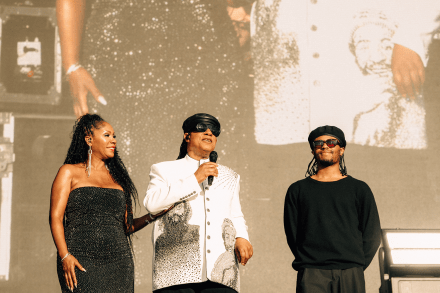
The highs of Stevie Wonder’s Hyde Park show were magnificently high. The vast band were fully clicked into that syncopated, swampy funk, horns stabbing through the synths, the backing singers adding gospel fervour. And Wonder – now 75 – sang like it was still the 1970s, his voice raspy one minute, angelic the next. Anyone who heard that phenomenal group play ‘Living for the City’ or ‘Superstition’ and didn’t feel ‘ants in my pants and I need to dance’, as James Brown once put it, should resign from life: they do not deserve such joy. That said, there were oddities. We were blessed with visits from four of Wonder’s nine children, two of whom were given whole songs to sing while the great man had a breather, as were three of the backing singers.

The disturbing ambient music of William Tyler

One could argue that all musical forms are essentially incomplete until the listener joins the party, but ambient music seems more needily co-dependent than most. Given that a typical sound bed is a blank canvas of amniotic electronica, much depends on the interpretation of whatever is laid over it: the drip and the drift; the scrape and the scratch; the arbitrary beauty of found sounds and field recordings. The meaning can be as banal or as profound as desired. Is that distant clanging the bells of mortal dread tolling for us all; or simply next door’s bin lid clattering on to the pavement?

Divorce are the best young British band I’ve seen in an age

Can we talk business for a moment? When reviewers like me go to big arenas, we get the best seats in the house, with fantastic sightlines and excellent sound (a PR who used to work for U2 told me she would routinely reassign press into even better seats than the already splendid ones they had originally been given; you do anything you can to get an extra 1 per cent more enthusiasm into the review). When we go to standing venues, though, we are as prone to the vagaries of geography as anyone else. And because we go to a lot of shows, we tend to arrive only five minutes before the turn we want to see goes on stage, which means we rarely find great positions.

Shades of Berlin Bowie and Ian Curtis: Hamish Hawk, at Usher Hall, reviewed

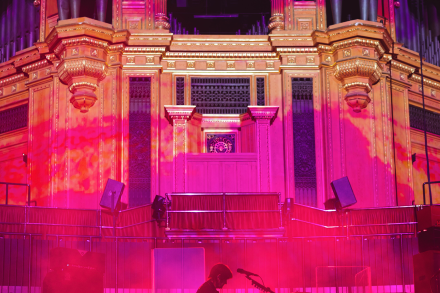
I am a regular attendee at the Usher Hall, Edinburgh’s most ornate and venerable concert venue. On more than one occasion recently I have seen Hamish Hawk here – albeit each time he was showing the audience to our seats. Hawk has graduated from Grand Circle stair duty to centre-stage spotlight, the kind of local-boy-made-good dramatic arc that positively begs for the Richard Curtis treatment. Making his debut headlining the 2,200-capacity venue, Hawk had the good grace to allude to his change in circumstances halfway through his set: ‘Please, be kind to the ushers…’ Everyone loves a hometown hero, but the pressure to deliver as a returning prodigal must be oppressive.

Kneecap are basic but thrilling

It was Irish week in London, with one group from the north and one from the south. Guinness was sold in unusual amounts; green football shirts were plentiful; and so, at both shows, was a genuinesense of joyful triumph – these were the biggest London venues either group had headlined. The Irishness was much more visible onstage at Kneecap, not least because, as a proudly Republican group, they can’t really not make a big deal of being from west Belfast. Their statements have prompted the inevitable fury from some quarters: Kemi Badenoch (as business secretary) refused them a £15,000 grant to help them tour, on the grounds that the British state should not be aiding those who despise it.

Perfectly imperfect: Evan Dando, at Islington Assembly Hall, reviewed

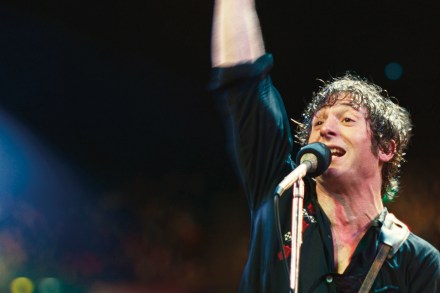
‘Can I have a photo with you, please?’ It’s the most embarrassing question you can ask of someone you’re interviewing. But I had to. Not only because Evan Dando is one of my favourite songwriters. But also – vainly – because years of on-off drug addiction (mostly on) mean Dando is no longer quite the beautiful young man he was when he became famous in the early 1990s. Back then, I’d have looked like a troll standing next to him. Now, not so much. It was a night of beautiful imperfection – the kind that feels truer than a thousand arena shows He still, however, looks better than he has any right to, and in the evening he proved that he sounded better than I had dared to hope. Better still, he was fully present – not just physically, but mentally and emotionally.

Terrifically good value: Nick Cave & the Bad Seeds reviewed

A few years ago, I received an early morning phone call from Nick Cave’s former PR, berating me for not crediting his band the Bad Seeds in an album review. She was quite right. As Cave says, with a hint of paternal pride, during this powerhouse Glasgow show: ‘This band can do anything.’ It’s not just that the Bad Seeds’s task ranges from delicately enhancing the most nakedly exposed ballads to unleashing a raging firestorm of noise. It’s that supporting a performer as mercurial as Cave takes oodles of nous and empathy. He’s a wild thing, but they never once lose him.

Too bombastic to be country music: Post Malone’s F-1 Trillion reviewed

Grade: B Country music has become the acceptable route through which American pop stars resuscitate their floundering careers: sales are down, kid – shove a fiddle in the next one. And a pedal steel. And git some of those country dudes to collaborate. Especially Dolly. But also Hank Williams Jnr, if you can. Makes them look hip, makes you look real down home. So it is with the agreeably slobbering rapper Post Malone, born in NYC, raised in LA but here sounding like he jes swung in from some roadhouse barstool outta Shreveport, with bourbon and country blood trickling down over his stupid tattoos. His career has hit a hiatus of late and so this is an attempted revival.

Boring, corporate, imitative, inane and gutless: Kasabian’s Happenings reviewed

Grade: D+ Happenings were interesting, or irritating, events staged from the late 1950s through to the early 1970s by performers who eschewed the corporate and bourgeois restraints placed on artists and veered into surrealism, parody, violence and, of course, situationism. Think Allan Kaprow and John Cage. In rock music, meanwhile, think the Fugs and the Pink Fairies. Happenings by our country’s most profitable faux-rawk outfit, Leicester’s Kasabian, is by contrast a celebration of everything happenings were most opposed to. It is boring, corporate, imitative, inane and gutless. I would almost rather listen to an album by Dua Lipa. It is 20 years since Kasabian’s first album and they have got no more interesting or challenging, but the cash flows in regardless.

Fat White Family’s new album is much, much better than I had feared

Grade: A- The irresistibly catchy – if you are not quite right in the head – ‘Touch The Leather’ was probably my favourite single of the previous decade, aided by a video which was simultaneously marvellously seedy, threatening and infantile. ‘Left-wing skin on the right-wing leather – touch the leather leather…’ Well it did it for me, and so I set great stock by these scrofulous squat-dwelling skaggies from Brixton, until with every subsequent dim-witted release the notion began to embed itself that they weren’t, actually, very good. ‘Touch The Leather’ was maybe just one of those glorious singular flukes you find in pop music by performers who aren’t really up to much. I might have to revise that opinion a little.

Never admit that your band is prog – it’s the kiss of death

Sensible prog-rock bands try to ensure no one ever realises they play prog. What happens when you are deemed a prog band is that you are condemned to the margins – little radio airtime, few TV appearances, barely any coverage in the mainstream press – because it has been decided you exist solely for the delectation of a tribe that baffles the rest of the world. Once non-proggers have decided you are prog, that’s it. There is no way back for you. Just collect your Campaign for Real Ale membership card, go home and practise your drum solos. Once non-proggers have decided you are prog, that’s it. There is no way back for you Hence Radiohead – absolutely, indubitably a prog band, right down to the tricksy time signatures – don’t bang on about Tales From Topographic Oceans.

Virgin on the astonishing: Madonna, at The O2, reviewed

When I was a kid listening obsessively to AC/DC and Iron Maiden and Black Sabbath, I despaired of music writers. How come none of them – except the staff of Kerrang! magazine and a couple of writers on Sounds – could see the majesty and splendour of this music? Why were they always banging on about flipping Echo and the Bunnymen and Joy Division, or harking back to old man Dylan? These days, all three of those bands are to some degree or another as revered. Not everyone loves them, but you won’t find many serious critics – even those who don’t personally care for ‘Whole Lotta Rosie’, ‘The Number of the Beast’ or ‘War Pigs’ – who’ll simply write them off as worthless. ‘A wandering worthless exercise’, wrote NME of Madonna’s Like a Virgin.