Robots

Could AI enslave humanity before it destroys it entirely?

From our UK edition

Depending on how you count, we are in the midst of the second or third AI hype-bubble since the 1960s, but the absolute current state of the art in machine cognition is still just about being better than humans at playing chess or being about as good as human beings at analysing some medical scans. It was recently revealed that many thousands of humans were secretly hired to check recordings of people interacting with the ‘intelligent assistants’ on their iPhones or other such devices: much of what is trumpeted as ‘AI’ is still, in fact, dependent on invisible human labour in the digital sweatshop.
Cuckoo in the nest | 11 April 2019

From our UK edition

What kind of loyalty do we owe a robot we’ve paid for — one who exhibits a convincingly human kind of consciousness? Less loyalty than we owe to our own children? But what about to someone else’s child? And do we commit murder if we destroy him? These are the questions facing Charlie when he spends his inheritance on a robot called Adam. Charlie is a trained anthropologist with an enthusiasm for computers who hopes to give his life meaning by experimenting in ‘electronics and anthropology — distant cousins whom late modernity has drawn together and bound in marriage’. He and his girlfriend Miranda join forces in programming Adam with a personality, playing at parenthood as they create a new quasi-human.

More than human

From our UK edition

Every ten to 15 years there is a technology breakthrough that really changes what it means to be human. The internet, mobile phones, social media and, most recently, AI voice assistance: all of these amplify the human experience. And with each technological game-changer we go through much of the same series of questions and anxieties. We worry both that it’s all too much, and too little. With the recent advances in artificial intelligence we leap ahead to the existential dangers, and at the same time wonder whether there aren’t more pressing issues to discuss: healthcare, climate change, education, the economy. Well, they are pressing issues — but AI has an impact on all of them.

Adventures with robots

From our UK edition

Imagine a world where we’re all hooked to our individual electronic devices, which feed us our music, communicate with our friends and know our needs; imagine a tech company that dominates an entire city, where your social pecking order is reflected in the devices you possess. Actually, you don’t have to imagine. It’s all there already… Apple, Google, Facebook. So Jinxed, by the young Canadian Amy McCulloch (Simon & Schuster, £7.99), is very much of the moment. It’s set in a city in Canada dominated by a tech corporation: ‘The final goal of Moncha Corp is to make life better... And to make people happier.’ Its academy is where every bright teenager wants to go.

Meet your makers

From our UK edition

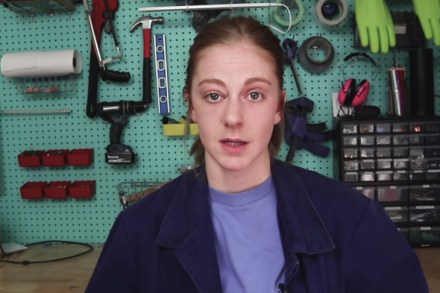
Older readers will perhaps recall the once popular Sunday evening TV programme Scrapheap Challenge, in which oily, boilersuited blokes competed to build machines out of materials scavenged from a scrapheap. Even older readers will recall The Great Egg Race, presented by Professor Heinz Wolff, in which bejumpered and bewhiskered engineers competed to build machines from materials scavenged from a BBC studio. These days, engineers and inventors call themselves makers, live and work on YouTube, are covered in tattoos and piercings, and the best of them are women. Laura Kampf posts videos about once a week. She makes bicycle sidecars and the sort of quirky furniture that probably seemed like a good idea at the time and goes down well in Cologne.

A robot to love

From our UK edition

‘I gotta be me,’ Sammy Davis Jr. croons as the android Dolores Abernathy (Evan Rachel Wood) steadies her horse, stands up on her stirrups, takes aim with her Winchester, and picks off her human masters one by one. The trailer’s out at last and the futuristic TV series Westworld is set to return in the spring. It’s a prescient show, but not in the ways you might expect. It’s not about robot domination. Westworld is about an uprising of pleasure cyborgs in a futuristic resort. It is, for all its gunplay, about love. And that makes it a very timely show indeed. In the real world, robots are actually being designed to love us — to fill traditional caring roles for which we have neither the time, energy, nor resources.

The Spectator Podcast: Lead or go

From our UK edition

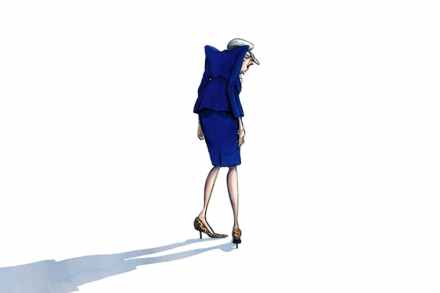
On this week’s episode we're wondering whether Theresa May can weather this latest storm, speaking to a robot expert (and a literal robot), and getting the inside story of male allyship workshops. The Prime Minister’s fortunes have ebbed and flowed since her disastrous election, but a yuletide season of relative calm has been replaced by her greatest challenge yet. 'Lead or go': that’s what James Forsyth says in this week’s cover piece, as pressure mounts on Theresa May to cobble together something resembling an agenda. He joins the podcast along with Giles Kenningham who worked at No.10 under David Cameron.

Letters | 11 January 2018

From our UK edition

Long lives and pension pots Sir: Jon Moynihan is too optimistic about the prospects for further increasing life expectancy, and too gloomy about those of the pensions industry (‘Falling Short’, 6 January). The wondrous advancements of medical science have offered little to solve the most pervasive problem we now face: declining mental health. It seems unlikely that society will chose to invest endlessly in repairing bodies to extend lifespans, when the minds relating to those bodies have already been lost. So the viability of pension providers is not as parlous as suggested.

We should regulate, not ban killer robots

From our UK edition

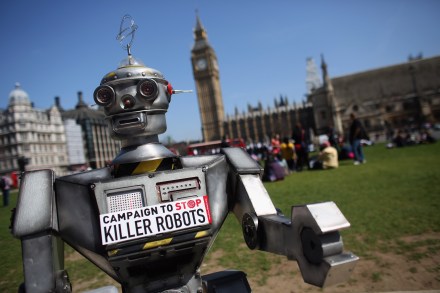
Last week, 116 experts including Tesla’s Elon Musk and DeepMind’s Mustafa Suleyman called for a ban on autonomous weapons, otherwise known as ‘killer robots’. The experts’ aims are laudable, but they are likely to have about as much effect as King Canute ordering the sea to turn back. Whether we like it or not, autonomous weapons are coming. States like China, Russia and the US are already developing such systems. They will not want to lose the potential military advantage to the other superpowers. From a technological perspective, seeking to ban one application of Artificial Intelligence will become increasingly difficult. More and more, A.I. is multi-purpose. Just think of IBM’s flagship program, ‘Watson’.

The Spectator’s notes | 20 April 2017

From our UK edition

The fact that nothing leaked about Mrs May’s snap election tells you much of what you need to know about her. It shows how iron is her discipline and how close her inner circle (so close, in fact, that it is a triangle rather than a circle). It suggests that she takes neither her cabinet nor her party into her confidence. It shows that if she wins the general election, her control of her administration will be much tighter than that of Margaret Thatcher (which was surprisingly loose) and even than that of David Cameron (which was surprisingly tight). Finally, it shows that if she loses, or gets a result no better than the present parliamentary arithmetic, she will find herself friendless.

The descent of man

From our UK edition

Why do humans want to build robots? It seems, on the face of it, to be a suicidal endeavour, destroying jobs and, ultimately, rendering our species redundant as more intelligent and effective beings take over. Lacking, as we now do, an agreed metaphysical justification for human specialness — for example, the soul — it must only be a matter of time before we submit to the machine ascendancy. So far, it has been a subtle, incremental process that conceals any wider significance. Take satellite navigation. This was first introduced in the 1980s and is now more or less universal. Maps have become quaint. As a result, we walk or drive without a visual model of where we are. This may be a small loss of human agency but it’s a loss nonetheless.

Losing heart | 3 November 2016

From our UK edition

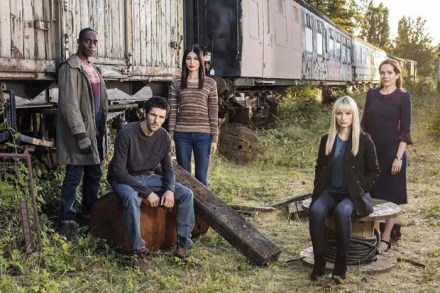
In 2015, the first series of Humans (Sunday) was apparently Channel 4’s most watched home grown drama since The Camomile Lawn: a programme broadcast when Neil Kinnock was still the Labour leader and given a obvious ratings boost by the tabloid outrage about its many nude scenes (and by its many nude scenes). In the case of Humans, though, the British people can’t be accused of ulterior motives, because this is a winningly intelligent piece of sci fi that ponders, among other things, the nature of consciousness and the future of the human race. Cleverly, too, it’s set, not in a domed city of jet packing commuters, but in a world very like our own.

Revenge of the robots

From our UK edition

The other day James Lovelock, the sprightly 97-year-old inventor of Gaia theory, told a mildly surprised Guardian interviewer that he wasn’t remotely worried about climate change any more. A far more plausible threat, he explained, were all the killer robots that would soon emerge and find no use for us inconvenient humans. Apparently this is a fashionable worry. It has to do with something called the ‘singularity’, which is the theoretical moment when machines become so sophisticated than they can outthink us, then advance at such a pace that we become powerless to stop them.

Dancing with robots

From our UK edition

Back in 2012, a team at Google built a state-of-the-art artificial intelligence network and fed it ten million randomly selected images from YouTube. The computer churned through them, and announced that it kept finding these strange things with furry faces. It had, in other words, discovered cats. Artificial intelligence has, all of a sudden, become the next big thing again. It is not so much sweeping across our world as seeping into it, with a combination of enormous computing power and the latest ‘deep learning’ techniques promising to give us better medical diagnoses, better devices, better recipes and better lives. Soon, it might even be able to give us new Beatles songs.

Letters | 21 January 2016

From our UK edition

Bureaucratic tyranny Sir: As James Forsyth points out (‘Scary Monsters’, 16 January), David Cameron and other ‘In’ campaign supporters wish voters to base their decision on the short term, as this enables them to highlight the uncertainty and fear factor. But this vote is about the long term, and in 20 years’ time one thing is certain: the ‘ever-closer union’, and all that it means, will exist. What I don’t understand, and what I hope every interviewer will force him to explain, is why David Cameron believes it will be better for Britain to be increasingly ruled by the bureaucratic tyranny that is the EU.

I, robot. You, unemployed

From our UK edition

One evening last autumn, four experts in the field of artificial intelligence arrived in Westminster with an urgent message for our government. There’s a robot revolution on the way, they said, and unless we prepare for it we’re in trouble. The briefing was a quiet affair — I was one of only a few journalists invited, for fear of headlines like ‘The Terminator is coming’. However, by the time the last A.I. expert had said his piece, it was hard to imagine how a hack could over-hype the story. Computers really are set to take over, it turns out. We’re rolling unstoppably towards servitude to machines. The four experts spoke in turn, each about a different point in the future, like biblical prophets warning of the End Times.

A captivating prospect

From our UK edition

What could happen in literature to a young couple — or a pair of young couples — who fall off the beaten track and enter a magical place not quite of this world? They might end up, like Adam and Eve, in paradise. Or, like The Tempest’s Miranda and Ferdinand, under the control of powers greater than they can hope to understand. Or, like the lovers in A Midsummer Night’s Dream, they could find themselves unsure who they love, or whether they can ever trust what they see, or feel. Or, like Charmaine and Stan, the star-crossed heroes of Margaret Atwood’s dazzling and hilarious new novel The Heart Goes Last, which plays effortlessly with tropes from Shakespeare and Milton, they could take shelter from a world ravaged by economic crises in a prison.

Lawyers, journalists, chefs, bankers, doctors – the robots are coming for your jobs next

From our UK edition

At the Hannover Messe robotics fair in Germany yesterday, UK company Mobey Robotics launched the world's first robot chef, capable of watching and mimicking the kitchen skills of a human chef and recreating them with superhuman consistency. There is already a restaurant in Soho with touch-screen tables where you can place your order and pay your bill, and restaurants in Japan where robotic waiters serve food. As these new technologies become cheaper and more widely available, they are likely to replace the need for human labour in restaurants altogether. If you find this a bit unlikely, remember that we've already accepted robots at the supermarket checkout, the airport check-in, the train station, the cinema and the bank.

Don’t buy The Glass Cage at the airport if you want a restful flight, warns Will Self

From our UK edition

Nicholas Carr has a bee in his bonnet, and given his susceptibilities this might well be a cybernetic insect, cunningly constructed by a giant tech company with the express purpose of irritating him — a likely culprit might be the Tyrell Corporation in Ridley Scott’s future-dystopic film Blade Runner. In 2012 Carr — whose name has homophonic overtones of Cassandra — published a minatory work on the internet and the web called The Shallows. The title does indeed say it all: Carr’s view was that our increasing use of these technologies is having an impact on our cognitive and other physical faculties, and that by and large it’s a negative one.

The real reason GPs are grumpy: the robots are coming for them | 15 January 2015

From our UK edition

There’s something wrong with the relationship between patients and their GPs. I’ve spent much of this winter in my local surgery, what with one thing and another, sitting among the stoic and snivelling, drifting between different doctors. They’re pleasant, if perfunctory, but with each visit I became more sure that something fundamental is awry. The docs seem ill at ease, as if their collective nose is out of joint, and I don’t think it’s overstretching or underfunding that’s the problem. My unprofessional diagnosis is that there’s a change under way in the balance of power between patients and medics; the status of GP as unimpeachable oracle is under threat, he feels the first tremors of what may be a seismic shift, and he doesn’t like it.